
Quote of the Week: “Wave Bye-Bye to the Bureaucrat.”


Busy-office-workerSynopsis of James O. Incandenza's short (16 min) film Wave Bye-Bye to the Bureaucrat, Latrodectus Mactans Productions, Year of the Whopper:

"A bureaucrat in some kind of sterile fluorescent-lit office complex is a fantastically efficient worker when awake , but he has this terrible problem waking up in the A.M., and is consistently late to work, which in a bureaucracy is idiosyncratic and disorderly and wholly unacceptable, and we see this bureaucrat getting called in to his supervisor’s pebbled-glass cubicle, and the supervisor, who wears a severely dated leisure suit with his shirt-collar flaring out on either side of its rust-colored lapels, tells the bureaucrat that he’s a good worker and a fine man, but that this chronic tardiness in the A.M. is simply not going to fly, and if it happens one more time the bureaucrat is going to have to find another fluorescent-lit office complex to work in . It’s no accident that in a bureaucracy getting fired is called ‘termination,’ as in ontological erasure, and the bureaucrat leaves his supervisor’s cubicle duly shaken. That night he and his wife go through their Bauhaus condominium collecting every alarm clock they own, each one of which is electric and digital and extremely precise, and they festoon their bedroom with them, so there are like a dozen timepieces with their digital alarms all set for 0615h. But that night there’s a power failure, and all the clocks lose an hour or just sit there blinking 0000h. over and over, and the bureaucrat still oversleeps the next A.M. He wakes late, lies there for a moment staring at a blinking 0000. He shrieks, clutches his head, throws on wrinkled clothes, ties his shoes in the elevator, shaves in the car, blasting through red lights on the way to the commuter rail. The 0816 train to the City pulls in to the station’s lower level just as the crazed bureaucrat’s car screeches into the station’s parking lot, and the bureaucrat can see the top of the train sitting there idling from across the open lot. This is the very last temporally feasible train: if the bureaucrat misses this train he’ll be late again, and terminated. He hauls into a Handicapped spot and leaves the car there at a crazy angle, vaults the turnstile, and takes the stairs down to the platform seven at a time, sweaty and bug-eyed. People scream and dive out of his way. As he careers down the long stairway he keeps his crazed eyes on the open doors of the 0816 train, willing them to stay open just a little longer. Finally, filmed in a glacial slo-mo, the bureaucrat leaps from the seventh-to-the-bottom step and lunges toward the train’s open doors, and right in mid-lunge smashes headlong into an earnest-faced little kid with thick glasses and a bow-tie and those nerdy little schoolboy-shorts who’s tottering along the platform under a tall armful of carefully wrapped packages. Kerwham, they collide. Bureaucrat and kid both stagger back from the impact. The kid’s packages go flying all over the place. The kid recovers his balance and stands there stunned, glasses and bow-tie askew. The bureaucrat looks frantically from the kid to the litter of packages to the kid to the train’s doors, which are still open. The train thrums. Its interior is fluorescent-lit and filled with employed, ontologically secure bureaucrats. You can hear the station’s PA announcer saying something tinny and garbled about departure. The stream of platform foot-traffic opens around the bureaucrat and the stunned boy and the litter of packages… The film’s bureaucrat’s buggy eyes keep going back and forth between the train’s open doors and the little kid, who’s looking steadily up at him, almost studious, his eyes big and liquid behind the lenses… The bureaucrat’s leaning away, inclined way over toward the train doors, as if his very cells were being pulled that way. But he keeps looking at the kid, the gifts, struggling with himself… The bureaucrat’s eyes suddenly recede back into their normal places in his sockets. He turns from the fluorescent doors and bends to the kid and asks if he’s OK and says it’ll all be OK. He cleans the kid’s spectacles with his pocket handkerchief, picks the kid’s packages up. About halfway through the packages the PA issues something final and the train’s doors close with a pressurized hiss. The bureaucrat gently loads the kid back up with packages, neatens them. The train pulls out. The bureaucrat watches the train pull out, expressionless. It’s anybody’s guess what he’s thinking. He straightens the kid’s bow-tie , kneeling down the way adults do when they’re ministering to a child, and tells him he’s sorry about the impact and that it’s OK. He turns to go. The platform’s mostly empty now. Now the strange moment. The kid cranes his neck around the packages and looks up at the guy as he starts to walk away: ‘Mister?’ the kid says. ‘Are you Jesus?’ ‘Don’t I wish,’ the ex-bureaucrat says over his shoulder, walking away, as the kid shifts the packages and frees one little hand to wave Bye at the guy’s topcoat’s back as the camera, revealed now as mounted on the 0816’ s rear, recedes from the platform and picks up speed."

              David Foster Wallace Infinite Jest, pp. 687-689, Little, Brown and Company

(For those who are wandering whether I'm reading Infinite Jest right now: Yes, I'm reading Infinite Jest right now.)
Quote of the Week: What Did I Tell You? People Just Don’t Want to Work!!!


Lazy_worker-150
"An employee at the Yotel and the Soho Grand started several fires allegedly because he wanted to make the 'hotels less popular' and lighten his workload."

From the Despicable-and-Lowbrow quadrant of The Approval Matrix page in New York Magazine


What Do Bosses Know About Their Employees?


1297457573478_ORIGINALWell, it varies from one boss to another, but one thing I can tell you for sure –nobody should ever expect a boss to bother learning who his subordinates are.  I mean as people. 

Yes, some overzealous HR pros in large companies paw through whatever material is made public by the social networking in pursuit of dirt, but  that's just "fact-finding" and gossip-mongering.  No, I am talking about a genuine human interest. 

In most cases there is none.  Watching all sorts of bosses interact with their employees I frequently wonder whether it registers in their heads that they deal with real people.  I think they subconsciously block this tiny detail out, so that they wouldn't feel guilty for being assholes.  So, how can you expect them to notice anything about your personality, if they see you as a cardboard cutout?  They are blind even to the most obvious manifestations of your existence outside of the workplace. 

You may belong to a weekend fight club and come to work every Monday with poorly covered bruises; or aspire to be the greatest drummer of all times and constantly bang your fingers on hard surfaces to some beats in your head; or know everything there is to know about existentialism and talk about it at length during office parties – none of it will be noticed: they see and hear it, but their minds reject it.  For them, you are still just Steve from Logistics, or Mike from Customer Service, or that girl from Accounting. 

Do I know for a fact that this sort of myopia exists?  Yes, I do.  My position as a financial executive and/or consultant allows me to observe various bosses in close proximity.  Over the years, I've collected a huge body of evidence to support my statements here.  But I can also vouch for their validity based on the incidents that involved me personally.  I'm not going to dwell here on the fact that none of my employers ever learned anything of my true motivations, ethical standards, or even why I work so hard and care so much.  Instead, let me share with you an instance of an inexplicable blindness.

I don't ever shove CFO Techniques into people's faces.  Being a book's author barely has any impact on consulting deals and it definitely has nothing to do with my CFO job.  But people do find out on their own: they connect with me on LinkedIn and see it on my profile, or they Google me, or whatever.  Normal people, not bosses.  A company's owner writes an email to one of his strategic financial partners with a copy to me: "Let me introduce our CFO M.G.  From now on, she is taking over all our M&A negotiations."  Apparently the fact that the three of us were at the same table during a corporate function has slipped his remembrance.  As per usual, I simply ignore it.  The external party doesn't:  "Not only that I've met Marina already, but I also keep her book on my desk."  The boss replies, "Oh yeah, I forgot, I introduced you, guys."  You may think that he deliberately ignored the part about the book, but I swear, he is not that devious – he simply blocked it out, didn't see it at all.    

And that's absolutely Ok.  Attentiveness is not a prerequisite to being a business leader and a jobs creator.  I'll take brilliance and perpetual drive to succeed over tact and personal involvement any day.  And I have to be honest – I'm not quite sure if I personally would've been as aware of people around me and familiar with some aspects of their lives if I weren't such an avid, life-long student of behavioral science.  At the end of the day, one can say that my interest is self-serving. 

Of course, sometimes it hurts just a bit that the people, for whom you work so hard, don't even care to learn who you are, but in the grander scheme of things we should not care – as I always say, every job is just another line on your resume.  Moreover, we should be grateful – we don't really want these people to know too much about us or our vulnerabilities.

That said, however, it is still pretty surprising when bosses are confused about most basic, most superficial facts about employees who worked for them for years.  Sometimes it brings about ludicrous, almost sketch-like dialogues.

A tragedy struck one of my subordinates: her Mom, only 55 years old,  died unexpectedly of a heart attack.  The girl has been with the company longer than me; she was originally hired by the CEO at the time when there were no other executive managers in the company at all – just owners and staffers.  The CEO shuffles into my office to reflect on the unfairness of life.

She said, "You know, it's so cruel: Shen's parents were the first-generation immigrants -  worked so hard to provide for the children!  And now, the kids are all grown up, married, educated - it was a time for her Mom to finally enjoy her life, and then this happened.  Just terrible!"

I listened to all that and agreed, "Yes, it's totally fucked up.  With respect to her Mom, it was Shen who was the first-generation immigrant.  Her parents got divorced when she was a little girl.  Shen came here 13 years ago with her farther and she didn't see her Mom for 8 years.  They missed each other terribly.  The girl was able to bring the mother here only after she herself came of age and became a US citizen.  They were together for only 5 years.  The Mom still worked 7 days a week to support herself, and now she is gone."

And here you have it, ladies and gentlemen: a boss's "reality" vs. truth.            

Quote of the Day: Truth from Behind the Mask


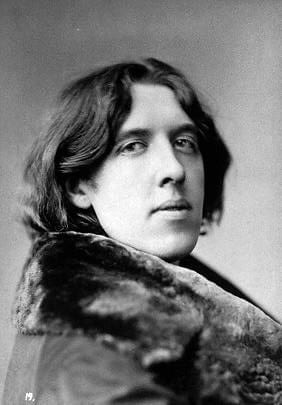
“Man is least himself when he talks in his own person.  Give him a mask, and he will tell you the truth.”

                                                                            Oscar Wilde

Quote of the Week: More on the Intelligent Machines


Thom+Yorke+154424"I am not afraid of computers taking over the world.  They're just sitting there.  I can hit them with a two by four."

Thom Yorke

                    (suggested by Yana Alexandra Crow)