Lena Dunham Claims Fame Makes Her Sick… Plus a Few Numbers

It’s like with all chronic irritants: just when you seem to forget about them altogether, something random will cause them to flare up… In a casual conversation Lena Dunham’s new memoir popped up. I wouldn’t know anything about it… But now… I got triggered. And you know how it is with mosquito bites—once you start scratching, you can’t stop.


It just had to happened, didn’t it?

It’s like with all chronic irritants: just when you seem to forget about them altogether, something random will cause them to flare up…

We were just talking about Beef‘s second season, my daughter and I. I remarked how shocking it was that the Ashley character was so obsessed with childbearing. An attitude rarely observed nowadays not only among gen-zers, but the millennials as well…

And that, somehow, prompted my daughter to tell me that Aubrey Plaza (six months my daughter’s senior) was expecting. With whom?—I wondered, since her husband passed away last year. Christoffer Abbott. Oh, he is cool. We saw him on Broadway in The House of Blue Leaves with Ben Stiller, Edie Falco, and Jennifer Jason Leigh back in 2011. He was also in the first season of The Sinner

...And Girls

As if I could ever forget! He is the one who left the show because he got fed up with Lena Dunham.

By the way—my daughter said—I just saw a clip of her on The Drew Barrymore Show. I don’t know why it was pushed to me. But some things she was talking about were quite…

Why, dammit?!! Lena Dunham—my personal symbol of undeserved attention and unrestrained nepotism! Please, stop!—I wanted to plea…

Yet… Why was she on Drew?—I asked. Is she promoting a new project? I mean, Too Much1 just came out last July… (I know because Netflix tried to push it on me.)

She wrote a new memoir…

All these tidbits are such peripheral, insignificant bleeps on the cultural radar. I wouldn’t know anything about them… But now… I got triggered. And you know how it is with mosquito bites—once you start scratching, you can’t stop. And now I am up to my ears in this…

The pushy dissemination.

My daughter shouldn’t have been surprised that Lean Dunham’s appearance on Drew was pushed at her after she decided to notice the news of Aubrey Plaza’s pregnancy. The actress starred in her late husband’s Jeff Baena‘s The Little Hours with one of the four Girls—Jemima Kirke. And there is zero degrees of separation from the future father. That’s how it works…

The only way we can stop the activity trackers from curating our content feeds is by quitting the whole online existence entirely. And there are probably brave and admirable people who do just that.

But I don’t think I have the emotional strength for such radical acts. I can bitch and moan about feeling like a fly stuck in the world-wide web, yet I continue to submit. And the stuff continues to be pushed…

Even Anna Wintour has soft spots.

Of course, I had to look up Lena’s book on Amazon… Just to see the title and the description. (I know, I know—we do it to ourselves, we do!)

Famesick… Ah, I see. Was pursuing her creative ambitions worth “all the pains of fame“?—she invites her readers to ponder… Fatigue, addictions, sex, and everything in between… The struggle is real!

Then, probably on the same day, I was on IMDb looking up the year The Prestige came out… It’s a regular thing for me. I am a cinephile…. Plus, I frequently feel compelled to rate what I watch… I’ve been using the site for decades now. Naturally, since Amazon acquired it in 1998, the interconnections became inescapable. I search for something on Amazon Prime and then I’m flooded with the ads for those items on IMDb.

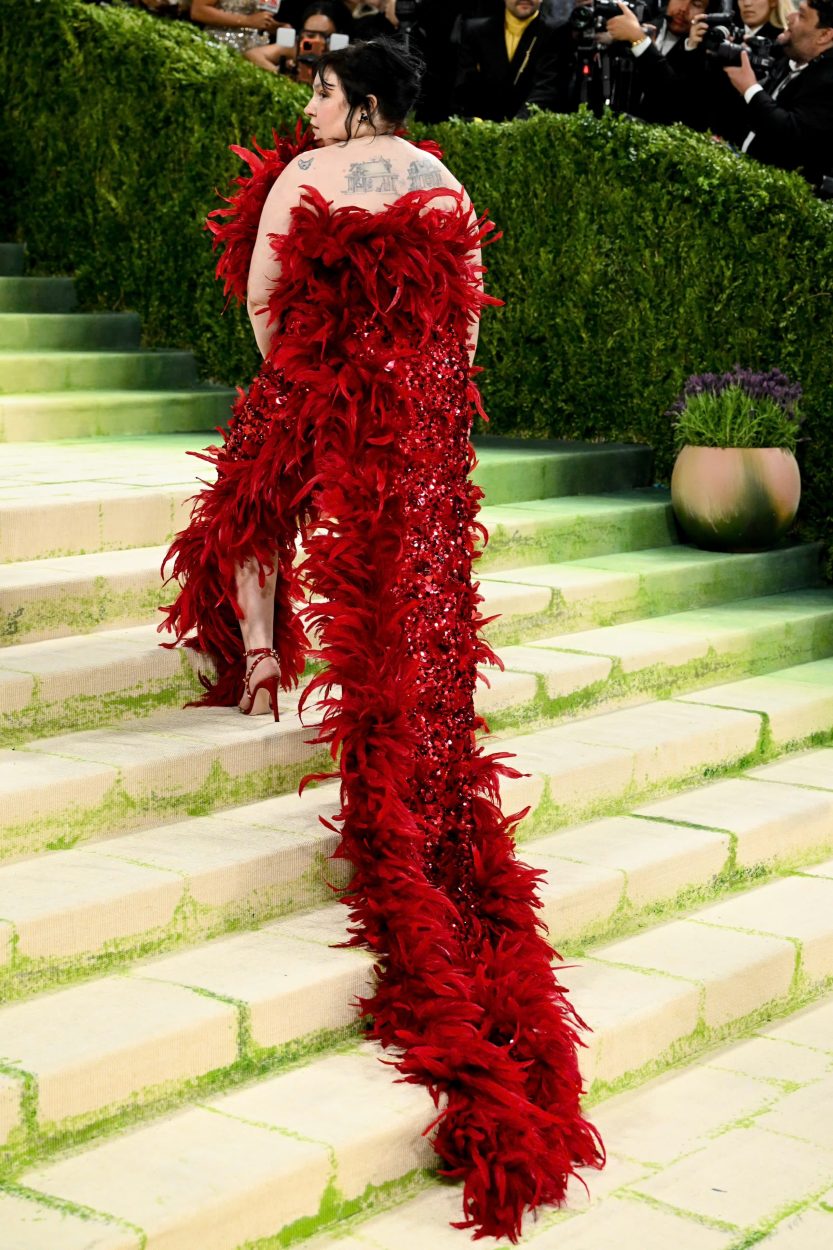
This time, however, the sidebar invited me to checkout the collection of photos from Met Gala 2026—Fashion Is Art. Deep inside I knew. Of course, I knew. And there she was: in a feathery thing of the signature Valentino Red hue. Beyonce, Jay-Z, Rhianna… and Lena Dunham.

And that, actually, made perfect sense…

Truth be told, Lena Dunham has always had a good sense of style. As well as personal ties—cultivated through parental wealth and art connections—with haute-couture houses. But so are thousands of other people.

Did you know that Anna Wintour personally selects the 700 or so invitees to the Gala and approves their outfits? She’s been doing it for nearly 40 years now. And even though she stepped down as Vogue’s editor-in-chief last year, she still carries that particular responsibility on as Condé Nast’s Global Chief Content Officer.

Still, Anna Wintour—widely known as a demanding, exacting, and formidable media executive—has her soft spots too. They get softer when she is affected by strong PR, off-kilter cultural airs, and the liberal feminism…

She has always been partial to Lena, making Ms. Dunham probably the only memoirist and fringe movie-TV-maker to be a Met Gala invitee. In fact, I already wrote about it twelve years ago when Lena beat Kim Kardashian for the March 2014 cover of Vogue.

As per usual, a few numbers…

Let’s see… Since Amazon holds about 50% share of the printed books selling market and about 80% of ebooks, its data makes it easier for us to do some guesstimations.

The best selling rankings

The book came out on April 14th, 2026. Dunham’s publisher announces right there above the description that the memoir was an “instant #1 New York Times bestseller”. In non-fiction sector, of course. Definitely a certified hit. To make that rank a book usually sells about 3,000-4,000 copies a day in

all outlets combined.

I don’t know how long it stayed at #1, but in its fifth week, it was #5. So, the initial impact is diminishing. And it was listed as #3 in the memoir section of Amazon’s Charts as of May 18th. That translates into 1,500-3000 copies a day.

Let us be generous here. Let’s say that the memoir sold 4,000 copies a day for the first two weeks and 3,000 for the following three. That gives us total of 119,000.

The Amazon reviews

We can try to prove this number further. The book already has around 1,500 Amazon Reviews. Those can only come from verified purchasers. (Unlike Goodreads ratings that can be entered by anyone with a free account, whether they bought, read, or even saw the book cover.)

From the marketing POV, Amazon reviews are “engagements”. So, naturally there are statistical sales probabilities attached. The publishing industry consensus and author data indicate that only a small fraction of readers leave a review. Of course.

And the rule of thumb is the “50x multiplier”, or 2% of all readers. That gives us 75,000 copies sold in 5 weeks via Amazon. Still on the same wave of generosity, let’s say that it represents 60% of overall sales, yielding us 125,000 copies in total. Very close.

The royalties

I have experience with both the publishing-house (CFO Techniques) and the self-publishing royalties(I Built This Prison). So, let me tell you.

A publishing house, which carries the responsibility for production and marketing costs, usually pays author 10-15% of the list price of the printed books and 15-25% for the ebooks. We are going to go with the higher percentages. So, Lena’s royalties are about $4.50 per printed copies and $2.50 per digital version.

Believe it or not, people still prefer to hold a real book in their hands. Print books dominate with 80% market share. Multiply this and that: we come to the total 5-weeks yield due to Lena of $512,500.

Not I’m Glad My Mom Died, but, impressive for a niche celebrity memoir anyway. Not surprising, of course, considering all the PR efforts with the promo circuit that includes The Drew Barrymore Show and such.

And it also probably entirely irrelevant as I don’t believe that Lena Dunham would bother writing anything on spec2. Also, her agents wouldn’t allow that.

So, the advance...

I doubt, of course, that Random House would expose themselves again to the loss they experienced with Lena’s previous book Not That Kind of Girl. Back in October 2012—just three months after Season 1 of Girls ended—they got themselves into the bidding war, which they won with a highly publicized $3.7 million advance, hoping for at least 1 million of books to be sold. According to Nielsen BookScan, their expectations were fulfilled only by about 30%.

Understandably, the advance Lena received for Famesick wasn’t publicly disclosed at all. Nevertheless, we can safely extrapolate that she received at least $1 million at the contract signing. Less agents’ commissions, less taxes.

Still, a needful chunk of change probably. As I estimate that the residuals from Girls—still available for streaming on Max—are drying out by now. Considering that Ms. Dunham created, starred, and produced it, wrote about 70% of the episodes, and directed a third of them, they used to be quite sizable. But it’s been nine years since the show closed, so now it’s down to less than 2% of the original payout level.

…and my rhetorical questions.

Which I can’t help but ask.

What fame?

Of course “people” know her… In Hollywood and within New York’s arty intelligentsia circles. Especially among indie-obsessed cinema lovers such as yours truly. But what do you think the probability of a random person you stop on the street knowing who Lena Dunham is? Don’t even go to rural Nebraska—try the Bronx. I think it’s not very high. I dare you.

Actually, Lena always had a bit of an exaggerated take on her success. I remember back in the Girls days, there was an interview, in which she lamented about some TSA agent giving her hard time at the airport. She was actually expecting him to say something like, “Love the show”. I vividly remember my shock at her delusion.

The truth is, when Girls originally aired, the show’s viewership consistently averaged between 600,000 and 800,000 per episode. And I seem to recall that the latter seasons dropped to something like 300,000 viewers. I mean, there are 270 million adults in this country.

Of course, it would be ridiculous to compare such an intellectually introspective and socially esoteric show as Girls, aired on a paid premium channel, to mass-appeal broadcasting blockbusters. On the other hand, another HBO show, Game of Thrones —same time, same price—managed to draw over 10 million viewers per episode.

And here is another question:

If something really makes you sick, wouldn’t you try to avoid it?

I feel a bit bewildered here… I mean, if being “famous” puts you in peril, if it affects your existence to the point of having a deteriorating effect on your physical wellbeing—what the hell are you doing prancing in front of paparazzis in 5-inch heels? At the event that bills itself as “the world’s most prestigious and glamorous”, where “FAME, wealth, power, social influence” come together.

Of course, Ms. Dunham has been discussing, essaying, and scripting her mental problems since her college-years YouTube videos. And surely the bravery of exposing yourself to the world takes its toll… But was it really such a big deal for your immediate artistic circle of friends and family to accept your creative choices? I mean, nudity—both physical and emotional—has been a habitual subject of Art since the ancient times.

On the other hand—after the euphoria of the entertainment industry’s attention ebbed—Lena could’ve naturally fallen into a down cycle. Maybe she was actually missing the “fame”.

But damning fame is so much more compelling, isn’t it? Appeals to everyone. To celebrities—always struggling with various insecurities and such. As well as to the general public that welcomes anything proving to them they dodged the fame bullet… So ripe for pitching and marketing!

And are you all better now after channeling all that pain through your book? Is that what readers are going to find at the end? The hopeful start of the new chapter of your life? Really? Good for you!

But it begs the most important question now… And believe you me, I’m asking it with all the compassion of a person who can relate to many a mental problem. Especially those of the body dysmorphia, OCD, and self-harm kind (I called that Chapter of I Built This PrisonBuckets of Tears and Blood)…

Girl, what could you possibly know about real pain?

You rode into “fame” you blame for your ills on the coattails of your famous-artist mother and her network of such friends as Meryl Streep. And didn’t she finance your breakout Tiny Furniture? And also played herself in it? You gave her the second billing!

Very good mother by my standards. Two personal thumbs up from me. I mean it. In spite of my utter distaste for nepotism. (I’m torn like that: maybe she genuinely believed in her daughter’s merits, not just layering the yellow bricks for her spawn…)

Now, try to imagine starting off and striving on without that bulldozing PR machine you were born into behind you. Like many thousands of aspiring writers, filmmakers, and artists.

Contemplate opening your heart and pouring your troubled soul out onto the pages of your memoir, then go through the struggles of self-publishing, and end up living with one review. How would you feel then?

Yet, objectivity is my highest priority.

I honestly believe that Ms. Dunham is actually controlled by an unparalleled driving force within her. I think Miriam Cohen is right: Lena IS The Girl Who Perseveres. She will never give up. Pains of fame be damned!

And my initial hunch was correct, by the way: it’s not just the memoir. There are plenty of other new endeavors too. In on-screen entertainment alone, Lena Dunham currently has four upcoming projects. A movie genred as “steamy romance”, which she wrote and directed, is in post-production. It stars Natalie Portman, Mark Ruffalo, and Meg Ryan. Two TV series. Plus, another movie she will executively produced.

Two of these projects have the word “sex” in their titles. And one is still untitled. So, who knows… It’s all about the shock of Lena’s fantasies, isn’t it?

I probably will not live to see Ms. Dunham achieving actual artistic merit deserving the attention she gets. But I must say: that Valentino gown—just breathtaking… And so appropriately Lena! This is exactly what I imagine she can do: just wrap a giant boa around her naked body. Fabulous!


  1. In a typical outcome for practically all of Lena Dunham’s projects, the show garnered unduly kind critical reviews in such prominent US outlets as The New Yorker and Los Angeles Times. Yet, it had very moderate viewership and a mediocre 6.2 IMDb rating. A British reviewer writing for The Guardian was blunt: This pile of clichés, she said, amounted to “way, way too little”. Four months into airing, Netflix announced the show will not be renewed for the second season. ↩︎
  2. In hopes of success, without pre-existing deal with an advance. ↩︎
I Built This PrisonExcerpt: Ozark‘s Wendy Byrde Negotiates Her Compensation


I Built This Prison,  Part I – Etiology of Crime, Chapter 3 – Delusions of Entitlement and Misconfusion of Rewards:

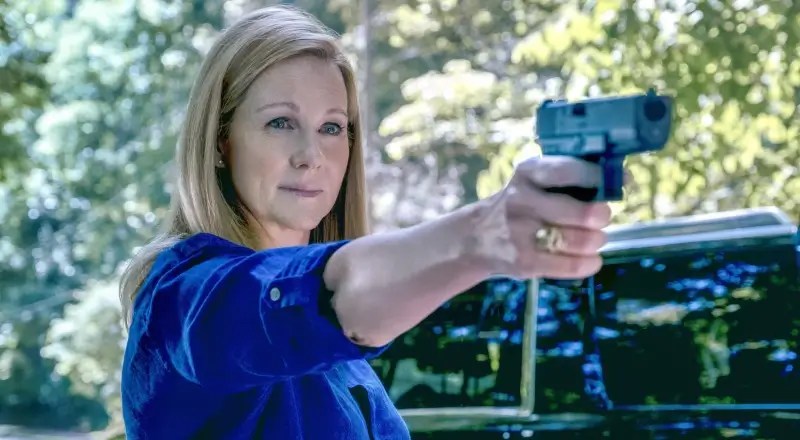
“In the episode 1.6 of Netflix’s original ‘Ozark’, desperate for money Wendy Byrde charges at her boss with an attempt of hostile earnings renegotiation (she is a pushy bird that Wendy Byrde, so it goes with the character). She notes that the sales are up 43% compare to the same month the previous year, while the only business change that took place was her hiring. Hence, she deserves a bonus that would correlate her compensation with her value(‼). Specifically, 50% of the income increase. They haggle and at the end the boss agrees to the bonus that together with Wendy’s salary amounts to one-third of the additional profits.

Fiction, of course. But, if the employers were actually inclined to evaluate and compensate their employees based on their tangible contribution into their businesses, the negotiations like that would be a common place. And maybe they are… somewhere. But I’ve never really witnessed anything like that. Well, something of the kind – once, fifteen years ago. But that was it.  

Of course, these are not exactly “negotiations” either. Wendy gives her boss an ultimatum because she has an upper hand – there is no comparable supply of labor in that God forsaken bumblefuck locale. There is like literally no one to do the same job – not on a half-ass, or quarter-ass, or even one-hundredth of an ass level. And so, her boss is not rewarding her for her contribution, he yields under the pressure of unfavorable market conditions.

An unimaginable situation for NYC (and I’m sure the same goes for all industrial centers), no matter what your field of expertise is! Here, an employer – even the one that is afraid out of his mind to lose you – deep inside knows that if you walk, he can find at least Somebody to fill the void. You, on the other hand, may drown in the competition searching for another place.”

                                                                                                                          p.40

What Is “Class”? – the American Mis-Confusion


So, somehow I overheard ( which is shocking, believe me, because I don’t really expose myself to this kind of news) that a few weeks ago “people” (who are they? some social media trolls?) got upset with Cate Blanchett (“they” always have a tendency of being upset for all the wrong reasons) on account of her calling herself “middle class”… And I thought: Aha! An excellent opportunity to clarify a thing or two!

Let me first confess: I have never been a big fan of Cate Blanchett as an actress… She has a good screen presence, no matter the setting, but that’s about it . And I’ve even seen her on stage a couple of times too… Including in Liv Ullman’s production of A Streetcar Named Desire, nearly 15 years ago. The critics and the audience raved about it, of course, but, as far as I was concerned, she lacked the emotional fragility necessary for the portrayal of a woman broken in that specific way of Blanche DuBois. I even got  myself in trouble with my fellow BAM patrons by not restraining my opinionated ass on account of that performance…  

But no matter, no matter – as this is not about her acting. This is about her socio-political statements…

(And that’s another thing: Why the hell do people always care so much about what the actors have to say about politics, or social structures, or international relations… Why the fuck the general public bothers itself with listening to  what Barbra Streisand, Bette Midler, Angelina Jolie, Ashley Judd, Madonna, or Cate Blanchett have to say about any of that instead of trying to utilize their own analytical capabilities and form their own opinions?)

So, here is how she described herself, while discussing her experiences of “working with refugees” (of some non-specific kind; yet, her Cannes’ red-carpet dress speaks volumes with that bright and glossy forest-green inset she kept revealing): “I am white, I am privileged, I am middle class…” And somehow it wasn’t the falsely apologetic tone of the whole thing, but the supposed mis-“classification” that got the people upset. Why? “They” explain: the actress’s estimated net worth is $95 million. And “they” think that it disqualifies her as the “middle class”.

Well, let’s see… Even though half-American (on her father’s side), Cate Blanchett was born, raised, and educated in Melbourne, Australia, and is encyclopedically considered an Australian actress. And in that country, as in all former and present parts of the British Empire, societal divisions are still very much defined by one’s familial origins, the ancestry and the hereditary structures. It really has nothing to do with the size of one’s coffers. There are two million millionaires in Australia – the prevailing majority of them are commoners. At the same time a blue-blood aristocrat can be dirt-poor. Therefore, by  these standards Blanchett is absolutely correct, deliberately honest, and entirely un-hypocritical – she is very much a middle-class product: mother’s a teacher, father was a US Navy officer turned an ad exec.

Furthermore, the only American billionaire I knew personally (through a theater charity as a matter of fact) also tried to instill in his three children the idea that they were of the “middle class”. He understood the hereditary class principles simply because his immense wealth placed him very close to the heart of the issue: he knew that his money didn’t make him the upper-class.

And since we’re talking about a screen/stage actor, here’s an example from another frequently produced classical play – Anton Chekhov’s The Cherry Orchard… Keep in mind that Russia had been a monarchy with centuries-old ancestral aristocracy up until just 107 years ago… The play’s central psycho-social conflict is focused on the impoverished hereditary landowners unable to hold on to their estates, including the symbolically precious cherry orchards. Meanwhile,  the wealthy merchant Yermolai Lopakhin, with his peasant familial roots, understands only too well that, in spite of his hard work and all his millions, he can raise himself in the old societal class hierarchy only as far as the middle…  Just like the billionaire I’ve mentioned above… Let me reiterate: the wealth doesn’t make one an aristocrat. 

Generally speaking, the monetary approach to defining societal classes is very much the New World’s notion, which makes me believe that Cate Blanchett’s self-appointed critics are predominantly American. Not surprising at all.

The fact that here, in the States, the vast majority of people consider personal wealth to be the primal factor of the class distinctions is the testimony to two attributes very particular to our country:

A. The strength of our democratic, equal-opportunity roots. In spite of all sorts of privileges and preferential treatments applicable to various and variably defined through the stages of our history societal groups; and with full acknowledgment of the suffocating nepotism that’s been stagnating our progress for decades now – we are still the most democratic country in the world. The state built without castes, aristocratic substructures, and governing rights based on the land ownership. A nation, which believes that a self-made celebrity is equal to the blue-blood royalty. We see nothing especially special in Beyoncé/Jay Z meeting up and chatting with Kate Middleton/Prince William. Hip-pop royalty, sovereign royalty – same difference… 

B. Our preoccupation with money above everything else. And this one is a trait that affects pretty much every single aspect of our nation’s existence – socio-economic, political, and intellectual – not just the interpretations of the societal segregation into classes.

Case in point:

It is without a doubt a reflection of our society’s values that lesser punishments are doled out to those who take away someone’s innocence, or even life, than to those who take someone’s money.”  

                                                                            I Built This Prison, Part III, p. 344

But let’s assume for a second that everyone around the world adopted the American way of thinking and dismissed the old-world traditions of the class division entirely… For the moment, let’s just focus exclusively on the money factor…

Does general public really think that all those doctors at struggling hospitals and private practices, faceless partners in large law firms, CFO’s of the companies barely breaking even – that they are the middle class?! Why? Because they  make lower, or even mid, six-figure salaries? Let me disillusion you about that! In a larger scheme of things, we are all poor – from welfare recipient to an owner of a multi-million-dollar company with a $500K annual salary. Monetarily, we are all the struggling lower class, with just a slight difference in the purchasing powers. None of us can afford to fly everywhere in the first class (let alone the private jets), stay in suites of the 5-star hotels, dine in restaurants with Michelin stars, casually buy designer bags and suits (especially at today’s prices)… Unless, of course, these luxuries are paid by some companies or some other persons… Moreover, children of the welfare recipients have better medical care through the states or the cities and broader access to the educational finances than those of the wage-paid parents…

And Cate Blanchett with her who knows how securely kept millions is somewhere in the median sector of the wealth curve… Truly of the middle class, no matter how you define the matter. Because the ones in the upper portion of the plentitude are what I call “the really rich people” – the sort of folks the dreamers insert into their billionaire fairy-tale romance novels.   


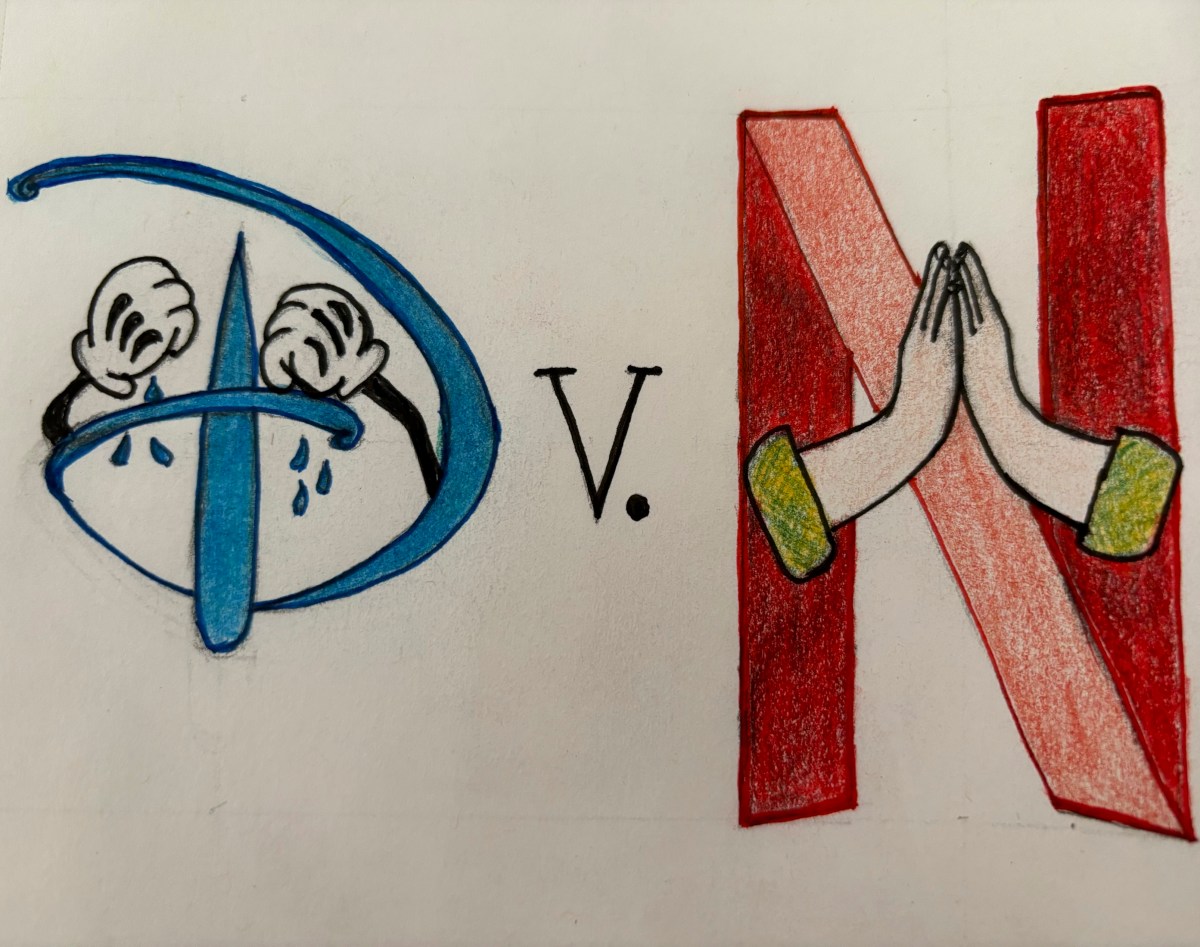
Disney Shareholders: Why Can’t You Be More Like Netflix?


It’s not an easy undertaking to make me laugh nowadays. Most of the time I’m just FINE (as in Frustrated [duh!], Insecure, Nervous, and Exhausted); the rest of the time I am severely distraught… And, of course, I meditate and do my best to cheer the fuck up… The vast music library helps; so does the good literature, quality entertainment… But, laughing – that’s rare, very rare… Except for the news – some news snippets make me burst out laughing! And incidentally this particular hilarious bit also had to do with Entertainment… Or rather the business of it.

You see, Disney is in trouble… I don’t need to regurgitate to you the whole stock-market mumbo-jumbo everyone else and their mothers write about, primarily focusing on the share prices, which are now below the level they were 10 years ago. Because the bottom line is fairly simple: The original Walt Disney Pictures isn’t pumping out winners annually as they used to do. All those astronomical investments into hoarding the big-name franchises like Stars Wars (Lucasfilm) and Marvel  – in spite of the high profits per hit, don’t really turn themselves into returns fast enough… And – most painfully in terms of the contemporary state of the entertainment marketing – the streaming arm Disney+ is not profitable at all.

Or, as I prefer to define it: Netflix it ain’t.

What to do? What to do? In a typical far-removed-from-reality only-in-corporate-boardrooms turn of events, the self-proclaimed “activist” investor billionaire Nelson Peltz (who started his “business-building” career – and this is very important – by inheriting his grandfather wholesale food company and then turning himself into a prominent private-equity mogul by buying and selling such fully-fledged companies as Snapple and Quaker Oats) challenged Disney’s BOD to commence the corrective actions by dismissing the company’s current CEO Bob (Why Bob, god dammit?! The man is 71! Time to grow up into your full name!) Iger (not a businessman at all – a career media executive, aka glorified mountain-top administrator with an outrageous compensation package of nearly $30 mil per year). In his haste for coup d’état, Peltz forgot to do his homework – he came into the fight empty-handed: no constructive plan, no corrective suggestions, no panoramic view of Disney’s new and improved future… Just the hope that, without Iger in the picture and with him on the board, things will get better… How? By Disney Magic? (If you didn’t hear: Peltz’s coup failed and Iger is still up there – on Disney’s very top, I mean).        

You get why this is so funny to me, don’t you?

The very idea of two people with no entrepreneurial experience in their respective portfolios fighting over who’s better fit to shake up the conglomerated mastodon (in case you forgot your primary-school lessons: mastodons were prehistoric, extinct cousins of the contemporary elephants – very large creatures) and expediently reshape it into an agile operational gazelle able to conquer the most difficult, most contemporary, most innovative trails – it seems inconceivable to me. Moreover, it’s so desperately naive to believe (assuming, of course, that anyone actually believes it) that changing one (or ten! or all!) person sitting on the head of the mastodon – very far away from its vital organs and moving limbs – would trigger the company’s rejuvenation. 

Do you think that the OG business-builders Walt and Roy Disney, if faced with a similar situation, would be concerning themselves with the BOD changes? I don’t think so. They would dig deep into the causes of the business’s slowdown, think outside of all boxes, and try to come up with absolutely new, never-explored-before solutions. Because they were the trailblazers and truly good fathers to their corporate child.  The current executive foster parents, on the other hand, are the worst: all they do is measure their child’s failures against their peers’ successes.        

You see, aspiring to someone else’s model that happens to work for them for the time being is nothing but a short-term bandaid. The key is in the entrepreneurial intuition, the managerial flexibility and the structural mobility; the integral ability to adapt, to change fast – with every single shift of the market demand and technological leap. And can we expect that from a giant who cannot be anything but rigid and slow simply because its too large for its own good? Pure fantasy, of course (who’s going to stop me, though? it’s my blog!), but the best thing for Disney’s Jenga-tower now would be to disassemble into individual blocks and let them operate as separate business units, without the burden of the astronomical executive packages. Let them compete within their own enterprising markets, against their specific peers – not against the fickle stock-market trends. I wonder what would happen then?   

And since commentators keep bringing it up as a benchmark, let me note this: Netflix Inc., God bless them – in spite of their global presence, publicly trading stock, and nineteen subsidiaries – is still a very much agile, 27-year-old (the most beautiful age) baby. With one of its shrewd co-founders still serving as an Executive Chairman of the board. 

I was a member of Blockbuster when my then pre-teen daughter first told me about Netflix DVD subscription. On my way to work I would drop the red envelopes into the mailbox and get the new ones shipped to us as soon as they were scanned into the USPS system at our local P.O. By the standards of those times: extraordinary expediency and incomparable efficiency of the entertainment-delivery operations. And that is still their main focus. Now, by means of what David Foster Wallace predicted (a few years before Netflix DVD was born, actually) would be the main form of delivering content into people’s screens – the dissemination into “teleputers” as he defined it, which we now known as streaming. In between, all of their transitions, developments, enhancements, and additions have been seamless precisely because they keep to their core, pursuing their mission.

And I hope they continue being spry, fluid, and easy to adapt. To whatever the future brings. I don’t know about the rest of you, but I owe them so much! No, for real, I have no clue how I would manage without them…   

De-Banking: It’s Very Personal to the Frustrated CFO


Sometimes I wonder about the kind of life, in which every single word your utter or mutter would be an instantaneous target of people’s analytical parsing, critiquing, and ridiculing… I mean, it’s hard enough to present to the public your written words – the ones that you’ve chosen meticulously, pored over a hundred times, edited, re-edited, and proof-read… (And I know, I know – most online and even in-print writers don’t do that anymore: the stupid, grammatically incorrect, unedited, shit you read sometimes even on the syndicated news! Yet, I still work like that.) But the unscripted and unabridged shit that just pops out of our mouths, even when we are debriefed and seemingly ready for anything… Brrr… Danger zone! Why do people want that kind of a life is an absolute mystery to me… But they do. And some of them self-delude and seemingly believe that they expose themselves for the sake of the “greater good”, but it’s all crap – the damage they cause to the nation, themselves, and their families is far greater than the sum of anything good they could possibly accomplish. It’s all fucking pride, and vanity, and over-confidence, and desire to hear themselves talk, which would be understandable if they were brilliant speakers, but the vast majority of them are far from it.

And so, there goes Mr. Trump – again… Clearly, it’s not enough for him to be ranked by many a poll among the three worst presidents of all times. (Those who know (1) my take on the Dumb Blonds and (2) that I spent most of Trump’s term in a medium security prison with no access to the mainstream information in any shape or form cannot possibly expect me to express my own opinion about his presidency. And this is not about my opinion. This is about the general public.) He wants another stab at it and he takes to the open mike on a speaking platform once again – in New Hampshire of all places. And, as these people frequently do, he stumbles on his words. He lets his thoughts run faster than his tongue and produces a statement that is not just confusing, it sounds practically unintelligible:

“We are going to place strong protections to stop banks and regulators from trying to de-bank you from your… your political beliefs… What they do. They want to de-bank you. We’re going to de-bank… Think of this. They want to take away your country.”   

I mean: WHAT???!!! 

The thing is, though, there is a lot of garbled garbage coming out of famous, semi-notable, and random people’s mouths all over the place – multiple times a day, every day. And they don’t make national news. Yes, pundits react to it and political bloggers write about it, and I have no idea who the fuck reads all that. And believe you me and my personal experience of it: most of it (or everything, really) is written for the audience of one – the writer herself.  And I myself is very selective with what I read beyond serious literature. Thus, I didn’t bother to know anything about Trump’s mentioning of de-banking until the media’s knees started jerking in response to the related SNL’s installment into their habitual dressing-down of Trump. In the sea of contemporary ignorance, they stood out with their allusions to Trump’s mental incapacity – as if he made up the “de-banking” term all on his own and, therefore, need to take “de-ambulance” and see “de-doctor” about it.   

Look, I personally started growing cold towards SNL ever since Tina Fey became its head writer, which was like 25 years ago, believe it or not. And then stopped watching it entirely after the twists of Fortune gave us an opportunity to appreciate Kristine Wiig’s talent elsewhere. So, I’m not really up on the show’s current level of quality comedy, but from what I hear and read – mostly from the news – it doesn’t seem very high. And that’s very disappointing. I mean, the whole point of SNL has always been the wittiness, as in smart, intellectual – not gag – humor. It was the reason why so many of SNL alumni and alumnae have become household names with gigantic careers – Steve Martin, Bill Murray, Adam Sandler, Will Ferrell, etc, etc, etc. Smart and brilliant, not just funny, they came up with the jokes and created the characters that made them relevant, impactful, and unforgettable. Meanwhile, the latest comedian I remember by name from that show is Andy Samberg – and it’s been a dozen years since he departed. And then what? As this Trump incident confirms, all traces of intellectualism are now gone. How else can we explain that not a single person in the entire writing, producing, acting, and supporting staff knew about “de-banking”, bothered to check it out (I mean, where were there iPhones?), or understood the seriousness of the matter. And I don’t really hold it against Lorne Michaels personally, but maybe – just maybe – at 79, it’s time to take an honorary Chairman (or something) position and hire a hands-on herder to manage these poorly qualified, lazy “entertainment” team.   

When the news of this skit finally rolled to me, I firstly got really insulted by the fact that the majority of the responders have dismissed this faux pas as “woke smugness”. How is anything about assuming that every “de” in front of a word in English language is a replacement for article “the” – whether in vernacular reality or with a mocking intention- is woke? You know, there are 5868 actively used words in English language that start with “de”. Quite a few of them are words we borrowed from Latin (e.g. decide), but in many the prefix “de” carries the notion of separation (e.g. depart), negation (e.g. derange), descent (e.g. degrading), or reversal (e.g. detract). So, what are these people telling me that using these words constitute “cultural appropriation”? My answer to that is that such notion is degrading and these commentators are deranged, and the world around us would be better if they decided to first detract their statements and then depart, as in go away.

Naturally, far more reasonable conjectures have been made about the impulses behind Trump’s de-banking outburst. It all came down to one quite obscure piece of information that seemingly democratic internet-grown financial institutions like PayPal, its subsidiary Venmo, GoFundMe, and such got into habit of kicking out, i.e. de-banking, some far-right activists due to their political standing… In fact, it’s so obscure that some commentators wrote: that this de-banking thing “must’ve completely flown under the radar of those people who are not glued to the internet…”

Well, it’s true – I had no idea that the online entrepreneurship of payment-processing persuasion got so misconfused about the foundation of equality that they started acting on the reactionary principles of “you want to infringe, we’ll infringe you back”. However, I have always known of the de-banking policies implemented in the majority of our financial institutions. And, while this is the first time I heard of it being used as a tool of pure discrimination on political grounds, I knew very well that banks have been throwing people out on account of what they perceive to be risks factor – financial, legal, but mainly to their reputation – like forever.

And guess what? I PERSONALLY GOT DE-BANKED by Chase while I was out on bail during my court proceedings (all depicted in great detail in my “I Built This Prison”). After 28 years of me faithfully depositing with them all my earnings; giving them all of my savings, retirement, auto-financing, and commercial business; referring to them my parents, my daughter, my son-in-law, both of their businesses – all it took is one request from the office of Manhattan DA for statements of my – not even personal, but business – account for the preceding sixty months. Next thing I knew I’ve got a letter from them that they were closing all of my accounts with them. And five days after the stated date, I’ve received cashiers checks – one for every account I held there, including all IRA’s and SEP’s. I was months away from pleading or being found guilty of my crime. But as far as Chase was concerned – they didn’t want to have anything to do with me. And there is nothing you can do about it. Let me tell you, even on the background of the ongoing criminal and civil lawsuits, it was an incredibly distressing event.     

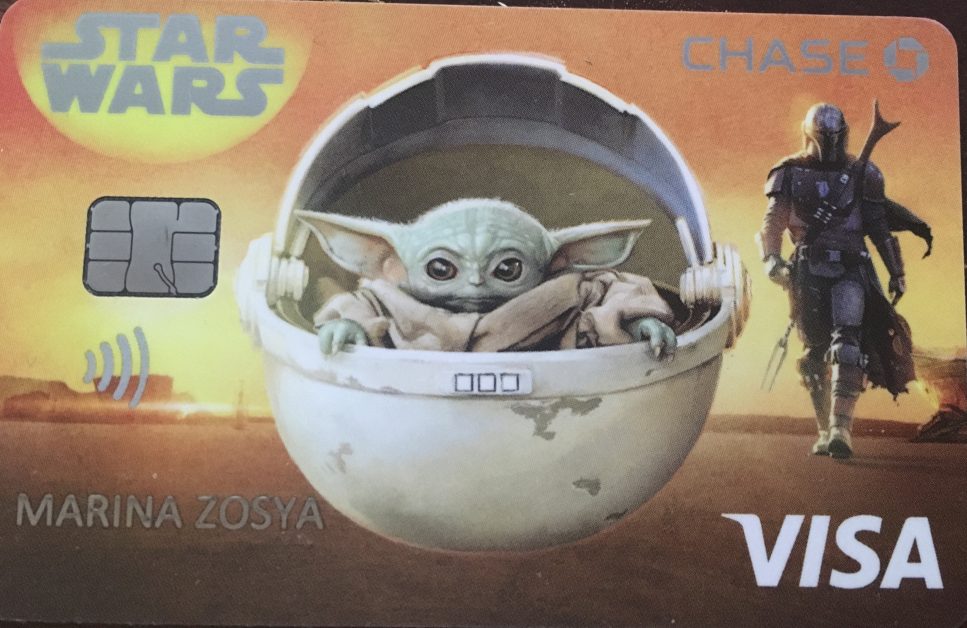
But wait! That’s not the end of it. Forward to April of 2023: I was watching the season 3 finale of The Mandalorian on Disney+ – elated by the the prevailing of all that’s good (Spoilers Alert!!! [but seriously – if you haven’t watched it by now, ten months later, it means nothing to you]): the distraction of the Darksaber and (!) Gideon, the heart-melting adoption, and the sunny adorableness of the new dwellings – when I was presented with a post-credits ad, offering to apply for Chase Disney Card. Which I would totally ignore because I didn’t really need another credit credit card, except that one of the “personalized” fronts of the possible cards you can get was that one – the one pictured above. Who can possibly resist the very idea of having a credit card with baby Yoda in his pod? I couldn’t. But it’s Chase! I don’t want to have anything to do with them anymore. Well, I can overcome that for Grogu. Do they want to have anything to do with me, though? I mean, by then nearly six years have passed since my de-banking. I’ve served my time and all that… Let the power be with me… Takes about two minutes – I was instantly approved for a $6K line. Ten days later the pleasingly adorable card was in my hands….

Two months later it stopped working… No warnings. No courtesy letters or emails. I looked it up online – it said that the account was closed. I called… Well, now you know: (A) It takes 60 days for the underwriting bank to run all of their checks and establish that, even though your credit is good, you remain undesirable to the bank for the reasons they never disclosed to you in the first place. (B) Six years is not enough time for a financial institution such as Chase to forgive you for… doing nothing wrong with respect to their operations per se, as far as I know. Once de-banked, you stay de-banked.

And, as it frequently happens with such entities, they just have to add an insult to the injury: sporadically they still send me an email informing me that “my” Disney credit card account’s statement is ready, balance zero, payment due zero… So heartless… And then a week ago, I received an envelope with Chase logo in the mail. Eight months after shutting down my Grogu account they were informing me that I was due points I managed to earn through the couple of times I did use the card. They’ve enclosed a cashier’s check for $1.65…

That did it. My heart bled for the the paper, the ink, the diesel fuel, etc. that went into production and delivery of that glob mucus into my face. And what else can I do but to write about it?