CFO Folklore: Delusional Self-Involvement of Business Owners


Bee-catAs my readers know, years ago I've made a career choice of avoiding large corporations and their tall organizational structures.  I prefer small and mid-size companies allowing opportunities of direct interactions with business owners – the very people responsible for recognizing one's efforts and allotting rewards.  It's not for sissies, of course, because in this environment you cannot hide your incompetence or laziness in a mass of indistinguishable drones – you and your work are on the spot and in full view all the time. 

Even for a highly skilled professional with a strong work ethic it's not easy to be constantly exposed to this very special breed of people - the entrepreneurial bosses, who, God bless them, unwittingly provide me with endless writing material.  I guess it will be several years into my retirement (assuming I will live that long) before the urges to highlight this or that aspect of their psychology and behavior will ceise.

It's uncanny how many common characteristics are shared by private business owners.  For example, all of them operate under the same delusion that employees care (or should care) about their companies just as much and exactly in the same way as they themselves do.  It's especially amazing to me because most of them are pretty levelheaded and highly functional people, yet they insist on this deranged assumption that doesn't fit into any rational frame of thought.

For a business owner his company is his life's endeavor, his singular purpose, his channel of expression and fulfillment, his source of pride and wealth, his outlet of personal freedom.  The owner/CEO's opinion overrides everybody else's; he is the only one with a full authority to direct the company's development in any direction (to a success or to a downfall); ultimately he holds all employment strings in his hands; he can say or do whatever he wants (within the limits of the law, of course); nobody watches his time, assesses his performance, addresses his shortcomings.

On the other hand, for an employee, no matter how dedicated, loyal, hard-working, conscientious, and highly positioned, a job is just a job – a line on a resume.  It cannot possibly be anything else, because there is no such a thing as a job security anymore, no matter where you work.  If the current employment ends, there most likely will be another one after.  Nowadays, probably shifting down, but maybe shifting up - who knows?  There must be something, or there will be oblivion.  For many of us, a job is just a source of sustenance, not the means of self-satisfaction.  And when it comes to personal freedom… I already wrote about it four years ago (Bill of Rights in Small-Business Environment ).

Clearly owners and their employees are conditioned to look at the business from different platforms.  It is preposterous to assume equal attitudes from unequal parties.  Yet, the faulty presumption persists and is manifested by various business owners quite frequently.  I'm sure many of you have experienced it first-hand. 

On the rare occasions, when opportunities to be frank present themselves, I try to explain to CEOs that their employees have their own individual life agendas: what's good for you, your business, and your pocket, Mr. Boss, is not necessarily all that important to them.  Sometimes I even draw Maslow's Hierarchy of Needs:  you see, I say, you cannot expect them to be proud of working in your wonderful growing company if they cannot make ends meet and feel overworked. 

Agh, it's no use!  Just the other week I was discussing (via email) with one of my clients, whose company made the 2013 Inc. 5000 list of the fastest growing companies in the nation, whether I should enter them into consideration this year as well.  It's my assessment that the negative outcome (everyone was complaining about the endless solicitation calls from various service companies) outweighed the pleasurable, yet hard to measure, positive impact of the resulted publicity.  He had no rebuttal to that particular argument.  Instead, he replied to me with the following:

"The ranking is something about which we can all be proud, and which thereby directly affects the morale of our staff, who both see results of their hard work translated into an accolade and have the pleasure of working for a company that has been honored.  I know I bathed in the warm glow of the company's recognition."

Of course he did!  It's his company.  He is rightfully entitled to tell about it every single person he meets.  But can you believe the gall?  They "have the pleasure…"!  Seriously?  Even the ones with $40K salaries and one-week-a-year vacations?  Uh-uh, Mr. Boss, the pleasure is all yours. 

Quote of the Week: You and Your Native Tongue


200px-Languages_of_pao"Each language is a special tool, with a particular capability.  It is more than a means of communication, it is a system of thought…  Think of a language as the contour of a watershed, stopping flow in certain directions, channeling it into others.  Language controls the mechanism of your mind.  When people speak different languages, their minds work differently and they act differently…  The question arises: does the language provoke or merely reflect…  Which came first: the language or the conduct?"

     Jack Vance, The Languages of Pao, 1958

The Frustrated CFO's comment: Maybe not the most mind-blowing science-fiction opus of mid-20s century, this short novel by the 14th Grand Master of the Science Fiction and Fantasy Writers of America is, nevertheless, full of fascinating concepts.  Those who ever wondered about the unmistakable passion of Italian, so perfect for melodramatic singing and kitchen fighting; or thought that French sounds too snooty even when spoken by hard-core street thugs, yet so sexy when whispered in one's ear; or heard dogs barking and whips lashing around people speaking German – will find the idea of controlling people through languages especially engaging.   

Quote of the Week: The Nesting Doll of Human Conglomeration


“Any collocation of persons, no matter how numerous, how scant, how even their homogeneity, how firmly they profess common doctrine, will presently reveal themselves to consist of smaller groups espousing variant versions of the common creed; and these sub-groups will manifest sub-sub-groups, and so to the final limit of the single individual, and even in this single person conflicting tendencies will express themselves.”

        Attributed to the imaginary author Adam Ostwald of a hypothetical tractate “Human Society”

Business-Lunch Scene Today: Cipriani Wall St.


R_671_main_imgFor many years Cipriani restaurant at 55 Wall St. (aka Cipriani Club 55) has been a staple location for Financial District's lunchers with company-paid expense accounts: classy, convenient, prestigious, comfortable, and moderately tasty (not enough to distract you from a business conversation, yet sufficiently to leave you and your guests satisfied).  And, of course, the drinkers can tease themselves here with famous Bellinis, that pre-war invention of Giuseppe Cipriani -  a mix of Prosecco (the Italian answer to Champagne) and peach puree; the only coral-pink drink in a flute I've ever seen straight men drink.

Being tied up in Midtown offices for years and always insistent on people coming to my turf, I have not been at this Cipriani location for a while.  Now, firmly based on Broad St., I am basically around the corner from the place.  So, it was only natural that an institutional investor picked it for a lunch meeting with me.

I arrived first and had a chance to observe the scenery for several minutes without any distractions.  So, this is what it's like here now?  For a hot second I thought I was in a wrong restaurant.  I remember the place being abuzz, full of men and a few women in Italian suits, their conversations merging into one low-volume background sound.  Now, at 1 pm (the busiest of  the lunch-time hours) the restaurant's occupancy is about 40%, which is not enough to blend the voices – you can clearly make out dialogues at different tables.

The most remarkable change, though, is in the contingent of patrons.  While all suits in attendance were of the familiar ilk (well, maybe not all of Italian make anymore – my observation is that Brooks Brothers' off-the-rack outfits, now predominately made in China, are gaining more and more ground here), there were several tables occupied by new fixtures. 

There were two (!) Russian tables.  The largest round table in the middle of the restaurant was occupied by a mixed-gender group of New Russians: Rolexes, Cartier tchotchkes, Zegna (men) and Chanel (women) suits, skirts too tight and too short, hills too high, voices too loud, full bottles of drinks on the table.  Several tables away from them, in a much quieter corner, were two Russian models: 6-feet tall with legs growing out of their armpits, long dirty-blond hair, indistinguishable faces with unnoticeable makeup, Roberto Cavalli jeans and blouses, marinated salmon and water on the table.  Well, nowadays, these people are everywhere.

It was really another couple that surprised me: A young (at least by the contemporary standards - about 38) stay-at-home Dad with his 4-year-old daughter on his lap.  Both of them were wearing high quality, expensive, but tastefully understated and casual clothes.  Except that the girl's outfit and hair were somewhat disheveled, apparently from unyielding resistance to Dad's feeding attempts (hence the lap position – to prevent spontaneous running).    

The truth is, though, I shouldn't have been surprised.  This pair was here probably for the same reason the Russian models were: most likely they live nearby, in one of many Financial District's ex-office buildings, now converted by their owners into condos to increase occupancy and profits.  They belong to the previously unimaginable in this area dog-walking crowd I try to get through every evening on my way home from the office.        

Don't get me wrong, this is not about Cipriani's shrinking revenues.  Who the fuck cares? I don't.  These people have hotels and restaurants all over the world; they've soldered through tax evasion suits and who knows what else.  Both Club 55 and Cipriani Grand Central are still prime choices for many non-profit, political, and commercial organizations hosting fundraisers and galas.  And I hear that the wedding business is going strong.

But I view all these shifts and changes, largely unnoticed by others, as evidence supporting my strong opinion that we live in a new economic stage – the one that doesn't fit into Nobel-prize-winning formulas; the one that leads rational thinkers to pessimistic predictions of the future that's coming both to Main Street and Wall Street.  Of course, we can pacify ourselves by saying that Cipriani is too outdated and stuffy; that the younger high-rollers prefer hipper places at nearby Peck Slip and other tiny waterfront streets.  But surely that alone wouldn't account for the dramatically reduced attendance in this brand-name establishment. 

A sober eye cannot help but track the obvious trend: the empty tables; the unoccupied offices; the converted buildings; the diminishing number of Italian suits on display.  It illustrates only too well a poignant number recently featured in New York Magainzine's Approval Matrix: 46% of New Yorkers are barely making more than the poverty threshold.  And it is pretty clear to me that, contrary to the popular opinion, 53.99% of the City's population don't make quite as much as they used to either.  The remaining 0.01% (not 1%, you fools!) are in a position to never get affected by any economic changes.  They can have Bellinis (and everything else) any time they want.                    

More on Nepotism (The Moviemaking)


In my earlier post The Curse of Private Business: Nepotism, I have touched on the damage this phenomenon affects on commercial enterprises and its unfairness to people who still believe in the power of merit-based rewards. It is a complicated topic, though, because when it comes to our own kids we are dedicated to their support. And we would like to believe, of course, they deserve it. It’s the undeserving support that’s problematic?

At the end, to underscore the pervasiveness of this issue I pointed the readers to the familiar territory of pop culture:

“… the industry where nepotism is the most prevalent is the one that suffers the most from lack of fresh talent is the entertainment business.”

Last week, I was told that an IMDb community’s member (Feodor8, I believe) contributed to this very topic. I only had time for a quick look and now the disucssion has been removed. Even without the original material at hand, I would like to comment on few aspects of the “article.”

I hope that the piece was deleted due to the author’s aggressive attitude, which irked me as well, and not because the topic was deemed too sensitive. The contributor didn’t need to resort to offensive tirades and bickering with the commenters.

Considering how intensely he feels about this issue, I found this movie fan’s list of Hollywood players with family connections under-researched. Let me visualize it from my memory… Talia Shire was there, but strangely her son, the adorable and talented Jason Schwartzman was not. Futher into the Coppola clan, Sophia was present, but her brother, director Roman was not. Was Nick Cage (born Coppola) there? None of the three younger Balwin brothers who followed Alec into the acting trade, were mentioned. Alexis Arquette got on the list, but her immensly talented sisters Rosanna and Patricia did not (I don’t remember whether David was there)… And I could go on and on…

Why do it at all, if you do it half-assed? This is so typical – people complain about quality, but cannot live up to their own standards. The same goes for the general public’s opinion-forming process: the prevailing tendency is just to scrape the surface without looking into the root of a problem. The “article’s” author blamed the plunging quality of the entire American cinema on people with family ties, even the talented and hard-working. That’s just superficial.

Remember, this is a CFO’s blog. Filmmaking is commercial enterprising and like any business it abides by basic economic law of supply and demand. The power is with the movie-going audience. If they did not pay their hard-earned money to see the movies feodor8 rightfully condemned, the studios wouldn’t finance them.

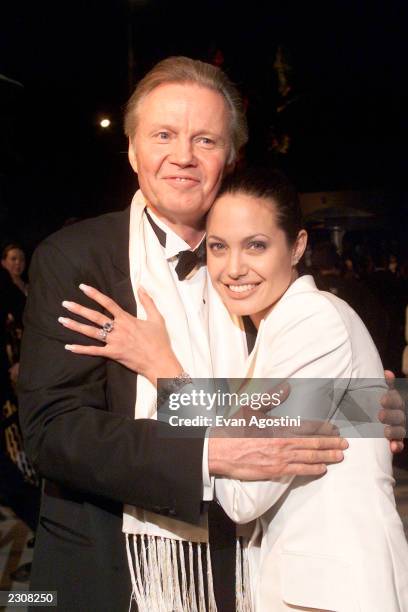
In the past 5 years Angelina Jolie (Midnight Cowboy Jon Voight’ daughter) starred in 7 feature movies. How many of them did I see? None. Yet, in the US alone they earned $440 million in the box office; all commercial successes!!! That’s the demand—and the supply follows. The quality of filmmaking is in your hands, dear audience. As long as you are willing to pay for crap, it will be made.