
WTF, Greece? Or The Luxurious Arrogance of Poverty


The funny thing is that I went to Greece precisely in the last moments of their Euro-backed temporary prosperity – in August of 2009.  By the end of that year, the Greek government had no choice but to come clean and admit that they "slightly" understated their national deficit, by like… 112%.  After that it all went down the hill and now we know where Greece really is – in deep shit.

It's a beautiful country!  Very beautiful and very proud of its history and culture, its ancient glory.  Sometimes to a fault, but that's another story.  Meanwhile, in this one I must say that, while our own Greek experience was nothing short of fantastic, we just knew that the shit will hit the fan pretty soon.  There were signs, both metaphorical and tangible.   

Towards the end of our trip, massive wildfires broke out in several areas.  On the morning of our drive to the Athens International Airport for the flight home, the vile smell of the scorched earth was already clinging to everything in the capital and its suburbs.  It felt as if we were escaping a cinematic doom, with the burning forests chasing us away.  Greeks and their theatrics! 

My fiscally attuned mind picked on far less dramatic, more subtle hints.  Small, but significant things; especially peculiar for a country that has an official status of "developed" and boasts "a high-income economy, a high quality of life, and a very high standard of living."

For example, practically every person we've met there had relatives in the US; and not second or third generation immigrants, but people who left in a past decade or so.  Since Greece has been a stable democracy for at least 35 years and it is pretty homogeneous racially, these people are obviously not political refugees.  Like for the majority of immigrants, their underlying reason for leaving the homeland is economic.

Also, there were scores people in their 50s and 60s who have already retired.  That actually could've been considered a sign of wealth, indicating significant personal savings.  Except that was not the case – all these people were relying on substantial government pensions.  Speaking of wealth, quite a few of more or less prosperous Greeks have businesses locally but reside in the US, Canada, Australia, and Germany, pulling substantial chunks of their capital out of their home country (Greece readily allows dual citizenship). 

The brand new (opened only two months before our arrival) Acropolis Museum, standing right next to the undergoing massive restorations Parthenon, simply blew my mind.  It is extraordinarily impressive!  With data from several sources I was able to estimate that,  between the museum and the archeological site, their owner, the Ministry of Culture, had spent $320 million (at the Euro/USD conversion rate of the time).  I wondered how a country of 11 million people with 2008 GDP smaller than Exxon Mobil's annual revenues could possibly afford such undertaking!  Well, it couldn't - the Greek government dipped into Eurozone lending pool to finance these projects.  And that brings us to the current stalemate.    

God!  There are so many economic, political, and social reviews out there on the subject of the Greek disaster, it would be just a waste of time to try to stick another two cents into the cacophony of bullshit prediction and "analytical" speculations.  Moreover, most commentators seem to be focused on the problem I've noticed back in 2009 and already pointed out above – the youngish pensioners.  So, what else there is to say?  Yet, I know a thing or two about countries that de facto belong to the third-world realm, but delude themselves into believing that they are big international players!  Hence, I may offer some additional insights. 

You see, average citizens don't get ideas of grandeur and prosperity out of thin air.  Every Emerald City has its own Wizard of Oz.  And those are always people of power with national (and international) reach; invariably they are all liars. 

With some nations (e.g. Russia) it's enough to bluntly smack green glasses of absolutely empty, never-ever fulfilled promises straight onto the noses of the countrymen and they will believe that they are surrounded by jewels.  In other countries, like Greece, the illusions must be more finessed – you actually have to give something tangible to people to make them believe that their lives can be no different than, let's say, in the Netherlands, or Sweden.  

As I said, it gets tricky:  In Scandinavian countries, citizens themselves are charged with an obligation to fund their state benefits through heavy income taxes.  But Greek politicians who rode to power on social programs have no resources like that – there is not enough domestic income to tax.  The national wealth is not real, it's just pretend.  What to do then?  Not to worry – it's all thought through: If your country is a Eurozone member, you have a shortcut – you can qualify for member loans (Acropolis, pensions, welfare – everything from the same Euro pot). 

The Prestige of this magic trick is this: in order to qualify the Greek government lied to everyone internally and externally – they falsified data, facts, statements and whatnot, obscuring the fact that the national wealth is not really there.  And no matter what people who benefited from thusly financed cushy social programs think, these opportunists had only their own personal interests and political aspirations in mind.

Of course now it is difficult to take any benefits away!  Greeks don't want to give them up.  Oh the luxurious arrogance of the poor!  They want to keep all their benefits and their pride intact at the same time – get their debts forgiven, receive more money.  They feel entitled! They are one of the oldest members of the Eurozone!  If their European comrades want to keep the Union intact, they will bite their tongues and save their Greek brother, no matter what!  Plus, no terms and conditions! 

This attitude manifested itself on 07/05, when 60% of the country voted in support of saying "No" to the bailout package that was on the table at the time.  The CNN Breaking News I've received that day said that Prime Minister Alexis Tsipras hoped that

"this will force Europe to hand over more money with less austerity attached, and cancel some of Greece's enormous debt."

For a hot second there it seemed that pride will become the top priority; that they'd rather starve standing up then eat kneeling.  Greeks were celebrating in the streets of Athens.  Where is all that pride coming from amidst all the lying and data falsification?  And who can afford to be proud when your national economy is in a state commonly known as a "free fall" and your banking system is in a virtual shut down due to empty vaults?  I don't know.   

But then, only four days later, they retracted and accepted the original offer:  zero old debt forgiveness; the bailout in the conventional form of loans; compulsory pension cuts and tax increases to make sure that the Greek government can serve this new debt and the old debt, i.e. pay interest to the lending Euro-brothers.  And now Mr. Tsipras says "YES, PLEASE" and is willing to battle his own MPs to ratify the requirements into laws! 

Doesn't it all sound like some sort of a kindergarten (aka political) game of delusional children?  But hold up!  The conditional bailout is not a guarantee.  Will Greece pass all those mandatory economic reforms as laws?  Will the PM be able to pull through?  The 6 million Spartans may still have a chance to keep their grand stance instead.         

The unspoken truth is – if that what happens tomorrow, it will be the best possible outcome for the European Union.  I mean, none of the members can really afford this bailout (Remember? France wants to sell Mona Lisa to cover exactly 0.1% of its own national debt).  It would be a much better fiscal option for other countries to let Greece follow that Exit sign straight out of the Eurozone.  
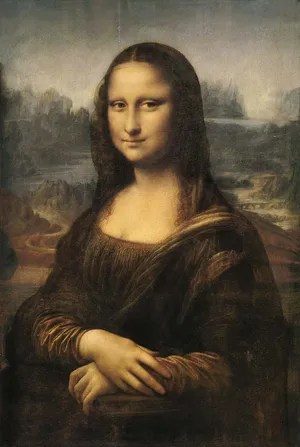
Economic Newsflash: You May Never Have a Chance to See the Mona Lisa Again


Old_695So, apparently France got themselves into a $2.6 trillion debt hole.  This translates into $42,623 of national obligations per each of 66 million French têtes.  Of course, the number is staggering.  However, I feel obligated to state that this is not as bad as what we have here, in our own beloved country with our very own $17.8 trillion burden pressing hard on 319 million of us with a weight of $55,684 per capita.

Still, someone just asked me the other day, how the hell France got itself so fucked.  It's not like the country pays $42 billion into IMF every year; or covers 22% of the UN budget; or sticks its nose into every hot spot in the world, bankrolling military and whatever-else aid campaigns.  And it definitely doesn't spend billions on artificially fueling the US stock market, even though if it crumbles the economies world-wide, including the French,  will be doomed.  It's our government that borrows funds for all that. 

I'm no expert on French economy and I'm not about to embark on researching their problems in detail (God knows, I have more pressing things to do).  However, basic knowledge of European affairs is sufficient for a logical person to form some general ideas. 

This is what happens with the formerly wealthy, but already shaky (who isn't now?), national economies when they decide to build an opposition to USA by combining as many European countries as they can into some utopian economic union: they start breaking their financial backs by carrying on their shoulders weaker (like, ahem… Greece) nations.  And, of course, the state needs resources to support domestic  industries (solely in the name of protectionism).  Add to that immigration policies driven by "special interests," which result in a population seriously skewed toward multi-children families with idle heads of households, who don't pay taxes but draw extensively on social programs.  And why not?  The majority of French population don't want to work too hard anyway: shorter hours, exuberantly long vacations, early retirement (at 60!).  And again, why not when there is the Mandatory State Pension Provision in place?    

What the poor France to do?  Well, the French government came up with this brilliant idea: They are going to sell national treasures, starting with… Da Vinci's Mona Lisa (!), which, thanks to king Francis I, has been in France's possession since Leonardo's death, i.e. nearly 500 years. 

Don't tell me that this doesn't sound like the end of the world:  Through ages of political rioting and religious massacres, twenty three wars, three full-blown revolutions, multiple colonial rebellions, and Nazi occupation France managed to hold on to Mona Lisa.  It's the perverted foreign policies and socialistic interior governing of our foolish times that led to the total socio-economic bankruptcy of the formerly powerful country.

You and I may think that La Gioconda is priceless, but the French have already assessed its market price, i.e. how much money someone may be willing to shed for it.  During the 60s the best guess of the art-dealing community was around $100 million.  Now, 50 years later, the time-adjusted equivalent of that sum is $2.6 billion.  Never mind that this would cover only 0.1% of the debt in question.  As they used to say in pre-Euro France, every centime counts.

One can't help but marvel at the utter stupidity and nearsightedness of the government that can entertain the idea of  eliminating one of the main reasons for the international tourism to the infamously snooty, unreasonably expensive, and ethnically unstable City of Lights (the Louvre is still #1 visited museum in the world).  Can these people see anything beyond their service terms?  I can clearly visualize the snowball of layoffs and business closures, which will unavoidably lead to the further drain on the state's treasury.  But those are French problems.  So, fuck them!

What the rest of the world, especially those of us who care for the arts, should be concerned about is the distinct possibility that we may never ever have a chance to stand in front of the Mona Lisa and attempt to absorb (it's really not that easy in the room full of tourists holding up their video and photo devices) Da Vinci's masterpiece in person.  And this is especially heart-breaking because it is one of only 23 surviving major works that are either universally or generally attributed to Leonardo.

It's dreamy to imagine one of the world's major museums trying to acquire the painting.  However, it is unlikely that any such institution will be able to come up with a $2.6 billion check.  The third-ranked museum in the world, The Metropolitan Museum of Art, is America's richest cultural institution with $2.7 - $3 billion annual endowment.  However, the $300 million operating budget and constant structural updates apparently eat away the majority of the funds – during the fiscal year of 2012 the Met spent only $39 million on new acquisitions.  Of course, there is an aggressive deaccessioning, which allows the museum to sell off "minor" pieces in pursuit of the "major works,"  but even with an average of $1 million per item, the institution will need to liquidate 2600 (!) works to collect the required amount.  Highly doubtful!

So, if the transaction does materialize, it most likely will be funded by private wealth.  You can pack a large ballroom with people from different corners of the world whose wealth amounts to multiples of the asking price.  For the sake of my personal amusement we can entertain another beautiful fantasy:  How grand would it be if one of our openly super-rich individuals with strong philanthropic inclinations shelled out a chunk of his wealth for La Gioconda and then gave it away to the Met, so that the grateful general public could continue enjoying it (only now in my own backyard)!     

It would take only 4.4% of Warren Buffett's worth or 3.2% of Bill Gates's.   But both of them are too preoccupied with keeping the world healthy and the US technologically comfortable (don't ask me why) to bother with art gifts like that.  And by the way, the Codex Leicester, the most famous of Da Vinci's scientific journals, which Gates bought in 1994 for $31 million, is kept in the MS mogul's own private vault.  It is considered a great generosity that the Codex is let for display once a year in different cities around the world.  Yes, it is hard to imagine that anyone would give away the Mona Lisa as a gift to an institution or a nation.

The way I see it, the buyer will probably be someone whose immeasurable wealth you can't find on some Forbes list, because it is not valued in the ephemeral public-stock prices.  This multi-billionaire is someone who keeps a low profile and his name would mean nothing to the majority of the world even if he walked into the Louvre in person.  But such an individual will transact through multiple proxies, and when all is done the Mona Lisa will disappear from the public eye into a secret stronghold.  We will be left with reproductions and copies, while a handful of people will enjoy the privilege of up-close peering into the delicate strokes of oil paints applied by the genius's hand to a piece of poplar wood. 

Global Economics Newsflash: You May Never Have a Chance to See the Mona Lisa Again


So, apparently France got themselves into a $2.6 trillion debt hole.  This translates into $42,623 of national obligations per each of 66 million French têtes.  Of course, the number is staggering.  However, I feel obligated to state that this is not as bad as what we have here, in our own beloved country with our very own $17.8 trillion burden pressing hard on 319 million of us with a weight of $55,684 per capita.

Still, someone just asked me the other day, how the hell France got itself so fucked.  It’s not like the country pays $42 billion into IMF every year; or covers 22% of the UN budget; or sticks its nose into every hot spot in the world, bankrolling military and whatever-else aid campaigns.  And it definitely doesn’t spend billions on artificially fueling the US stock market, even though if it crumbles the economies world-wide, including the French,  will be doomed.  It’s our government that borrows funds for all that. 

I’m no expert on French economy and I’m not about to embark on researching their problems in detail (God knows, I have more pressing things to do).  However, basic knowledge of European affairs is sufficient for a logical person to form some general ideas. 

This is what happens with the formerly wealthy, but already shaky (who isn’t now?), national economies when they decide to build an opposition to USA by combining as many European countries as they can into some utopian economic union: they start breaking their financial backs by carrying on their shoulders weaker (like, ahem… Greece) nations.  And, of course, the state needs resources to support domestic  industries (solely in the name of protectionism).  Add to that immigration policies driven by “special interests,” which result in a population seriously skewed toward multi-children families with idle heads of households, who don’t pay taxes but draw extensively on social programs.  And why not?  The majority of French population don’t want to work too hard anyway: shorter hours, exuberantly long vacations, early retirement (at 60!).  And again, why not when there is the Mandatory State Pension Provision in place?    

What the poor France to do?  Well, the French government came up with this brilliant idea: They are going to sell national treasures, starting with… Da Vinci’s Mona Lisa (!), which, thanks to king Francis I, has been in France’s possession since Leonardo’s death, i.e. nearly 500 years. 

Don’t tell me that this doesn’t sound like the end of the world:  Through ages of political rioting and religious massacres, twenty three wars, three full-blown revolutions, multiple colonial rebellions, and Nazi occupation France managed to hold on to Mona Lisa.  It’s the perverted foreign policies and socialistic interior governing of our foolish times that led to the total socio-economic bankruptcy of the formerly powerful country.

You and I may think that La Gioconda is priceless, but the French have already assessed its market price, i.e. how much money someone may be willing to shed for it.  During the 60s the best guess of the art-dealing community was around $100 million.  Now, 50 years later, the time-adjusted equivalent of that sum is $2.6 billion.  Never mind that this would cover only 0.1% of the debt in question.  As they used to say in pre-Euro France, every centime counts.

One can’t help but marvel at the utter stupidity and nearsightedness of the government that can entertain the idea of  eliminating one of the main reasons for the international tourism to the infamously snooty, unreasonably expensive, and ethnically unstable City of Lights (the Louvre is still #1 visited museum in the world).  Can these people see anything beyond their service terms?  I can clearly visualize the snowball of layoffs and business closures, which will unavoidably lead to the further drain on the state’s treasury.  But those are French problems.  So, fuck them!

What the rest of the world, especially those of us who care for the arts, should be concerned about is the distinct possibility that we may never ever have a chance to stand in front of the Mona Lisa and attempt to absorb (it’s really not that easy in the room full of tourists holding up their video and photo devices) Da Vinci’s masterpiece in person.  And this is especially heart-breaking because it is one of only 23 surviving major works that are either universally or generally attributed to Leonardo.

It’s dreamy to imagine one of the world’s major museums trying to acquire the painting.  However, it is unlikely that any such institution will be able to come up with a $2.6 billion check.  The third-ranked museum in the world, The Metropolitan Museum of Art, is America’s richest cultural institution with $2.7 – $3 billion annual endowment.  However, the $300 million operating budget and constant structural updates apparently eat away the majority of the funds – during the fiscal year of 2012 the Met spent only $39 million on new acquisitions.  Of course, there is an aggressive deaccessioning, which allows the museum to sell off “minor” pieces in pursuit of the “major works,”  but even with an average of $1 million per item, the institution will need to liquidate 2600 (!) works to collect the required amount.  Highly doubtful!

So, if the transaction does materialize, it most likely will be funded by private wealth.  You can pack a large ballroom with people from different corners of the world whose wealth amounts to multiples of the asking price.  For the sake of my personal amusement we can entertain another beautiful fantasy:  How grand would it be if one of our openly super-rich individuals with strong philanthropic inclinations shelled out a chunk of his wealth for La Gioconda and then gave it away to the Met, so that the grateful general public could continue enjoying it (only now in my own backyard)!     

It would take only 4.4% of Warren Buffett’s worth or 3.2% of Bill Gates’s.   But both of them are too preoccupied with keeping the world healthy and the US technologically comfortable (don’t ask me why) to bother with art gifts like that.  And by the way, the Codex Leicester, the most famous of Da Vinci’s scientific journals, which Gates bought in 1994 for $31 million, is kept in the MS mogul’s own private vault.  It is considered a great generosity that the Codex is let for display once a year in different cities around the world.  Yes, it is hard to imagine that anyone would give away the Mona Lisa as a gift to an institution or a nation.

The way I see it, the buyer will probably be someone whose immeasurable wealth you can’t find on some Forbes list, because it is not valued in the ephemeral public-stock prices.  This multi-billionaire is someone who keeps a low profile and his name would mean nothing to the majority of the world even if he walked into the Louvre in person.  But such an individual will transact through multiple proxies, and when all is done the Mona Lisa will disappear from the public eye into a secret stronghold.  We will be left with reproductions and copies, while a handful of people will enjoy the privilege of up-close peering into the delicate strokes of oil paints applied by the genius’s hand to a piece of poplar wood. 

Economic Reflections of a Traveling CFO


It's one thing to sit in front of a computer screen and intellectualize about the irreversible deterioration of financial and social climates and the necessity for people to face the truth about the new economic reality.  It's a completely different thing to get your ass off the chair, pack your bags with some walking and hiking footwear, go away from your stomping grounds, and observe downhill changes in distant places.  Even without an elaborate analysis of economic indices you can pick up a lot of signals along the way.

It wasn't intentional (after all, the primary purpose of my traveling was leisure), but the states I visited represented an interesting mix: Washington, the state with the second highest average income of $41.5K; Oregon – the sixth lowest with $30.3K; and California – the fourth lowest with $29.8K (all the wealth of Silicon Valley moguls, Napa Valley nabobs, and Malibu celebrities cannot outweigh the endless number of unemployed and barely employed aspiring creative types).  It's like I journeyed down the geographical and fiscal routes.  A year ago I stopped in most of the same places, so it was unavoidable for my mind to register the most apparent changes. 

Seattle is a very special city.  Last year I summarized my impressions of it as calm and cool.  It has this aura of serenity about it. Yet, the place gave birth to Grunge (aka Seattle sound) – that's like fucking awesome, man.  The city's most prominent artist is the master of chilled glass flow – world-renown Dale Chihully.  Even local famous graves are the coolest: Jimi Hendrix and Bruce Lee.  It's not Bangkok (#1 travel destination this year), but there are plenty of tourists here, especially in and around the iconic Pike Place market and the Space Needle.  Many of these people are about to board cruise liners and explore the even crisper climates of Alaska.

The business person in me associates Seattle with, what I call, Zen entrepreneurship: they start small, but with great aspirations.  Some succeed in building long-lasting local fixtures, reassuringly there for you every time you come – like Jack's Fish Spot that has been serving the best crab in the world at Pike Place Market for over 30 years.  Others go on to materialize their national and international ambitions: The metropolitan Seattle is birthplace and still home to the headquarters of Nordstrom, Starbucks, Sur La Table, COSTCO, Amazon, Expedia, and Blue Nile among others. 

All that happened in the relatively recent past.  Now, the enterprising endeavors here are marked by a greater than ever sense of risk and uncertainty, and the new businesses mostly struggle to stay afloat as long as they can. 

Thanks to a recommendation from a local insider, I ventured into Ballard (Seattle's Williamsburg) with the specific purpose of visiting a cutting-edge, connoisseur-targeted Slate Coffee Roasters run by Chelsea Walker, who shares the company's ownership with her brother and mother.  (Her entrepreneurship and business model deserve a dedicated post , which will be coming soon.)  Chelsea served us her signature Deconstructed Espresso and chocolate-covered orange slices, which were beyond outstanding – they were a revelation.  And it is sad that I was urged to go to Slate "like right now," because "it will not necessarily be here next time around."  And I'm not all that surprised that the business is hurting: The best advertising for the quality of their roasts is right there, in a cup prepared by an expert barista.  However, you can only go this far on word of mouth (even if it's powered by Yelp), and the location is way out of the main thoroughfares, in a residential area that doesn't look affluent at all.   

To tell you the truth, this time around the whole city looked to me less appealing, more haggard.  Even Pike Place market didn't feel too bustling – with fewer vendors and significantly reduced numbers of transactions.  Climbing onto Capitol Hill on Friday (!), you experience an eerie sensation of emptiness: there are barely any people around and most establishments, including the small art galleries, are open only for a few hours a day; so, in the early afternoon, they are either already closed or not yet open.  And walking only a few blocks up from the posh corner of Pine St. & 6th Ave. towards Broadway, I'm sorry to say, is an experience that evokes the documentary footage of Trenton, NJ.  It's just heartbreaking. 

I can't believe I'm saying this, but there is no doubt in my mind that, while Stephenie Meyer single-handedly destroyed the already low aesthetic values of at least two young generations, the movies based on her Twilight series are most definitely responsible for the economic well-being of the upper regions of the Olympic Peninsula.  Port Angeles, Forks, La Push, and the magical rainforests of the area are busy with fans trying to relive Bella-Edward-Jacob "thrills" and the genuine nature-lovers who have to see for themselves that this national treasure is for real and not CGI'ed by the filmmakers (it is real!): So, the ferries are packed, the inns are booked, RV parks are full, the backpackers are checking into the campgrounds, cyclists are devouring Thriftway's garlic bread, espressos are flowing, and by 8 pm the Mexican eatery with a pinned above the register photo of Robert Pattison embracing the staff is out of all proteins.  Good for them!  Since the monster has been unleashed from the cultural hell anyway, I hope local small-business owners milk this cash cow as long as they can.

You head 200 miles further down the coast to Cannon Beach, OR (via never prosperous Aberdeen, WA) and the picture changes completely.  Even its reputation as one of the most beautiful beaches in the world, the famous sand-castle competition, and the high popularity with the movie-location scouts are not able to create sufficient pull to attract more tourists – the place's sole source of revenues.  There are simply less people who can afford to travel now, and those who can, would rather go to more buzz-worthy places.  While the efforts of Cannon Beach's Chamber of Commerce to bar big-name hotels, stores, and restaurants out of the area do protect local businesses from the hard-core competition, nothing can be done about the evaporating bank balances.  And the chain reaction is unavoidable: In the absence of sufficient revenues, the hospitality proprietors  start cutting corners and provide the still-paying guests with shabbier living spaces and lower quality food, thus drastically reducing the plausibility of customer retention.  I was glad our plans called just for an overnight stay there.   

To my sensibilities, Portland, OR is a paradox.  In comparison, let's say, to Seattle, it's simultaneously simpler and more pretentious.  On one hand, there are no passing-through cruises or world-famous attraction icons and, therefore, less touristy hustle.  (Even though, the hotel I stayed in, the famous Heathman with its library of over 2000 autographed books, is definitely getting a fresh influx of new tourists, thanks to another set of the literally trash soon to crawl onto the silver screen, Fifty Shades of Grey – what with the book's multiple seedy scenes actually taking place in one of this wonderful (truly!) establishment's suites.)  On the other hand, Portland has an unmistakable independent spirit and everything that comes with it – both good and bad. 

The city counts the bona fide indie filmmaker Gus Van Sant and the late indie-rock singer-songwriter Elliott Smith among its local celebrities, even though neither was born here.  The enterprising here is more of a boutique nature as well: there are definitely less Starbucks per capita than in other prominent cities, but you can find a small coffee shop practically everywhere you turn. 

There are plenty of tiny start-ups here, including chic eateries, and, of course, they are struggling.  One of the ways the survival efforts manifest themselves here is the "open to close" trend, which for someone from the city that never sleeps and has famous restaurants open until 2 am seemed novel and strange. (And fucking annoying, since we actually had to turn away from closed doors of establishments that were supposed to be open according to their posted hours of operation).  At the same time, I have to admit that it does save a chunk of money if you shut down an empty store or a restaurant – turning off the equipment, making all employees clock out, etc.  It's possible that we saw the future there.

Unfortunately, the flip side of the indie culture is the profusion of hipsters.  Fred Armisen can continue telling everyone that Portlandia could've been placed anywhere, but I'm not convinced – it couldn't, not even in Brooklyn.  The hipster details are too specifically Portland, including the lightless intersections conundrum.

Uninitiated people associate the hipster phenomenon with a certain level of affluence.  And in a lot of cases that's correct.  But it's also a good cover up for border-line destitute situations.  The difference is not easy to recognize, though.  You may pass two people on the street looking exactly the same to an untrained eye: skinny jeans, boots, checkered shirt, green or brown hoody, cross-body messenger bag, glasses, long scarf, carefully disordered hair – you know what I'm talking about.  It takes the knowledgeable eye of a fashion devotee to distinguish an $800 Japanese hoodie from a $60 Urban Outfitters' one, or a $10 Kohl's bargain.  

Here, in Portland, the balance between hipsters with steady income and those who have lost their jobs and rentals a while ago seems to be tipping towards a larger percentage of impoverished individuals.  They feed the increasing contingent of pervasive drunks and bums, which are a big problem and the primary concern of the local law enforcement.  It is obvious to the naked eye that in one year the situation got worse - now they are everywhere.

Eureka, CA is a small town (population 27K) with its one side overlooking the ocean and the other side bordering Humboldt State Park, the home of the Pacific Northwest Redwood giants.  It has campuses of two higher education institutions – College of the Redwoods and Humboldt State University, whose professors and students contribute into the consumer pool.  However, the main attraction here is the proximity to the Trees and, just like in Cannon Beach, Eureka's economy relies on tourism.  And, just like in Cannon Beach, it doesn't look too good.  

The town's only member of the Select Registry of North American Distinguished Inns, Carter House Inn has been considered a premium B&B for almost 30 years, and last year we found our accommodations here pleasantly quaint.  I remember the place was practically full and even at 11 pm (late by the local standards) the lobby was busy with guests partaking in complementary tea-and-cookies service. 

This year, our arrival coincided with a police drug bust: At the entrance, I literally had to give way to four cops in rubber gloves removing a resisting female junkie from the premises.  As bizarre as that scene was, I don't think anybody can blame the inn's severe underbooking on it.  It seemed eerily empty.  Again, signs of the funds' shortage could be clearly seen: There is obviously not enough money even to clean, let alone repair or replace, the soiled or chipped furniture and fixtures.  And now, all chamber-maid staff is let off before 2 pm.  So, if you linger in your room in the morning trying to clear your backlog of emails, there will be no housekeeping for you.

Of course, no economic troubles can stop people from coming to the Redwoods for a glimpse at what Earth should've looked like, but the preferences presently lie with camping and RV-renting rather than with $300 a night inns that don't live up to their rates.  

If I could avoid going to San Francisco I would, but it was the easiest route for my return trip.  Traveling through that city is like visiting a third-world country, or going back in time to the area's gold-rush origins.  We talk a lot about the national phenomenon of a disappearing middle class, but out there it had vanished some time ago: There is a handful of incredibly rich high-tech tycoons, and everyone else is barely getting by, or worse – San Francisco has the second-highest concentration of homeless people per capita in the country (first place belongs to Los Angeles). 

At this point, the monetary disparity has started taking its toll on the city's social atmosphere.  I don't like geographical generalizations: for instance, not everyone in New York is pushy.  And my experience shows that everywhere you go in the world, the local population represents your regular bag of mixed nuts: assholes, bullies, helpful individuals, etc.  But in San Francisco, it seems like most people, regardless of their personalities, are covered by some sheen of general nastiness.

And that, my friends, is pure social science: Sour economies always result in the deterioration of social values, civil discord, harder policing, and so on, and so forth.  We live in a very large country and things develop at different rates depending on the specific area.  But eventually the downturn will catch up with the 99.9% everywhere.