It’s not an easy undertaking to make me laugh nowadays. Most of the time I’m just FINE (as in Frustrated [duh!], Insecure, Nervous, and Exhausted); the rest of the time I am severely distraught… And, of course, I meditate and do my best to cheer the fuck up… The vast music library helps; so does the good literature, quality entertainment… But, laughing – that’s rare, very rare… Except for the news – some news snippets make me burst out laughing! And incidentally this particular hilarious bit also had to do with Entertainment… Or rather the business of it.
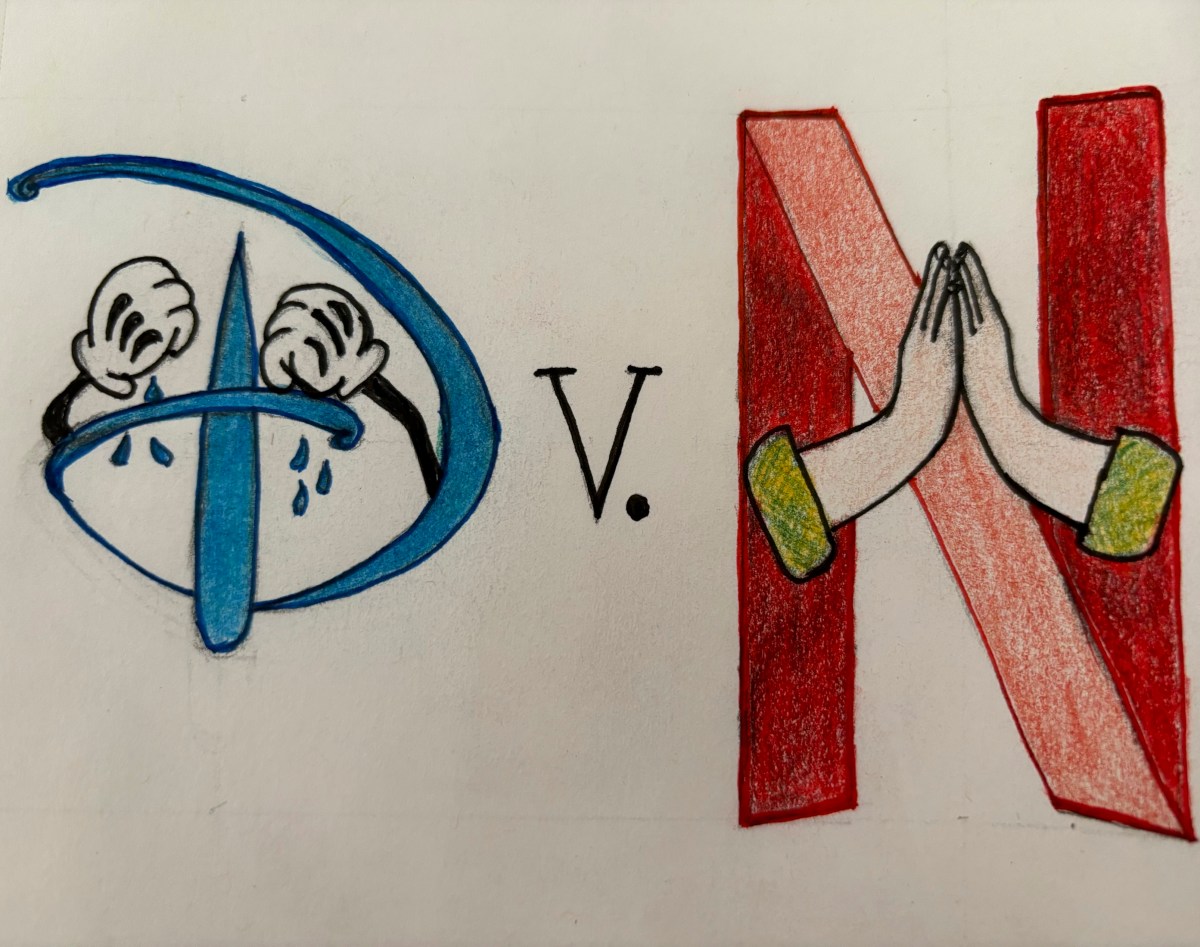
You see, Disney is in trouble… I don’t need to regurgitate to you the whole stock-market mumbo-jumbo everyone else and their mothers write about, primarily focusing on the share prices, which are now below the level they were 10 years ago. Because the bottom line is fairly simple: The original Walt Disney Pictures isn’t pumping out winners annually as they used to do. All those astronomical investments into hoarding the big-name franchises like Stars Wars (Lucasfilm) and Marvel – in spite of the high profits per hit, don’t really turn themselves into returns fast enough… And – most painfully in terms of the contemporary state of the entertainment marketing – the streaming arm Disney+ is not profitable at all.
Or, as I prefer to define it: Netflix it ain’t.
What to do? What to do? In a typical far-removed-from-reality only-in-corporate-boardrooms turn of events, the self-proclaimed “activist” investor billionaire Nelson Peltz (who started his “business-building” career – and this is very important – by inheriting his grandfather wholesale food company and then turning himself into a prominent private-equity mogul by buying and selling such fully-fledged companies as Snapple and Quaker Oats) challenged Disney’s BOD to commence the corrective actions by dismissing the company’s current CEO Bob (Why Bob, god dammit?! The man is 71! Time to grow up into your full name!) Iger (not a businessman at all – a career media executive, aka glorified mountain-top administrator with an outrageous compensation package of nearly $30 mil per year). In his haste for coup d’état, Peltz forgot to do his homework – he came into the fight empty-handed: no constructive plan, no corrective suggestions, no panoramic view of Disney’s new and improved future… Just the hope that, without Iger in the picture and with him on the board, things will get better… How? By Disney Magic? (If you didn’t hear: Peltz’s coup failed and Iger is still up there – on Disney’s very top, I mean).
You get why this is so funny to me, don’t you?
The very idea of two people with no entrepreneurial experience in their respective portfolios fighting over who’s better fit to shake up the conglomerated mastodon (in case you forgot your primary-school lessons: mastodons were prehistoric, extinct cousins of the contemporary elephants – very large creatures) and expediently reshape it into an agile operational gazelle able to conquer the most difficult, most contemporary, most innovative trails – it seems inconceivable to me. Moreover, it’s so desperately naive to believe (assuming, of course, that anyone actually believes it) that changing one (or ten! or all!) person sitting on the head of the mastodon – very far away from its vital organs and moving limbs – would trigger the company’s rejuvenation.
Do you think that the OG business-builders Walt and Roy Disney, if faced with a similar situation, would be concerning themselves with the BOD changes? I don’t think so. They would dig deep into the causes of the business’s slowdown, think outside of all boxes, and try to come up with absolutely new, never-explored-before solutions. Because they were the trailblazers and truly good fathers to their corporate child. The current executive foster parents, on the other hand, are the worst: all they do is measure their child’s failures against their peers’ successes.
You see, aspiring to someone else’s model that happens to work for them for the time being is nothing but a short-term bandaid. The key is in the entrepreneurial intuition, the managerial flexibility and the structural mobility; the integral ability to adapt, to change fast – with every single shift of the market demand and technological leap. And can we expect that from a giant who cannot be anything but rigid and slow simply because its too large for its own good? Pure fantasy, of course (who’s going to stop me, though? it’s my blog!), but the best thing for Disney’s Jenga-tower now would be to disassemble into individual blocks and let them operate as separate business units, without the burden of the astronomical executive packages. Let them compete within their own enterprising markets, against their specific peers – not against the fickle stock-market trends. I wonder what would happen then?
And since commentators keep bringing it up as a benchmark, let me note this: Netflix Inc., God bless them – in spite of their global presence, publicly trading stock, and nineteen subsidiaries – is still a very much agile, 27-year-old (the most beautiful age) baby. With one of its shrewd co-founders still serving as an Executive Chairman of the board.
I was a member of Blockbuster when my then pre-teen daughter first told me about Netflix DVD subscription. On my way to work I would drop the red envelopes into the mailbox and get the new ones shipped to us as soon as they were scanned into the USPS system at our local P.O. By the standards of those times: extraordinary expediency and incomparable efficiency of the entertainment-delivery operations. And that is still their main focus. Now, by means of what David Foster Wallace predicted (a few years before Netflix DVD was born, actually) would be the main form of delivering content into people’s screens – the dissemination into “teleputers” as he defined it, which we now known as streaming. In between, all of their transitions, developments, enhancements, and additions have been seamless precisely because they keep to their core, pursuing their mission.
And I hope they continue being spry, fluid, and easy to adapt. To whatever the future brings. I don’t know about the rest of you, but I owe them so much! No, for real, I have no clue how I would manage without them…