
BOI Reporting: Wellcome, Big Brother?


If you are a business owner and/or executive and you’ve used an online processor, like LegalZoom, to set up your corporate affairs; or outsource some of your in-house functions to a large service provider, like Paychex, for instance; or employ a fairly sizable CPA company to audit your books – it is most likely that these business partners of yours have notified you at some point last year that you are a subject to the new type of government reporting – the Beneficial Ownership Information (BOI), due for submission to Financial Crime Enforcement (FinCEN) bureau of the US Department of Treasury. 

The rest of the business owners – those without an exposure to large business and/or professional networks – especially the ones running those small, private, neighborhood companies we supposed to cherish as a backbone of the American economy…  Well, I don’t really know how they are meant to find out about this new reporting obligation. FinCEN promised to roll-out a whole awareness campaign with YouTube videos and stuff – but I personally haven’t seen anything like that being pushed at me. Maybe if you search for it, you’ll find something… But how would you know to look in the first place?

I personally discovered it via LegalZoom’s notification sent to an entrepreneur whose books I help to keep. She casually mentioned it to me – I somehow sensed it seriousness and looked into it. Mainly for the sake of the small business owners around me, but also out of the feeling of foreboding this bit of information gave me.

It turned out that FinCEN was formed in 1990 (Wow! The things that fly over our heads! Even if we are somewhat politically alert.) under the parentage of the Office of Terrorism and Financial Intelligence with an official purpose

“to combat domestic and international money laundering, terrorism financing, and other financial crimes”.

Naturally, it is a perfect agency to oversee the specific measures that have been formulated under the Corporate Transparency Act (CTA) signed into power by Congress in 2021 – the federal law pushed through under the banner of

“the government’s efforts to make it harder for bad actors to hide or benefit from their ill-gotten gains through shell companies or other opaque ownership structures.”

                                                      fincen.gov, January 29th, 2024

(Again! What ordinary citizen paid attention to that piece of shocking legal maneuvering?!)

One such measure, formulated in March of 2023, is the BOI reporting. I don’t want bore my readers with every single rule and detail pertaining to this new corporate reporting duty. Just bear with me for a few important highlights I’m providing for those who didn’t dive into this issue yet. 

A Beneficial Owner is a person who directly or indirectly exercises substantial control over the reporting company or owns at least 25% of its interests. Now, all senior officers – specifically: President, CFO, General Counsel, CEO, and COO; anyone with an ability to appoint or remove officers or a majority of directors; anyone who is an “important decision-maker”; and anyone (listen to this catchall) who has “any other form of substantial control” are qualified as Beneficial Owners and must be reported as such to FinCEN.

There is an interesting caveat: if a person is not a senior officer, but, nevertheless, exercises significant control over the reporting company through her employment there, that person doesn’t need to be reported. I’m thinking: high-power controllers who value their privacy higher than the status, or simply don’t want to expose their personal info for open access, should stop vying for CFO positions (assuming, of course, the pay is satisfactory). 

Any and all corporations, LLCs, and other entities created through the filing of a document with a secretary of State or any other similar office in the US is obligated to report. I carefully studied the 23 exceptions and can vouch that I personally never dealt with an entity that would qualify for an exemption. Nevertheless, everyone who deals with corporate matters of their businesses/employers is encouraged to study the relevant material at BOI FAQ.

Anyone whom the reporting company authorizes  to act on its behalf may file the BOI report. And this authorized filer, whatever their relationship with the company may be, MUST submit her full name, email address, and phone number

The information the reporting company must submit about itself is: full legal name, any trade names (DBAs, etc.), current street address of the principal place of business (to be updated when changes), its jurisdiction of formation or registration, and TIN. The whole kit and caboodle.

For the beneficial owners the reportable data is as follows: name, DOB, residential address, and ID# – either US passport or state driver’s license – and the name of the latter’s jurisdiction. And guess what? The reported ID must be uploaded into the database! Some people may feel relieved that at least they are not demanding the SSN’s. But if you ask me: disclosing your picture ID and the place where you live! Seriously?

But get a load of this! In addition to the information on the entities, their beneficial owners, and those assigned to deal with this by their bosses, the financial crime fighters want to further collect the same info on the individuals they call “applicants” (starting with incorporating dates of January 1, 2024 and on), i.e. the individuals who directly file the documents that create or register the company and those who direct and control the filing. And that’s pretty much any intermediary agent whose services you may engage in the process: accountants, lawyers, formation services, even the messengers delivering the application packages into the hands of the clerks.     

FinCEN openly discloses that any Federal, State, local, and Tribe as well as “certain” foreign officials will be allowed the access to thus compiled database for activities broadly described as “related to national security, intelligence, and law enforcement.” No consents or even notices of the inquiries’ subjects are required. On the other hand, financial institutions need to obtain a reporting company’s agreement before being allowed to take a peek. But who in their right mind says “no” to a bank considering granting you a credit line, for example? Especially if it’s a small entrepreneurial business. Most eager CFO’s and CEO’s wouldn’t even bother asking who exactly will be looking.

The penalties for refusing or foregoing the BOI reporting include both civil and criminal repercussions: up to $500 per day of the violation, $10,000 fine, and up to 2 years of imprisonment.  

So, to summarize: millions and millions of Americans are now forced to make their personal information openly available for access by all and any domestic and international government entities as well as financial institutions, or risk criminal and civil prosecution. I absorbed all that, and I was like: Whoa! What?! George Orwell miscalculated his arrival by 40 years, for sure, but the Big Brother is definitely hear now – not in North Korea, Iran, Russia, China; but here in the United States of A as well as 30-something other “civilized” countries with similar regulations. Of course, I have to be objective about my reactions to such things: I was born and raised under the communist dictatorship of the Soviet Union. Therefore, I have a tendency of seeing things related to governmental interferences in darker lights than most American citizens. I mean, Terry Gilliam’s Brazil (1985) is the avant-garde realism to me, not a dystopian sci-fi as it’s conventionally classified.

Moreover, I’m a libertarian in my political convictions. Thus, personal and socio-economic freedoms are paramount to me. Even more painful for a small-business crusader like myself: Do we really need another negative consideration thrown at potential entrepreneurs considering going into business? It’s fucking depressing – at least to me…

But guess what? It turned out that I was not alone in my fears of the government’s infringing on our democracy. On March 1, 2024, the United States District Court for the Northern District of Alabama held the entire CTA, and BOI requirements in particular, unconstitutional. To the fundamental question of whether the Constitution gives Congress the power to regulate millions of entities and their stakeholders the moment they obtain their formal corporate status from the state, the Court has answered that not only there are no constitutional provisions supporting such excessive claims of power, but there are also no citable precedents or sufficient legal nexus.

For the time being, the Alabama Court’s decision protects from CTA’s enforcement only the specific plaintiffs who filed the claim. We can hope, however, that it will encourage other companies, individuals, civil rights lawyers, etc. in other states, to join the effort of protecting our corporate and individual privacy. Meanwhile, every entity incorporated before January 1, 2024 have to file before the deadline of January 1, 2025 and those incorporated during 2024 – within 90 days after the date of official creation by the state. Starting 2025, the reporting timeframe will be shortened to just 30 days.

Here comes the funny part, though: If you decide to bother yourself with episode 17 of the final (10th) season of The Blacklist, you will be able to see how utterly futile these government efforts are. The vast network the FBI special task force is trying to dismantle during that episode is engaged not only in establishing the fictitious corporate fronts to cover the diverse criminal enterprising, but also in creating flawless, unimpeachable false identities for the individuals – real or virtual – who qualify to be their “Beneficial Owners” under the CTA’s definitions.

I mean, it’s pretty clear to all of us, isn’t it? Those who want to stay hidden – will. Meanwhile, the rest of us will expose our identities to hell knows what kind of breaches and misuses. And if you think that that particular bit of The Blacklist fancy is as phantasmagorical as the rest of the show, we can agree to disagree: I thought it was the most realistic piece of plotting of the entire series. And I watched every single of the 218 episodes and liked quite a few of them too.                 
The Problem of the Brain


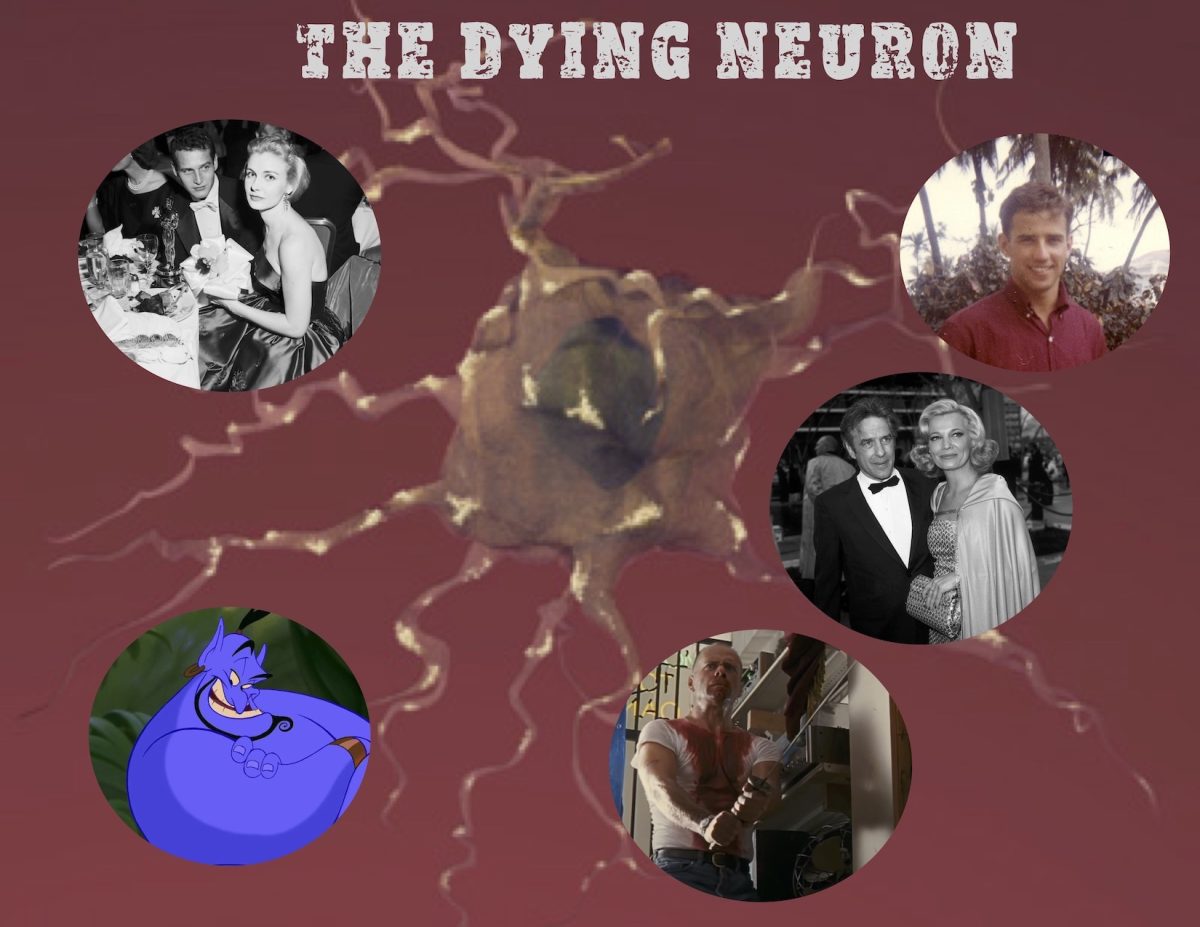
Funny how things happen sometimes… Lately, I’ve been brightening my time on the walking pad (wonderful, but incredibly boring exercise) by re-watching movies from my fairly extensive DVD collection. Every day… I’m not even choosing them – just going in the order my collection is organized: European arthouse, American Classics, American arthouse, etc. And so, believe it or not, on the very day I popped in John Cassavetes’s “Gloria” (1980), starring his wife Gena Rowlands, their son Nick Cassavetes publicly announced that Ms. Rowlands (now 94) has been living with Alzheimer’s disease for the past five years… Heartbreaking…

We hear a lot of that lately, don’t we? More and more people live well into their 90s nowadays: Mel Brooks is 97, William Shatner – 94, Lee Grant – 98, Clint Eastwood – 94, Jimmy Carter is an astonishing 99… And it’s not just celebrities. From Scarsdale to Hong Kong, I know people who lived to see their great-great-grandchildren born… Some of them keep their wits about them just fine, but quite a few fall victims to the age-driven degenerative tendencies of the neurons in the human brains; the ones that force the elderly to develop various conditions leading to dementia… Just like poor Gena Rowlands…

Do you ever think about the reasons behind this trend? I do. In fact, I’m so paranoid about the conditions of people’s brains, I’ve been thinking about this since I was in my 30s. And the way I see it, one of the main underlying causes is the profound disparity between the advances in cardiology vs. neuroscience.

Nowadays, people get their heart valves repaired and replaced, their damaged and destroyed arteries bypassed in triple and quadruple ways, their entire dying hearts transplanted straight into the medical waste and exchanged for the healthy ones obtained off of some unfortunate (but robust, nevertheless) recently departed individual. And all these marvelous procedures end up regenerating cardiovascular wellbeing,  rejuvenating the throbbing engines by decades… 80 and 90-year-olds run around with tickers as vigorous as those of the well-fit 50-year-old youngsters.

On the other hand, the Brains… I don’t think they can 3D-print them even in the most secretive of all evil laboratories in the world. (To the best of my knowledge and research, you know.) And so, very frequently these healthy hearts end up beating for people who can’t recognize their children, can’t take care of their basic needs, have no clue  who and where they are. Did you know that people may live with Alzheimer’s for as long as 25 years? It’s been 5 years for Gena Rowlands, but poor Joanne Woodward, now also 1994, has been living with that diagnosis since 2007. 

For me personally (and I absolutely mean it): I would not want anything working properly in my body, let alone having a heart capacity to last for any extra number of years, if I couldn’t know my daughter sitting in front of me. Fuck that shit! And I was seriously concerned when ten years ago my father, then turning 80, was going for his second stent placement… But his memory and mental faculties were above par for his age and nobody even asked me to contribute my opinion… He was desperate to get rid of the pain in his chest and the shortness of breathe… And I felt terrible even having those thoughts in my head… 

Thankfully, I knew that I weren’t alone and that there were other people who also came to experience such concerns – and not just on a speculatively statistical level, but in a very tangible, first-hand way: Two years prior, in May of 2012, I’ve read Michael Wolff’s cover article he wrote for New York Magazine: A Life Worth Ending – an incredibly intimate account of his and his siblings’ journey through the ordeal of caring for their mother whose heart, through prior surgical intervention, was much younger than her brain. Granted, the article was focused on the healthcare costs associated with such parental conundrum as well as already familiar to me by then subject of Long-Term Care insurance policies… Still, Mr. Wolff’s is a master of narrative nonfiction and his account of this familial ordeal was deeply emotional and relatable.     

I am a very private person who rarely shares (or even communicates – to be honest) with other people. And so that article was basically the first confirmation to me that I weren’t crazy or sinister to be thinking about these matters. That there were other people who agreed that we should be acutely guarded against all those frivolous heart repairs for elderly. That it would be not just prudent, but ultimately humane to be considerate of the possibility that these surgeries may destroy, not improve, the quality of their future lives – if the dementia comes knocking. 

Universally speaking – I would even say, on the politic0-scientific scale of the matter – we can move in two directions towards a kinder, more reasonable, and, in the long run, beneficial for everyone concerned resolution of this, unfortunately very frequently occurring, predicament.

On one hand, we can attempt to make it compulsory for cardiologists to be more responsible when it comes to recommending surgical interventions for people over certain age and more holistic in their patient care with consideration of conditions beyond their direct specialties. Even more important, we (the elderly and their caretakers as the unified interest group) can insist on being provided with the full disclosure regarding the scope of future possibilities, including the one of the longer life marred by mental incapacity.

But here we have finally arrived at the fiscal side of the issue at hand. (I hope you didn’t really think I’ve forgotten about it.) The cardiovascular mending is the biggest cash cow of the medical industrial complex. Heart conditions are #1 most expensive group of chronic diseases. It’s literally impossible nowadays to find a relatively recent statistics on anything, but in 2016 adult cardiovascular spending came to a sweet little sum of $320 billion! Of which 54% was covered by public insurance, i.e. Medicaid and Medicare, and 37% by private insurance. That’s 91%, or $291 billion of automatically collectable funds. It’s hard to imagine the hospital systems, particularly their boards and  investors, giving up any portion of that income – humaneness be damned!  

Yet, there is an alternative route of action: to finally start bearing down on this stumbling block of the aging Brain and attempt to, at the very least, match its longitivtiy of the repaired hearts. And I’m not talking about some sci-fi scenarios here either. Researchers working in the stem-cells limitless field of opportunities already made significant inroads into the possibilities of treating a broad spectrum of neurological conditions, including the ones leading to dementia.

Unfortunately, this area of science is suffering from the – really unimaginable in our “enlightened” times – plaque of “ethical” debates, particularly around the matters of embryonic stem cells. And it is an undeniable reality that entirely baseless, anti-scientific, purely political positions still prevail, thus influencing the legal landscape around the matter; slowing down – instead of spearheading – the advancement towards the younger brains. And, just like with the reproductive rights, the antis here are preoccupied with the status of embryos.    

Actually, whether it deals with embryos or not, officially stem cell research is legal in the United States. However, it’s subject to state-specific laws and federal funding restrictions. And even the embryonic stem cell research is not technically illegal. But! The federal funding (the source responsible for over 50% of all American academic R&D) is categorically prohibited for both the creation of new embryos – reproductive (remember Dolly?) or therapeutic (the creation of stem cells entirely independent of the fertilized eggs) alike – as well as for the distraction of embryos. The latter is especially significant as it includes the process of obtaining stem cells from the existing human embryos – unused and donated by their creators through the fertility banks. In other words, as it frequently happens with our government, everything is dumped into the same suppressive bucket, regardless of the source and purpose.

Believe you me: I’m as much in opposition of the reproductive cloning as the most reactionary conservatives from the heart of Arkansas. I mean, let’s leave the  artificial creation of multiple identical offsprings in the realms of science fiction. Nobody is that special and we truly already have too many people on this planet. And cloned sustenance – no, thank you!

But the therapeutic cloning with hopes to eliminate dementia?! What’s wrong with that? Why do these strange people keep caring more about never to be born embryos than about the living, breathing, and suffering humans. Many of them quite accomplished individuals. Please, let the scientist use those donated bits of cells! Please, give them grants to hurry this shit up! Aren’t you afraid that these terrible neurological tragedies may befall you?           

And it’s so fiscally nearsighted too! Cause imagine the billing volume that can be generated by curative methodologies directed at not just dementia, but also paralysis, multiple sclerosis, Parkinson’s decease… Leukemia, lymphoma, neuroblastoma… Etc., etc., etc. – virtually no limitation to the scope of the applications. Including the heart failure!

But I guess, on the Capitol Hill religious lobbying trumps even HMO lobbying… And so, we remain stuck between the cardiologists who can make you ticking like a fucking clock for decades and the helpless neurologists absolutely unequipped to deal with the sad state of the Brains.        


On Columbia Campus or NYS Prison Camp, Antisemitism Is Inescapable: I Built This Prison Excerpt


Over and over again, I am consistently stunned by the political blindness of hate. It’s incomprehensible to me. How can people loathe all Catholics because they still worship the papal Christianity or all arabs because of 9/11 and ISIS? Or how pro-Palestinian convictions automatically translate into hostile animosity  towards all Jews dispersed throughout the globe – many of whom are not religious whatsoever, have never been and don’t plan to go to Israel, and some (especially here, in the States) don’t even understand what the conflict over there is all about? Aren’t the haters at all concerned that their blanket enmity completely obscures the essential meaning of their political standpoints? Shouldn’t they be more focused and direct their efforts against the forces behind the territorial and largely economic conflicts? What can possibly be achieved by inciting violence against the students and the teaching staff of an educational institution 5700 miles away from the epicenter of the military actions? It’s truly bizarre!

On the other hand, I’m quite accustomed to the pervasive, persistent, and profuse plain-ass antisemitism no matter how many political, nationalistic, self-righteous, and morally confused shrouds anyone throws over it. Look, I was born in the most antisemitic country in the world – Soviet Russia, with its pre- and post-revolutionary history of oppressing my relatives and ancestors going back centuries.  Thus, as the Soviet Jew I was raised to believe that antisemitism is simply written into the genetic code (my mother was among the first generation of Soviet physiology students to be taught genetics at universities in the 50s) of every non-Jew and there is nothing we can do about it: Whether openly or secretly, and with some even subconsciously, goyim will despise you. Live with that. Period.

And when I escaped Russia, the Soviet Union, though on its last legs, was still live and kicking, the communists were still in power (many of them still are – lightly disguised), and anti-Jewish state policies were still as prominent as the nationalistic hatred of the Russian populace. But, of course, decades of the subsequent NYC living… It lulls you with its ethnic diversity, and religious freedoms, and Jewish mayors, and Philip Roth, and Woody Allen, and Kubrick, and the overwhelming popularity of Seinfeld and Friends, and everybody eating lox on their bagels… And you (I mean me), a cultural non-observant Jew, start feeling… Well, I wouldn’t go as far as to say “free of the ethnic bias”, but you definitely push to the back of your Jewish kop the teachings of your grandparents – that if you ever forget that you are a Jew, there will be an antisemite nearby to remind you.

Of course, Ivy League schools, even those – like Columbia University – located in Manhattan, are nothing like NYC. Their student bodies, professorial staff, and administrations consist mostly of transient people from all over the world. Not just all fifty states of our own nation – most of them not nearly as diverse as our city, but from the foreign countries with their own socio-economic backgrounds as well. These people are here not because they belong, but because it’s good for their resumes – if I had to generalize. So, it shouldn’t be surprising at all that these educational institutions are prone to become fertile grounds for antisemitic protests.

And apparently the ones at Columbia earlier this week got so threatening, Jewish religious leaders urged students to STAY HOME (!!!) Here, IN NEW YORK CITY! And the university’s administration (as well as the law enforcement – let’s be honest) are so powerless in the face of these protests, the solution they offered is online classes! This is Columbia we’re talking about!

I don’t even know, though, why I’m so shocked. I mean, I’ve already got exposed in the fairly recent past to similar displays of open antisemitism and the passivity by “the powers that be”. Because, guess what? The New York State prison system is even further removed from NYC than the hodgepodge of Columbia campus. It’s staffed entirely with ethnically and culturally isolated upstate prison guards; and among the inmate population, there are plenty of multigenerational neo-Nazis – proud to display their various tattooed insignia and the compatible attitudes – as well as intellectually confused people.

From I Built This Prison, Part III – Impressions of Imprisonment, •The Jewish Thing:

To continue: p. 428 


The featured image:

© Marina Zosya, My Personal Nazi Brigade – Self-portrait in Mise-en-scene, ACF, 2019

NPR Reports: Prisons Are Not Fit for the Elderly. What Else Is New?


On Monday, March 11th (I beg your pardon – it always takes time for me to summarize my reactions), NPR reported via Apple News (The U.S. prison population is graying fast… by Meg Anderson) that American federal and state prisons are not prepared to deal with their growing contingent of elderly inmates. Primarily because the correctional medical care cannot keep up with this demographic trend.

The provided statistical evidence illuminates the bleak reality: Apparently

“across the nation, between 1999 and 2016 the number of adults aged 55 and older increased 280%, compared to an increase of only 3% in those under 55.”

But what else could we possibly expect? The multitude of our socio-economic problems affects all aspects of life, including the age mix of the prison population: the lifers with over thirty years of incarceration on their shoulders, the repeat offenders who cannot be absorbed into society and keep coming back even in the late stages of their lives, plus the older people who commit their first crimes out of hopeless desperation, yet become the subjects of our brutal sentencing customs nevertheless – it’s only arithmetically natural for the proportion of older inmates to increase.

At the same time, it is absolutely unthinkable for any branch or twig of any governmental body directly or tangibly related to correctional codes to consider age-driven triggers for early releases. I mean, as it stands right now, only terminally ill inmates, with pretty much days to live, may qualify for this rare privilege. Anything short of that retains an inmate in prison until the sentencing conditions are fulfilled.   

It appears that the NPR reporter’s main focus is to single out the truth of the aging prison population as the most crucial factor testing the limits of the correctional systems around the nations in keeping all of their charges healthy.  She further broadens the magnitude of the age effect in one of her leading arguments. Namely that prison is a difficult environment and “people behind the bars tend to age faster.” To support this postulation the article quotes some studies by medical professionals specializing in Public Health, which claim that “incarcerated adults experience accelerated aging” (a term borrowed from engineering practice of specifically designed tests under aggravated conditions to speed up the aging of objects). One of the cited doctors suggests that “geriatric” in prison can mean someone as young as 50. 

Well, let’s set the quality of prison medical care – for the entire imprisoned population, not just for elderly – aside for a moment. Because, first and foremost, I would like to contest the validity of the rapid-aging generalization itself. You see, I believe that it actually depends on the person and her attitude. For example, take me (who else would I take, really?): On the day I was sentenced I was 57 years 2 months and 3 weeks old. And yes, pretty quickly my hair gone completely gray. NYS Department of Corrections and Community Supervision (DOCCS) prohibits hair-dying within its walls. (Unlike the federal prison network, which allows it.) And since I’ve been going gray since I was very young and started my regular visits to a colorist when I turned 35, I had no choice but to turn peppery gray in prison. And yes, Natura Bissē products couldn’t be obtained in the commissary or pass through the package-room regulations. So, it was impossible to hide the gloomy state of mind behind the brightness of my skin… But other than that… After decades of sitting on my fat ass behind my office desk, I managed to use my time in prison to get myself into a much better physical shape than I’ve experienced in my entire life: Walking the significant distances between various destinations of Albion prison’s camp and performing daily tasks of physical labor were at first difficult, than bearable, and eventually easy. I progressed from crawling to power-walking at a speed uncatchable by the smoking 20-year-olds. My first yoga class happened in prison and eventually I geared myself up all the way to the power-yoga level. Moreover, I’ve discovered a rowing machine in the gym… Eventually, I’ve developed muscles in places where I only had fat before. And I felt much healthier than I did outside… I felt 40. No joke… Age is really a very-very relative thing.

That said, however, it is an undeniable truth that cost of medical care for incarcerated individuals, guaranteed by the Eighth Amendment to our Constitution, has been growing exponentially. If not because of the aging per se, but due to the complex combination of factors, including the alarming health and longevity decline in the United States. Note: A recent Harvard study has determined that

“for every two Americans who died age 65 and under, one [MZ: 50%] would have been alive if they lived in Australia, Canada, Germany, Japan, or Portugal. An epidemic of chronic illness has also taken hold, with rates of heart disease, diabetes, liver disease, and obesity skyrocketing and impacting younger populations.”


Thus, the percentage of sick people entering various jails and prisons, regardless of their age, is now much higher than anyone expects.  This, along with the persistently increasing price tags of pharmaceuticals and all health-related services, which we all experience whether we are “free” or incarcerated, multiplies the weight of the monetary burden on, already pretty fragile, shoulders of correctional systems. Naturally, the NPR article quotes a few prison officials complaining that it is impossible to care for the older inmates within the existing budget constraints. And I believe them: neither the states nor the federal government have enough money for comprehensive healthcare of incarcerated individuals to begin with; having funds for the permanent geriatric  needs – forget about it!

There is, however, one important factor entirely avoided in the article – maybe deliberately, maybe not: The inherent and persistent problem of the corrections – the utter mismanagement and inefficiency of whatever means they have on hand, sufficient or not. And I don’t know, of course, maybe in the sampled states – Oklahoma, Texas, Michigan, Minnesota – everything is ran in the most methodical and productive ways; and if they had sufficient funds they would be able to medically accommodate prisoners of all ages (though my gut sours in doubt at that)… But I can testify that it would be an impossible dream (and when I say “impossible”, I mean like a fan dreaming of dating her pop-idol) in the prison structure I had a misfortune to experience firsthand, i.e. New York State’s women prisons – the most messed-up can of the administrative worms imaginable, if I have to say so myself.  

There are a couple of essays in I Built This Prison” specifically related to this subject matter – the general mismanagement, the medical care, and the mix thereof. But here let me just mention a few facts. There are three female correctional facilities in the whole of NYS – one for each level of security: the maximum and the minimum are Downstate, in Westchester County, mere 35 miles from NYC and its multitude of high-quality medical care facilities; and medium located in God-forsaken Albion, practically a stone’s throw away from the Canadian border, with the only hospital servicing the prisoners (Erie County Medical Center) 56 miles away. This latter prison camp is, of course, is larger – both in its capacity and the actual population – than the other two put together. And yet… The Albion Correctional Facility (ACF) has only a tiny medical office with no specialists, no OBGYN, no diagnostics, a few beds, and a handful (literally) of doctors that leave at 3 pm and don’t work on weekends. On the other hand, the Regional Medical Unit (RMU), which can actually be qualified as a prison hospital because it is staffed with medical personnel, including doctors and RN’s on 24/7 duty, and, in addition to 20 infirmary beds, has 30 long-term care beds as well as the maternity and nursery divisions – that’s, ladies and gentlemen, is, of course, in Westchester.

So, if an inmate happens to be pregnant or nursing, they have to be held in the maximum security prison regardless of their actual security gradation. The same goes for the legally blind as they cannot get walking assistance Upstate – and no one knows why. On the other hand, every one who is afflicted by ailments that bind them to wheelchairs, including murderers and other violent criminals, are invariably sent away to Albion – that’s where the mobility assistance is provided, which is by no means a replacement for the proper medical care. Etc., etc., etc., etc. It’s truly bizarre. And none of these three facilities can possibly deal with the needs of the aging population. In Albion, even 72-year-old women cannot obtain medical releases from their mess-hall job assignments, even if their feet double in size by the end of the day from edema – I’ve known them personally…

For further reading:

I Built This Prison”, Part III: In Case You Were Wondering About the State-Ran Healthcare 

I Built This Prison”, Part III: Through the Ass Backwards


Clinton/Warren Ticket – Joke of the Week #2


Two blond lawyers wearing Mao suits walk into a bar.

“Look at those hussies frolicking in their despicable sexy dresses,” says the younger one.

“Don’t worry,” replies the senior, “I’ll text my Saudi and Omani pals to come over.  They’ll cover those floozies from head to toe in a blink of an eye.”