
On Monday, March 11th (I beg your pardon – it always takes time for me to summarize my reactions), NPR reported via Apple News (The U.S. prison population is graying fast… by Meg Anderson) that American federal and state prisons are not prepared to deal with their growing contingent of elderly inmates. Primarily because the correctional medical care cannot keep up with this demographic trend.
The provided statistical evidence illuminates the bleak reality: Apparently
“across the nation, between 1999 and 2016 the number of adults aged 55 and older increased 280%, compared to an increase of only 3% in those under 55.”
But what else could we possibly expect? The multitude of our socio-economic problems affects all aspects of life, including the age mix of the prison population: the lifers with over thirty years of incarceration on their shoulders, the repeat offenders who cannot be absorbed into society and keep coming back even in the late stages of their lives, plus the older people who commit their first crimes out of hopeless desperation, yet become the subjects of our brutal sentencing customs nevertheless – it’s only arithmetically natural for the proportion of older inmates to increase.
At the same time, it is absolutely unthinkable for any branch or twig of any governmental body directly or tangibly related to correctional codes to consider age-driven triggers for early releases. I mean, as it stands right now, only terminally ill inmates, with pretty much days to live, may qualify for this rare privilege. Anything short of that retains an inmate in prison until the sentencing conditions are fulfilled.
It appears that the NPR reporter’s main focus is to single out the truth of the aging prison population as the most crucial factor testing the limits of the correctional systems around the nations in keeping all of their charges healthy. She further broadens the magnitude of the age effect in one of her leading arguments. Namely that prison is a difficult environment and “people behind the bars tend to age faster.” To support this postulation the article quotes some studies by medical professionals specializing in Public Health, which claim that “incarcerated adults experience accelerated aging” (a term borrowed from engineering practice of specifically designed tests under aggravated conditions to speed up the aging of objects). One of the cited doctors suggests that “geriatric” in prison can mean someone as young as 50.
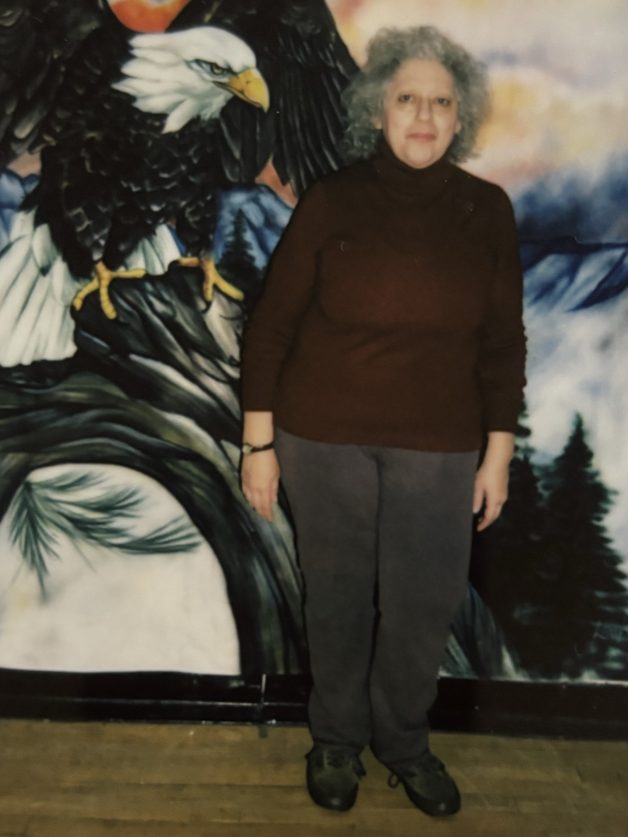
Well, let’s set the quality of prison medical care – for the entire imprisoned population, not just for elderly – aside for a moment. Because, first and foremost, I would like to contest the validity of the rapid-aging generalization itself. You see, I believe that it actually depends on the person and her attitude. For example, take me (who else would I take, really?): On the day I was sentenced I was 57 years 2 months and 3 weeks old. And yes, pretty quickly my hair gone completely gray. NYS Department of Corrections and Community Supervision (DOCCS) prohibits hair-dying within its walls. (Unlike the federal prison network, which allows it.) And since I’ve been going gray since I was very young and started my regular visits to a colorist when I turned 35, I had no choice but to turn peppery gray in prison. And yes, Natura Bissē products couldn’t be obtained in the commissary or pass through the package-room regulations. So, it was impossible to hide the gloomy state of mind behind the brightness of my skin… But other than that… After decades of sitting on my fat ass behind my office desk, I managed to use my time in prison to get myself into a much better physical shape than I’ve experienced in my entire life: Walking the significant distances between various destinations of Albion prison’s camp and performing daily tasks of physical labor were at first difficult, than bearable, and eventually easy. I progressed from crawling to power-walking at a speed uncatchable by the smoking 20-year-olds. My first yoga class happened in prison and eventually I geared myself up all the way to the power-yoga level. Moreover, I’ve discovered a rowing machine in the gym… Eventually, I’ve developed muscles in places where I only had fat before. And I felt much healthier than I did outside… I felt 40. No joke… Age is really a very-very relative thing.
That said, however, it is an undeniable truth that cost of medical care for incarcerated individuals, guaranteed by the Eighth Amendment to our Constitution, has been growing exponentially. If not because of the aging per se, but due to the complex combination of factors, including the alarming health and longevity decline in the United States. Note: A recent Harvard study has determined that
“for every two Americans who died age 65 and under, one [MZ: 50%] would have been alive if they lived in Australia, Canada, Germany, Japan, or Portugal. An epidemic of chronic illness has also taken hold, with rates of heart disease, diabetes, liver disease, and obesity skyrocketing and impacting younger populations.”
Thus, the percentage of sick people entering various jails and prisons, regardless of their age, is now much higher than anyone expects. This, along with the persistently increasing price tags of pharmaceuticals and all health-related services, which we all experience whether we are “free” or incarcerated, multiplies the weight of the monetary burden on, already pretty fragile, shoulders of correctional systems. Naturally, the NPR article quotes a few prison officials complaining that it is impossible to care for the older inmates within the existing budget constraints. And I believe them: neither the states nor the federal government have enough money for comprehensive healthcare of incarcerated individuals to begin with; having funds for the permanent geriatric needs – forget about it!
There is, however, one important factor entirely avoided in the article – maybe deliberately, maybe not: The inherent and persistent problem of the corrections – the utter mismanagement and inefficiency of whatever means they have on hand, sufficient or not. And I don’t know, of course, maybe in the sampled states – Oklahoma, Texas, Michigan, Minnesota – everything is ran in the most methodical and productive ways; and if they had sufficient funds they would be able to medically accommodate prisoners of all ages (though my gut sours in doubt at that)… But I can testify that it would be an impossible dream (and when I say “impossible”, I mean like a fan dreaming of dating her pop-idol) in the prison structure I had a misfortune to experience firsthand, i.e. New York State’s women prisons – the most messed-up can of the administrative worms imaginable, if I have to say so myself.
There are a couple of essays in “I Built This Prison” specifically related to this subject matter – the general mismanagement, the medical care, and the mix thereof. But here let me just mention a few facts. There are three female correctional facilities in the whole of NYS – one for each level of security: the maximum and the minimum are Downstate, in Westchester County, mere 35 miles from NYC and its multitude of high-quality medical care facilities; and medium located in God-forsaken Albion, practically a stone’s throw away from the Canadian border, with the only hospital servicing the prisoners (Erie County Medical Center) 56 miles away. This latter prison camp is, of course, is larger – both in its capacity and the actual population – than the other two put together. And yet… The Albion Correctional Facility (ACF) has only a tiny medical office with no specialists, no OBGYN, no diagnostics, a few beds, and a handful (literally) of doctors that leave at 3 pm and don’t work on weekends. On the other hand, the Regional Medical Unit (RMU), which can actually be qualified as a prison hospital because it is staffed with medical personnel, including doctors and RN’s on 24/7 duty, and, in addition to 20 infirmary beds, has 30 long-term care beds as well as the maternity and nursery divisions – that’s, ladies and gentlemen, is, of course, in Westchester.
So, if an inmate happens to be pregnant or nursing, they have to be held in the maximum security prison regardless of their actual security gradation. The same goes for the legally blind as they cannot get walking assistance Upstate – and no one knows why. On the other hand, every one who is afflicted by ailments that bind them to wheelchairs, including murderers and other violent criminals, are invariably sent away to Albion – that’s where the mobility assistance is provided, which is by no means a replacement for the proper medical care. Etc., etc., etc., etc. It’s truly bizarre. And none of these three facilities can possibly deal with the needs of the aging population. In Albion, even 72-year-old women cannot obtain medical releases from their mess-hall job assignments, even if their feet double in size by the end of the day from edema – I’ve known them personally…
For further reading:
“I Built This Prison”, Part III: In Case You Were Wondering About the State-Ran Healthcare
“I Built This Prison”, Part III: Through the Ass Backwards