Ten Reasons Why “CFO Techniques” Is a Must-Read for Small-Business CFOs


GI_98327_CFO TechniquesReason #1.

"CFO Techniques" was NOT written from an academic perspective, such as of a typical university professor with a consulting-for-large-business on the side.

Not the Author
On the contrary, it WAS WRITTEN by your fellow CFO, who earned her professional stripes in the small-business trenches. During more than 20 years of this hands-on experience, with the last 18 in CFO and Controller positions, she was fortunate to gain exposure to all facets of financial management and organizational administration. Just like the most of you, she knows only too well what it means to wear many hats at the same time.

Hats_0003
Reason #2.

Yet, the author did not loose a constructive touch of a theoretician. In writing the book, she employed her:

  • in-depth knowledge of the fundamental principles that govern all areas of corporate accounting and finance,
  • methodical approach to all tasks that compile ever-expanding scope of a CFO's responsibilities,
  • and ability to dissect the cause and effect relationships of various concepts.

The result is the crystallization of the vast experience into a streamlined functional system, easily adaptable to various types of businesses and industries.

Reason #3.

"CFO Techniques" doesn't try to rehash official regulations, statistical information, bits of hot technology news, results of narrow studies, and such. The book's mission is to spotlight the most important areas of a CFO's or a controller's functionality:

Eight Balls with Juggler

Reason #4.

These professional cornerstones are broken down into crucial components described in bite-size, easily digestible chapters written in a fun and lithe language. The book presents the most complex financial and accounting concepts in comprehensive forms,  which can serve as introductory aids for those who just attained their first controllership appointment and as concise refreshers for seasoned professionals.

Figure 27-1

Reason #5.

It is an unfortunate truth that millions of small businesses struggle (and frequently fail) to survive not because they are neglected by owners and managers, but because these hard-working people simply have no clue what exactly is wrong with their companies, where are the weakest points, which areas require immediate improvements. Smaller enterprises suffer the most from the lack, even complete absence, of business intelligence and performance analytics. "CFO Techniques" is a part of the author's personal crusade to help small and mid-size businesses by providing them with survival tools (analytical, budgetary, procedural, etc.) that don't require expensive and complicated software.

Figure 25-1

Reason #6.

One of the most unique and valuable devices offered within the book is the proprietary  chart

INCOTERMS FOR ACCOUNTANTS.

Originally developed by Eclectic & Dynamic Controllership Consulting (E&D CC) specifically for businesses involved in buying and selling goods, it expands the definitions of standard Incoterms to include such accounting notions as title transfer rules and description of applicable source documents, thus accommodating needs of proper revenue, COGS, and inventory recognition.

Title 

Reason #7.

One of the main underlying themes of the book is the necessity for small-business CFO's and controllers to raise themselves above the bean-counting stereotype and become critical thinkers, indispensable members of the executive management team. "CFO Techniques" emphasizes this pressing demand throughout every section and accentuates the tasks that may facilitate such transformation.

Bean-counter to thinker

Reason #8.

While shedding new light on the day-to-day routines and spinning conventional accounting and finance tasks as crucial and indispensable cogs in the business machine, the author's functional system gives equal rights to new categories of CFOs responsibilities, such as company-wide Information Technology Management, Risk Control, and Strategic Planning.

Reason #9. %5CStore%5CLarge%5Chw-5799

The book takes a holistic approach to multi-faceted positions of CFOs and controllers and supplements specific structural guidelines and practical functional advices with discussions of more general topics applicable to any senior professional operating in private-business environment. Among others, it includes observations and suggestions on how to deal with people on different level of corporate hierarchy and what changes to expect in your future, even if at the moment you feel 100% secure.  

Reason #10.

Even if you don't learn anything new, or if you'll find the book not applicable to your specific professional niche, at the very least you can entertain yourself with the multitude of eclectic cultural references and business insights from the author's personal experience woven through the book's text.
10 reasons ent collage


CFO Folklore: Segmental Performance Analysis


SegRep #1 Regardless of whether your company is large or small, rich in cash or eke out its survival on a tight cash flow, operate with the most sophisticated custom-designed ERP fitted with Cognos or makes do with QuickBooks/Excel combo, if I ask you to pinpoint the exact segments where you lose or make money, most likely the answer is too broad, or intuitive, or incorrect.

Based on my experience, segmental performance is one of the most deficient areas of business analysis.  Ok, the larger are probably doing better than the small ones.  The latter, unfortunately, are clueless 99% of the time.

Then again, what is your segment?  Do we need the Large Hadron Collider to break the business matter into invisible particles?  Of course not, but a sensible breakdown can give an invaluable insight and bring about organizational changes.  And let me clarify that when I talk about "performance," I don't mean revenues, which are easy to track, I am talking about EBITDA – my favorite indicator.     

Familiar to everyone example – CBS Corporation.  Its portfolio consists of 23 separate brands (subsidiaries), including CBS Television, CBS News, CW, Showtime, Simon & Schuster, etc.  Of course, there are separate P&L's for each of these sub-entities. I am positive, Showtime Networks knows who does better Showtime or The Movie Channel.  I am pretty sure they are aware of how much "Dexter," or "Nurse Jackie" contribute to the bottom line.  Moreover, thanks to digital counting of viewers tuned in, they know for a fact how much Gross Revenue each episode generates.  As I said, that's easy – they know how much they get paid for each subscriber.  (Side Note: it's just as easy for the network television, where the revenue is calculated based on the commercial time).

But do they know how much profit (or loss) they make from each episode?  ALL costs allocated, including CBS Corporation CEO's salary?  What, it is not required by financial statements?  We are not talking about  them.  We are talking about magerial understanding of the business.  Is it important?  It's fundamentally important.  Each episode is written by different writers, directed by different directors, some use more effects and extras than others, etc., etc.  This is BUSINESS INTELLIGENCE and those are factors impacting this particular business.   

Here is promised CFO Folklore.  At some point in my career, I accepted a position in a company with national exposure – 14 operational facilities in different states.  They needed me because they couldn't understand why they experienced cash flow shoratges.  The first thing I did was the profitability analysis for each of the locations.  I uncovered that 9 out of 14, have been consistently loosing money for the past 18 months.  

There are, however, inherent difficulties that prevent most financial executives with limited human resources from undertaking this exercise.  First of all, it is not easy to properly define your segments.  It is pretty much a game of optimization between the level of details you would like to have and the resouces you need to achieve it.  The most intense part of the analysis, however, is the selection of proper principles of allocation for all shared costs and the allocation process itself.     

The spreadsheet image is courtersy of E&D CC, Inc.  If you are looking for help with segmental analysis, I recommend  contacting E&D CC – they specialize in assessing reporting needs and designing specific analytical tools related to profitability and costs, as well as budgetary, treasury, viability, forecasting and planning instruments: mzosya.edcc@gmai.com  

The Dashboards Obsession


It is easy to understand how executive dashboards have become so chic.  Most products come to mass market by way of technological advancements.  The 3-D movies fascinated audiences in select theaters for decades.  Now, we have 3-D TVs in our homes.  By the same token, specialized and complicated business intelligence software (like Cognos) existed since the 70s.  However, the 21st century brought forward adaptable, customizable, open-architecture systems and integratable reporting tools. 

Business intelligence and financial performance management are not new ideas.  Data warehousing may sound like a novelty, but collecting and organizing records in a particular order for easier access existed for centuries. The concept of information as a key to business success is millennia old.  How many spearheads you are going to make, if you don’t know all the warriors in your tribe? 

Of course, nowadays data flows are more complex.   The CFO’s and CEO’s need information integrated from different sources and they need it fast.   So, the developers caught up with the demand and offered executive information systems aka dashboards.  They advertise, give distribution licenses to specialized vendors, hold conferences, etc. As usual, standardization is mandatory in order to capture larger market shares, and that’s where the fallacy forms. 

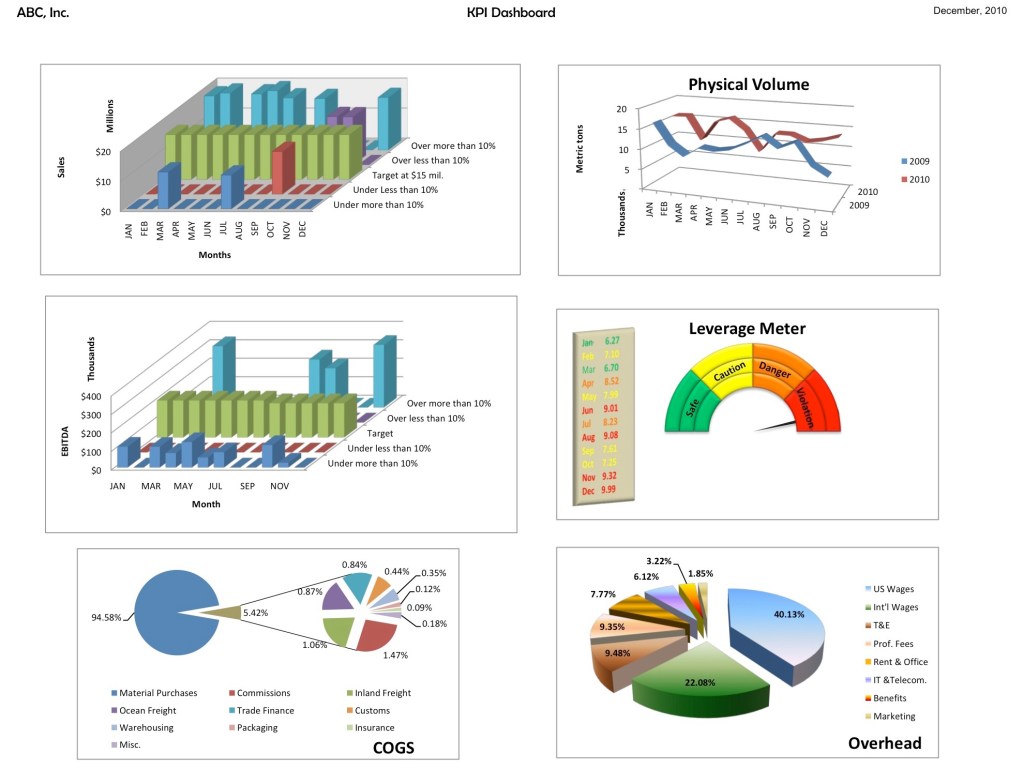
Don’t get me wrong, they are beautiful visual arrangements – much more vivid than dry columns of numbers, far more impressive and memorable.  On top of that, more expensive ones allow you to drill down into the data behind them.  That’s incredibly cool!

Here are some of mine own:

Yet, in far too many instances the form obscures the substance.  Now, the users think they need something looking exactly like that, instead of thinking what info is fed into it.  And it is very sad, because CEOs and CFOs in need of sensible information, frequently end up just looking at a pretty picture.

I’ve seen a lot of dashboards – most of the time I find them absolutely irrelevant.   You are looking at your 12-month revenue curve and it displays expected cyclical pattern.  What are you learning here after spending a tidy sum for ability to generate this graph with a push of a button?  Nothing new – your last year curve had exactly the same shape.  How do you know whether you are doing better or worth now than a year ago?

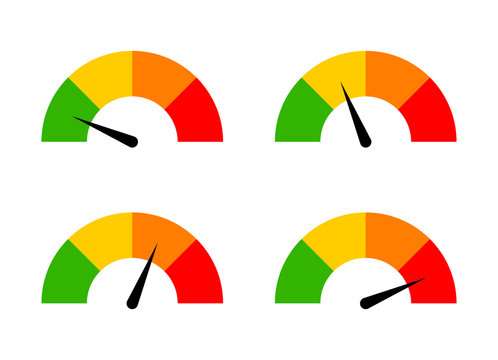
And the gauges!!!  They look awesome and they justify the name “dashboard,” but they are the most difficult charts to read.  Moreover, they are kind of useless for static information.  Unless a constantly changing (and most importantly, crucial) information is fed into this device in real time, you have no reason to stare at a red circle with green border and unmoving black arrow.    

Here is my advice: don’t fall for colorful pictures.  Start from the beginning.  You know which information is most important for you and your CEO, which parameters affect your business’s ability to survive.  Figure out what combination of data would make the real impact on your decision-making, how frequently you want see it, whether it needs to be dynamic or static, etc, etc.  Only after that you can think about the format. 

Let’s say your product’s price is in direct correlation with crude oil market.   In this case, may be the two sets of data should be presented together, or maybe it’s most important to look at the units, not the sales dollar value?  Those are the important decisions, not the shapes and colors.

It is very possible that you need bar charts, graphs, even gauges.  Hey, if you are a jewelry manufacturer and make raw material procurement decisions all day long, there is nothing wrong with having a gold price meter installed right in the center of your screen.  At the end of the day, it is all about common sense.