Disney Shareholders: Why Can’t You Be More Like Netflix?


It’s not an easy undertaking to make me laugh nowadays. Most of the time I’m just FINE (as in Frustrated [duh!], Insecure, Nervous, and Exhausted); the rest of the time I am severely distraught… And, of course, I meditate and do my best to cheer the fuck up… The vast music library helps; so does the good literature, quality entertainment… But, laughing – that’s rare, very rare… Except for the news – some news snippets make me burst out laughing! And incidentally this particular hilarious bit also had to do with Entertainment… Or rather the business of it.

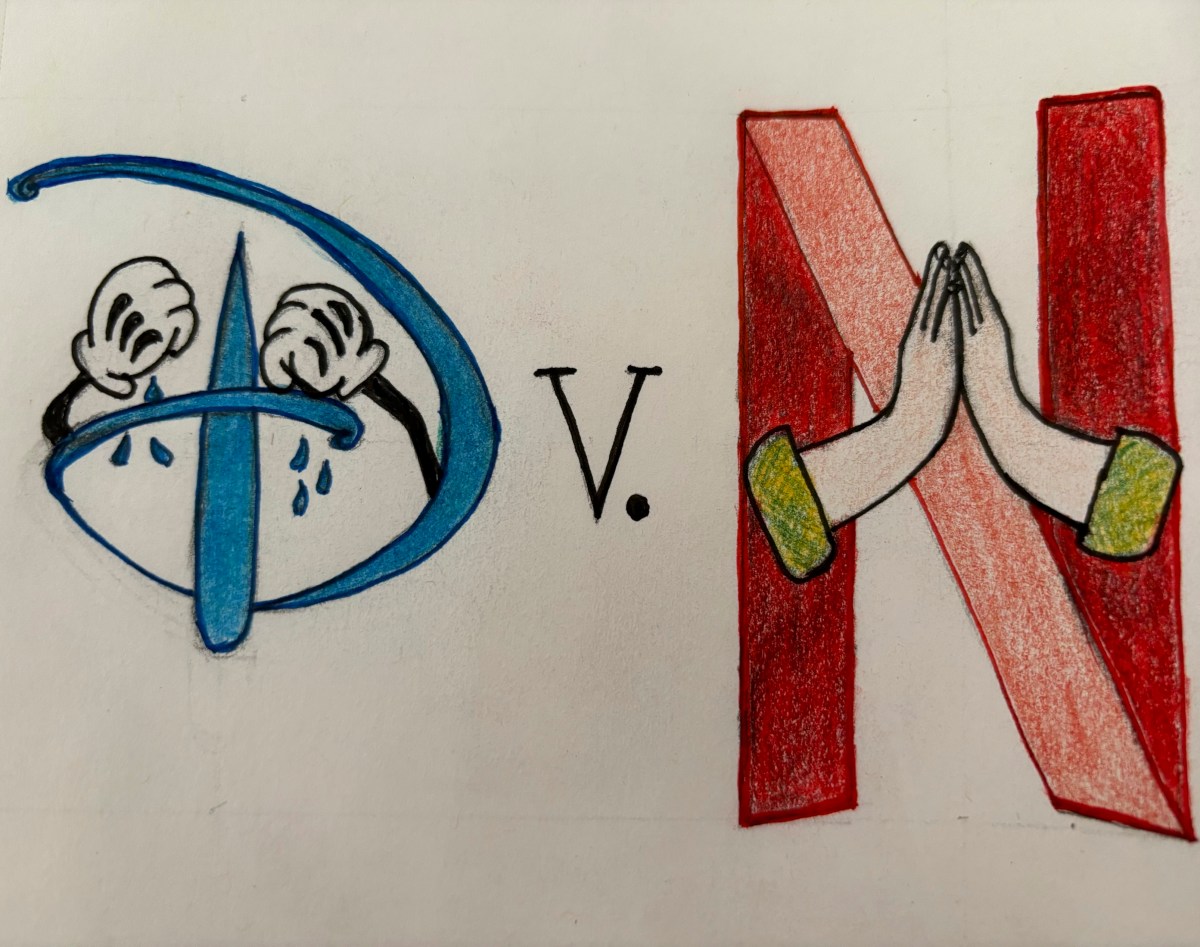
You see, Disney is in trouble… I don’t need to regurgitate to you the whole stock-market mumbo-jumbo everyone else and their mothers write about, primarily focusing on the share prices, which are now below the level they were 10 years ago. Because the bottom line is fairly simple: The original Walt Disney Pictures isn’t pumping out winners annually as they used to do. All those astronomical investments into hoarding the big-name franchises like Stars Wars (Lucasfilm) and Marvel  – in spite of the high profits per hit, don’t really turn themselves into returns fast enough… And – most painfully in terms of the contemporary state of the entertainment marketing – the streaming arm Disney+ is not profitable at all.

Or, as I prefer to define it: Netflix it ain’t.

What to do? What to do? In a typical far-removed-from-reality only-in-corporate-boardrooms turn of events, the self-proclaimed “activist” investor billionaire Nelson Peltz (who started his “business-building” career – and this is very important – by inheriting his grandfather wholesale food company and then turning himself into a prominent private-equity mogul by buying and selling such fully-fledged companies as Snapple and Quaker Oats) challenged Disney’s BOD to commence the corrective actions by dismissing the company’s current CEO Bob (Why Bob, god dammit?! The man is 71! Time to grow up into your full name!) Iger (not a businessman at all – a career media executive, aka glorified mountain-top administrator with an outrageous compensation package of nearly $30 mil per year). In his haste for coup d’état, Peltz forgot to do his homework – he came into the fight empty-handed: no constructive plan, no corrective suggestions, no panoramic view of Disney’s new and improved future… Just the hope that, without Iger in the picture and with him on the board, things will get better… How? By Disney Magic? (If you didn’t hear: Peltz’s coup failed and Iger is still up there – on Disney’s very top, I mean).        

You get why this is so funny to me, don’t you?

The very idea of two people with no entrepreneurial experience in their respective portfolios fighting over who’s better fit to shake up the conglomerated mastodon (in case you forgot your primary-school lessons: mastodons were prehistoric, extinct cousins of the contemporary elephants – very large creatures) and expediently reshape it into an agile operational gazelle able to conquer the most difficult, most contemporary, most innovative trails – it seems inconceivable to me. Moreover, it’s so desperately naive to believe (assuming, of course, that anyone actually believes it) that changing one (or ten! or all!) person sitting on the head of the mastodon – very far away from its vital organs and moving limbs – would trigger the company’s rejuvenation. 

Do you think that the OG business-builders Walt and Roy Disney, if faced with a similar situation, would be concerning themselves with the BOD changes? I don’t think so. They would dig deep into the causes of the business’s slowdown, think outside of all boxes, and try to come up with absolutely new, never-explored-before solutions. Because they were the trailblazers and truly good fathers to their corporate child.  The current executive foster parents, on the other hand, are the worst: all they do is measure their child’s failures against their peers’ successes.        

You see, aspiring to someone else’s model that happens to work for them for the time being is nothing but a short-term bandaid. The key is in the entrepreneurial intuition, the managerial flexibility and the structural mobility; the integral ability to adapt, to change fast – with every single shift of the market demand and technological leap. And can we expect that from a giant who cannot be anything but rigid and slow simply because its too large for its own good? Pure fantasy, of course (who’s going to stop me, though? it’s my blog!), but the best thing for Disney’s Jenga-tower now would be to disassemble into individual blocks and let them operate as separate business units, without the burden of the astronomical executive packages. Let them compete within their own enterprising markets, against their specific peers – not against the fickle stock-market trends. I wonder what would happen then?   

And since commentators keep bringing it up as a benchmark, let me note this: Netflix Inc., God bless them – in spite of their global presence, publicly trading stock, and nineteen subsidiaries – is still a very much agile, 27-year-old (the most beautiful age) baby. With one of its shrewd co-founders still serving as an Executive Chairman of the board. 

I was a member of Blockbuster when my then pre-teen daughter first told me about Netflix DVD subscription. On my way to work I would drop the red envelopes into the mailbox and get the new ones shipped to us as soon as they were scanned into the USPS system at our local P.O. By the standards of those times: extraordinary expediency and incomparable efficiency of the entertainment-delivery operations. And that is still their main focus. Now, by means of what David Foster Wallace predicted (a few years before Netflix DVD was born, actually) would be the main form of delivering content into people’s screens – the dissemination into “teleputers” as he defined it, which we now known as streaming. In between, all of their transitions, developments, enhancements, and additions have been seamless precisely because they keep to their core, pursuing their mission.

And I hope they continue being spry, fluid, and easy to adapt. To whatever the future brings. I don’t know about the rest of you, but I owe them so much! No, for real, I have no clue how I would manage without them…   
De-Banking: It’s Very Personal to the Frustrated CFO


Sometimes I wonder about the kind of life, in which every single word your utter or mutter would be an instantaneous target of people’s analytical parsing, critiquing, and ridiculing… I mean, it’s hard enough to present to the public your written words – the ones that you’ve chosen meticulously, pored over a hundred times, edited, re-edited, and proof-read… (And I know, I know – most online and even in-print writers don’t do that anymore: the stupid, grammatically incorrect, unedited, shit you read sometimes even on the syndicated news! Yet, I still work like that.) But the unscripted and unabridged shit that just pops out of our mouths, even when we are debriefed and seemingly ready for anything… Brrr… Danger zone! Why do people want that kind of a life is an absolute mystery to me… But they do. And some of them self-delude and seemingly believe that they expose themselves for the sake of the “greater good”, but it’s all crap – the damage they cause to the nation, themselves, and their families is far greater than the sum of anything good they could possibly accomplish. It’s all fucking pride, and vanity, and over-confidence, and desire to hear themselves talk, which would be understandable if they were brilliant speakers, but the vast majority of them are far from it.

And so, there goes Mr. Trump – again… Clearly, it’s not enough for him to be ranked by many a poll among the three worst presidents of all times. (Those who know (1) my take on the Dumb Blonds and (2) that I spent most of Trump’s term in a medium security prison with no access to the mainstream information in any shape or form cannot possibly expect me to express my own opinion about his presidency. And this is not about my opinion. This is about the general public.) He wants another stab at it and he takes to the open mike on a speaking platform once again – in New Hampshire of all places. And, as these people frequently do, he stumbles on his words. He lets his thoughts run faster than his tongue and produces a statement that is not just confusing, it sounds practically unintelligible:

“We are going to place strong protections to stop banks and regulators from trying to de-bank you from your… your political beliefs… What they do. They want to de-bank you. We’re going to de-bank… Think of this. They want to take away your country.”   

I mean: WHAT???!!! 

The thing is, though, there is a lot of garbled garbage coming out of famous, semi-notable, and random people’s mouths all over the place – multiple times a day, every day. And they don’t make national news. Yes, pundits react to it and political bloggers write about it, and I have no idea who the fuck reads all that. And believe you me and my personal experience of it: most of it (or everything, really) is written for the audience of one – the writer herself.  And I myself is very selective with what I read beyond serious literature. Thus, I didn’t bother to know anything about Trump’s mentioning of de-banking until the media’s knees started jerking in response to the related SNL’s installment into their habitual dressing-down of Trump. In the sea of contemporary ignorance, they stood out with their allusions to Trump’s mental incapacity – as if he made up the “de-banking” term all on his own and, therefore, need to take “de-ambulance” and see “de-doctor” about it.   

Look, I personally started growing cold towards SNL ever since Tina Fey became its head writer, which was like 25 years ago, believe it or not. And then stopped watching it entirely after the twists of Fortune gave us an opportunity to appreciate Kristine Wiig’s talent elsewhere. So, I’m not really up on the show’s current level of quality comedy, but from what I hear and read – mostly from the news – it doesn’t seem very high. And that’s very disappointing. I mean, the whole point of SNL has always been the wittiness, as in smart, intellectual – not gag – humor. It was the reason why so many of SNL alumni and alumnae have become household names with gigantic careers – Steve Martin, Bill Murray, Adam Sandler, Will Ferrell, etc, etc, etc. Smart and brilliant, not just funny, they came up with the jokes and created the characters that made them relevant, impactful, and unforgettable. Meanwhile, the latest comedian I remember by name from that show is Andy Samberg – and it’s been a dozen years since he departed. And then what? As this Trump incident confirms, all traces of intellectualism are now gone. How else can we explain that not a single person in the entire writing, producing, acting, and supporting staff knew about “de-banking”, bothered to check it out (I mean, where were there iPhones?), or understood the seriousness of the matter. And I don’t really hold it against Lorne Michaels personally, but maybe – just maybe – at 79, it’s time to take an honorary Chairman (or something) position and hire a hands-on herder to manage these poorly qualified, lazy “entertainment” team.   

When the news of this skit finally rolled to me, I firstly got really insulted by the fact that the majority of the responders have dismissed this faux pas as “woke smugness”. How is anything about assuming that every “de” in front of a word in English language is a replacement for article “the” – whether in vernacular reality or with a mocking intention- is woke? You know, there are 5868 actively used words in English language that start with “de”. Quite a few of them are words we borrowed from Latin (e.g. decide), but in many the prefix “de” carries the notion of separation (e.g. depart), negation (e.g. derange), descent (e.g. degrading), or reversal (e.g. detract). So, what are these people telling me that using these words constitute “cultural appropriation”? My answer to that is that such notion is degrading and these commentators are deranged, and the world around us would be better if they decided to first detract their statements and then depart, as in go away.

Naturally, far more reasonable conjectures have been made about the impulses behind Trump’s de-banking outburst. It all came down to one quite obscure piece of information that seemingly democratic internet-grown financial institutions like PayPal, its subsidiary Venmo, GoFundMe, and such got into habit of kicking out, i.e. de-banking, some far-right activists due to their political standing… In fact, it’s so obscure that some commentators wrote: that this de-banking thing “must’ve completely flown under the radar of those people who are not glued to the internet…”

Well, it’s true – I had no idea that the online entrepreneurship of payment-processing persuasion got so misconfused about the foundation of equality that they started acting on the reactionary principles of “you want to infringe, we’ll infringe you back”. However, I have always known of the de-banking policies implemented in the majority of our financial institutions. And, while this is the first time I heard of it being used as a tool of pure discrimination on political grounds, I knew very well that banks have been throwing people out on account of what they perceive to be risks factor – financial, legal, but mainly to their reputation – like forever.

And guess what? I PERSONALLY GOT DE-BANKED by Chase while I was out on bail during my court proceedings (all depicted in great detail in my “I Built This Prison”). After 28 years of me faithfully depositing with them all my earnings; giving them all of my savings, retirement, auto-financing, and commercial business; referring to them my parents, my daughter, my son-in-law, both of their businesses – all it took is one request from the office of Manhattan DA for statements of my – not even personal, but business – account for the preceding sixty months. Next thing I knew I’ve got a letter from them that they were closing all of my accounts with them. And five days after the stated date, I’ve received cashiers checks – one for every account I held there, including all IRA’s and SEP’s. I was months away from pleading or being found guilty of my crime. But as far as Chase was concerned – they didn’t want to have anything to do with me. And there is nothing you can do about it. Let me tell you, even on the background of the ongoing criminal and civil lawsuits, it was an incredibly distressing event.     

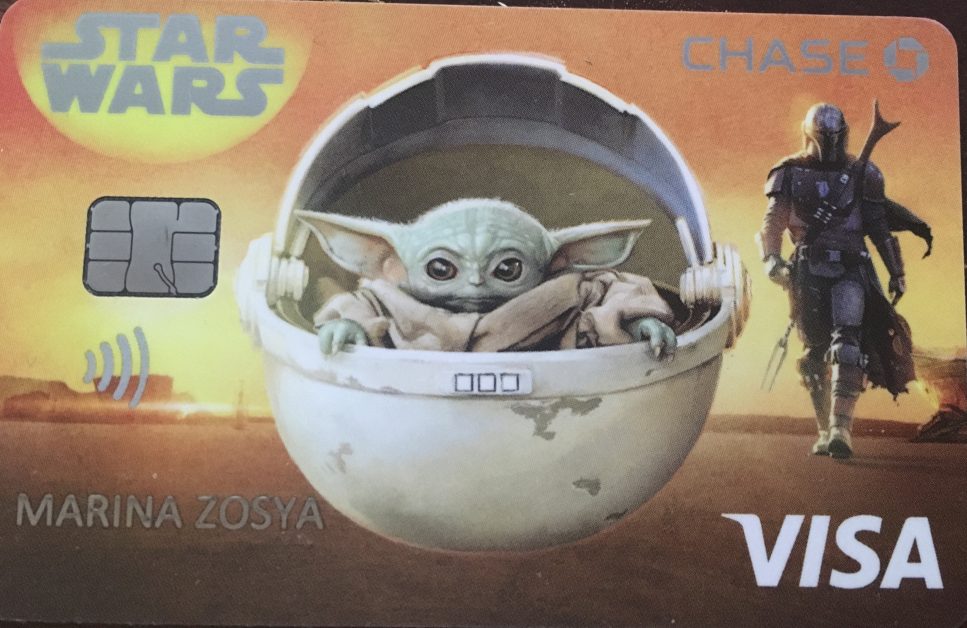
But wait! That’s not the end of it. Forward to April of 2023: I was watching the season 3 finale of The Mandalorian on Disney+ – elated by the the prevailing of all that’s good (Spoilers Alert!!! [but seriously – if you haven’t watched it by now, ten months later, it means nothing to you]): the distraction of the Darksaber and (!) Gideon, the heart-melting adoption, and the sunny adorableness of the new dwellings – when I was presented with a post-credits ad, offering to apply for Chase Disney Card. Which I would totally ignore because I didn’t really need another credit credit card, except that one of the “personalized” fronts of the possible cards you can get was that one – the one pictured above. Who can possibly resist the very idea of having a credit card with baby Yoda in his pod? I couldn’t. But it’s Chase! I don’t want to have anything to do with them anymore. Well, I can overcome that for Grogu. Do they want to have anything to do with me, though? I mean, by then nearly six years have passed since my de-banking. I’ve served my time and all that… Let the power be with me… Takes about two minutes – I was instantly approved for a $6K line. Ten days later the pleasingly adorable card was in my hands….

Two months later it stopped working… No warnings. No courtesy letters or emails. I looked it up online – it said that the account was closed. I called… Well, now you know: (A) It takes 60 days for the underwriting bank to run all of their checks and establish that, even though your credit is good, you remain undesirable to the bank for the reasons they never disclosed to you in the first place. (B) Six years is not enough time for a financial institution such as Chase to forgive you for… doing nothing wrong with respect to their operations per se, as far as I know. Once de-banked, you stay de-banked.

And, as it frequently happens with such entities, they just have to add an insult to the injury: sporadically they still send me an email informing me that “my” Disney credit card account’s statement is ready, balance zero, payment due zero… So heartless… And then a week ago, I received an envelope with Chase logo in the mail. Eight months after shutting down my Grogu account they were informing me that I was due points I managed to earn through the couple of times I did use the card. They’ve enclosed a cashier’s check for $1.65…

That did it. My heart bled for the the paper, the ink, the diesel fuel, etc. that went into production and delivery of that glob mucus into my face. And what else can I do but to write about it?  

I Built This Prison: Excerpt: Once More On Looking (or Rather Not Looking) the Part


From I Built This Prison, Chapter 2. Aspirations, Hopes, and Dreams

Here is an interesting thing to consider: I never was of the correct shape and texture to fit the typical idea of a cutthroat corporate mover and shaker.  Anywhere. In the same way probably as Julia Child was not considered an acceptable choice as standard TV personality in her time. First of all, it wasn’t just the creative pursuits and liberal-arts education – which included journalism, languages, art history, theater and cinema studies, to make a short list – that were barred by the antisemitism in the Communist Russia. Any and all “executive prospects”, such as they were, were also closed for even the most persistent, academically overachieving Jews. The only thing that mattered there was that I looked Semitic and that my “Nationality”, as ethnically defined on the fifth line of a Russian passport, was “Jewish”.

I bless the moment I was accepted to America as a political refugee over three decades ago. Yet, the pertinent truth is that, even after 25 years of professional experience in NYC and the addition of MBA to the list of my degrees, I was still not recognized as a perfectly fitting executive peg here either. Ethnically looking immigrant with an accent; no Ivy-League tokens on my resume or any nepotistic cards up my sleeve – I had to break a lot of barriers to attain my positions even in the private entities, for which I worked.

Big-time HR managers and headhunters will never admit to it, but, in spite of my verifiable knowledge and expertise, they could never visually match me with formal demands and expectations of their illustrious employers/clients for the targeted positions. It’s only when I had a chance to speak with a functional key person from the hiring company directly my qualification usually prevailed over everything else, which only happened in smaller, privately held companies…

We cannot deny the simple fact that opticals play an instrumental role for all American occupations. It’s like what Aaron Sorkin wrote in his 1995 script for ‘The American President’…: “If there had been a TV in every living room sixty years ago, this country doesn’t elect a man in a wheelchair.”

Visually, people like me look most appropriate in the seclusion of labs with Bunsen burners and glass retorts, research libraries with old books and microfiche, at the desks with typewriters, at the various lecture podiums addressing a blurred audience… Not at large-scale corporate events, schmoozing, in a constant search of best-connected targets like a self-propelled torpedo… I cannot stand shellacked hair and none of my business skirts are pencil-shaped. I prefer pantsuits.

I recently mentioned this “suitable look” issue to my daughter who, God bless her, is able to look and act right in any environment imaginable. And she said very simply, “It’s unfortunate, yes. But, Mom, you never even tried to straighten your hair…” How heartbreaking is that? This is what we need to consider in order to succeed in this world? What kind of aspirations we are talking about?

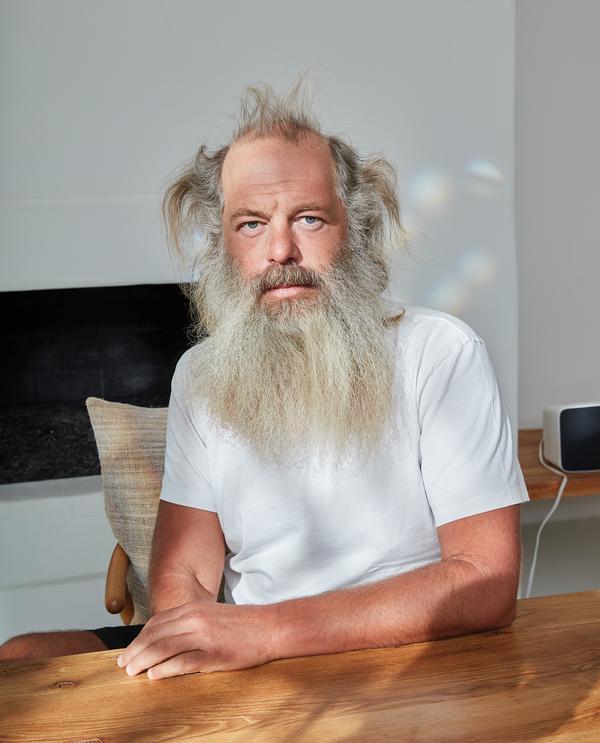
Let me remind you that I am referring here only to the external perception, not the actual competence, abilities, skills, expertise. Everyone knows about a book and its cover, and still no one is willing to read. Yet, looks are truly deceiving, you know, for both covering up the rot and concealing the superpowers. A person may look like an Orthodox-Christian priest but be one of the most important hip-hop, heavy metal, and alternative rock producers of all times (This, by no means, is an abstract example – I specifically have Rick Rubin in mind. I knew who he was long before I saw his photo for the first time. It surprised me.)

I Built This Prison: Teaser #3: I Just Hate Job Hunting


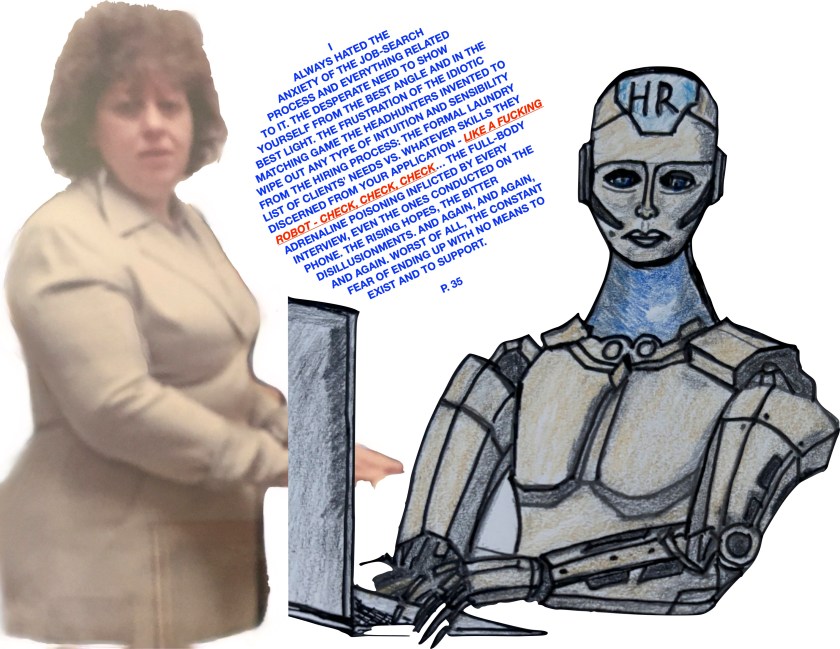
I always hated the anxiety of the job-search process and everything related to it. The desperate need to show yourself from the best angle and in the best light. The frustration of the idiotic matching game the headhunters invented to wipe out any type of intuition and sensibility from the hiring process: the formal laundry list of clients’ needs vs. whatever skills they discerned from your application – like a fucking robot – check, check, check… The full-body adrenaline poisoning inflicted by every interview, even the ones conducted on the phone. The rising hopes, the bitter disillusionments. And again, and again, and again. Worst of all, the constant fear of ending up with no means to exist and to support.

  I Built This Prison, p. 35

Off the Cutting Room Floor of I Built This Prison: Clip #1: Authorship Under Employment


It’s not just your basic human rights that get clipped. You know the inherent copyright rule that everything you create is yours? Not if you created it within your employment framework. As hired help, we lose any and all forms of authorship. Whatever we develop, design, formulate, innovate, write in a normal course of our paid work responsibilities belongs to the compensator. The re-using or duplicating your own prior achievements in any other business can be subject to litigations, which, at best, is throwing money into the wind and, at worst, will ruin your life.

Here’s a classic pop-culture example that can make it clear for everyone. In 1982, Tim Burton, then employed by Walt Disney Feature Animation (a subsidiary of Walt Disney Studios), wrote a poem titled The Nightmare Before Christmas. Being who he is – I mean, an incredibly talented visual storyteller – he considered various possibilities of translating it into images: a TV special, a children book… He created the concept art, the storyboards, and even got Rick Heinrichs (a production designer on many subsequent Tim Burton’s projects, as well as both Ghostbusters, all Pirates of the Caribbeans, etc.) to sculpt the character models… But Disney of the time (CEO E. Cardon Walker) deemed the project too “weird” and stalled it… Then, in his two-year stint as Disney’s CEO (1983-1984), Ron Miller was more interested in creating the Touchstone, which allowed Disney to develop “grown-up” movies, than in Tim Burton’s beautifully morbid ideas – he fired the auteur in 1984.

Thank God for that, because in the next eight years, Tim Burton went on creating Pee Wee’s Big Adventure, Beetlejuice, Batman (all for WB), and Edward Scissorhands (for 20th Century Fox). Yet, the quasi-autobiographical turmoil and conflict between the strangeness of character and the desire to fit into the spirit of a “happy holiday” (never mind that it’s Halloween) that he conceptualize for Jack Skellington have never really left Burton’s creative horizons. Around 1990 he checked… And guess what? Disney still owned it. And by then it was already a Michael Eisner and Jeffrey Katzenberg’s domain with the turf fertile for producing a full-feature Nightmare.

Oh, of course, they gave Tim Burton the creative credit – as the story and characters’ developer. And they listed him as a producer… Why wouldn’t they? His movies were already commercial and critical successes – the instant cult classics that, nevertheless, generated box office numbers in multiples of their budgets. Who wouldn’t want to smack Tim Burton’s name on a billboard? But it’s not like he could take this child he conceived and labored to birth – his creation, and take it away to some place where he could nurture it. No… It was fostered now by people with no blood relations. They even didn’t want to wait until the birth parent was free to play with it (he was committed now to Batman Returns at WB)…. They hired their own nannies from within – a screen writer (Caroline Thompson) and a director (Henry Selick)…  

Don’t get me wrong: I love The Nightmare Before Christmas the way it ended up to be – the stop-motion animated musical with genius music and voice of Danny Elfman. Still, for 30 years now, I’ve been wondering: What it might’ve been if Tim Burton’s parental rights were not terminated by the fact that he was paid a salary by Disney at the time of the authorship…

And as I said, the same rules apply to all achievements attained by a paid employee under the constriction of employment. Whether it’s a product – either creative or physical, a formula, a solution, a process, a recipe, a construct, a logarithm, a program, an optimization matrix, an analytical macro, or a KPI dashboard – it does not belong to you just because you created it. It’s in the possession of the people who paid you your wages. They are the ones who get to use and reuse it, whether you are still attached or separated from them.”

                    Deleted from I Built This Prison, Chapter 4 – Bucket of Tears… and Blood