
Overhead! – Every CEO’s First Response to Subpar Performance Results


Profit DropOf course, it would be obnoxious to generalize my observations to include the entire class of business owners and chief executives (maybe they are not all the same), but every single CEO, with whom I've ever dealt, displayed the same behavioral pattern at the first sound of "bad news."

It's one of the most unpleasant experiences many financial professionals go through from time to time. The fiscal period (month, quarter, year) is closed and you look at the bottom line that is way below the company's target, or worse – the numbers are in red. You cannot help feeling singly responsible, simply because you are the first person to stare in the face of this unfortunate reality.

Yet, while it's true that a holistic CFO, the rightful member of an executive team, shares the P&L responsibility with the rest of the decision-making crew, unless she uses extravagantly expensive capital resources, her direct responsibility for the poor performance is highly unlikely. In fact, she probably anticipated this outcome and was doing everything in her power to prevent it: fought for better informed procurement decisions, higher efficiency, sensible distribution methodology, more selective sales, and so on.

Nevertheless, here are the results. The gross profit is too low, eaten away by sub-par sales. Some of new products couldn't make any money at all due to the lack of marketing and distribution efforts. There is a delinquent debt write-off on an account blessed by the boss for open terms. All these operational losses that you tried so hard to thwart.

And now it's time to present the results to the CEO. Frustrated by the company's poor performance, worrying about the impact the loss may have on the cash-flow, formulating the bullshit you will have to feed to the bankers to spin the disappointing news, you go through the established reporting protocol, whatever it is in you company: KPI tables, graphic dashboards, formal financial statements. As I said, in my experience the delivery of the news causes the same reaction: "We have to reduce our OVERHEAD!!!"

Overhead? We've kept our general and administrative expenses (G&A) stable for years! While we doubled our volume (triple, quadruple – whatever is your case), we managed to do so with a mere 10% increase in non-operating expenses. It's the gross margin we should be discussing. Alas, your reasonable arguments will break against the wall of stubborn conviction that overhead is the source of all evil.

Afterwards, the useless exercise of scrutinizing every single category of G&A will commence. You will have very expensive meetings with highly paid executive staff, including yourself, devoting their valuable time to discussions of $5,000 monthly Federal Express charges and $500 spent on various subscriptions. While you do that, another transaction bound to lose $250,000 will materialize, and then another, and another…

Why does it always happen like this? The answer is simple: only a handful of people are capable of facing their own failures without flinching away. It is very difficult for chief execs , who are frequently involved in operational management, sales, and business development, to admit that they don't really handle their side of the business too well. So, instead of dissecting the real causes, they jump on something they rarely control. And it's really funny, because a significant portion of the overhead is created by them. You know – travel, dinners, drinks, limos, perks, etc.
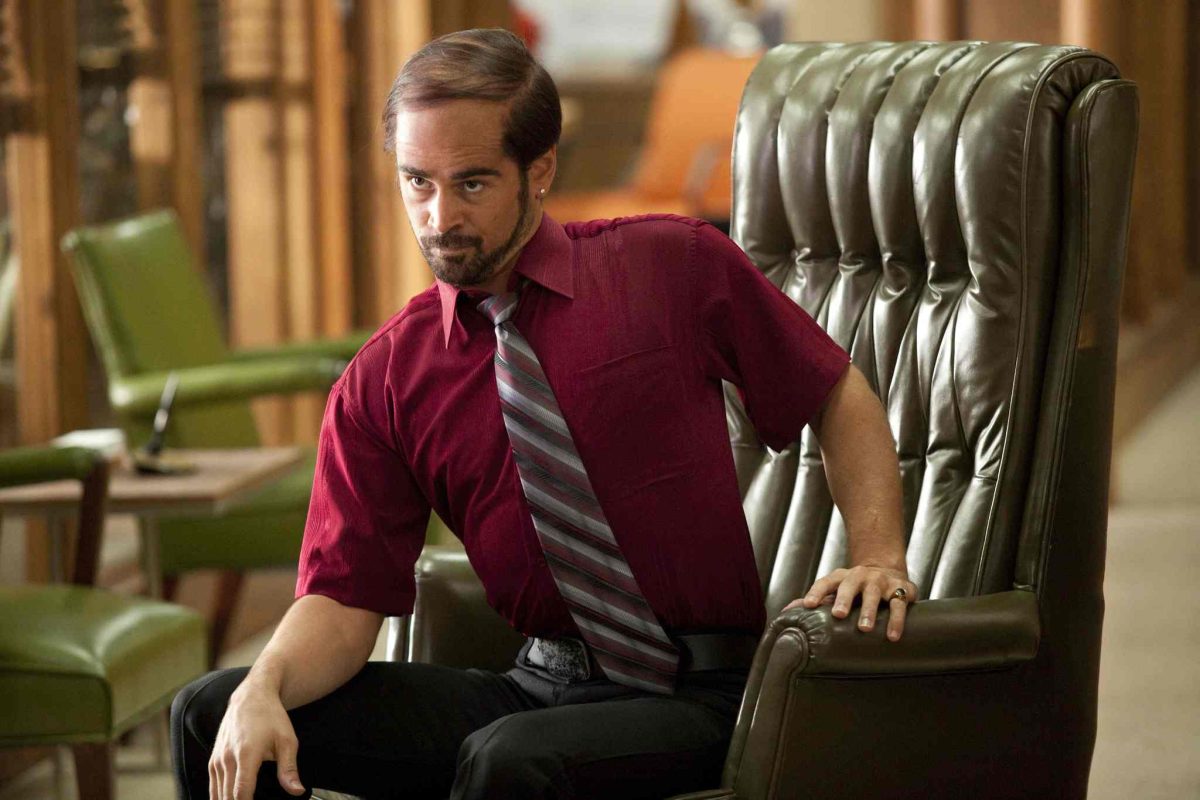
Quote of the Week: “Horrible Bosses”


I still think that this is a silly, phantasmagorical flick.  But that doesn’t prevent me from objectively acknowledging the mastery of Colin Farrell’s acting. He delivers there his most farcical performance to date in his pitch-perfect American accent.  His Bobby Pellitt is a caricature of those real people I frequently describe here—those who think that GAAP and GAP are the same things. 

Huffington Post nominated the following exchange as one of the funniest movie quotes of the year. It’s both funny and quite probable—believe me.

(Written by Michael Markowitz and John Francis Daley.)

Bobby:  We need to trim some of the fat.

Kurt:  What do you mean by trim the fat?

Bobby:  I want you to fire the fat people. They’re lazy and they’re slow and they make me sad to look at.

You can watch the whole clip here: Horrible Bosses


Showtime’s “House of Lies” Showcases “Big Business”


ImagesShowtime methodically continues expanding its gallery of likable bastards – you know, those characters who consistently behave badly, violate conventional "morality" in every other screenshot, show complete disregard for their "fellow humans," and yet entice the adoring audience to watch their screen-capades every week, sins and all. Brian Kinney ("Queer as Folk"), Nancy Botwin ("Weeds"), Hank Moody ("Californication"), Jackie Peyton ("Nurse Jackie"), the Gallaghers ("Shameless") – they all have devoted followers who adore them despite their multiple faults and vices.

Now comes Marty Kaan (Don Cheadle), the ruthless management consultant who, together with his younger team members, would stop at nothing to rake more billable hours and expenses into their employer's purse. To make the main characters more or less palatable to the audience, and at times even lovable and pitiful, the show goes beyond the beaten path of showing their human side in personal situations – it pitches them against the somewhat two-dimensional, but decisively abhorrent, cast of clients who, in the viewers' minds, "deserve" to be taken advantage of, if for no other reason but to restore the sense of "social justice."

This means that the show doesn't go after small businesses – that could be risky as the viewers might feel compassion for the struggling owners, and, more importantly, it would demand from them a sufficient familiarity with commercial specifics. Moreover, even people with no exposure to actual business activities understand that no small company can afford Marty's team's first-class airfare and stretch-SUV limos.

In fact, the clients are all large businesses that seem to be plucked out of the media coverage, which makes them not just the Big Bad Wolves, but the familiar ones as well. These are the entities that, at the very least, come into the peripheral vision of the general public. You've got your proverbial bank, tainted by sub-prime mortgages and riding the bailout wave; an obnoxious teenage high-tech billionaire; a national budget-hotel chain helmed by racist Mormons, etc.

Not-businessy people ask me if the show reflects the reality of the every-day business life. My answer is, "No." And it's not because there are no consulting firms, businesses, engagements, and people like the ones we see in the show, or that the writers get the terminology wrong. Actually they get a lot of things right and I wouldn't be surprised if the writing staff compiled by Matthew Carnahan for this show has at least a few people with MBA's in their past. At times they even go too far in their realism: I wonder, for example, what percentage of the audience understands what KPI's are.

The reason the show has nothing to do with the life most business people live is that the Big Business's actual existence is unreal and makes no common sense. Their paper-financed operations, the influence on the government, the executive compensations, the excessive spenditures on… mmm… everything, the actions they get away with – they are surreal and grotesque. But, I guess, that makes it even more fitting for entertainment purposes.

That said, there were a few observations within the first 5 episodes of the show that not only rang very true to my ears, but some were already addressed in this blog's posts:

1. Within the first 10 minutes of the pilot, Marty explains to the audience how the "afterwork" is attained: make them feel like their business is going to fail without you and tons of billable hours will be generated (see 05/14/2011 post Case Study: The Marketing of Fear).

2. The member of Kaan's team responsible for crunching numbers and analyzing clients' financials looks timidly and acts awkwardly in social situations, representing the classical Hollywood stereotype of an accounting professional (see 10/26/2010 post He Looks Like an Accountant…).

3. The core substance of dynamics between various CEOs and CFOs so frequently discussed here (just go to the "Bosses" category) is accurately captured in a very schematic way, which actually manages to make it almost biblical in its generality: a prim-spined, heartless bully, bent on doing the things his way, whether it's good for the business or not (the Boss), on one side and a somewhat hunched, practical, reasonable, subordinate, but still powerful in his own sneaky way schemer (CFO) on the other.

4. Finally, the ultimate truth I have an occasion to repeat at least once every day: everything in this world is a matter of perception, or, as Marty Kaan puts it, "Data dump is the key; everything else is horseshit, except PERCEPTION, which is horseshit you can leverage."

CFO Folklore: Joke of the Day


From an actual email exchange:

CEO:    "I wonder when my crack accounting team planned to tell me about this previously unknown accrual!"

CFO:     "First of all, it's not crack, it's dope!  Secondly, the accrual is only 5 minutes old and you are already informed.  We are not in an AT&T commercial, you know."


A CFO’s Democratism Gets Tested


Worker Bee In most smaller companies, CFOs and controllers include general HR functions into their scopes of responsibilities – that's a given. The flat organizational structures, though, with their spatial and psychological proximity of top executives to the staff, play peculiar tricks on those in charge of the company's human relations.

Very frequently a CFO takes a role of a buffer between the owner/CEO and the rest of the company's employees. She feels obligated to soften the impact of the direct dealing with frequently harsh and hard attitudes of the boss.

I've said it before and I'll say it again: more frequently than not entrepreneurs don't have an experience of ever being in a position of an employee and, therefore, they have very little understanding of the staff's mentality. On the other hand, a CFO maybe a right-hand person now, but she is still just a salaried employee, most likely grown into her current status by climbing through the ranks. If she is a decent human with a conscience, she is sensitive to the needs of valuable employees and cares about their well-being (if they are useless, let someone else care about them).

It's likely that an excellent CFO would enjoy a comparatively preferential treatment by a CEO: more disciplinary leniency, nicer attitude, better perks, general amiability, etc. When it comes to other employees, their efforts and achievements may be remarkable, but they are not as evident to the boss, and that reduces their value in his eyes. I've had one CEO openly tell me that if I want a certain benefit (let's say flexible spending account) for myself, he would be fine with obtaining it, but he did not care about the rest of the "worker-bees."

So, the CFO takes it upon herself to protect other employees from undue tyranny and act as their speaker when it comes to betterment of the employment conditions, whatever they are: raises, bonuses, vacations, benefits, etc. Sort of like a representative of the XYZ Company's employees union. And when she discusses this situation with her friends and family, she expresses her disdain for the undemocratic ways of her boss, taking pride in her efforts to right the wrongs.

Now imagine such a CFO taking a position with a new company – small, young, still pretty much in development stage. The owners are very liberal and treat everyone like equals. Moreover, the CFO is the last person being hired. Those few other employees have been there from the start. Nobody needs protection. Furthermore, there is one person who has been there the longest, starting as a CEO's assistant. Not that she gets any special perks or something like that, but she definitely feels very secure.

This should make the democratic CFO very happy. After all, wasn't she fighting for equality of other employees all the time before? Yes, it's nice; wonderful, really; exactly what she hoped to find… Except that… Being "the chosen one" was kind of a guilty pleasure too, an enjoyable self-esteem booster. And the gratitude of others for all that blow-cushioning effort was very rewarding as well. As important as the democratic principles were to this CFO, the old tyranny is somewhat missed.

That's how we, humans, are. For various reasons and purposes, mostly subconsciously and without any malice, we create these little lies that alter our self-image and other people's perception of us in one way or another.

It reminds me of my UK friend of many years, Gerald Hamer's, revelation concerning his constant bitching and moaning about endless international traveling he had to endure throughout many years of his impressive career as financial broker and adviser. "In truth," he said, "deep inside I love the goddamn airports; the sub-par plane food; the inevitable delays; god-forsaken Yakutsk, the coldest city on Earth, with its diamond mines one week, and unbearable humidity of Bahrain another. I wouldn't want it any other way."

So, all you, democratic CFOs out there, work as hard as you can and fight for your employees' well-being with all you've got, but be honest with yourself: you enjoy being special, the Most Valuable Player in the field.