
The Dashboards Obsession


It is easy to understand how executive dashboards have become so chic.  Most products come to mass market by way of technological advancements.  The 3-D movies fascinated audiences in select theaters for decades.  Now, we have 3-D TVs in our homes.  By the same token, specialized and complicated business intelligence software (like Cognos) existed since the 70s.  However, the 21st century brought forward adaptable, customizable, open-architecture systems and integratable reporting tools. 

Business intelligence and financial performance management are not new ideas.  Data warehousing may sound like a novelty, but collecting and organizing records in a particular order for easier access existed for centuries. The concept of information as a key to business success is millennia old.  How many spearheads you are going to make, if you don’t know all the warriors in your tribe? 

Of course, nowadays data flows are more complex.   The CFO’s and CEO’s need information integrated from different sources and they need it fast.   So, the developers caught up with the demand and offered executive information systems aka dashboards.  They advertise, give distribution licenses to specialized vendors, hold conferences, etc. As usual, standardization is mandatory in order to capture larger market shares, and that’s where the fallacy forms. 

Don’t get me wrong, they are beautiful visual arrangements – much more vivid than dry columns of numbers, far more impressive and memorable.  On top of that, more expensive ones allow you to drill down into the data behind them.  That’s incredibly cool!

Here are some of mine own:
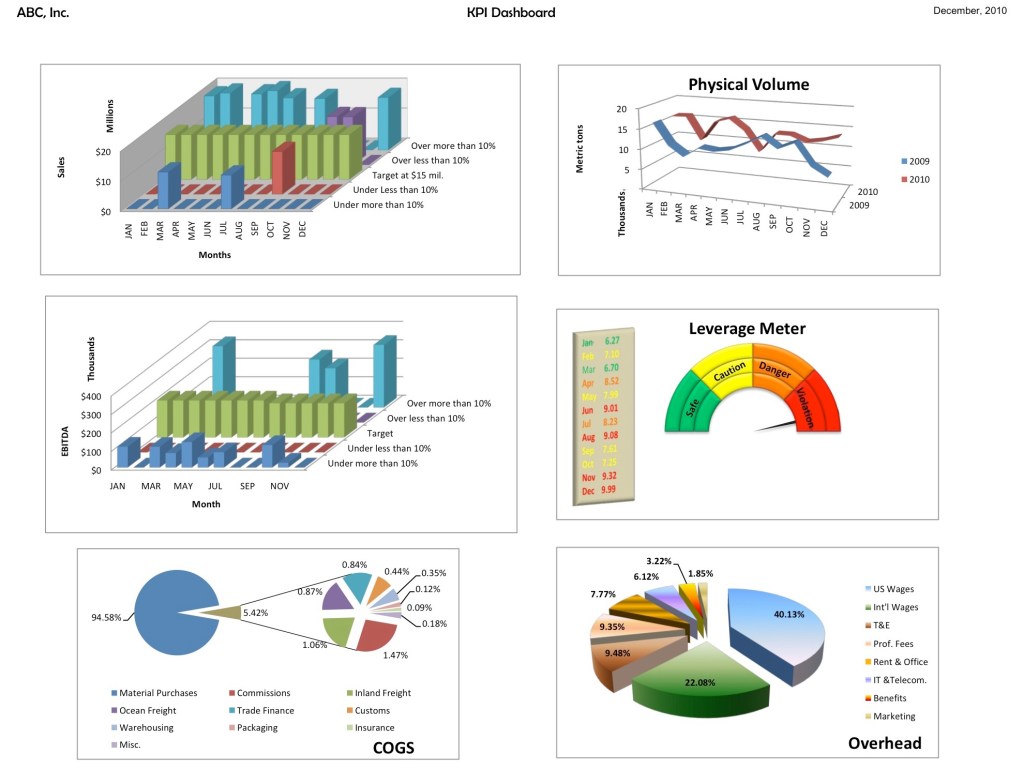
Yet, in far too many instances the form obscures the substance.  Now, the users think they need something looking exactly like that, instead of thinking what info is fed into it.  And it is very sad, because CEOs and CFOs in need of sensible information, frequently end up just looking at a pretty picture.

I’ve seen a lot of dashboards – most of the time I find them absolutely irrelevant.   You are looking at your 12-month revenue curve and it displays expected cyclical pattern.  What are you learning here after spending a tidy sum for ability to generate this graph with a push of a button?  Nothing new – your last year curve had exactly the same shape.  How do you know whether you are doing better or worth now than a year ago?

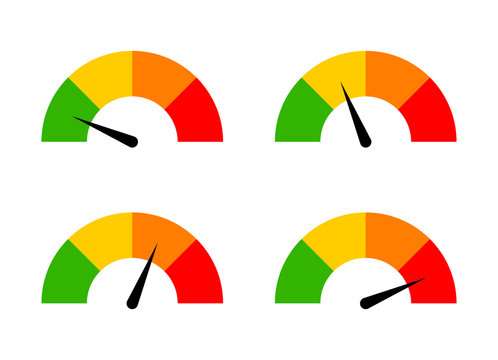
And the gauges!!!  They look awesome and they justify the name “dashboard,” but they are the most difficult charts to read.  Moreover, they are kind of useless for static information.  Unless a constantly changing (and most importantly, crucial) information is fed into this device in real time, you have no reason to stare at a red circle with green border and unmoving black arrow.    

Here is my advice: don’t fall for colorful pictures.  Start from the beginning.  You know which information is most important for you and your CEO, which parameters affect your business’s ability to survive.  Figure out what combination of data would make the real impact on your decision-making, how frequently you want see it, whether it needs to be dynamic or static, etc, etc.  Only after that you can think about the format. 

Let’s say your product’s price is in direct correlation with crude oil market.   In this case, may be the two sets of data should be presented together, or maybe it’s most important to look at the units, not the sales dollar value?  Those are the important decisions, not the shapes and colors.

It is very possible that you need bar charts, graphs, even gauges.  Hey, if you are a jewelry manufacturer and make raw material procurement decisions all day long, there is nothing wrong with having a gold price meter installed right in the center of your screen.  At the end of the day, it is all about common sense.
Executive Recruiter aka Thoughtless Pest


 Let me explain right away that this is not an attack on the entire human resources profession.  There are many thoughtful in-house HR Managers and freelance consultants with whom I worked.  I have no problems with them. 

This is about scores and scores of functionaries buzzing around in international headhunting factories that pretty much monopolize the executive search field – Robert Half, Michael Page, Execu|Search, Ajilon and their lesser competitors.  I kind of hoped that they would be extinct by now.

These pests have neither time nor dedication to understand the actual specifics of positions they are paid to fill.  Even in the pre-internet times, all they ever did was looking for matching items between some laundry lists of requirements and applicants’ resumes.  Did you actually think they read them?  Nope!  It’s a matching game.  Nowadays, they don’t even do that, they don’t even look at CVs.  Now, they’ve got a “cool” software known as  Applicant Tracking System (ATS).  The computer plays the game and just reports the score.    

This insults my intelligence.  It used to devastate me as a job seeker.  It offends me as a hiring executive who goes out of her way looking beyond the resume phraseology for the spark of brightness.  For me hiring was never about check marks.  Recruiting, especially on the senior executive level, is about real jobs and real abilities.     

What I don’t understand is why there is still demand for their services?  Why people are still willing to pay $30K-$100K for a “good enough match”  that rarely produces satisfactory results?  People tell me that they see the same job postings for six, sometimes even 12 months.  Are you kidding me?

Don’t employers know that for a very reasonable fee they can post their ads on job boards such as Monster, CareerBuilder, The Ladders, where all job seekers look?  They can be even more effective (still for a very reasonable fee) and use those boards’ search engines to access thousands of resumes.  It may be time-consuming, but trust me, it has higher value/cost ratio.

Eliminating recruiters from the market would make the job boards’ fees even more competitive.  Meanwhile, they are polluted by big-name ads.  With this post in mind, I took a quick look.   It seems that nearly 80% of postings are coming from just four players.  And the “Requirements” are so similar – they must be copied from the same template.  I am sure they enjoy big discounts too by getting the bulk deals.

With so many people presently out of work, the stories of headhunter encounters just pouring in.  Some of them are so fascinating, they can warrant their own feature posts.  However, there is a striking similarity in all of them – the notion of mindless attitudes and inconsiderate actions.  It appears that like doctors, who have seen so much pain and devastation, they became absolutely insensitive to other people’s anxieties and worries, the recruiters also forgot that they deal with live human beings.  

Well, I am not dealing with them.  How about you?

How Far Can They Push Us?


The post about infringement of freedom in the workplace generated further discussions among my peers. 

Some people actually said that I made them very depressed by putting into words realizations they try to avoid.  I would like to remind these people that the Welcome page of this blog, Reason to Share, clearly expresses my belief that sharing frustration gives us therapeutic relief.

Others felt that my "uplifting" statement that one can always quit was clouded by the suggestion that most CFOs and Controllers cannot afford to do so.  Indeed, I keep talking about how difficult it is to find a CFO/Controller level job nowadays.  That's why I don't suggest quitting without lining something else up or having sufficient funds to keep yourself afloat during the job search.  The truth is, you need to establish an emergency fund anyway – as I always say, there is no such thing as job security for anyone in this new world.

But let me tell you from my own experience, there comes the time when you just know you cannot deal anymore.  You are so frustrated, anxious, depressed, angry and hopeless, you cannot breath.  No matter what you do to get a grip, it feels like your balance is slipping away.  If that's the case, it is time to make your move, because otherwise the suffering is going to destroy you either psychologically, or physically, or both.

I have many stories about people pushed too far and, hopefully, I will be able to tell them here at one or another point.  However, for this particular post I decided to use, as means of a more familiar illustration, a Hollywood classic by Billy Wilder – "The Apartment" (1960). 

The main character (forever great Jack Lemmon) is not a CFO or a Controller, but he is an ambitious person and the gist of the story is very relatable to subordinate employees on all levels.  You see, he really wants to climb the career ladder.  So, he lets the VPs to use his apartment for their extramarital encounters.  He even lays out snacks and liquor for them to enjoy. 

When he allows himself to be convinced by his boss to leave his apartment on  a rainy Christmas Eve, he is angry and frustrated, but he keeps his mouth shut.  And finally he gets that "big promotion" he'd wanted.


Jack's character falls in love with the elevator girl.  He doesn't know that she has been to his apartment with one of his bosses as well.  When the moment of truth finally comes, he feels so overwhelmed, he realizes that he cannot be a doormat anymore.  The time has come to be a human being.


So, gives up his job.  Of course, as in all Hollywood fairy tales, he gets the girl (an adorable Shirley MacLaine) as a reward for his courage.  But it does not matter: rewards or not, everyone has their own threshold of pain tolerance.


Why Are Ex-Bosses Mad at Us?


Daruma People complain to me about not being able to get in touch with their old bosses.  This means they are talking about business owners. 

I have not heard of anybody having problems like that with their former supervisors from large companies.  After all, those people are subordinates of their own bosses too.  Unless you have spat into his coffee mug or slept with his wife, the two of you should still be on good terms.

It's a different story with Owners/CEOs.  Some may ask, why do you want to be in touch with them?  As the matter of fact, for many reasons.  I've already addressed the references issue (see my post from a month ago CFO's References Trap).  He (I am talking about an archetypal boss now) may have a networking connection you crave.  He may know someone you need to contact for your new business.  You liked his attorney and now you need one.

There could be a million reasons.  But you cannot reach him.  You emailed, you left messages with his assistant and/or wife, you tried to contact him via mutual relation…  No response!  And that fucking hurts! 

You have toiled 60-hours a week for him, you grew his business, you made him richer, you saved his ass from troubles numerous times.  Hey, you pulled him from the verge of bankruptcy and complete destruction!  Hell, it's his fault you are not his CFO/Controller anymore.  You are the one who should be mad at him!

And the funny things is – other people who worked there adore you.  They tell you how great and important you were to the entire company, how much they've learned from you.  Yet, the person who benefited the most from it, doesn't even want to acknowledge your existence.

Now, let's put emotions aside and think about it with our cool, rational financial minds.  There are obvious reasons for your ex-boss to be mad at you:

1.  You warned him about troubles that may befall his business and did your best trying to cover the risks, but he didn't listen to you.  Now, history proved you right.  Do you really expect him to talk to you and acknowledge that?

2.  Even before your ways parted, subconsciously he knew your were the smarter one.  Secretly he hated you for that.

3.  In his mind he expects to hear, "I told you so."  He has no clue that your decency would never let you do that.

4.  If he contracted and managed to save the smaller version of his business, in his head he probably blames your absence for his inability to grow back. 

5.  He had to hire three people to replace you and still they cannot keep up.  Whose fault is that?  Yours.

6.  And that secretary of his…  Well, let's not go there.

If any of these scenarios apply to your case, I guarantee, he will never talk to you, even if he needs you desperately.  He is the BOSS – he cannot put the ego aside the way we always do.     

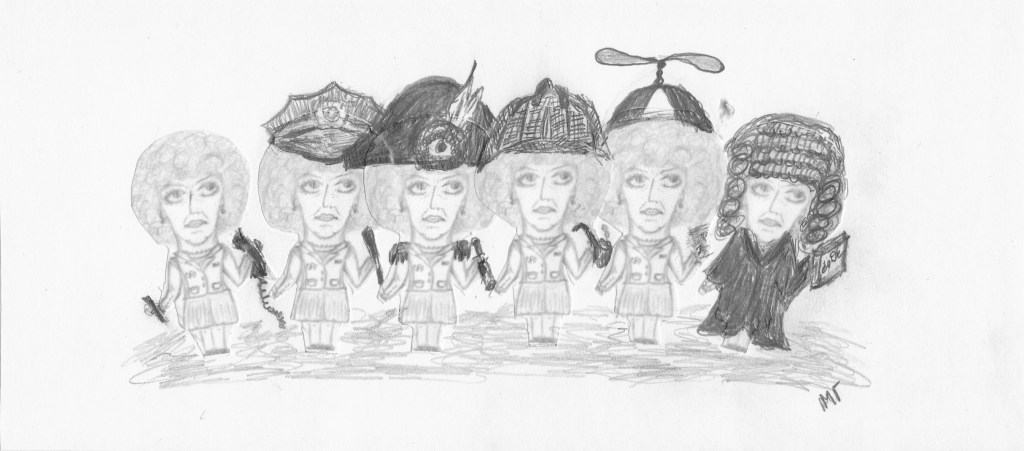
Illustration to the Recurring Subject of CFO’s Many Hats


These are just the transformations the small-business financial execs experience on daily basis: from CFO to Policy Enforcer to Strategist to Forensics Pro to Computer Geek to Legal Authority

If you are interested to read more on the subject, please, go back to my very first two-part post:

CFO’s Many Hats: Etiology of Affliction, Part I.

CFO’s Many Hats:Etiology of Affliction, Part II.

Readers who have stories to share, as always, welcomed to contact me.