
Economic Newsflash: You May Never Have a Chance to See the Mona Lisa Again


Old_695So, apparently France got themselves into a $2.6 trillion debt hole.  This translates into $42,623 of national obligations per each of 66 million French têtes.  Of course, the number is staggering.  However, I feel obligated to state that this is not as bad as what we have here, in our own beloved country with our very own $17.8 trillion burden pressing hard on 319 million of us with a weight of $55,684 per capita.

Still, someone just asked me the other day, how the hell France got itself so fucked.  It's not like the country pays $42 billion into IMF every year; or covers 22% of the UN budget; or sticks its nose into every hot spot in the world, bankrolling military and whatever-else aid campaigns.  And it definitely doesn't spend billions on artificially fueling the US stock market, even though if it crumbles the economies world-wide, including the French,  will be doomed.  It's our government that borrows funds for all that. 

I'm no expert on French economy and I'm not about to embark on researching their problems in detail (God knows, I have more pressing things to do).  However, basic knowledge of European affairs is sufficient for a logical person to form some general ideas. 

This is what happens with the formerly wealthy, but already shaky (who isn't now?), national economies when they decide to build an opposition to USA by combining as many European countries as they can into some utopian economic union: they start breaking their financial backs by carrying on their shoulders weaker (like, ahem… Greece) nations.  And, of course, the state needs resources to support domestic  industries (solely in the name of protectionism).  Add to that immigration policies driven by "special interests," which result in a population seriously skewed toward multi-children families with idle heads of households, who don't pay taxes but draw extensively on social programs.  And why not?  The majority of French population don't want to work too hard anyway: shorter hours, exuberantly long vacations, early retirement (at 60!).  And again, why not when there is the Mandatory State Pension Provision in place?    

What the poor France to do?  Well, the French government came up with this brilliant idea: They are going to sell national treasures, starting with… Da Vinci's Mona Lisa (!), which, thanks to king Francis I, has been in France's possession since Leonardo's death, i.e. nearly 500 years. 

Don't tell me that this doesn't sound like the end of the world:  Through ages of political rioting and religious massacres, twenty three wars, three full-blown revolutions, multiple colonial rebellions, and Nazi occupation France managed to hold on to Mona Lisa.  It's the perverted foreign policies and socialistic interior governing of our foolish times that led to the total socio-economic bankruptcy of the formerly powerful country.

You and I may think that La Gioconda is priceless, but the French have already assessed its market price, i.e. how much money someone may be willing to shed for it.  During the 60s the best guess of the art-dealing community was around $100 million.  Now, 50 years later, the time-adjusted equivalent of that sum is $2.6 billion.  Never mind that this would cover only 0.1% of the debt in question.  As they used to say in pre-Euro France, every centime counts.

One can't help but marvel at the utter stupidity and nearsightedness of the government that can entertain the idea of  eliminating one of the main reasons for the international tourism to the infamously snooty, unreasonably expensive, and ethnically unstable City of Lights (the Louvre is still #1 visited museum in the world).  Can these people see anything beyond their service terms?  I can clearly visualize the snowball of layoffs and business closures, which will unavoidably lead to the further drain on the state's treasury.  But those are French problems.  So, fuck them!

What the rest of the world, especially those of us who care for the arts, should be concerned about is the distinct possibility that we may never ever have a chance to stand in front of the Mona Lisa and attempt to absorb (it's really not that easy in the room full of tourists holding up their video and photo devices) Da Vinci's masterpiece in person.  And this is especially heart-breaking because it is one of only 23 surviving major works that are either universally or generally attributed to Leonardo.

It's dreamy to imagine one of the world's major museums trying to acquire the painting.  However, it is unlikely that any such institution will be able to come up with a $2.6 billion check.  The third-ranked museum in the world, The Metropolitan Museum of Art, is America's richest cultural institution with $2.7 - $3 billion annual endowment.  However, the $300 million operating budget and constant structural updates apparently eat away the majority of the funds – during the fiscal year of 2012 the Met spent only $39 million on new acquisitions.  Of course, there is an aggressive deaccessioning, which allows the museum to sell off "minor" pieces in pursuit of the "major works,"  but even with an average of $1 million per item, the institution will need to liquidate 2600 (!) works to collect the required amount.  Highly doubtful!

So, if the transaction does materialize, it most likely will be funded by private wealth.  You can pack a large ballroom with people from different corners of the world whose wealth amounts to multiples of the asking price.  For the sake of my personal amusement we can entertain another beautiful fantasy:  How grand would it be if one of our openly super-rich individuals with strong philanthropic inclinations shelled out a chunk of his wealth for La Gioconda and then gave it away to the Met, so that the grateful general public could continue enjoying it (only now in my own backyard)!     

It would take only 4.4% of Warren Buffett's worth or 3.2% of Bill Gates's.   But both of them are too preoccupied with keeping the world healthy and the US technologically comfortable (don't ask me why) to bother with art gifts like that.  And by the way, the Codex Leicester, the most famous of Da Vinci's scientific journals, which Gates bought in 1994 for $31 million, is kept in the MS mogul's own private vault.  It is considered a great generosity that the Codex is let for display once a year in different cities around the world.  Yes, it is hard to imagine that anyone would give away the Mona Lisa as a gift to an institution or a nation.

The way I see it, the buyer will probably be someone whose immeasurable wealth you can't find on some Forbes list, because it is not valued in the ephemeral public-stock prices.  This multi-billionaire is someone who keeps a low profile and his name would mean nothing to the majority of the world even if he walked into the Louvre in person.  But such an individual will transact through multiple proxies, and when all is done the Mona Lisa will disappear from the public eye into a secret stronghold.  We will be left with reproductions and copies, while a handful of people will enjoy the privilege of up-close peering into the delicate strokes of oil paints applied by the genius's hand to a piece of poplar wood. 
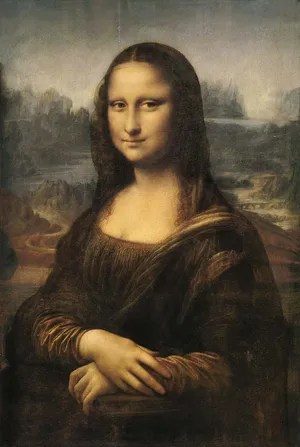
Global Economics Newsflash: You May Never Have a Chance to See the Mona Lisa Again


So, apparently France got themselves into a $2.6 trillion debt hole.  This translates into $42,623 of national obligations per each of 66 million French têtes.  Of course, the number is staggering.  However, I feel obligated to state that this is not as bad as what we have here, in our own beloved country with our very own $17.8 trillion burden pressing hard on 319 million of us with a weight of $55,684 per capita.

Still, someone just asked me the other day, how the hell France got itself so fucked.  It’s not like the country pays $42 billion into IMF every year; or covers 22% of the UN budget; or sticks its nose into every hot spot in the world, bankrolling military and whatever-else aid campaigns.  And it definitely doesn’t spend billions on artificially fueling the US stock market, even though if it crumbles the economies world-wide, including the French,  will be doomed.  It’s our government that borrows funds for all that. 

I’m no expert on French economy and I’m not about to embark on researching their problems in detail (God knows, I have more pressing things to do).  However, basic knowledge of European affairs is sufficient for a logical person to form some general ideas. 

This is what happens with the formerly wealthy, but already shaky (who isn’t now?), national economies when they decide to build an opposition to USA by combining as many European countries as they can into some utopian economic union: they start breaking their financial backs by carrying on their shoulders weaker (like, ahem… Greece) nations.  And, of course, the state needs resources to support domestic  industries (solely in the name of protectionism).  Add to that immigration policies driven by “special interests,” which result in a population seriously skewed toward multi-children families with idle heads of households, who don’t pay taxes but draw extensively on social programs.  And why not?  The majority of French population don’t want to work too hard anyway: shorter hours, exuberantly long vacations, early retirement (at 60!).  And again, why not when there is the Mandatory State Pension Provision in place?    

What the poor France to do?  Well, the French government came up with this brilliant idea: They are going to sell national treasures, starting with… Da Vinci’s Mona Lisa (!), which, thanks to king Francis I, has been in France’s possession since Leonardo’s death, i.e. nearly 500 years. 

Don’t tell me that this doesn’t sound like the end of the world:  Through ages of political rioting and religious massacres, twenty three wars, three full-blown revolutions, multiple colonial rebellions, and Nazi occupation France managed to hold on to Mona Lisa.  It’s the perverted foreign policies and socialistic interior governing of our foolish times that led to the total socio-economic bankruptcy of the formerly powerful country.

You and I may think that La Gioconda is priceless, but the French have already assessed its market price, i.e. how much money someone may be willing to shed for it.  During the 60s the best guess of the art-dealing community was around $100 million.  Now, 50 years later, the time-adjusted equivalent of that sum is $2.6 billion.  Never mind that this would cover only 0.1% of the debt in question.  As they used to say in pre-Euro France, every centime counts.

One can’t help but marvel at the utter stupidity and nearsightedness of the government that can entertain the idea of  eliminating one of the main reasons for the international tourism to the infamously snooty, unreasonably expensive, and ethnically unstable City of Lights (the Louvre is still #1 visited museum in the world).  Can these people see anything beyond their service terms?  I can clearly visualize the snowball of layoffs and business closures, which will unavoidably lead to the further drain on the state’s treasury.  But those are French problems.  So, fuck them!

What the rest of the world, especially those of us who care for the arts, should be concerned about is the distinct possibility that we may never ever have a chance to stand in front of the Mona Lisa and attempt to absorb (it’s really not that easy in the room full of tourists holding up their video and photo devices) Da Vinci’s masterpiece in person.  And this is especially heart-breaking because it is one of only 23 surviving major works that are either universally or generally attributed to Leonardo.

It’s dreamy to imagine one of the world’s major museums trying to acquire the painting.  However, it is unlikely that any such institution will be able to come up with a $2.6 billion check.  The third-ranked museum in the world, The Metropolitan Museum of Art, is America’s richest cultural institution with $2.7 – $3 billion annual endowment.  However, the $300 million operating budget and constant structural updates apparently eat away the majority of the funds – during the fiscal year of 2012 the Met spent only $39 million on new acquisitions.  Of course, there is an aggressive deaccessioning, which allows the museum to sell off “minor” pieces in pursuit of the “major works,”  but even with an average of $1 million per item, the institution will need to liquidate 2600 (!) works to collect the required amount.  Highly doubtful!

So, if the transaction does materialize, it most likely will be funded by private wealth.  You can pack a large ballroom with people from different corners of the world whose wealth amounts to multiples of the asking price.  For the sake of my personal amusement we can entertain another beautiful fantasy:  How grand would it be if one of our openly super-rich individuals with strong philanthropic inclinations shelled out a chunk of his wealth for La Gioconda and then gave it away to the Met, so that the grateful general public could continue enjoying it (only now in my own backyard)!     

It would take only 4.4% of Warren Buffett’s worth or 3.2% of Bill Gates’s.   But both of them are too preoccupied with keeping the world healthy and the US technologically comfortable (don’t ask me why) to bother with art gifts like that.  And by the way, the Codex Leicester, the most famous of Da Vinci’s scientific journals, which Gates bought in 1994 for $31 million, is kept in the MS mogul’s own private vault.  It is considered a great generosity that the Codex is let for display once a year in different cities around the world.  Yes, it is hard to imagine that anyone would give away the Mona Lisa as a gift to an institution or a nation.

The way I see it, the buyer will probably be someone whose immeasurable wealth you can’t find on some Forbes list, because it is not valued in the ephemeral public-stock prices.  This multi-billionaire is someone who keeps a low profile and his name would mean nothing to the majority of the world even if he walked into the Louvre in person.  But such an individual will transact through multiple proxies, and when all is done the Mona Lisa will disappear from the public eye into a secret stronghold.  We will be left with reproductions and copies, while a handful of people will enjoy the privilege of up-close peering into the delicate strokes of oil paints applied by the genius’s hand to a piece of poplar wood. 

Rumor Has It… Trouble Is Brewing in Private-Equity World


Storymaker-slideshow-holy-monks-brewmasters2-514x418The other day I had a meeting with some big shots from Citibank's commercial landing.  Every single person at the table felt disappointed.  On my side of the negotiations, everyone was shocked that the bank came up with some really sneaky changes to the Term Sheet we have originally accepted.  Citibank's covert operatives were distressed to realize that their maneuvering didn't work on us and, moreover, we are absolutely ready to walk away from the deal. 

Nobody was disgusted more than me, though: I've rejected other lending candidates in Citi's favor based on the conditions of that damn Term Sheet; I've spent so much time and effort making sure that the deal comes to conclusion and closes by June 15th; I've conducted so many detailed discussions with the bank officers; I've plied the Credit Risk Group with tons of information and provided elaborate answers to every single of their drilling questions – dammit, what a waste!  I started getting up from the table, determined to say a cold goodbye ("Good day, sirs… I said, 'Good day'," or something like that) and leave everyone in the conference room to their own devices. 

But the bank's team leader didn't want to give up.  This seasoned warrior (whose bonus depends on the number of deals she closes) quickly swallowed the bitter pill of defeat and started deliberating the possibilities of remedying the unfortunate situation.  By way of explaining and excusing their underhanded tactics, she embarked on a tale of pressure and oppression all national banks suffer from the Office of the Controller of the Currency (OCC) that, empowered by the US Treasury's mandate, tightened the regulatory screws on all commercial lenders operating in small and middle markets.     

Ring-ding-ding!  The government is making it more difficult for small and mid-size businesses to borrow operating funds?  Tell me more!  

I can only attribute her sudden loquacity to the awkwardness of the impasse we have reached, to the thickness of the room's air that required some sort of easement before our dialogue completely choked.  Not only that she went into details of the new pre-lending qualification requirements for private businesses such as lower leverage (i.e. debt/equity) and higher fixed-coverage (EBIT + fixed costs/fixed costs + interest) ratios, but she also divulged some information bankers almost never discuss – she told us about a specific deal just killed by the bank's risk underwriters for the sake of compliance with the government's wishes.

It was the nature of the transaction in question that surprised me at first – a typical leveraged buyout (LBO) of a privately-held manufacturer, with a well-known private equity (PE) firm and a mezzanine lender already in place.  Citi was expected to step in as an institutional lender covering 55% of the contractual purchase price.  I might've been wrong, since I'm not exposed to M&A on daily basis, but I was under impression that banks are usually hungry for the high-yield rewards of such deals, especially considering the prominence of the PE behind it. The fact that this case was presented to us as an example of insufferable regulatory interference kind of confirmed my suspicion that Citi's bailing out was an unexpected turn of events for the bankers themselves.

So, did they get the explanation from their Risk partners? Yes, they did: The due diligence suggested that the deal had a high probability of a quick turnaround.  In other words, it was expected that the PE firm would quickly flip the acquired company's stock for a nice profit leaving the company to deal with the loan repayments.  Ok, but isn't that the nature of any private equity transaction, regardless of whether the ownership is sold fast or kept in-house for years?  The loan repayments always come out of the company's operational cash flows.  The liability is a part of their balance sheet.  Hmm…     

Anyway, the talkative tactics worked and we all decided to go back to our respective drawing boards instead of walking away from a very promising relationship.  Good!  But the story of the killed LBO kept gnawing at me. 

Ok, on the surface, it may seem that the government is working hard on protecting taxpayers from a possibility of another bailout.  But

  1. Citigroup was one of the first bailees to repay the government ($51 billion) with the highest profit on the bailout list (additional $13.5 billion).
  2. As we know, it wasn't the commercial lending, but the sub-prime mortgages and the securitization thereof that was at the core of the financial crisis and the subsequent bailout.  That is why the government-sponsored Fannie Mae and Freddie Mac top the bailout chart with $187 billion of the received support between two of them.
  3. Of the top 20 bailout recipients the one with the largest debt still outstanding since 2008  is General Motors (as of 05/29/2014, $11.5 billion is still due)- an automaker, a public company, a NYSE's Blue Chip.      

Wait a minute, wait a minute!  Private business vs. public company?  These Treasury moves have nothing to do with the fiscal protection of the nation.  It has to do with the government's continuous prevention of the stock-market crash and massive panic that will follow.  Too scared to deal with the long overdue adjustment, it has been doing everything in its power to direct both public and corporate investments into the shares gambling of mythological proportions. 

The private businesses and the private equity investors act against this insane agenda by laboring hard under the natural commercial formula of growing capital through realized profits generated by functional enterprises.  To undercut these efforts, the proverbial "they" are willing to sabotage private businesses, which hoi poloi knows nothing about, in order to continue ballooning the stock market cancer, so that the general public with their Ameritrade accounts and 401(k) plans invested into "emerging" markets is kept at bay.

Well, I will not fold!  I will get that Citi line!  As hopeless as it may be in the long run, I take a great satisfaction in the fact that my daily work is essentially a part of the Fiscal Resistance. 

Business-Lunch Scene Today: Cipriani Wall St.


R_671_main_imgFor many years Cipriani restaurant at 55 Wall St. (aka Cipriani Club 55) has been a staple location for Financial District's lunchers with company-paid expense accounts: classy, convenient, prestigious, comfortable, and moderately tasty (not enough to distract you from a business conversation, yet sufficiently to leave you and your guests satisfied).  And, of course, the drinkers can tease themselves here with famous Bellinis, that pre-war invention of Giuseppe Cipriani -  a mix of Prosecco (the Italian answer to Champagne) and peach puree; the only coral-pink drink in a flute I've ever seen straight men drink.

Being tied up in Midtown offices for years and always insistent on people coming to my turf, I have not been at this Cipriani location for a while.  Now, firmly based on Broad St., I am basically around the corner from the place.  So, it was only natural that an institutional investor picked it for a lunch meeting with me.

I arrived first and had a chance to observe the scenery for several minutes without any distractions.  So, this is what it's like here now?  For a hot second I thought I was in a wrong restaurant.  I remember the place being abuzz, full of men and a few women in Italian suits, their conversations merging into one low-volume background sound.  Now, at 1 pm (the busiest of  the lunch-time hours) the restaurant's occupancy is about 40%, which is not enough to blend the voices – you can clearly make out dialogues at different tables.

The most remarkable change, though, is in the contingent of patrons.  While all suits in attendance were of the familiar ilk (well, maybe not all of Italian make anymore – my observation is that Brooks Brothers' off-the-rack outfits, now predominately made in China, are gaining more and more ground here), there were several tables occupied by new fixtures. 

There were two (!) Russian tables.  The largest round table in the middle of the restaurant was occupied by a mixed-gender group of New Russians: Rolexes, Cartier tchotchkes, Zegna (men) and Chanel (women) suits, skirts too tight and too short, hills too high, voices too loud, full bottles of drinks on the table.  Several tables away from them, in a much quieter corner, were two Russian models: 6-feet tall with legs growing out of their armpits, long dirty-blond hair, indistinguishable faces with unnoticeable makeup, Roberto Cavalli jeans and blouses, marinated salmon and water on the table.  Well, nowadays, these people are everywhere.

It was really another couple that surprised me: A young (at least by the contemporary standards - about 38) stay-at-home Dad with his 4-year-old daughter on his lap.  Both of them were wearing high quality, expensive, but tastefully understated and casual clothes.  Except that the girl's outfit and hair were somewhat disheveled, apparently from unyielding resistance to Dad's feeding attempts (hence the lap position – to prevent spontaneous running).    

The truth is, though, I shouldn't have been surprised.  This pair was here probably for the same reason the Russian models were: most likely they live nearby, in one of many Financial District's ex-office buildings, now converted by their owners into condos to increase occupancy and profits.  They belong to the previously unimaginable in this area dog-walking crowd I try to get through every evening on my way home from the office.        

Don't get me wrong, this is not about Cipriani's shrinking revenues.  Who the fuck cares? I don't.  These people have hotels and restaurants all over the world; they've soldered through tax evasion suits and who knows what else.  Both Club 55 and Cipriani Grand Central are still prime choices for many non-profit, political, and commercial organizations hosting fundraisers and galas.  And I hear that the wedding business is going strong.

But I view all these shifts and changes, largely unnoticed by others, as evidence supporting my strong opinion that we live in a new economic stage – the one that doesn't fit into Nobel-prize-winning formulas; the one that leads rational thinkers to pessimistic predictions of the future that's coming both to Main Street and Wall Street.  Of course, we can pacify ourselves by saying that Cipriani is too outdated and stuffy; that the younger high-rollers prefer hipper places at nearby Peck Slip and other tiny waterfront streets.  But surely that alone wouldn't account for the dramatically reduced attendance in this brand-name establishment. 

A sober eye cannot help but track the obvious trend: the empty tables; the unoccupied offices; the converted buildings; the diminishing number of Italian suits on display.  It illustrates only too well a poignant number recently featured in New York Magainzine's Approval Matrix: 46% of New Yorkers are barely making more than the poverty threshold.  And it is pretty clear to me that, contrary to the popular opinion, 53.99% of the City's population don't make quite as much as they used to either.  The remaining 0.01% (not 1%, you fools!) are in a position to never get affected by any economic changes.  They can have Bellinis (and everything else) any time they want.                    

Federal Reserve, Economists, and The Wall Street Journal Blame Frigid Weather for Nonexistent Recovery


ColdcatYesterday was the deadline for reporting first quarter fiscal results: I filed financial statements and supplements with lenders and such; various US government agencies released their data to the public.  Everyone was on time.  The difference is that I take my job seriously and can substantiate every single digit I report, while the national economists have nothing better to do than look at the numbers in front of them in total bewilderment and spit out funny bullshit.

The Wall Street Journal's online edition titled its summary of quarterly results U.S. Economy Starts Year With a Whimper - a great title for a parody sketch, but no, it's a "serious" article with a grave first sentence:

"U.S. growth nearly stalled in the first three months of the year, fresh evidence that the economic expansion that began almost five years ago remains the weakest in modern history."

 I don't read WSJ anymore but the article was forwarded to me, and it makes me wonder whether the person who sent it did so specifically to elicit my indignant bitterness!  Well, she failed: I cannot get angry about this fucking shit anymore.  I react with questions: What growth?!  What expansion?!! Started when?!!!

I've said it before and I will probably need to say it many times again:  THERE IS NO RECOVERY!!!  This weak whatever we are witnessing is THE NEW REALITY!!!  How I wish for these people to wake up and throw their outdated economic concepts, models, and notions out of their high-floor windows!  And, to tell you the truth, I don't really trust the numbers anymore either.  My naked eye tells me they are falsified: They say GDP (I CANNOT BELIEVE THEY ARE STILL USING THAT METRIC!) grew 0.1% in the first quarter?  I say it probably contracted by 5% or more.

But that's not the funniest part.  According to economists quoted in the article, "harsh weather likely slowed first-quarter business investment."  Really?  Not the lack of the world-wide market demand for US products, but the weather?  Let me tell you, the coldest city in the world is Yakutsk, Russia.  Only Antarctica registers colder temperatures.  You know what it's famous for? Diamond mining – it's responsible for  1/5 of the world's production, freezing weather or not. 

Furthermore, cold weather "could have even blocked exports—which notched their sharpest decline since the recovery began—from reaching ports." Hmm, let me see.  First-hand info: My import/export client had  62 shipments coming to and going from US ports (Bayonne, Savannah, Houston) in the first quarter.  None (!) of them experienced any delays.  

And are you confused?  By definition, exports leave our cold American ports, not reach them.  Obviously these business commentators  don't know (who hired them?) that boats with exports go the other way – to foreign lands.  FYI, according to Global Analysis of National Climatic Data Center, the combined average temperature over global land and ocean surfaces in January was the WARMEST since 2007 and February tied with 2001 for the 21st highest record ever.  So, nothing could've blocked our export shipments from reaching their overseas destinations.           

But, of course, the thing that stupefies these people the most is the consumer spending.  Bitches cannot force themselves to believe that people have no money to buy shit.  So, they again blame the weather for the smallest gain in consumer spending on goods since 2011.  Yet, the poor frozen bastards had no choice but to spend more on services, including energy to heat homes and health care. Aha, the moment of truth:

"If not for the increased spending on health care and utilities, the economy would have contracted in the first quarter."

Dudes!  Make up your melons! Was the "frigid weather" bad or good for your numbers?  Or did it actually have very little impact on our new-world economy?