Respect Your Audience: Reflections Triggered by Matthew Good’s Concert at Mercury Lounge


Images-1Let's face it – most of business professionals, including CFO's and controllers, like hearing themselves talk. Frequently, we cannot stop ourselves, going on and on about some business matter, or bitching about some subordinate, or superior, or peer. Presentations are too long to hold listeners' attention, pitches are unfocused, emails look like novellas, and meeting speeches are self-aggrandizing. There is no denying – that pervasive affliction of humanity, narcissism, is inescapable.

The sad truth is that by doing this we depreciate ourselves – people see it as overcompensation for hidden insecurities. Moreover, such behavioral tendencies give the listeners a good reason to be dismissive. They will feel disrespected and resist to be receptive.

However, even with that affliction sometimes obstructing our way to successful communications, most of us have enough common sense and professional experience not to offend our audience with outright insults. The nature of our positions forces us to be diplomatic. We are in the business of dealing with brash bosses, prima-donna sales people, sensitive customers, important bankers, strategic suppliers, valuable subordinates, and whoever else the job brings into our habitats. The words we use and thoughts we express have a potential of affecting our company's business in a positive or negative way. So, we'd better be respectful, and, most of the time, we are.

These thoughts kept popping into my head last week during Matthew Good's concert at Mercury Lounge. The whole experience was a bit strange. I've been listening to this Canadian rocker's beautiful music, channeled through his amazing vocal and guitar skills, since the 90s (God bless them!). Now, standing right in front of the tiny stage, I've observed a 40-year-old (looking over 50), kinda balding, kinda pudgy, unkempt man, who managed to down three large glasses of gin in a span of 90 minutes. 

It was unexpected, but I really-really don't care what people look like as long as they do their job well. And I've got to say, when Mr. Good sang, it made you forget everything: his age, your age, what he looks like, and what you look like now, and all the shit that happened in 20 years since you first heard him. The trouble was the man sang only half the time.

Dana Carvey once said that all comedians want to be rock stars; apparently, and vice versa. Matthew talked after every song (literally): SNL sketches, whooping cough epidemic in Vancouver, one of his kids being a bastard, postnasal drip, Lance (his guitar Dobby/drinks server/on-the-road chef), hot dogs – what have you. I was standing there thinking, "Dude, do your job, sing. Have some fucking respect – it's midnight on a Wednesday night, some of us worked all day and have to work tomorrow."

It got worse: as the blood alcohol level was rising, his widely known political side started coming out. When he began throwing accusations regarding American government's shadiness mixed with condescending remarks like, "You should know what your government is doing" into the audience (thanks, dude, without your Canadian ass I wouldn't know how to form political opinions!), someone else voiced, "What about your government?"

But at the end, it was an issue related to his own music, with which he hit the ultimate low of disrespect. The exhausted, but still forgiving fans started throwing song requests at him; some from The Matthew Good Band's first album "Last of the Ghetto Astronauts." "There is a better chance for my starting chewing crack than for your forcing me to sing anything from that album. Common, people, admit it – that was crap written by a 24-year-old." This is to those who bought the album and listened to it since 1995, plus many members of the audience who are in their 20s now, yet know every word of lyrics you wrote when they were wearing pampers? How offensive is that?

Essentially, touring musicians are in business of selling their albums and solidifying their fan base, thus making sure that people will buy tickets again and again. In that, they are not much different from other business professionals.  The way I see it, they should be afraid to lose their paying customers the same way we do. Alas, Matthew Good thinks differently. Well, I'm not buying next time.
What If You Don’t Look the Part?


ImagesAh, December!  The month of office parties and corporate gatherings.  Small or large, every company feels obligated to do something: sandwiches from a nearby deli with soda in plastic cups, or formal cocktails and fancy dinners – whatever fits the budget (frequently, way over budget).

On Monday I had to take part in my client's festivities.  The company is small, but has a lot of external relations (bankers, financiers, big-time suppliers, shippers, brokers, lawyers, consultants).  So, the gathering turned out to be pretty significant.  As their acting CFO I am viewed as an insider and, therefore, was placed at the head of the "finance and legal" table.  Funny!  Other tables – operations, logistics, etc. were vividly mixed-gendered.  At my table – I was the only woman.

"But no matter, no matter!"  As all of us – females of corporate finance, I've been working in the predominantly testosterone environment my entire career.  I know how men operate and expect them eventually, after obligatory discussions of each other's success, politics, economy, and the stock market, to fall into a football patter.  And even though I myself find basketball and tennis far more exciting (and, as my readers know, prefer arts altogether), I am ready.  It's not really that difficult – here, in NYC, they are predominantly Giants' fans.  All it takes is to remember few key names and events, and they feel like you are "one of the boys." 

So, here we are, in the third hour of the event, with enough liquor in all of them to knock a team of stevedores to the ground (ever since the martini lunches have become their industry's long-gone past, the thirsty bankers make up for them in the evenings), when the Giants sneak their way into the conversation.  Only this time around, there is a twist – a politely contained and quiet tiff erupts over Eli Manning. 

You see, there is this guy, second from me on the left, in his early sixties, who looks like the Nazi who got the scepter's head burnt into his palm in "Raiders of the Lost Ark."  Only 30 minutes ago he said that the best presidential candidate right now was Michele Bachmann, which made me bit my tongue so hard to prevent a spontaneous response, I bled a little in my mouth.  Now he is arguing with other neighboring boys, telling them how much he hates Eli, and the way he sits on the side, and his smile, and his hat, etc., etc.  The fact that he is one of the only three Giants' players ever to be named a Super Bowl MVP apparently means nothing.

Let me tell you, I don't really give a rat's ass about either of the Manning brothers.  It's the underlying principle that's important to me.  So, I look the man in the eyes through his round glasses and say, "Many conservative men don't like Eli Manning, because he looks like a goofy high-schooler."  "Yes, and that stupid grin of his," says the man.  And I say, "But that look, and that grin, and that hat – they have nothing to do with his performance on the field."  The conversation ended right then and there.

More than a year ago, I finished my post "He Looks Like an Accountant…" by saying that young crowd at rock concerts don't believe that I am a career CFO.  The truth is that, unless I am introduced as one, nobody ever guesses it.  Moreover, there is always an element of surprise in people's reaction, when they learn about my profession.  It doesn't matter that I am very good at it and have a book on the subject coming out, I don't come off as "corporate finance," at least not by American standards.  I am not tall, not skinny; I don't have the fake gloss all over me.  And that crazy hair I could never tame!  I am acutely aware of this discrepancy with people's expectations.  That's why "CFO Techniques" doesn't have my picture on the back cover – I don't want to confuse people.

Quote of the Week: Eclecticism


5From a text-message exchange (Friday, February 24):

"YZ – Andrew Bird secret show tomorrow night at a small venue in Brooklyn… Got two tickets. R u down?

The Frustrated CFO – Always. I will crawl to secret shows if I cannot walk."

Quote of the Week: “Horrible Bosses”


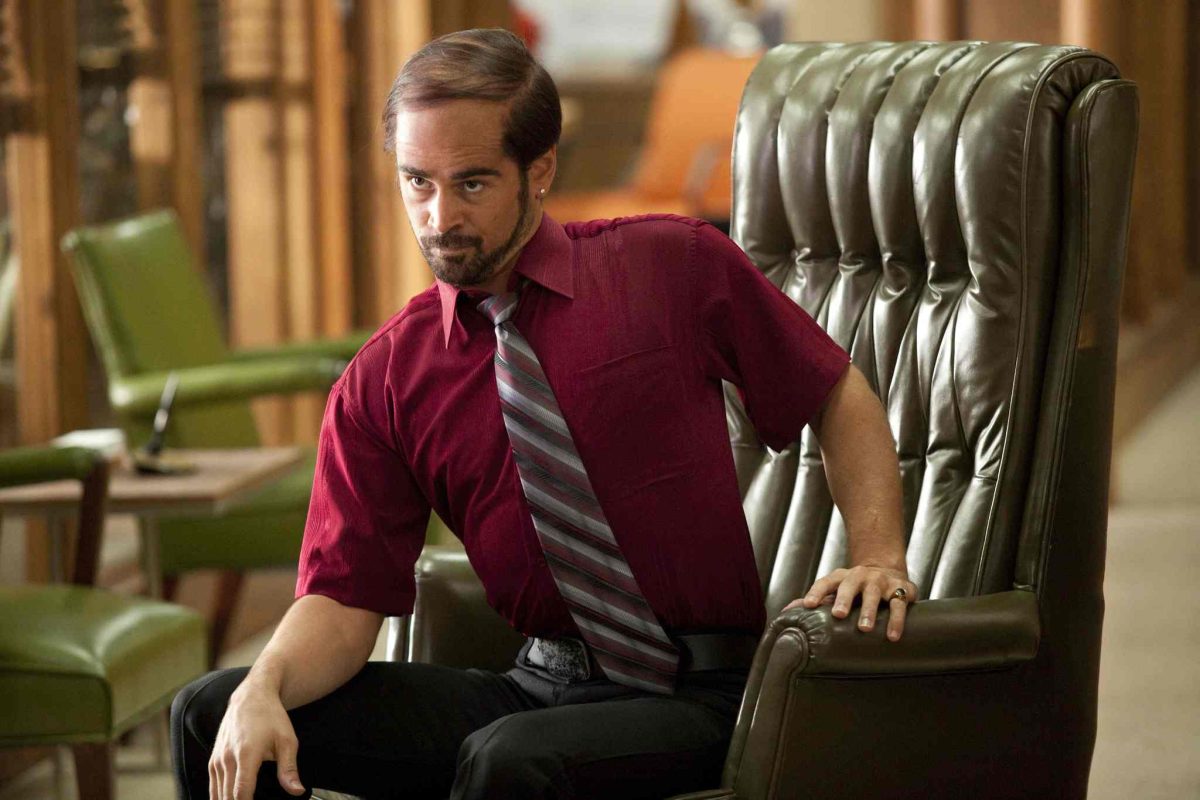
I still think that this is a silly, phantasmagorical flick.  But that doesn’t prevent me from objectively acknowledging the mastery of Colin Farrell’s acting. He delivers there his most farcical performance to date in his pitch-perfect American accent.  His Bobby Pellitt is a caricature of those real people I frequently describe here—those who think that GAAP and GAP are the same things. 

Huffington Post nominated the following exchange as one of the funniest movie quotes of the year. It’s both funny and quite probable—believe me.

(Written by Michael Markowitz and John Francis Daley.)

Bobby:  We need to trim some of the fat.

Kurt:  What do you mean by trim the fat?

Bobby:  I want you to fire the fat people. They’re lazy and they’re slow and they make me sad to look at.

You can watch the whole clip here: Horrible Bosses


Showtime’s “House of Lies” Showcases “Big Business”


ImagesShowtime methodically continues expanding its gallery of likable bastards – you know, those characters who consistently behave badly, violate conventional "morality" in every other screenshot, show complete disregard for their "fellow humans," and yet entice the adoring audience to watch their screen-capades every week, sins and all. Brian Kinney ("Queer as Folk"), Nancy Botwin ("Weeds"), Hank Moody ("Californication"), Jackie Peyton ("Nurse Jackie"), the Gallaghers ("Shameless") – they all have devoted followers who adore them despite their multiple faults and vices.

Now comes Marty Kaan (Don Cheadle), the ruthless management consultant who, together with his younger team members, would stop at nothing to rake more billable hours and expenses into their employer's purse. To make the main characters more or less palatable to the audience, and at times even lovable and pitiful, the show goes beyond the beaten path of showing their human side in personal situations – it pitches them against the somewhat two-dimensional, but decisively abhorrent, cast of clients who, in the viewers' minds, "deserve" to be taken advantage of, if for no other reason but to restore the sense of "social justice."

This means that the show doesn't go after small businesses – that could be risky as the viewers might feel compassion for the struggling owners, and, more importantly, it would demand from them a sufficient familiarity with commercial specifics. Moreover, even people with no exposure to actual business activities understand that no small company can afford Marty's team's first-class airfare and stretch-SUV limos.

In fact, the clients are all large businesses that seem to be plucked out of the media coverage, which makes them not just the Big Bad Wolves, but the familiar ones as well. These are the entities that, at the very least, come into the peripheral vision of the general public. You've got your proverbial bank, tainted by sub-prime mortgages and riding the bailout wave; an obnoxious teenage high-tech billionaire; a national budget-hotel chain helmed by racist Mormons, etc.

Not-businessy people ask me if the show reflects the reality of the every-day business life. My answer is, "No." And it's not because there are no consulting firms, businesses, engagements, and people like the ones we see in the show, or that the writers get the terminology wrong. Actually they get a lot of things right and I wouldn't be surprised if the writing staff compiled by Matthew Carnahan for this show has at least a few people with MBA's in their past. At times they even go too far in their realism: I wonder, for example, what percentage of the audience understands what KPI's are.

The reason the show has nothing to do with the life most business people live is that the Big Business's actual existence is unreal and makes no common sense. Their paper-financed operations, the influence on the government, the executive compensations, the excessive spenditures on… mmm… everything, the actions they get away with – they are surreal and grotesque. But, I guess, that makes it even more fitting for entertainment purposes.

That said, there were a few observations within the first 5 episodes of the show that not only rang very true to my ears, but some were already addressed in this blog's posts:

1. Within the first 10 minutes of the pilot, Marty explains to the audience how the "afterwork" is attained: make them feel like their business is going to fail without you and tons of billable hours will be generated (see 05/14/2011 post Case Study: The Marketing of Fear).

2. The member of Kaan's team responsible for crunching numbers and analyzing clients' financials looks timidly and acts awkwardly in social situations, representing the classical Hollywood stereotype of an accounting professional (see 10/26/2010 post He Looks Like an Accountant…).

3. The core substance of dynamics between various CEOs and CFOs so frequently discussed here (just go to the "Bosses" category) is accurately captured in a very schematic way, which actually manages to make it almost biblical in its generality: a prim-spined, heartless bully, bent on doing the things his way, whether it's good for the business or not (the Boss), on one side and a somewhat hunched, practical, reasonable, subordinate, but still powerful in his own sneaky way schemer (CFO) on the other.

4. Finally, the ultimate truth I have an occasion to repeat at least once every day: everything in this world is a matter of perception, or, as Marty Kaan puts it, "Data dump is the key; everything else is horseshit, except PERCEPTION, which is horseshit you can leverage."