Economic Newsflash: You May Never Have a Chance to See the Mona Lisa Again


Old_695So, apparently France got themselves into a $2.6 trillion debt hole.  This translates into $42,623 of national obligations per each of 66 million French têtes.  Of course, the number is staggering.  However, I feel obligated to state that this is not as bad as what we have here, in our own beloved country with our very own $17.8 trillion burden pressing hard on 319 million of us with a weight of $55,684 per capita.

Still, someone just asked me the other day, how the hell France got itself so fucked.  It's not like the country pays $42 billion into IMF every year; or covers 22% of the UN budget; or sticks its nose into every hot spot in the world, bankrolling military and whatever-else aid campaigns.  And it definitely doesn't spend billions on artificially fueling the US stock market, even though if it crumbles the economies world-wide, including the French,  will be doomed.  It's our government that borrows funds for all that. 

I'm no expert on French economy and I'm not about to embark on researching their problems in detail (God knows, I have more pressing things to do).  However, basic knowledge of European affairs is sufficient for a logical person to form some general ideas. 

This is what happens with the formerly wealthy, but already shaky (who isn't now?), national economies when they decide to build an opposition to USA by combining as many European countries as they can into some utopian economic union: they start breaking their financial backs by carrying on their shoulders weaker (like, ahem… Greece) nations.  And, of course, the state needs resources to support domestic  industries (solely in the name of protectionism).  Add to that immigration policies driven by "special interests," which result in a population seriously skewed toward multi-children families with idle heads of households, who don't pay taxes but draw extensively on social programs.  And why not?  The majority of French population don't want to work too hard anyway: shorter hours, exuberantly long vacations, early retirement (at 60!).  And again, why not when there is the Mandatory State Pension Provision in place?    

What the poor France to do?  Well, the French government came up with this brilliant idea: They are going to sell national treasures, starting with… Da Vinci's Mona Lisa (!), which, thanks to king Francis I, has been in France's possession since Leonardo's death, i.e. nearly 500 years. 

Don't tell me that this doesn't sound like the end of the world:  Through ages of political rioting and religious massacres, twenty three wars, three full-blown revolutions, multiple colonial rebellions, and Nazi occupation France managed to hold on to Mona Lisa.  It's the perverted foreign policies and socialistic interior governing of our foolish times that led to the total socio-economic bankruptcy of the formerly powerful country.

You and I may think that La Gioconda is priceless, but the French have already assessed its market price, i.e. how much money someone may be willing to shed for it.  During the 60s the best guess of the art-dealing community was around $100 million.  Now, 50 years later, the time-adjusted equivalent of that sum is $2.6 billion.  Never mind that this would cover only 0.1% of the debt in question.  As they used to say in pre-Euro France, every centime counts.

One can't help but marvel at the utter stupidity and nearsightedness of the government that can entertain the idea of  eliminating one of the main reasons for the international tourism to the infamously snooty, unreasonably expensive, and ethnically unstable City of Lights (the Louvre is still #1 visited museum in the world).  Can these people see anything beyond their service terms?  I can clearly visualize the snowball of layoffs and business closures, which will unavoidably lead to the further drain on the state's treasury.  But those are French problems.  So, fuck them!

What the rest of the world, especially those of us who care for the arts, should be concerned about is the distinct possibility that we may never ever have a chance to stand in front of the Mona Lisa and attempt to absorb (it's really not that easy in the room full of tourists holding up their video and photo devices) Da Vinci's masterpiece in person.  And this is especially heart-breaking because it is one of only 23 surviving major works that are either universally or generally attributed to Leonardo.

It's dreamy to imagine one of the world's major museums trying to acquire the painting.  However, it is unlikely that any such institution will be able to come up with a $2.6 billion check.  The third-ranked museum in the world, The Metropolitan Museum of Art, is America's richest cultural institution with $2.7 - $3 billion annual endowment.  However, the $300 million operating budget and constant structural updates apparently eat away the majority of the funds – during the fiscal year of 2012 the Met spent only $39 million on new acquisitions.  Of course, there is an aggressive deaccessioning, which allows the museum to sell off "minor" pieces in pursuit of the "major works,"  but even with an average of $1 million per item, the institution will need to liquidate 2600 (!) works to collect the required amount.  Highly doubtful!

So, if the transaction does materialize, it most likely will be funded by private wealth.  You can pack a large ballroom with people from different corners of the world whose wealth amounts to multiples of the asking price.  For the sake of my personal amusement we can entertain another beautiful fantasy:  How grand would it be if one of our openly super-rich individuals with strong philanthropic inclinations shelled out a chunk of his wealth for La Gioconda and then gave it away to the Met, so that the grateful general public could continue enjoying it (only now in my own backyard)!     

It would take only 4.4% of Warren Buffett's worth or 3.2% of Bill Gates's.   But both of them are too preoccupied with keeping the world healthy and the US technologically comfortable (don't ask me why) to bother with art gifts like that.  And by the way, the Codex Leicester, the most famous of Da Vinci's scientific journals, which Gates bought in 1994 for $31 million, is kept in the MS mogul's own private vault.  It is considered a great generosity that the Codex is let for display once a year in different cities around the world.  Yes, it is hard to imagine that anyone would give away the Mona Lisa as a gift to an institution or a nation.

The way I see it, the buyer will probably be someone whose immeasurable wealth you can't find on some Forbes list, because it is not valued in the ephemeral public-stock prices.  This multi-billionaire is someone who keeps a low profile and his name would mean nothing to the majority of the world even if he walked into the Louvre in person.  But such an individual will transact through multiple proxies, and when all is done the Mona Lisa will disappear from the public eye into a secret stronghold.  We will be left with reproductions and copies, while a handful of people will enjoy the privilege of up-close peering into the delicate strokes of oil paints applied by the genius's hand to a piece of poplar wood. 

RIP Robin Williams… And a Few Numbers


Unfathomable!  Dead?  How can somebody so alive be dead?  Is it possible that a person who couldn’t remain seated in a chair for more than a minute at a time during talk show appearances stays so still now?  Who can imagine this 500-miles-per-hour talking train to be completely silent?

Yet, I understand: The mud at the bottom of the depression well must be too thick to move and no scream can reach the surface.  There is only unbearable pain.  I am terrified imagining the emotional sufferings that led to this.  But it’s hard to believe – he made so many people happy!  Steven Spielberg kept his number on speed dial during filming of Schindler’s List – he would put him on speakerphone, so that he could cheer up the cast and crew with his endless jokes and impersonations.  Amazingly, his dramatic gifts were equal to his comedic talents.  At the end, none of it mattered – a good lesson to the vast majority of people who believe that popularity is the ultimate end game.

And now he is gone, leaving behind 102 acting jobs that drew $5.2 billion back into the entertainment industry; $50 million raised through Comedy Relief; endless hours of improvisational material that simply couldn’t fit into his movies and TV shows (16 hours for Aladdin alone); #13 rank on Comedy Central’s list of “100 Greatest Stand-ups of All Time”; a speed of 15 impressions under a minute; 64 awards and nominations; 3 wives and 3 children…

Everyone’s favorite Genie, gay impresario, cross-dressing housekeeper, Popeye, war-time disc jockey, and alien; a literature teacher and a psychiatrist we wished we met; the best player of the most dangerous game that can eat you alive – I hope he is at peace now.  Maybe now he can be this happy all the time:

Watch: Robin Williams makes Koko the gorilla smile

Video Quote of the Week: What Would You Do for Your Art, John Waters?


The Frustrated CFO’s preface:

I’ve been a John Water’s admirer for… hell, I don’t want to count the years, because the man is timeless and forever, just like the ugly qualities of the human species he saw, recognized, and had the unique brilliance to shove into our faces in the hyperbolized, grotesque fashion comparable to Goya’s etchings.  I always think of him as a kindred spirit just as frustrated with his surroundings as I am.  Anyway, the first time I watched Divine in Pink Flamingos, sentencing Marbles to death for “first degree stupidity” and “assholism,” I was captivated.  And it’s not just about the talent for me.  His unabashed bravery and complete disregard for the established “civil” canons give me chills!  I’m not going to lie – I wish I could be that courageous and free.  And just as I thought that Mr. Waters, now 66, could not possibly enhance my appreciation of him any further, he went and hitchhiked across the country with a single purpose of writing a book about his experience doing it.  Wow!  Below is New York Time’s video of him talking about it.  Enjoy and aspire! 


What the video here: John Waters Hitchhiking Across the U.S.


Quote of the Week: Red Reddington and The Frustrated CFO Concur in Defining the Key to Success


NBC_s-The-Blacklist-_Classified_-Trailer-on-Vimeo-5

The Frustrated CFO's preface:

I'm in the dental office, standing by the payment-processing counter with the endodontist.  We are waiting for one of the claim processors to estimate the out-of-pocket costs that will arise from the doctor's suggested course of action.  It's one of those full-service dental groups where they have all specialists, either on staff or itinerant.  This requires a matching number of assistants, plus administration – in other words, there are a lot of people around.  I'm here only for the second time.  Yet, I notice every person I've already met, "Hi, Vivien, how are you?"  "Hello, Christa."  (None of them wear name-tags or anything like that).  

The doctor asks, "How come you know everyone?"  Well, I don't know "everyone", but he seems like a nice guy, very pleasant, so I have an impulse for a wholehearted answer: "This is what I do.  If a person introduces him- or herself, I make an effort to remember the name.  Every time.  No matter who that person is – customer service representative on the phone, a salesperson in the store, a receptionist in whatever office, your dental assistant, people I meet in business gatherings.  If I have a chance, I immediately address that person by name.  …And that's how you succeed in life."

Well, my dear readers, "success" is a relative notion, of course – this rule is not going to make you billions, but, I promise you, it will definitely help in whatever your life's endeavors are.

One of the women sitting behind the counter, Hope the Office Manager, chimes in: "But I'm so bad with names!"  I just smile at her sweetly.  In my head I'm thinking, "And that makes you a terrible administrator."

Literally a couple of days later I'm watching the first season's finale of The Blacklist on demand.  Imagine my surprise at the perfectly timed like-mindedness when, about 15 minutes before the episode's end, Red Reddington bursts out the following tirade written for him by the series's writers (John Eisendrath et al.):

"I must say, I'm very good at finding people.  I've tracked enemies far and wide.  I once found a hedge fund manager hiding in the Amazon… on the banks of the Cuini River.  You know what the key to finding your enemies is?  Remembering everyone's name.  It's critical to my survival.  Anyone knows the head of some drag cartel in Columbia; some politician in Paris.  But I know their wives, girlfriends, children, their enemies, their friends.  I know their favorite bartender, their butcher…"        

More on Nepotism (The Moviemaking)


In my earlier post The Curse of Private Business: Nepotism, I have touched on the damage this phenomenon affects on commercial enterprises and its unfairness to people who still believe in the power of merit-based rewards. It is a complicated topic, though, because when it comes to our own kids we are dedicated to their support. And we would like to believe, of course, they deserve it. It’s the undeserving support that’s problematic?

At the end, to underscore the pervasiveness of this issue I pointed the readers to the familiar territory of pop culture:

“… the industry where nepotism is the most prevalent is the one that suffers the most from lack of fresh talent is the entertainment business.”

Last week, I was told that an IMDb community’s member (Feodor8, I believe) contributed to this very topic. I only had time for a quick look and now the disucssion has been removed. Even without the original material at hand, I would like to comment on few aspects of the “article.”

I hope that the piece was deleted due to the author’s aggressive attitude, which irked me as well, and not because the topic was deemed too sensitive. The contributor didn’t need to resort to offensive tirades and bickering with the commenters.

Considering how intensely he feels about this issue, I found this movie fan’s list of Hollywood players with family connections under-researched. Let me visualize it from my memory… Talia Shire was there, but strangely her son, the adorable and talented Jason Schwartzman was not. Futher into the Coppola clan, Sophia was present, but her brother, director Roman was not. Was Nick Cage (born Coppola) there? None of the three younger Balwin brothers who followed Alec into the acting trade, were mentioned. Alexis Arquette got on the list, but her immensly talented sisters Rosanna and Patricia did not (I don’t remember whether David was there)… And I could go on and on…

Why do it at all, if you do it half-assed? This is so typical – people complain about quality, but cannot live up to their own standards. The same goes for the general public’s opinion-forming process: the prevailing tendency is just to scrape the surface without looking into the root of a problem. The “article’s” author blamed the plunging quality of the entire American cinema on people with family ties, even the talented and hard-working. That’s just superficial.

Remember, this is a CFO’s blog. Filmmaking is commercial enterprising and like any business it abides by basic economic law of supply and demand. The power is with the movie-going audience. If they did not pay their hard-earned money to see the movies feodor8 rightfully condemned, the studios wouldn’t finance them.

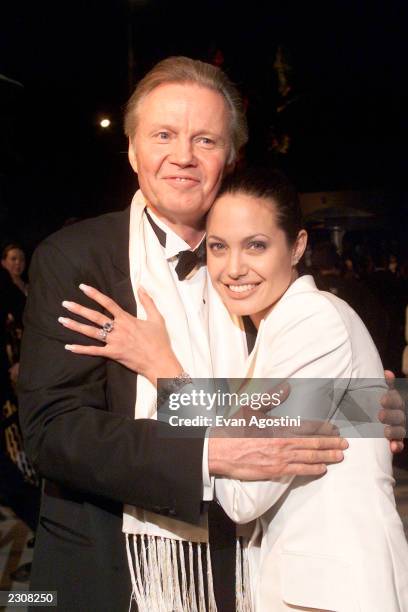
In the past 5 years Angelina Jolie (Midnight Cowboy Jon Voight’ daughter) starred in 7 feature movies. How many of them did I see? None. Yet, in the US alone they earned $440 million in the box office; all commercial successes!!! That’s the demand—and the supply follows. The quality of filmmaking is in your hands, dear audience. As long as you are willing to pay for crap, it will be made.