
First Impression Is the Most Lasting Indeed


They say that the first impression is the most lasting one.  And it is true even for those people who try very  hard to be fair and give people a chance to show their true qualities. 

I myself is one of those people who make themselves look past the appearance of a job applicant.  Few years ago I have interviewed a woman who was grossly obese and needed a cane to assist her in moving her body.  I knew right away that aside from possible health issues, there could be multitude of other problems: we would need to order her a special X-large chair, my CEO may not like someone like that to be prominently installed in the Operations Department, visiting business relations may be destructed by the sight, etc. etc. 

Nevertheless, I gave her a full interview, which she passed with flying colors, and ended up hiring her.  It never even occurred to me not to offer her the salary attached to the position.  She got paid the same wages anyone in her place would.

Turns out, I am a rare exception.  Please, read this post from Vault's Career Blog Does your weight determine your salary?  The statistical data reported in the article are appalling.

Weight issue aside, my opinion is that when it comes to hiring process the entire "first impression" concept is very unprofessional.  Time after time, hiring execs, recruiters and variety of HR professionals yield to their contrived, closed-minded, self-centered views of other people instead of thinking of what's best for their companies.

Two weeks ago my good friend MJZ, also a career CFO, went for a job interview to a company that provides services to children with learning disabilities and autism under the contracts with various government health agencies.  Since such programs usually become first victims of states and counties budget cuts, the company desperately needs someone who can strategize their way into more diversified revenue models.   MJZ has a vast experience of building such strategies and facilitating companies' growth. 

She has previously had a phone interview and communications with the CEO's personal assistant.  So when in-person interview invitation was received, she assumed it would be with the CEO herself.  However, she was interviewed by a middle-rank HR Manager.  

When she told me that she did not even make it to the next round – the actual interview with the CEO (the HR Manager sent her an email), I've asked for the entire meeting description.  Now, knowing all details, I am confident that the HR Manager's rejection had nothing to do with MJZ's professional qualifications.  It had to do with the fact that she was dressed for an interview with the CEO and instead was assessed by a sweater-and-tights-clad middle-manager. 

The sad result is that the company had missed an opportunity to hire somebody who could have brought them to the next level of development.  Their loss, of course, but nevertheless a disappointing experience for my friend.
The Frustrated CFO Is Getting Anxious


I am really anxious to move away from abstract discussions on the nature of stress we experience every day and start showcasing stressful incidents and frustrating professional issues near and dear to every CFO, Controller, etc.  However, before I do that I feel we need to address one more theoretical subject – correlation of Frustration and Anxiety.

As I already mentioned several times, frustration is a normal reaction (whether extra- on introverted) to situations in which we face obstacles to our achieving goals or actions that contradict our standards, etc.  Every person experiences it from the moment he or she is born.  In this blog, with examples from daily war of survival, I argue that my peers, CFOs, Controllers, and other financial execs in entrepreneurial environment, operate in a state of chronic frustration.

Anxiety, on the other hand, no matter how many scientific definitions are out there, boils down to sense and fear of danger, whether real or non-existent.  The symptoms and sensations are the same if you are genetically predisposed ("wired") for anxiety or forced into it through the lifetime of conditioning.

Because it is far more fascinating to try to explain why some people feel anxiety and panic attacks for no tangible reasons at all, cognitive science is primarily preoccupied with the types of anxiety that are caused by chemical imbalance, hereditary factors, etc.  If you are interested to learn more about the latest research advancement in this area, I particularly recommend an almost a year old, but still very accurate and exhaustive, New York Times Magazine article Understanding the Anxious Mind

And, of course, most of us belong to the army of Americans (tens of millions of people, actually) who are worried about the economy, their job security, the money they lost in various market shakeups, the environment, the future of their children, etc. etc. Economic and environmental issues are big reasons why so many people seem to be on the verge of a breakdown.

That said, in the context of this blog I am primarily interested in the undeniable fact that chronic frustration with your job leads to stress and acute anxiety.  Just like Pavlov's dogs we are conditioned by frustration to fear those situations that cause the unpleasant experience.

We try to accomplish a particular task, meet our regular obstacles (bosses interventions, subordinates incompetence, time constraints), fail to achieve our goal, get frustrated – and (surprise-surprise), now we feel anxious every time we start that task, because subconsciously we anticipate frustration and fear the pain.  The anxieties accumulate into stress, and now we feel trapped.  If the situation is not managed, we can spin out of control.

And that is why it is so important to find methods of releasing frustration out of your system (please see my post One CFO's Personal Tools for Frustration Relief) and, just equally important, find resolutions for your professional problems by elevating your managerial, organizational, behavioral and technical skills – issues I hope to discuss in the future based on the incidents from your professional life.  

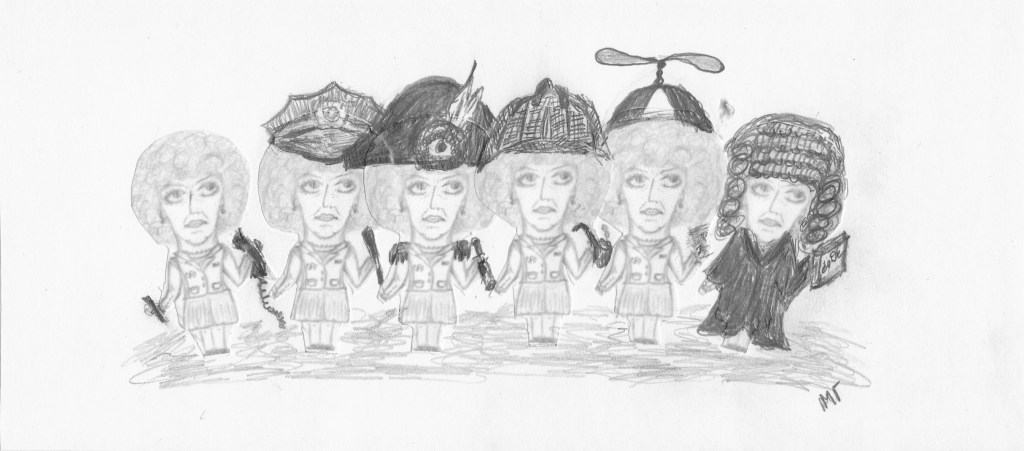
Illustration to the Recurring Subject of CFO’s Many Hats


These are just the transformations the small-business financial execs experience on daily basis: from CFO to Policy Enforcer to Strategist to Forensics Pro to Computer Geek to Legal Authority

If you are interested to read more on the subject, please, go back to my very first two-part post:

CFO’s Many Hats: Etiology of Affliction, Part I.

CFO’s Many Hats:Etiology of Affliction, Part II.

Readers who have stories to share, as always, welcomed to contact me.


CFO (or Controller) Puts on Her Recruitment Hat


It is difficult to look for a job – I already talked about it several times and even have a "Job Search" category to keep the related posts in one place.  Every time I encounter information that may help job-hunting CFOs and Controllers, I make sure that it finds its way into this blog.

But what about my peers and myself who are in an active headhunter mode?  Truth: we dislike looking for people nearly as much as job-searching.  I guess, being a seeker is not as enjoyable to us as it is to Harry Potter.  

Pitching yourself to prospective employers and recruiters is nerve-straining.  Dealing with unfairness, randomness and subjectivity is frustrating.  Facing rejection is disheartening.  That's all true.  However, after each attempt you collect yourself, you move on.  

On the other hand, recruiting people who will work for you, who will carry out functions you delegate to them, but for which you are ultimately responsible, is not just an excruciatingly difficult and tedious work.  When that stage is over, you are not done -  this is just the start.  Now you have to ease the new hire into his functions, fill him with missing knowledge, perfect his ability to perform the tasks, i.e. develop your new staff member into an asset. 

Here is what frequently happens.  After spending your preciously scarce time looking through hundreds of resumes, interviewing candidates by the score, all you want is to get this damned recruitment issue off your agenda.  If you cave in and make a mistake of hiring a wrong person simply because you are tired of the process,  you will still go through the remaining steps without a chance of achieving the desirable result.   So, all that time will be completely wasted.  Moreover, it is damaging to the company, to your own success, to your staff's morale.  It leads to enormous amounts of the worst type of frustration – the one that's based on guilt.

Why do we end up falling into this trap?  If you are not a giant corporation that can afford to fill departments with bodies and let the most ambitious and talented ones to surface, every person you hire needs to be the best you can find.  And of course, you are somewhat handicapped by the fact that you are not a household name. 

Still, it is shocking really how difficult it is to find good candidates considering how many people are out there unemployed.  On one hand, it is a buyer's market, on the other hand, the shelves are stocked with generic products who are limited, unfocused, and dull. 

And I am actually very flexible.  I don't hold industry-specific experience in much regard.  I believe that it depends on a person, and not the school,  whether he is well educated or not.  What I am looking for is that spark in the eyes showing intelligence; the ability of systematic thinking; the foundation I can build on.  And that's hard to come by.   

One CFO’s “Page of Frustration”


I thought I'd show you my own Page of Frustration.  However, I insist that if you decide to use this method of release,  you should create one for yourself according to the general description I provided in item 2 of my previous post One CFO's Personal Tools for Frustration Relief.  The process of designing your own Page will not only help you to work out the real reasons behind the frustration, but will also have a therapeutical effect.

  Page of Frustration-med