
De-Banking: It’s Very Personal to the Frustrated CFO


Sometimes I wonder about the kind of life, in which every single word your utter or mutter would be an instantaneous target of people’s analytical parsing, critiquing, and ridiculing… I mean, it’s hard enough to present to the public your written words – the ones that you’ve chosen meticulously, pored over a hundred times, edited, re-edited, and proof-read… (And I know, I know – most online and even in-print writers don’t do that anymore: the stupid, grammatically incorrect, unedited, shit you read sometimes even on the syndicated news! Yet, I still work like that.) But the unscripted and unabridged shit that just pops out of our mouths, even when we are debriefed and seemingly ready for anything… Brrr… Danger zone! Why do people want that kind of a life is an absolute mystery to me… But they do. And some of them self-delude and seemingly believe that they expose themselves for the sake of the “greater good”, but it’s all crap – the damage they cause to the nation, themselves, and their families is far greater than the sum of anything good they could possibly accomplish. It’s all fucking pride, and vanity, and over-confidence, and desire to hear themselves talk, which would be understandable if they were brilliant speakers, but the vast majority of them are far from it.

And so, there goes Mr. Trump – again… Clearly, it’s not enough for him to be ranked by many a poll among the three worst presidents of all times. (Those who know (1) my take on the Dumb Blonds and (2) that I spent most of Trump’s term in a medium security prison with no access to the mainstream information in any shape or form cannot possibly expect me to express my own opinion about his presidency. And this is not about my opinion. This is about the general public.) He wants another stab at it and he takes to the open mike on a speaking platform once again – in New Hampshire of all places. And, as these people frequently do, he stumbles on his words. He lets his thoughts run faster than his tongue and produces a statement that is not just confusing, it sounds practically unintelligible:

“We are going to place strong protections to stop banks and regulators from trying to de-bank you from your… your political beliefs… What they do. They want to de-bank you. We’re going to de-bank… Think of this. They want to take away your country.”   

I mean: WHAT???!!! 

The thing is, though, there is a lot of garbled garbage coming out of famous, semi-notable, and random people’s mouths all over the place – multiple times a day, every day. And they don’t make national news. Yes, pundits react to it and political bloggers write about it, and I have no idea who the fuck reads all that. And believe you me and my personal experience of it: most of it (or everything, really) is written for the audience of one – the writer herself.  And I myself is very selective with what I read beyond serious literature. Thus, I didn’t bother to know anything about Trump’s mentioning of de-banking until the media’s knees started jerking in response to the related SNL’s installment into their habitual dressing-down of Trump. In the sea of contemporary ignorance, they stood out with their allusions to Trump’s mental incapacity – as if he made up the “de-banking” term all on his own and, therefore, need to take “de-ambulance” and see “de-doctor” about it.   

Look, I personally started growing cold towards SNL ever since Tina Fey became its head writer, which was like 25 years ago, believe it or not. And then stopped watching it entirely after the twists of Fortune gave us an opportunity to appreciate Kristine Wiig’s talent elsewhere. So, I’m not really up on the show’s current level of quality comedy, but from what I hear and read – mostly from the news – it doesn’t seem very high. And that’s very disappointing. I mean, the whole point of SNL has always been the wittiness, as in smart, intellectual – not gag – humor. It was the reason why so many of SNL alumni and alumnae have become household names with gigantic careers – Steve Martin, Bill Murray, Adam Sandler, Will Ferrell, etc, etc, etc. Smart and brilliant, not just funny, they came up with the jokes and created the characters that made them relevant, impactful, and unforgettable. Meanwhile, the latest comedian I remember by name from that show is Andy Samberg – and it’s been a dozen years since he departed. And then what? As this Trump incident confirms, all traces of intellectualism are now gone. How else can we explain that not a single person in the entire writing, producing, acting, and supporting staff knew about “de-banking”, bothered to check it out (I mean, where were there iPhones?), or understood the seriousness of the matter. And I don’t really hold it against Lorne Michaels personally, but maybe – just maybe – at 79, it’s time to take an honorary Chairman (or something) position and hire a hands-on herder to manage these poorly qualified, lazy “entertainment” team.   

When the news of this skit finally rolled to me, I firstly got really insulted by the fact that the majority of the responders have dismissed this faux pas as “woke smugness”. How is anything about assuming that every “de” in front of a word in English language is a replacement for article “the” – whether in vernacular reality or with a mocking intention- is woke? You know, there are 5868 actively used words in English language that start with “de”. Quite a few of them are words we borrowed from Latin (e.g. decide), but in many the prefix “de” carries the notion of separation (e.g. depart), negation (e.g. derange), descent (e.g. degrading), or reversal (e.g. detract). So, what are these people telling me that using these words constitute “cultural appropriation”? My answer to that is that such notion is degrading and these commentators are deranged, and the world around us would be better if they decided to first detract their statements and then depart, as in go away.

Naturally, far more reasonable conjectures have been made about the impulses behind Trump’s de-banking outburst. It all came down to one quite obscure piece of information that seemingly democratic internet-grown financial institutions like PayPal, its subsidiary Venmo, GoFundMe, and such got into habit of kicking out, i.e. de-banking, some far-right activists due to their political standing… In fact, it’s so obscure that some commentators wrote: that this de-banking thing “must’ve completely flown under the radar of those people who are not glued to the internet…”

Well, it’s true – I had no idea that the online entrepreneurship of payment-processing persuasion got so misconfused about the foundation of equality that they started acting on the reactionary principles of “you want to infringe, we’ll infringe you back”. However, I have always known of the de-banking policies implemented in the majority of our financial institutions. And, while this is the first time I heard of it being used as a tool of pure discrimination on political grounds, I knew very well that banks have been throwing people out on account of what they perceive to be risks factor – financial, legal, but mainly to their reputation – like forever.

And guess what? I PERSONALLY GOT DE-BANKED by Chase while I was out on bail during my court proceedings (all depicted in great detail in my “I Built This Prison”). After 28 years of me faithfully depositing with them all my earnings; giving them all of my savings, retirement, auto-financing, and commercial business; referring to them my parents, my daughter, my son-in-law, both of their businesses – all it took is one request from the office of Manhattan DA for statements of my – not even personal, but business – account for the preceding sixty months. Next thing I knew I’ve got a letter from them that they were closing all of my accounts with them. And five days after the stated date, I’ve received cashiers checks – one for every account I held there, including all IRA’s and SEP’s. I was months away from pleading or being found guilty of my crime. But as far as Chase was concerned – they didn’t want to have anything to do with me. And there is nothing you can do about it. Let me tell you, even on the background of the ongoing criminal and civil lawsuits, it was an incredibly distressing event.     

But wait! That’s not the end of it. Forward to April of 2023: I was watching the season 3 finale of The Mandalorian on Disney+ – elated by the the prevailing of all that’s good (Spoilers Alert!!! [but seriously – if you haven’t watched it by now, ten months later, it means nothing to you]): the distraction of the Darksaber and (!) Gideon, the heart-melting adoption, and the sunny adorableness of the new dwellings – when I was presented with a post-credits ad, offering to apply for Chase Disney Card. Which I would totally ignore because I didn’t really need another credit credit card, except that one of the “personalized” fronts of the possible cards you can get was that one – the one pictured above. Who can possibly resist the very idea of having a credit card with baby Yoda in his pod? I couldn’t. But it’s Chase! I don’t want to have anything to do with them anymore. Well, I can overcome that for Grogu. Do they want to have anything to do with me, though? I mean, by then nearly six years have passed since my de-banking. I’ve served my time and all that… Let the power be with me… Takes about two minutes – I was instantly approved for a $6K line. Ten days later the pleasingly adorable card was in my hands….

Two months later it stopped working… No warnings. No courtesy letters or emails. I looked it up online – it said that the account was closed. I called… Well, now you know: (A) It takes 60 days for the underwriting bank to run all of their checks and establish that, even though your credit is good, you remain undesirable to the bank for the reasons they never disclosed to you in the first place. (B) Six years is not enough time for a financial institution such as Chase to forgive you for… doing nothing wrong with respect to their operations per se, as far as I know. Once de-banked, you stay de-banked.

And, as it frequently happens with such entities, they just have to add an insult to the injury: sporadically they still send me an email informing me that “my” Disney credit card account’s statement is ready, balance zero, payment due zero… So heartless… And then a week ago, I received an envelope with Chase logo in the mail. Eight months after shutting down my Grogu account they were informing me that I was due points I managed to earn through the couple of times I did use the card. They’ve enclosed a cashier’s check for $1.65…

That did it. My heart bled for the the paper, the ink, the diesel fuel, etc. that went into production and delivery of that glob mucus into my face. And what else can I do but to write about it?  
I Built This Prison: Excerpt: Once More On Looking (or Rather Not Looking) the Part


From I Built This Prison, Chapter 2. Aspirations, Hopes, and Dreams

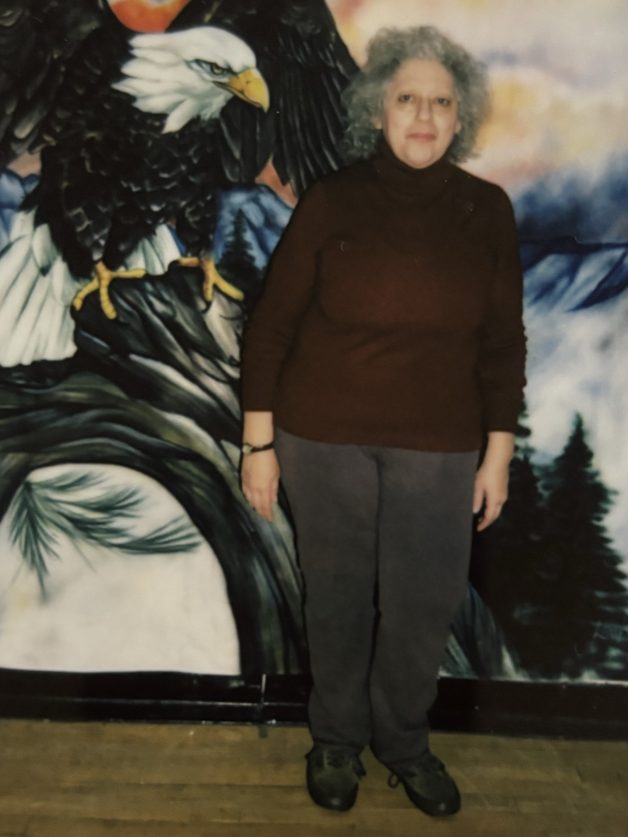
Here is an interesting thing to consider: I never was of the correct shape and texture to fit the typical idea of a cutthroat corporate mover and shaker.  Anywhere. In the same way probably as Julia Child was not considered an acceptable choice as standard TV personality in her time. First of all, it wasn’t just the creative pursuits and liberal-arts education – which included journalism, languages, art history, theater and cinema studies, to make a short list – that were barred by the antisemitism in the Communist Russia. Any and all “executive prospects”, such as they were, were also closed for even the most persistent, academically overachieving Jews. The only thing that mattered there was that I looked Semitic and that my “Nationality”, as ethnically defined on the fifth line of a Russian passport, was “Jewish”.

I bless the moment I was accepted to America as a political refugee over three decades ago. Yet, the pertinent truth is that, even after 25 years of professional experience in NYC and the addition of MBA to the list of my degrees, I was still not recognized as a perfectly fitting executive peg here either. Ethnically looking immigrant with an accent; no Ivy-League tokens on my resume or any nepotistic cards up my sleeve – I had to break a lot of barriers to attain my positions even in the private entities, for which I worked.

Big-time HR managers and headhunters will never admit to it, but, in spite of my verifiable knowledge and expertise, they could never visually match me with formal demands and expectations of their illustrious employers/clients for the targeted positions. It’s only when I had a chance to speak with a functional key person from the hiring company directly my qualification usually prevailed over everything else, which only happened in smaller, privately held companies…

We cannot deny the simple fact that opticals play an instrumental role for all American occupations. It’s like what Aaron Sorkin wrote in his 1995 script for ‘The American President’…: “If there had been a TV in every living room sixty years ago, this country doesn’t elect a man in a wheelchair.”

Visually, people like me look most appropriate in the seclusion of labs with Bunsen burners and glass retorts, research libraries with old books and microfiche, at the desks with typewriters, at the various lecture podiums addressing a blurred audience… Not at large-scale corporate events, schmoozing, in a constant search of best-connected targets like a self-propelled torpedo… I cannot stand shellacked hair and none of my business skirts are pencil-shaped. I prefer pantsuits.

I recently mentioned this “suitable look” issue to my daughter who, God bless her, is able to look and act right in any environment imaginable. And she said very simply, “It’s unfortunate, yes. But, Mom, you never even tried to straighten your hair…” How heartbreaking is that? This is what we need to consider in order to succeed in this world? What kind of aspirations we are talking about?

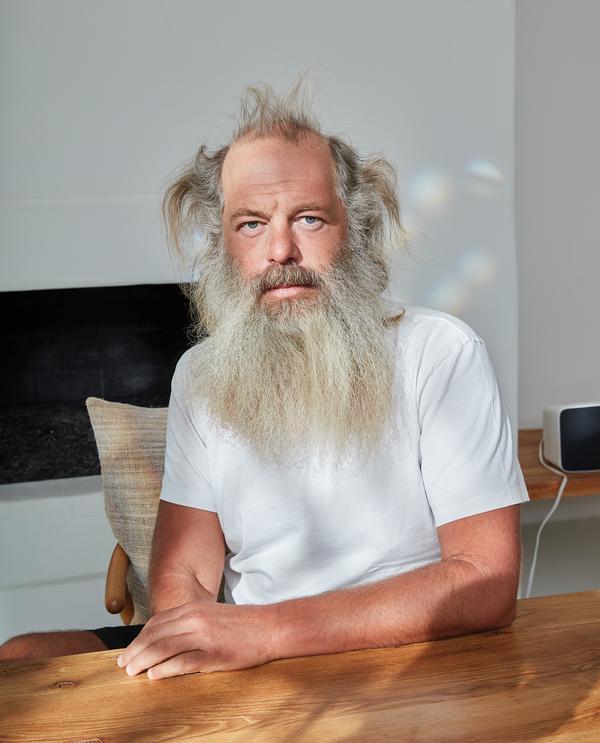
Let me remind you that I am referring here only to the external perception, not the actual competence, abilities, skills, expertise. Everyone knows about a book and its cover, and still no one is willing to read. Yet, looks are truly deceiving, you know, for both covering up the rot and concealing the superpowers. A person may look like an Orthodox-Christian priest but be one of the most important hip-hop, heavy metal, and alternative rock producers of all times (This, by no means, is an abstract example – I specifically have Rick Rubin in mind. I knew who he was long before I saw his photo for the first time. It surprised me.)

NPR Reports: Prisons Are Not Fit for the Elderly. What Else Is New?


On Monday, March 11th (I beg your pardon – it always takes time for me to summarize my reactions), NPR reported via Apple News (The U.S. prison population is graying fast… by Meg Anderson) that American federal and state prisons are not prepared to deal with their growing contingent of elderly inmates. Primarily because the correctional medical care cannot keep up with this demographic trend.

The provided statistical evidence illuminates the bleak reality: Apparently

“across the nation, between 1999 and 2016 the number of adults aged 55 and older increased 280%, compared to an increase of only 3% in those under 55.”

But what else could we possibly expect? The multitude of our socio-economic problems affects all aspects of life, including the age mix of the prison population: the lifers with over thirty years of incarceration on their shoulders, the repeat offenders who cannot be absorbed into society and keep coming back even in the late stages of their lives, plus the older people who commit their first crimes out of hopeless desperation, yet become the subjects of our brutal sentencing customs nevertheless – it’s only arithmetically natural for the proportion of older inmates to increase.

At the same time, it is absolutely unthinkable for any branch or twig of any governmental body directly or tangibly related to correctional codes to consider age-driven triggers for early releases. I mean, as it stands right now, only terminally ill inmates, with pretty much days to live, may qualify for this rare privilege. Anything short of that retains an inmate in prison until the sentencing conditions are fulfilled.   

It appears that the NPR reporter’s main focus is to single out the truth of the aging prison population as the most crucial factor testing the limits of the correctional systems around the nations in keeping all of their charges healthy.  She further broadens the magnitude of the age effect in one of her leading arguments. Namely that prison is a difficult environment and “people behind the bars tend to age faster.” To support this postulation the article quotes some studies by medical professionals specializing in Public Health, which claim that “incarcerated adults experience accelerated aging” (a term borrowed from engineering practice of specifically designed tests under aggravated conditions to speed up the aging of objects). One of the cited doctors suggests that “geriatric” in prison can mean someone as young as 50. 

Well, let’s set the quality of prison medical care – for the entire imprisoned population, not just for elderly – aside for a moment. Because, first and foremost, I would like to contest the validity of the rapid-aging generalization itself. You see, I believe that it actually depends on the person and her attitude. For example, take me (who else would I take, really?): On the day I was sentenced I was 57 years 2 months and 3 weeks old. And yes, pretty quickly my hair gone completely gray. NYS Department of Corrections and Community Supervision (DOCCS) prohibits hair-dying within its walls. (Unlike the federal prison network, which allows it.) And since I’ve been going gray since I was very young and started my regular visits to a colorist when I turned 35, I had no choice but to turn peppery gray in prison. And yes, Natura Bissē products couldn’t be obtained in the commissary or pass through the package-room regulations. So, it was impossible to hide the gloomy state of mind behind the brightness of my skin… But other than that… After decades of sitting on my fat ass behind my office desk, I managed to use my time in prison to get myself into a much better physical shape than I’ve experienced in my entire life: Walking the significant distances between various destinations of Albion prison’s camp and performing daily tasks of physical labor were at first difficult, than bearable, and eventually easy. I progressed from crawling to power-walking at a speed uncatchable by the smoking 20-year-olds. My first yoga class happened in prison and eventually I geared myself up all the way to the power-yoga level. Moreover, I’ve discovered a rowing machine in the gym… Eventually, I’ve developed muscles in places where I only had fat before. And I felt much healthier than I did outside… I felt 40. No joke… Age is really a very-very relative thing.

That said, however, it is an undeniable truth that cost of medical care for incarcerated individuals, guaranteed by the Eighth Amendment to our Constitution, has been growing exponentially. If not because of the aging per se, but due to the complex combination of factors, including the alarming health and longevity decline in the United States. Note: A recent Harvard study has determined that

“for every two Americans who died age 65 and under, one [MZ: 50%] would have been alive if they lived in Australia, Canada, Germany, Japan, or Portugal. An epidemic of chronic illness has also taken hold, with rates of heart disease, diabetes, liver disease, and obesity skyrocketing and impacting younger populations.”


Thus, the percentage of sick people entering various jails and prisons, regardless of their age, is now much higher than anyone expects.  This, along with the persistently increasing price tags of pharmaceuticals and all health-related services, which we all experience whether we are “free” or incarcerated, multiplies the weight of the monetary burden on, already pretty fragile, shoulders of correctional systems. Naturally, the NPR article quotes a few prison officials complaining that it is impossible to care for the older inmates within the existing budget constraints. And I believe them: neither the states nor the federal government have enough money for comprehensive healthcare of incarcerated individuals to begin with; having funds for the permanent geriatric  needs – forget about it!

There is, however, one important factor entirely avoided in the article – maybe deliberately, maybe not: The inherent and persistent problem of the corrections – the utter mismanagement and inefficiency of whatever means they have on hand, sufficient or not. And I don’t know, of course, maybe in the sampled states – Oklahoma, Texas, Michigan, Minnesota – everything is ran in the most methodical and productive ways; and if they had sufficient funds they would be able to medically accommodate prisoners of all ages (though my gut sours in doubt at that)… But I can testify that it would be an impossible dream (and when I say “impossible”, I mean like a fan dreaming of dating her pop-idol) in the prison structure I had a misfortune to experience firsthand, i.e. New York State’s women prisons – the most messed-up can of the administrative worms imaginable, if I have to say so myself.  

There are a couple of essays in I Built This Prison” specifically related to this subject matter – the general mismanagement, the medical care, and the mix thereof. But here let me just mention a few facts. There are three female correctional facilities in the whole of NYS – one for each level of security: the maximum and the minimum are Downstate, in Westchester County, mere 35 miles from NYC and its multitude of high-quality medical care facilities; and medium located in God-forsaken Albion, practically a stone’s throw away from the Canadian border, with the only hospital servicing the prisoners (Erie County Medical Center) 56 miles away. This latter prison camp is, of course, is larger – both in its capacity and the actual population – than the other two put together. And yet… The Albion Correctional Facility (ACF) has only a tiny medical office with no specialists, no OBGYN, no diagnostics, a few beds, and a handful (literally) of doctors that leave at 3 pm and don’t work on weekends. On the other hand, the Regional Medical Unit (RMU), which can actually be qualified as a prison hospital because it is staffed with medical personnel, including doctors and RN’s on 24/7 duty, and, in addition to 20 infirmary beds, has 30 long-term care beds as well as the maternity and nursery divisions – that’s, ladies and gentlemen, is, of course, in Westchester.

So, if an inmate happens to be pregnant or nursing, they have to be held in the maximum security prison regardless of their actual security gradation. The same goes for the legally blind as they cannot get walking assistance Upstate – and no one knows why. On the other hand, every one who is afflicted by ailments that bind them to wheelchairs, including murderers and other violent criminals, are invariably sent away to Albion – that’s where the mobility assistance is provided, which is by no means a replacement for the proper medical care. Etc., etc., etc., etc. It’s truly bizarre. And none of these three facilities can possibly deal with the needs of the aging population. In Albion, even 72-year-old women cannot obtain medical releases from their mess-hall job assignments, even if their feet double in size by the end of the day from edema – I’ve known them personally…

For further reading:

I Built This Prison”, Part III: In Case You Were Wondering About the State-Ran Healthcare 

I Built This Prison”, Part III: Through the Ass Backwards


Clinton/Warren Ticket – Joke of the Week #2


Two blond lawyers wearing Mao suits walk into a bar.

“Look at those hussies frolicking in their despicable sexy dresses,” says the younger one.

“Don’t worry,” replies the senior, “I’ll text my Saudi and Omani pals to come over.  They’ll cover those floozies from head to toe in a blink of an eye.”

Clinton/Warren Ticket – Joke of the Week #1


Two blond lawyers wearing pantsuits with deep pockets walk into a bar.

“God, this joint is a mess!” complains the one with $60 million in her pocket.

“Don’t worry,” replies the one with $20 million in hers, “My Dad was a janitor.  I’ll clean this place out in no time.  First, we will raise everyone’s wages to $22/hours; and when the establishment goes belly up, I’ll represent them in bankruptcy hearings, blaming everything on the banks.”