
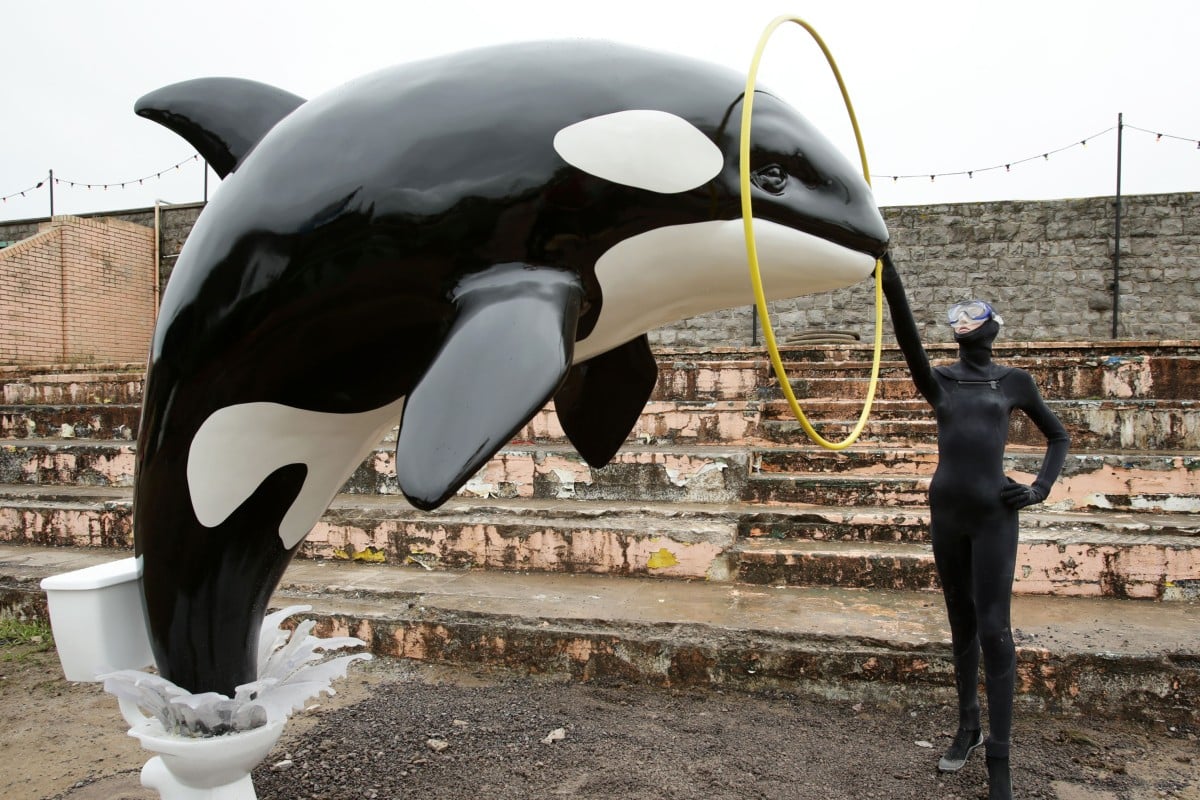
Banksy’s Dismaland: A Social Experiment


On Saturday, August 22nd, internationally famous British street artist and social rebel Banksy declared his latest project Dismaland open to the public. 

I’ve noticed that many commentators rushed to label the large-scale art installation dystopian, but I tend to disagree.  Dystopia is an imaginary place where everything is scary and bad.  But Banksy’s mini “park” in Weston-super-Mare (UK) is an artistic re-imagining of a fairy-tale theme park in the harsh light of our miserable reality.  From what I’ve seen, instead of saying, “Imagine if everything was horrible,” the site screams, “Take off your pink glasses and see the horrors around you.  Look in the mirror and see who you are.”

While Dismaland is basically a collective art show (50 artists in total) and Banksy himself contributed only 10 pieces of his own into the mix, it is first and foremost his aesthetic concept, his political declaration, his social commentary.  And even if you never bothered yourself with an interpretive analysis of art and know very little about this artist and his work, as long as you know something you most likely know that

  1. Banksy is a provocateur.  As the best of the street artists before him, he seeks to stir and cause awareness.
  2. Banksy is a social critic who is focused on exposing the flaws of contemporary society’s structure and its perversity.
  3. Banksy is a student of anthropology who probes human reactions to various stimuli he creates with his projects, from early anti-establishment graffiti to Exit through the Gift Shop and Gaza Strip Clip.  Some sharp and extraordinarily observant people have suggested, for example, that Mr. Brainwash was Banksy’s creation from start to finish – a test to see how far hype can lead the artsy herd.     

Knowing this makes it hard to resist a thought that, regardless of the artistic merits and social significance of the individual pieces inside, a stationary installation with a six-week limited run and a daily allotment of only 2000 tickets priced at a laughable £3 is Banksy’s latest experiment in human behavior.  His name itself is a perfect sensationalistic stimulus required to initiate the chain reaction ripe with observational material.  He already knows what an attraction he is – his 2009 Banksy vs. Bristol Museum show was attended by 300,000 people in 12 weeks.

It started immediately.  As soon as Dismaland’s site came to life the day before yesterday, 6 million people attacked it trying to pre-book the admission tickets; crushing the site.  We cannot know what proportion of these people were scalpers, but a few tickets (most likely fake)  are being offered on eBay for $700.  (It’s worth noting that the “park” would have to stay open for over 8 years to accommodate 6 million people).

Now that the online ticketing is disabled (supposedly temporarily – until Tuesday), people are queuing in person and there are definite reports of ticket hopefuls camping out around the site.  Of course, it is only the second day of the show, but it is easy to imagine that the number of campers will only increase. 

For those of us who stayed for hours and sometimes days in front of museums just to get in, or concert venues to win a place by the stage, it is easy to envision further developments: lists organized by orderly art-lovers, marks on hands, attempts to join a “party of friends” upfront, offers to buy someone’s place for an exorbitant amount of money, yelling matches, and fist fights. 

Things like that happen around events that only last for a few hours.  This one will be open for six weeks.  So, those with the especially strong propensity for an escalation of commitment may be there for days upon days with limited access to food and hygiene – dirty, unfed, angry, and semi-violent “art lovers.”   

Remember?  Dismaland is an absurd version of a Disney park and the most dismal part of a Disney experience is the lines.  Recreating that in an extreme way is an art piece of its own right.  Every single person trying to get in becomes a part of Banksy’s art project and even more so when they finally get inside and start wandering among the attractions.

So, ask yourself: Do you want to be a part of Banksy’s social experiment?  It’s up to you to decide whether it’s more important to attend and be a subject in it, to watch from the sidelines through media, or to purposely not engage.  Banksy’s Cinderella’s Castle centerpiece seems to be asking the question – what will it take for people to look away?

Acknowledgement:  Special thanks to Y.A. Crow for invaluable advice and inspiring editing
The Wealth of the Nation: Observation #3


Rambo BillboardJust like every other New Yorker, I have experienced the rush of LIE's giant billboard ads coming at me on the way out of and into the Midtown Tunnel on numerous occasions.  You cannot really avoid the experience – there are just too many possibilities that can draw you that way: JFK, LaGuardia, US Open at Flushing Meadows, its next-door neighbors the Mets, your relatives in Queens, your suburban friends with their Near Long Island homes, and maybe even rich acquaintances with summer residences in the Hamptons.  Hey, it's possible you just like sitting in traffic for hours.  Whatever is the reason, the majority of people who live in or visit NYC have been exposed to the visual calls of various brands, upcoming movies, TV seasons' premiers, etc. strategically positioned on that particular spot between the boroughs.

Liberal extremists and snooty hipsters unconditionally reject all forms of commercial publicity as the front-end of consumerism (yet, they all support it by the sheer fact of having facebook accounts and iPhones).  But I'm no hypocrite – I don't simplistically dismiss advertising and even consumerism itself as evil.  In full honesty: quality objects are quite necessary in my life for aesthetic, utilitarian, vain, and psycho-therapeutic reasons.  Quality being an operative word, of course.  Unfortunately, the majority of contemporary promotions target general public that cannot afford quality anymore.  And it has been reflected on the ever-changing billboards.

Over the years I've experienced a broad spectrum of reactions to the images coming into my view on LIE.  At worst, they've ranged from "Who the hell is this ad for?  Billionaires?" to "God, that's just cheap and ugly!"  And at best, I have been pleasantly surprised by the resurrection of a high quality classic (Longines); awed by the first digital installation (FreshDirect); excited by the success of a small business (7 for All Mankind – unfortunately, they sold out to a global conglomerate VF within a couple of years); inspired by the social changes we have witnessed (Queer As Folk).    

Sadly, in the last couple of years my reaction range narrowed to one very intense sliver of irritation, but at least the billboards were largely occupied as recently as four months ago.  Imagine my surprise last weekend when I saw that less than 50% of the boards were actually covered by promo bills.  I don't think I've ever seen them like that.              

No, wait!  There was a period back in, I believe, 2012 when a lot of ads had to be taken down and boards dismantled due to the strict enforcement of the billboard laws related to the size and distance requirements.  But it is safe to assume that both the space owners and advertisers overcame the regulation hurdles, since, as I said, I just recently saw practically all billboards occupied.

So, that's not it.  What then?  Two things, really – the national impoverishment and the incurable social-media degeneracy.

You see, the billboards are not cheap.  It's not Super Bowl prices ($4.5 million for a 30-second spot this year), but still – an LIE billboard rents for about $30K per month.  And that's at the time when every single company that targets the consumer market with its goods or services MUST make room in their advertising budgets for GoogleAds (which also owns YouTube), iAds, facebook, Twitter, etc.  

Multiply that consideration by the wavering consumer confidence (I don't care what the "official" numbers are showing) compounded with the dwindling buying power and you come to the point when even the companies selling the highest volumes of consumer goods have to start making tough choices: whether to allocate $300K per year to a physical spot with a maximum of 210,000 possible views a day (LIE's 2014 auto throughput) or to a virtual spot tied to some viral YouTube video that generates 5 million views in 5 days. 

The empty spots along the expressway testify to the choices the companies are making.  It's totally opportunistic, of course.  Moreover, from my POV it's also totally short-sighted – there are so many existing and potential problems with online advertising, I intend to write a separate post on the subject.  It is possible that we are yet to see the times when advertisers will be fighting for the physical publicity spaces.  But for now, more and more billboards along the highways and on the City's buildings will go empty. 

I have a feeling that even the famous and fabulous digital screens at one of the most visited places in the world (50 million visitors a year), Times Square, may end up going dark at some point.  After all, nowadays the tourists and locals alike are mostly looking down at their electronic devices, not up.  So, it would be only fiscally prudent for the consumer-oriented companies to spend $1M-$4M a year (2015 rates) some place else.

And I find it very telling that the most gigantic (the whole block, 77 feet tall by 323 feet long, 20 pixels big) and the most expensive ($2.5 million for EVERY 4 WEEKS) LED advertising screen was taken by the company that makes billions on online advertising – Google.  They can actually afford it easily. 

Of course, the blank billboards are good news for graffiti artists like Rambo – more real estate for them! There is a poetic justice in that: the promotion of consumerism gets replaced by the guerrilla art.  Historically, the explosion of street art always went hand-in-hand with the economic downfalls.  That's why in the past it frequently (and expediently) turned into Prop Art – going from philosophical expressionism straight into political activism.  People should remember that as a valuable lesson in social science. 

In my opinion, it's not accidental that the crumbling of our ecological and socioeconomic environments coincides with the aesthetic degradation we are experiencing right now – when people bow to false idols and nepotistic, masturbatory garbage is passed as the "contemporary art" by the pushers from auction houses and big-name galleries.  I can only hope that real artists will fulfill their soul-changing mission and force people to look away from their little crack-emitting handheld displays and up at something awesome and powerful.          

WTF, Greece? Or The Luxurious Arrogance of Poverty


The funny thing is that I went to Greece precisely in the last moments of their Euro-backed temporary prosperity – in August of 2009.  By the end of that year, the Greek government had no choice but to come clean and admit that they "slightly" understated their national deficit, by like… 112%.  After that it all went down the hill and now we know where Greece really is – in deep shit.

It's a beautiful country!  Very beautiful and very proud of its history and culture, its ancient glory.  Sometimes to a fault, but that's another story.  Meanwhile, in this one I must say that, while our own Greek experience was nothing short of fantastic, we just knew that the shit will hit the fan pretty soon.  There were signs, both metaphorical and tangible.   

Towards the end of our trip, massive wildfires broke out in several areas.  On the morning of our drive to the Athens International Airport for the flight home, the vile smell of the scorched earth was already clinging to everything in the capital and its suburbs.  It felt as if we were escaping a cinematic doom, with the burning forests chasing us away.  Greeks and their theatrics! 

My fiscally attuned mind picked on far less dramatic, more subtle hints.  Small, but significant things; especially peculiar for a country that has an official status of "developed" and boasts "a high-income economy, a high quality of life, and a very high standard of living."

For example, practically every person we've met there had relatives in the US; and not second or third generation immigrants, but people who left in a past decade or so.  Since Greece has been a stable democracy for at least 35 years and it is pretty homogeneous racially, these people are obviously not political refugees.  Like for the majority of immigrants, their underlying reason for leaving the homeland is economic.

Also, there were scores people in their 50s and 60s who have already retired.  That actually could've been considered a sign of wealth, indicating significant personal savings.  Except that was not the case – all these people were relying on substantial government pensions.  Speaking of wealth, quite a few of more or less prosperous Greeks have businesses locally but reside in the US, Canada, Australia, and Germany, pulling substantial chunks of their capital out of their home country (Greece readily allows dual citizenship). 

The brand new (opened only two months before our arrival) Acropolis Museum, standing right next to the undergoing massive restorations Parthenon, simply blew my mind.  It is extraordinarily impressive!  With data from several sources I was able to estimate that,  between the museum and the archeological site, their owner, the Ministry of Culture, had spent $320 million (at the Euro/USD conversion rate of the time).  I wondered how a country of 11 million people with 2008 GDP smaller than Exxon Mobil's annual revenues could possibly afford such undertaking!  Well, it couldn't - the Greek government dipped into Eurozone lending pool to finance these projects.  And that brings us to the current stalemate.    

God!  There are so many economic, political, and social reviews out there on the subject of the Greek disaster, it would be just a waste of time to try to stick another two cents into the cacophony of bullshit prediction and "analytical" speculations.  Moreover, most commentators seem to be focused on the problem I've noticed back in 2009 and already pointed out above – the youngish pensioners.  So, what else there is to say?  Yet, I know a thing or two about countries that de facto belong to the third-world realm, but delude themselves into believing that they are big international players!  Hence, I may offer some additional insights. 

You see, average citizens don't get ideas of grandeur and prosperity out of thin air.  Every Emerald City has its own Wizard of Oz.  And those are always people of power with national (and international) reach; invariably they are all liars. 

With some nations (e.g. Russia) it's enough to bluntly smack green glasses of absolutely empty, never-ever fulfilled promises straight onto the noses of the countrymen and they will believe that they are surrounded by jewels.  In other countries, like Greece, the illusions must be more finessed – you actually have to give something tangible to people to make them believe that their lives can be no different than, let's say, in the Netherlands, or Sweden.  

As I said, it gets tricky:  In Scandinavian countries, citizens themselves are charged with an obligation to fund their state benefits through heavy income taxes.  But Greek politicians who rode to power on social programs have no resources like that – there is not enough domestic income to tax.  The national wealth is not real, it's just pretend.  What to do then?  Not to worry – it's all thought through: If your country is a Eurozone member, you have a shortcut – you can qualify for member loans (Acropolis, pensions, welfare – everything from the same Euro pot). 

The Prestige of this magic trick is this: in order to qualify the Greek government lied to everyone internally and externally – they falsified data, facts, statements and whatnot, obscuring the fact that the national wealth is not really there.  And no matter what people who benefited from thusly financed cushy social programs think, these opportunists had only their own personal interests and political aspirations in mind.

Of course now it is difficult to take any benefits away!  Greeks don't want to give them up.  Oh the luxurious arrogance of the poor!  They want to keep all their benefits and their pride intact at the same time – get their debts forgiven, receive more money.  They feel entitled! They are one of the oldest members of the Eurozone!  If their European comrades want to keep the Union intact, they will bite their tongues and save their Greek brother, no matter what!  Plus, no terms and conditions! 

This attitude manifested itself on 07/05, when 60% of the country voted in support of saying "No" to the bailout package that was on the table at the time.  The CNN Breaking News I've received that day said that Prime Minister Alexis Tsipras hoped that

"this will force Europe to hand over more money with less austerity attached, and cancel some of Greece's enormous debt."

For a hot second there it seemed that pride will become the top priority; that they'd rather starve standing up then eat kneeling.  Greeks were celebrating in the streets of Athens.  Where is all that pride coming from amidst all the lying and data falsification?  And who can afford to be proud when your national economy is in a state commonly known as a "free fall" and your banking system is in a virtual shut down due to empty vaults?  I don't know.   

But then, only four days later, they retracted and accepted the original offer:  zero old debt forgiveness; the bailout in the conventional form of loans; compulsory pension cuts and tax increases to make sure that the Greek government can serve this new debt and the old debt, i.e. pay interest to the lending Euro-brothers.  And now Mr. Tsipras says "YES, PLEASE" and is willing to battle his own MPs to ratify the requirements into laws! 

Doesn't it all sound like some sort of a kindergarten (aka political) game of delusional children?  But hold up!  The conditional bailout is not a guarantee.  Will Greece pass all those mandatory economic reforms as laws?  Will the PM be able to pull through?  The 6 million Spartans may still have a chance to keep their grand stance instead.         

The unspoken truth is – if that what happens tomorrow, it will be the best possible outcome for the European Union.  I mean, none of the members can really afford this bailout (Remember? France wants to sell Mona Lisa to cover exactly 0.1% of its own national debt).  It would be a much better fiscal option for other countries to let Greece follow that Exit sign straight out of the Eurozone.  

Post Scriptum to Pseudoscience Post: Michael LaCour


Einstein-science-false-balanceA week ago I posted my comments on pseudo-economics  and a couple of days later someone drew my attention to Michael LaCour's mess.

That's right, I am not up to date on my bullshit news!  And if some of you are not either:  Michael LaCour is a political-science PhD aspirant at UCLA.  Last year, he successfully pushed through academic approvals and straight into mass media his research, which "empirically proved" that voters' opinions on gay marriage could be positively shifted based on a single 20-minite conversation with an LGBT person relating his/her story. 

Of course, it was a fake!  Not only the results were falsified, the entire study was a fiction.  As I was trying to explain in the previous post, there is a lot of this shit going on, especially in social sciences.  Surprisingly, it got exposed as a fraud within just one year!      

Oh, my!  What a case in point!  Or rather a case in multiple points I've been addressing from time to time.  Here are a few:

Point 1.  Nowadays, you can literally fake anything – data, documents, careers, personae and personalities, talents, beauty, courage, loyalty, honesty, news, finances, science, art, national histories, even entire lives, as long as you wrap it in an impressive package and  your lies hit the right spot in the target audience. The gullible, superficial, ignorant, and plain stupid majority of contemporary humans make terrifically fertile soil for all kind of schemers and fakers to sow their poisonous seeds.  What used to be a crime of skillful con artists and corrupt governments has become a way of life for quite a few people; many of them very successful and well known.        

Point 2Nobody is doing their job and/or paying attention.  It is impossible to count how many times I brought up this issue, both in writing and in conversations.  LaCour's blatant fakery passed with flying colors through multiple stages of mandatory academic, "accuracy-liable" reporting, and widespread public assessments.  Faculty advisers, peer reviewers, editors of research journals, social justice non-profits, mass-media reporters and their respective editors – they all accepted and approved the study's premise, methodology, findings, and conclusions.

Even LaCour's "co-author," Columbia University political science professor Donald Green didn't bother to check the validity of the data presented to him.  (This is how it works, by the way, in academia in all countries – you need some professor's name on your papers to get them published).  I can vividly see all these people, too impotent to engage any critical reasoning, speed-reading the first and the last 10 pages of the paper and being bedazzled by colorful charts and tables of numbers. 

Point 3Media and public perception will always prevail over reason and truth.  Because for the past several years gay marriage has been one of the hottest topics on the journalistic radar, publication of the study in Science magazine worked like a spark for the international print media engine.  As the result, the research was headlined in The New York Times, The Washington Post, The Wall Street Journal, The Economist, The Los Angeles Times, and This American Life

Because people read about it in these "respected" newspapers and magazines (oh, they've failed us so many times – but people don't want to learn), nobody questioned the fact that the study contradicted the times-proven concept that the vast majority of people tend to hold on to their social and political opinions regardless of what they read or hear.  Moreover, everyone's daily personal interactions are miniature studies in people's staunch stubbornness and inability to absorb opponents' arguments; alas, that was also ignored.

It takes an extraordinary power of persuasion of some very special people who possess illuminating brilliance of the mind, impressive oratory skills, and innate guruship (all of it at the same time) to alter minds and souls.  And I don't think you can find 100 of those in Los Angeles, or the entire state of California, or any single nation.  Hell, let me be honest – I think it would be hard to find 100 people like that on this entire planet.

Yet, the confused liberal do-gooders got so excited about the "scientifically proven" possibility of influencing potential voters through a simple tool of a 20-minute conversation, many of them shook their donors' wallets and scraped their budget barrels in order to fund multiple LGBT canvasing projects.  Are you ready?  Ireland's Yes Campaign publicly connects the successful legalization of gay marriage in that country six weeks ago to their use of LaCour's paper as a template in targeting conservative voters with personal stories' recounts.  Not the years of political struggle, constitutional law reviews, tremendous cultural shifts of the past 20 years affecting generations of people in many countries, but one single (and short) conversation!      

Point 4Common sense is all you need to see the truth.  (It's getting to be my mantra, isn't it?)  David Brookman, another graduate student at University of California (only in Berkley, not LA) took a quick look at some of the input data presented in LaCour's research and went like, "What the fuck?"  Or something to that effect - I wasn't really there.  He didn't need any heavy investigative machinery or extensive computer modeling – just simple arithmetic in his head: 10,000 of "recorded" contacts at a disclosed incentives of $100 a pop, that's… $1,000,000!!!  Who the hell funded this scientifically uncertain PhD research in the first place?  (The fact that nobody, not even the co-author, has put two and two together before Brookman did literally makes my blood boil.)  And was it some highly reputable survey organization that handled this substantial sum?  Nah, the name didn't ring any bells, like at all.  After that it was just unspooling the lies.  

Point 5The unrepairable damage of pseudoscientific bullshit.  They come in different shapes and forms, and they can manifest themselves right away or in the distant future, but there is no question about it - nothing good ever comes out of pseudoscience and falsified research.  Whether it's Nazi's eugenics providing foundation for racial extermination, or "medical cures" of homosexuality destroying lives, or pulp sci-fi replacing healthcare and education for millions of people around the world - some terrible fallout always follows. 

Without getting all preachy and embarking on a rant about the amorality of LaCour's con, let me instead mention its two more tangible negative outcomes.  

As soon as the fraud was exposed,  The Wall Street Journal (one of the original heralds of the "revolutionary" findings), in a typical swing to the other extreme, gave its editorial page to some conservative "scientists" to vent their righteous indignation.  These theoreticians, of course, couldn't possibly miss the opportunity to denounce all of social science (I guess, that includes Economics) as unscientific and nothing more than "liberal wishful thinking." 

Because so many civil-rights advocacy groups associated themselves with LaCour's bullshit and, as I mentioned before, spent gifted, bequeathed, and granted funds replicating the experiment that never was, they discredited themselves as organizations and people who didn't know what they were doing.  Even staunch supporters feel embarrassed by those leaders who succumbed to someone's unscrupulous methods of advancing their academic careers.  I am guessing, a few non-profit heads will roll.

And truthfully I cannot possibly feel sorry for these fools.  Just like I didn't feel sorry for Bernie Madoff's victims.  These people want to hear the "good news" so badly, they become eager and willing participants in these not-so-clever schemes.   

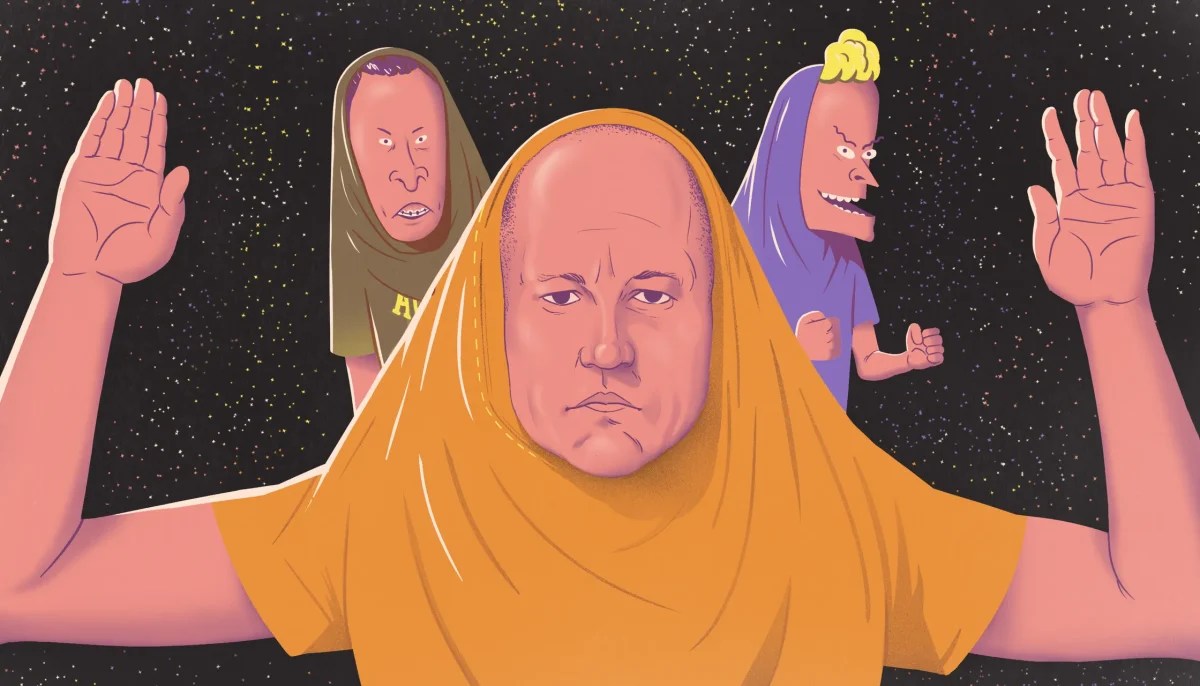
Quote of the Week: Mike Judge, the Prophet


“Data creation is exploding.  With all the selfies and useless files people refuse to delete on the Cloud – 92% of the world’s data was created in the last two years alone.  At the current rate, the world’s data storage capiacity will be overtaken by next Spring.  It will be nothing short of a catastrophe: data shortages, data rationing, data black markets…  Datageddon!”

                            Gavin Belson, founder & CEO of Hooli, Inc.

                    (Silicon Valley, co-created by Mike Judge, episode 2.1)

The Frustrated CFO’s commentary:  For years now, the genius that lives in my home has been responding to all innovations of information technology with the same mantra: “As long as the servers can bear it.”  I humbly concur.  And it is reassuring that exactly the same sentiments are finally being verbalized through a pop-culture medium, such as HBO.  It is especially awesome and scary that this confirmation of the imminent future comes courtesy of the prophetic marvel Mike Judge – the one third of, what I call, the Trinity of the Eye-Opening Truth (Trey Parker, Matt Stone, and Mike Judge).  It’s scary because the man possesses  Cassandra‘s foresight: In 2006 when the incredible cult classic Idiocracy came out, it was written off by distributors as a campy sci-fi; eight years later people started creating lists of Mike Judge’s predictions that already came true: on birth rates, on advertising, on entertainment, on language, on political process, etc.  Not everyone is as fortunate as I am to have a warning oracle at home.   Hence, they should pay attention to Mr. Judge and his collaborators.