Economic Newsflash: You May Never Have a Chance to See the Mona Lisa Again


Old_695So, apparently France got themselves into a $2.6 trillion debt hole.  This translates into $42,623 of national obligations per each of 66 million French têtes.  Of course, the number is staggering.  However, I feel obligated to state that this is not as bad as what we have here, in our own beloved country with our very own $17.8 trillion burden pressing hard on 319 million of us with a weight of $55,684 per capita.

Still, someone just asked me the other day, how the hell France got itself so fucked.  It's not like the country pays $42 billion into IMF every year; or covers 22% of the UN budget; or sticks its nose into every hot spot in the world, bankrolling military and whatever-else aid campaigns.  And it definitely doesn't spend billions on artificially fueling the US stock market, even though if it crumbles the economies world-wide, including the French,  will be doomed.  It's our government that borrows funds for all that. 

I'm no expert on French economy and I'm not about to embark on researching their problems in detail (God knows, I have more pressing things to do).  However, basic knowledge of European affairs is sufficient for a logical person to form some general ideas. 

This is what happens with the formerly wealthy, but already shaky (who isn't now?), national economies when they decide to build an opposition to USA by combining as many European countries as they can into some utopian economic union: they start breaking their financial backs by carrying on their shoulders weaker (like, ahem… Greece) nations.  And, of course, the state needs resources to support domestic  industries (solely in the name of protectionism).  Add to that immigration policies driven by "special interests," which result in a population seriously skewed toward multi-children families with idle heads of households, who don't pay taxes but draw extensively on social programs.  And why not?  The majority of French population don't want to work too hard anyway: shorter hours, exuberantly long vacations, early retirement (at 60!).  And again, why not when there is the Mandatory State Pension Provision in place?    

What the poor France to do?  Well, the French government came up with this brilliant idea: They are going to sell national treasures, starting with… Da Vinci's Mona Lisa (!), which, thanks to king Francis I, has been in France's possession since Leonardo's death, i.e. nearly 500 years. 

Don't tell me that this doesn't sound like the end of the world:  Through ages of political rioting and religious massacres, twenty three wars, three full-blown revolutions, multiple colonial rebellions, and Nazi occupation France managed to hold on to Mona Lisa.  It's the perverted foreign policies and socialistic interior governing of our foolish times that led to the total socio-economic bankruptcy of the formerly powerful country.

You and I may think that La Gioconda is priceless, but the French have already assessed its market price, i.e. how much money someone may be willing to shed for it.  During the 60s the best guess of the art-dealing community was around $100 million.  Now, 50 years later, the time-adjusted equivalent of that sum is $2.6 billion.  Never mind that this would cover only 0.1% of the debt in question.  As they used to say in pre-Euro France, every centime counts.

One can't help but marvel at the utter stupidity and nearsightedness of the government that can entertain the idea of  eliminating one of the main reasons for the international tourism to the infamously snooty, unreasonably expensive, and ethnically unstable City of Lights (the Louvre is still #1 visited museum in the world).  Can these people see anything beyond their service terms?  I can clearly visualize the snowball of layoffs and business closures, which will unavoidably lead to the further drain on the state's treasury.  But those are French problems.  So, fuck them!

What the rest of the world, especially those of us who care for the arts, should be concerned about is the distinct possibility that we may never ever have a chance to stand in front of the Mona Lisa and attempt to absorb (it's really not that easy in the room full of tourists holding up their video and photo devices) Da Vinci's masterpiece in person.  And this is especially heart-breaking because it is one of only 23 surviving major works that are either universally or generally attributed to Leonardo.

It's dreamy to imagine one of the world's major museums trying to acquire the painting.  However, it is unlikely that any such institution will be able to come up with a $2.6 billion check.  The third-ranked museum in the world, The Metropolitan Museum of Art, is America's richest cultural institution with $2.7 - $3 billion annual endowment.  However, the $300 million operating budget and constant structural updates apparently eat away the majority of the funds – during the fiscal year of 2012 the Met spent only $39 million on new acquisitions.  Of course, there is an aggressive deaccessioning, which allows the museum to sell off "minor" pieces in pursuit of the "major works,"  but even with an average of $1 million per item, the institution will need to liquidate 2600 (!) works to collect the required amount.  Highly doubtful!

So, if the transaction does materialize, it most likely will be funded by private wealth.  You can pack a large ballroom with people from different corners of the world whose wealth amounts to multiples of the asking price.  For the sake of my personal amusement we can entertain another beautiful fantasy:  How grand would it be if one of our openly super-rich individuals with strong philanthropic inclinations shelled out a chunk of his wealth for La Gioconda and then gave it away to the Met, so that the grateful general public could continue enjoying it (only now in my own backyard)!     

It would take only 4.4% of Warren Buffett's worth or 3.2% of Bill Gates's.   But both of them are too preoccupied with keeping the world healthy and the US technologically comfortable (don't ask me why) to bother with art gifts like that.  And by the way, the Codex Leicester, the most famous of Da Vinci's scientific journals, which Gates bought in 1994 for $31 million, is kept in the MS mogul's own private vault.  It is considered a great generosity that the Codex is let for display once a year in different cities around the world.  Yes, it is hard to imagine that anyone would give away the Mona Lisa as a gift to an institution or a nation.

The way I see it, the buyer will probably be someone whose immeasurable wealth you can't find on some Forbes list, because it is not valued in the ephemeral public-stock prices.  This multi-billionaire is someone who keeps a low profile and his name would mean nothing to the majority of the world even if he walked into the Louvre in person.  But such an individual will transact through multiple proxies, and when all is done the Mona Lisa will disappear from the public eye into a secret stronghold.  We will be left with reproductions and copies, while a handful of people will enjoy the privilege of up-close peering into the delicate strokes of oil paints applied by the genius's hand to a piece of poplar wood. 

Rumor Has It… Trouble Is Brewing in Private-Equity World


Storymaker-slideshow-holy-monks-brewmasters2-514x418The other day I had a meeting with some big shots from Citibank's commercial landing.  Every single person at the table felt disappointed.  On my side of the negotiations, everyone was shocked that the bank came up with some really sneaky changes to the Term Sheet we have originally accepted.  Citibank's covert operatives were distressed to realize that their maneuvering didn't work on us and, moreover, we are absolutely ready to walk away from the deal. 

Nobody was disgusted more than me, though: I've rejected other lending candidates in Citi's favor based on the conditions of that damn Term Sheet; I've spent so much time and effort making sure that the deal comes to conclusion and closes by June 15th; I've conducted so many detailed discussions with the bank officers; I've plied the Credit Risk Group with tons of information and provided elaborate answers to every single of their drilling questions – dammit, what a waste!  I started getting up from the table, determined to say a cold goodbye ("Good day, sirs… I said, 'Good day'," or something like that) and leave everyone in the conference room to their own devices. 

But the bank's team leader didn't want to give up.  This seasoned warrior (whose bonus depends on the number of deals she closes) quickly swallowed the bitter pill of defeat and started deliberating the possibilities of remedying the unfortunate situation.  By way of explaining and excusing their underhanded tactics, she embarked on a tale of pressure and oppression all national banks suffer from the Office of the Controller of the Currency (OCC) that, empowered by the US Treasury's mandate, tightened the regulatory screws on all commercial lenders operating in small and middle markets.     

Ring-ding-ding!  The government is making it more difficult for small and mid-size businesses to borrow operating funds?  Tell me more!  

I can only attribute her sudden loquacity to the awkwardness of the impasse we have reached, to the thickness of the room's air that required some sort of easement before our dialogue completely choked.  Not only that she went into details of the new pre-lending qualification requirements for private businesses such as lower leverage (i.e. debt/equity) and higher fixed-coverage (EBIT + fixed costs/fixed costs + interest) ratios, but she also divulged some information bankers almost never discuss – she told us about a specific deal just killed by the bank's risk underwriters for the sake of compliance with the government's wishes.

It was the nature of the transaction in question that surprised me at first – a typical leveraged buyout (LBO) of a privately-held manufacturer, with a well-known private equity (PE) firm and a mezzanine lender already in place.  Citi was expected to step in as an institutional lender covering 55% of the contractual purchase price.  I might've been wrong, since I'm not exposed to M&A on daily basis, but I was under impression that banks are usually hungry for the high-yield rewards of such deals, especially considering the prominence of the PE behind it. The fact that this case was presented to us as an example of insufferable regulatory interference kind of confirmed my suspicion that Citi's bailing out was an unexpected turn of events for the bankers themselves.

So, did they get the explanation from their Risk partners? Yes, they did: The due diligence suggested that the deal had a high probability of a quick turnaround.  In other words, it was expected that the PE firm would quickly flip the acquired company's stock for a nice profit leaving the company to deal with the loan repayments.  Ok, but isn't that the nature of any private equity transaction, regardless of whether the ownership is sold fast or kept in-house for years?  The loan repayments always come out of the company's operational cash flows.  The liability is a part of their balance sheet.  Hmm…     

Anyway, the talkative tactics worked and we all decided to go back to our respective drawing boards instead of walking away from a very promising relationship.  Good!  But the story of the killed LBO kept gnawing at me. 

Ok, on the surface, it may seem that the government is working hard on protecting taxpayers from a possibility of another bailout.  But

  1. Citigroup was one of the first bailees to repay the government ($51 billion) with the highest profit on the bailout list (additional $13.5 billion).
  2. As we know, it wasn't the commercial lending, but the sub-prime mortgages and the securitization thereof that was at the core of the financial crisis and the subsequent bailout.  That is why the government-sponsored Fannie Mae and Freddie Mac top the bailout chart with $187 billion of the received support between two of them.
  3. Of the top 20 bailout recipients the one with the largest debt still outstanding since 2008  is General Motors (as of 05/29/2014, $11.5 billion is still due)- an automaker, a public company, a NYSE's Blue Chip.      

Wait a minute, wait a minute!  Private business vs. public company?  These Treasury moves have nothing to do with the fiscal protection of the nation.  It has to do with the government's continuous prevention of the stock-market crash and massive panic that will follow.  Too scared to deal with the long overdue adjustment, it has been doing everything in its power to direct both public and corporate investments into the shares gambling of mythological proportions. 

The private businesses and the private equity investors act against this insane agenda by laboring hard under the natural commercial formula of growing capital through realized profits generated by functional enterprises.  To undercut these efforts, the proverbial "they" are willing to sabotage private businesses, which hoi poloi knows nothing about, in order to continue ballooning the stock market cancer, so that the general public with their Ameritrade accounts and 401(k) plans invested into "emerging" markets is kept at bay.

Well, I will not fold!  I will get that Citi line!  As hopeless as it may be in the long run, I take a great satisfaction in the fact that my daily work is essentially a part of the Fiscal Resistance. 

Quote of the Week: You and Your Native Tongue


200px-Languages_of_pao"Each language is a special tool, with a particular capability.  It is more than a means of communication, it is a system of thought…  Think of a language as the contour of a watershed, stopping flow in certain directions, channeling it into others.  Language controls the mechanism of your mind.  When people speak different languages, their minds work differently and they act differently…  The question arises: does the language provoke or merely reflect…  Which came first: the language or the conduct?"

     Jack Vance, The Languages of Pao, 1958

The Frustrated CFO's comment: Maybe not the most mind-blowing science-fiction opus of mid-20s century, this short novel by the 14th Grand Master of the Science Fiction and Fantasy Writers of America is, nevertheless, full of fascinating concepts.  Those who ever wondered about the unmistakable passion of Italian, so perfect for melodramatic singing and kitchen fighting; or thought that French sounds too snooty even when spoken by hard-core street thugs, yet so sexy when whispered in one's ear; or heard dogs barking and whips lashing around people speaking German – will find the idea of controlling people through languages especially engaging.   

Quote of the Week: The Nesting Doll of Human Conglomeration


“Any collocation of persons, no matter how numerous, how scant, how even their homogeneity, how firmly they profess common doctrine, will presently reveal themselves to consist of smaller groups espousing variant versions of the common creed; and these sub-groups will manifest sub-sub-groups, and so to the final limit of the single individual, and even in this single person conflicting tendencies will express themselves.”

        Attributed to the imaginary author Adam Ostwald of a hypothetical tractate “Human Society”

More on Nepotism (The Moviemaking)


In my earlier post The Curse of Private Business: Nepotism, I have touched on the damage this phenomenon affects on commercial enterprises and its unfairness to people who still believe in the power of merit-based rewards. It is a complicated topic, though, because when it comes to our own kids we are dedicated to their support. And we would like to believe, of course, they deserve it. It’s the undeserving support that’s problematic?

At the end, to underscore the pervasiveness of this issue I pointed the readers to the familiar territory of pop culture:

“… the industry where nepotism is the most prevalent is the one that suffers the most from lack of fresh talent is the entertainment business.”

Last week, I was told that an IMDb community’s member (Feodor8, I believe) contributed to this very topic. I only had time for a quick look and now the disucssion has been removed. Even without the original material at hand, I would like to comment on few aspects of the “article.”

I hope that the piece was deleted due to the author’s aggressive attitude, which irked me as well, and not because the topic was deemed too sensitive. The contributor didn’t need to resort to offensive tirades and bickering with the commenters.

Considering how intensely he feels about this issue, I found this movie fan’s list of Hollywood players with family connections under-researched. Let me visualize it from my memory… Talia Shire was there, but strangely her son, the adorable and talented Jason Schwartzman was not. Futher into the Coppola clan, Sophia was present, but her brother, director Roman was not. Was Nick Cage (born Coppola) there? None of the three younger Balwin brothers who followed Alec into the acting trade, were mentioned. Alexis Arquette got on the list, but her immensly talented sisters Rosanna and Patricia did not (I don’t remember whether David was there)… And I could go on and on…

Why do it at all, if you do it half-assed? This is so typical – people complain about quality, but cannot live up to their own standards. The same goes for the general public’s opinion-forming process: the prevailing tendency is just to scrape the surface without looking into the root of a problem. The “article’s” author blamed the plunging quality of the entire American cinema on people with family ties, even the talented and hard-working. That’s just superficial.

Remember, this is a CFO’s blog. Filmmaking is commercial enterprising and like any business it abides by basic economic law of supply and demand. The power is with the movie-going audience. If they did not pay their hard-earned money to see the movies feodor8 rightfully condemned, the studios wouldn’t finance them.

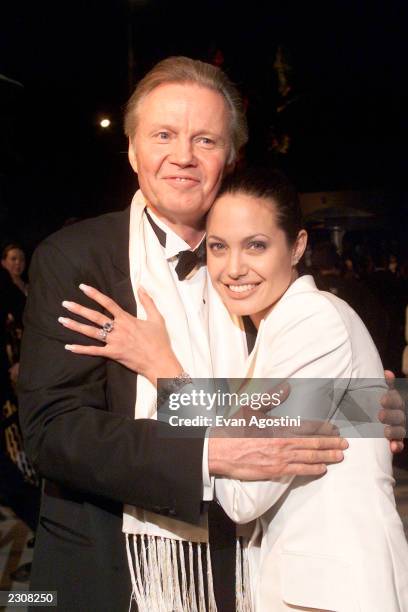
In the past 5 years Angelina Jolie (Midnight Cowboy Jon Voight’ daughter) starred in 7 feature movies. How many of them did I see? None. Yet, in the US alone they earned $440 million in the box office; all commercial successes!!! That’s the demand—and the supply follows. The quality of filmmaking is in your hands, dear audience. As long as you are willing to pay for crap, it will be made.