The Struggle Is Real for Employers As Millennials Enter the Workforce with Their Own Value System


Like many hiring execs, I still have an employer account with Monster.com, even though the time when they dominated the job-hunting market has passed.  Nowadays, they are not even at the top of the industry leaders list.  Still, we got used to them in the 17 years they've been around.  And they do try their best to provide the paying clients with value-added bells and whistles beyond the standard ad posting:  resume matching, database searching, description writing, HR Resource Center, and whatnot.  

Pouty ShirleyOne of these add-ons is the email service that blasts recruitment articles to all registered users.  I usually ignore these emails, but the last one had an article with an enticing title The Real Reason Millennials are Leaving Your Company.  

The first thing that caught my eye was the singular "Reason."  I thought, "The author was able to identify a single, most fundamental cause of what appears to be a case of chronic pins and needles in the millennial butts?  That's remarkable!"

I got even more curious reading the logline.  It talked about an abundance of options, "a plethora of jobs" that allow millennials to be "super selective" in their career choices.  Moreover, it promised expert advice to employers on how to keep the "valuable millennials" in the work seats.  I was like: This must be one of those sci-fi imagine-if humorous thingies, because these statements, if not drenched in undiluted sarcasm, can only refer to some remote planet in an unknown universe.  Here on Earth, right now, most of the millennials you and I know are either unemployed, or work jobs that have nothing to do with their chosen professions (let alone vocations), or stretch their schooling to avoid facing the bleakness of the job market.  I mean, there are premium cable shows and broadcast sitcoms about it.   

And, "valuable millennials?"  Yes, they exist, in small numbers and tiny clusters, and you ought to be very lucky to have them around.  But generally speaking: the state of our arts and entertainment is a testimony of young people's value and their values.  And when it comes to hiring, you need to go through 800 entry-level resumes to find 3 candidates who can write a coherent sentence, even though (I'm talking to you, senator Sanders!), all of the applicants have college degrees.     

Opening the article immediately dispelled all enthusiasm.  Firstly, no pinnacle reasoning was crystallized.  The piece was divided into subsections addressing different causes for millennials' job mobility.  Since the author is not a Canadian afflicted by the national inability to pluralize words, I can only attribute the use of the single form in the title to writing and editing sloppiness.  And, of course, there was not a single whiff of alien or any other humor.

In fact, the self-branded Talent Maximizer® Roberta Matuson, who wrote the article, takes herself and her "advisory" role very seriously.  In complete solemnity she lists the following as the reasons why the millennials don't want to hold on to their jobs (with my commentaries):

  • Millennials want to work for companies that help to improve society.  Ms. Matuson suggests that those employers who want to retain Millennial workers should "take a closer look at the organizational purpose," assess how the company's mission impacts society, and redefine its purpose.

To paraphrase Woody Allen, "What's wrong with this?  Everything!" 

First of all, what does the lame formula "improved society" mean?  What's a "better society" for one person, is hell for another.  The massive support of Bernie Sanders by young voters clearly shows that they want to live in a welfare state.  I, on the other hand, have been preaching no government interference and market economy my whole life.  I would understand if the focus was more specific – let's say on environmental issues.  If employees of different ages boycotted the fracking industry, for example, our society would seriously benefit in the long run.  But I doubt we are talking about future impact here.  I'm pretty sure that if the fracking industry started providing free daily lunches to local people, the millennials would think of them as employers with a positive mission!  Never mind the explosions and the fiery faucets.

And what happened to the old-fashioned purpose of being profitable, staying in business, and continuously providing jobs?  It's not good enough?  Do all millennials want to work for non-profits spending grants, or public companies depleting investors' pension and college funds?

  • Millennials need constant external motivation: nurture, praise, repeat.  A shout-out here, a lunch with a boss there, or an invite to an off-site event, Ms. Matuson suggests, will help to demonstrate that the employers care.  Otherwise, the millennials will leave, because "the recession is over."  

Well, this is not the first time I am confronted with the suggestion that what I call "hugging motivation" is more important to younger people than fairness, objectivity, professional growth, adequate compensation, etc.  Don't get me wrong, the acknowledgement of one's achievement is incredibly important, but only if it's deserved.   Constantly patting on the back some unimpressive, low-value jackass out of fear that they will leave – that would be a betrayal of my work ethics and a violation of my fiduciary duty as a CFO.  Merit-based rewards, people!  That's what made America great in the first place and that's what will bring the greatness back! 

And here she goes again with the sci-fi twist: the recession is over!  Where?  In Alpha Centauri?  Oh, wait – on the front page of The Wall Street Journal and in government reports.   In real life, we are in the permanently recessive stage of economic decline with no prospects for upward turn.  This slow sliding may feel to the uninitiated as a flat plateau, but just you wait - we are bound to experience some dramatic crashes as well.

  • (Brace yourself for this one, cause contrary to the previous statement:) Compensation is important to millennials, especially if they have student loans.  "If you don't pay the millennial whatever he or she thinks they are worth," they will leave.

So, no matter how much you praise them, and hug them, and take them to lunch, the old-school paycheck still matters! Except there is nothing old-school about it either.  Back in the day, wages were determined by clear and tangible factors: the sophistication of the job, the level of expertise, the scarcity of QUALIFIED professionals on the market.  But apparently it doesn't work like that with the generation of people who were born after The Breakfast Club and Back to the Future came out.  The key to their adequate compensation is their own self-worth.  We must pay them whatever they think we must pay them.  And don't forget, the employers need to account for the student loans!  Essentially the implication is that we have to pay them what they NEED and not what they earn.  "From each according to his ability, to each according to his needs" maybe sounds right to Sanders's supporters, but it is not the principle that lies in the American foundation.  You know whose principle that is?  Marxists-communists!

  • Millennials require work-life balance.  

Just the millennials?  Is that what the article's author actually believes?  That millennials should be treated preferentially when it comes to working hours, paid time-off, etc.?  That there should be two different HR policies in every company, one for millennials and another for the rest of us chickens?  That's age-based discrimination, isn't it?   

I've always believed in the importance of work-life balance and regularly wrestle with the owners to ensure that every employee has access to the same set of benefits and perks.  And what my experience shows is that the millennials take the full advantage of these packages like no one else; sometimes to the point of abuse.  90% run out of the office the minute the clock strikes the official end time, no matter what's happening with the work.  Many don't even spare a few seconds to shut down their computers (yet all of them fancy themselves "environmentalists").  Just last year, I had a millennial employee who was out for 15 working days in the 5 months I tolerated her bullshit.  I've never had to deal with that kind of attitude before the millennials entered the workforce.         

The truth is that you don't need to be an HR expert to formulate your ideas about the reasons behind the millennials' prevalent job discontent.  Any experienced manager with a keen eye and some human insight can draw up a comprehensive list.  And here is mine (in no particular order):

  1.  Many millennials, especially liberal arts majors, have a hard time defining their purpose and developing a sense of belonging at a job.  This is primarily because they go to college to learn… nothing.  I'm not even talking about slacking and partying.  There are so many narrow-niche bullshit "liberal arts" degrees out there, most bachelor graduates acquire no practical knowledge.  And it makes thinking of a career path very difficult.
  2. Much scarier, they are not equipped with any basic learning skills.  They can neither study on their own, nor operate with minimal supervision.  Not able to absorb new knowledge, they feel like failures and will eventually leave for an "easier" job.
  3. Turns out that the damned phone is a millennial Achilles heel.  The millennials are so used to texting, tweeting, and posting, 85% of them are afraid of talking on the phone.  When confronted with a job that entails constant voice-to-voice interactions, which are a plenty,  they opt to quit.
  4. Aside from athletes and health freaks, young people nowadays live incredibly passive lives.  Some people say that the abundance of streaming content is to blame, but we all know that way before YouTube (2005) and  Netflix's streaming (2008), young people were already glued to their computers and game consoles.  Thus, they suffer terribly on the jobs that require them to be out of the office most of the time – selling, pitching, servicing, etc.  According to some HR professionals, this is one of the millennials' biggest complains.    
  5. The bulk of this generation grew up with no discipline or structure, both at home and at school.  While being a non-conformist is an invaluable quality when it comes to independent thinking and artistic expression, in a survival-driven business environment the lack of self-control, inability to follow rules of conduct, and disregard for subordination can make one's life pretty unbearable. 
  6. They want to be hugged and cuddled all the time.  Many of them crumble under pressure and cannot deal with reprimands.
  7. I know it sounds like a cliche at this point, but it is true – they do want trophies just for showing up, because that's what they are used to.  As a result, they develop a clinical deficiency of self-motivation for achieving merit-based recognition.  They shy away from competitive environments where hard work and achievement translates into tangible rewards of raises, bonuses, and promotions.
  8. Celebrity-saturated social media made the majority of millennials into unsettled zombies who are preoccupied with fantasies of becoming instantaneously rich and famous.  I guarantee that the star-struck ones will continue moving from one job to another, feeling extremely discontent.   
  9. The majority of the millennials are not prepared to be self-reliant.  The livelihood of many a chronic quitter usually doesn't depend on their own paychecks; they expect to be continuously supported by their parents.  
  10. And some young people, just like in every generation before them, are restless because they want to be adventurers; they are afraid that Life will pass them by.  The boring job can wait; while they pursue their dreams.  And, of course, sadly, most of them are confused, and don't know what they want, and don't have any ideas, or talents, or clues.  But let me tell you: that is the only good reason to quit your job (assuming you can afford it).  All the others are just weaknesses and incompetence.           

 

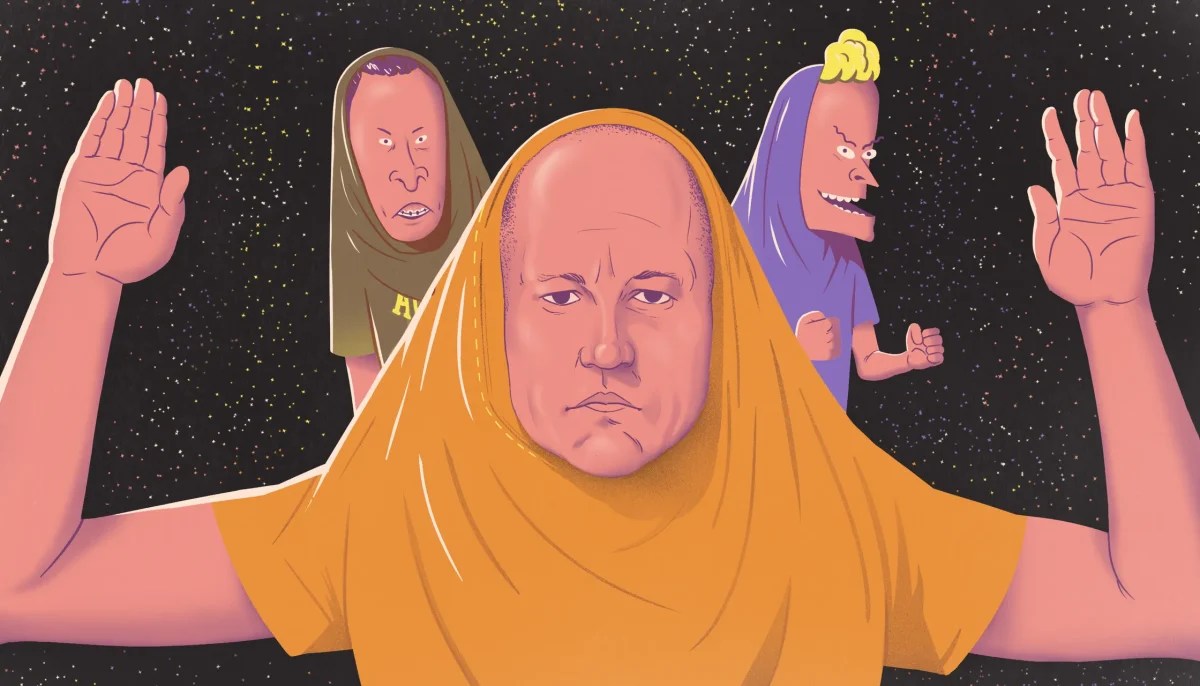
Photo Quote of the Week: The Millennial Conundrum


© 2016 Original by YAC. All rights reserved.

Three Business Owners and Five Sales Directors Walk into a Bar…


We used to complain about our country being divided into two colors, red and blue.  Boy, I miss those clear-cut times when we had a few personal liberties to fight about!  Now we are a fucking Pollock's painting!  Social, monetary, ideological, intellectual, and cultural (some even say micro-cultural) differences create a broad variety of political blends and affiliations.  At this point, we have pretty much slid off the two-party platform; we are now swimming (or drowning) in a multi-faction cesspool.  

It definitely looks to me like the 2016 primaries are far more divisive and tumultuous than the presidential election will be in November.  Each candidate, on both sides of the partisan divide, represents a very distinct combination of views and positions that categorically separate him/her from others.  Accordingly, the supporters are broken up into a multitude of tiny puddles, not two oceans.    

Pollock's ConvergenceThis made Politics into a more dangerous and touchy subject than it has ever been. I always tried to uphold the propriety rules and stay clear of the political discussions in public, particularly with co-workers, business relations, perfunctory acquaintances, etc.  But nowadays, I am literally left with only one place where I can express my opinions openly – my own home.  Even in this blog I keep myself in check.  

But there are people who will talk politics anywhere.  They are usually either (i) very brave and willing to take a stand; (ii) too powerful or confident to care; or (iii) absolutely tactless and have no idea that they make others uncomfortable.  The combination of (ii) and (iii) is also very typical.  And, of course, I happened to work with one of those.  It seems that this business owner believes the impossible – that everyone in the room shares his opinions on… everything.

When I end up in one of the awkward situations he creates (usually during business dinners), my choice of actions is simple: ignore (just get myself busy with food or something) or deflect (hopefully there are people with little kids at the table - trumps all other topics).  Sometimes I find a reason to avoid going to an event with this dude altogether; which is what I did the other week during the company's Annual Sales Summit.  

And dammit!  He actually managed to instigate a rare political exposé: he asked everyone around the table (two other business owners and five sales directors) to declare their choices of Presidential Candidates!  I cannot tell you at what level of intoxication these people agreed to basically reveal their political stands  ("No judgement!" was guaranteed, by the way); nor can I warranty the truthfulness of the disclosures.  However, I can testify to the fact that everyone was surprised and/or traumatized by their own unusual candor: one by one, all eight participants came to my office the next day to confide their bewilderment and share the results of this bizarre poll.  And now I am sharing them with you, my readers (in the order they came through my door):

  1. Business Owner (the instigator himself), 60:  A liberal Upper West Side exterior, rotten chauvinist interior (just imagine late Nora Ephron writing a really obnoxious character); born and raised in Westchester County, he'd spent 30 years of his life running his own business in Pacific Asia before returning to Central Park West –  Hillary Clinton;
  2. Business Owner, 46:  The company's founder and CEO; a remarkable woman who remade herself from a basic Chinese wife into an extremely independent and self-reliant woman – Michael Bloomberg;
  3. Sales Director, 48 : A Midwestern gentlemen with deep roots in 250 years of family traditions; a trained chemical engineer, he spent most of his life in business development and sales; an avid hunter and a boater – Jeb Bush;
  4. Sales Director, 41: A Texan of Korean descent; another engineer who actually has spent most of his career in chemical manufacturing; someone capable of setting up a production line from A to Z; a tech savvy guy with unbearably weak handshake and darting eyes - Jeb Bush;
  5. Sales Director, 45: A third-generation raw-materials distribution professional; born, raised, and still residing near the New Jersey Shore; recently divorced with one daughter whom he loves more than anything; after three beers will bust out pretty credible vocal quotes from Notorious B.I.G. and 2Pac (beats 'n all), if you ask nicely – Donald Trump;
  6. Sales Director, 33: An ambitious Korean boy born in Southern California; trained within LG system for the Latin American markets, he possesses the valuable assets of fluent Korean and Spanish; while making a low 6-figure annual income, he still lives with his mom so that he can support her – No one; he stated that no candidate represents his political, economic, or life concerns;
  7. Business Owner, 49: A descendant of an old aristocratic Shanghainese family persecuted by the Mao regime, whose parents forced him into piano playing and lounge singing as possible means of self-support; yet, after coming to America at age 16, he chose engineering and business as his areas of interest; he was making a remarkable progress climbing a career ladder of one of the largest plastics producers in the US, when the company's founder (see above) offered him the partnership – Ted Cruz;
  8. Sales Director, 65: An old-school career salesman, he was originally responsible for building the core of the company's distribution structure, bringing with him dozens of his customers; a Vietnam War veteran with the combat experience and hot-blooded Italian ancestry, he is known for smashing desk phones against the walls; yet his wife, with whom he lives in Upstate New York, has been able to calm him down for nearly 40 years - Bernie Sanders.

So, here you go, ladies and gentlemen!  By most statistical parameters this group is not even all that diverse!  Yet, the results are all over the place; with some totally surprising picks (Ted Cruz? Really?!).  I mean, some respondents have named people who are not running at all or are out of the running already.  Moreover, the leading Republic and Democratic candidates only got one vote each.  It's remarkable how uncertain and confused our political landscape is!

But I have to say: that last one actually broke my heart a little.  It is unfathomable to me that someone who fought North Vietnamese commies in hand-to-hand combat; who saw with his own eyes the devastation and poverty of the people under socialist regime; who enjoyed the benefits of booming American capitalism during some of our country's most prosperous periods would vote for a socialist.  What veteran would support a senatorial failure that is Bernie Sanders?  And why?  If I had to guess, it's because his daughter and son-in-law are not doing all that great financially up there in Vermont, but they had two kids nevertheless.  The man is afraid that he will be the one paying for his granddaughters' college tuition.

And isn't this typical?  A demagogue promises people something free (without even laying down the actual plan of actions) and everyone's principles go out of the window.  History repeats itself.     

Why Do I Stay Subscribed to Quora Digest?


Quora LogoThe truth is I have no idea why I receive Quora Digest emails.  I don't recall subscribing to the feed.  Of course, nowadays one can passively "accept" electronic deliveries of bullshit by failing to unclick some hidden option box.  I am certain, however, that  I'm not registered on Quora website.  I wouldn't.   

Quora, as in plural of Quorum – in the same way as Data is plural of Datum. It is basically a blogging hub masked as a Q&A platform: one registered person posts a question and all other registered contributors are invited to answer.  Strictly speaking, this unrestricted invitation to participate clashes with the name, which refers to "select groups."  Maybe the founders confused it with fora (the Latin plural of forum).  I don't know and I don't care: The whole concept reminds me of Coffee Talk with Linda Richman, when Mike Myers would get "all verklempt" and invite us to talk amongst ourselves by providing a discussion topic.        

Moreover, many things about Quora simply creep me out.  For instance, Quora's T&C state that contributors retain the copyright to their content.  Well, it's great that they threw that in, however, the enforcement appears to be highly problematic.  Questions posted to the site are open for editing by everyone.  This includes official editors and all registered users.  Users can also submit unlimited number of suggestions for editing the responses.  Therefore, the possibilities for modifications of the original material are endless.  The apparent absence of a solution for the copyright sharing basically nullifies the notion of IP protection.

It's weird that the site demands its users to register with their real names instead of handles and go through email verification.  It's not that I think people should hide, but they must remember that Quoara automatically releases users' names to the search engines.  We don't know whether the site gets some sort of fees in return, but it wouldn't surprise me if they do.  Just like it wouldn't surprise me if they intend to sell the subscribers' lists to other marketers as well.  But these are just my speculations.  In the absence of a clear mission statement, that's the only thing one can do – guess.  

In reality, the fact that Adam D'Angelo (CEO) doesn't seem to be interested in generating revenues makes me very suspicious of his actual intentions and motivations.  It seems only logical to suggest that they are spying on the contributors, studying their interests, behavioral patterns, and tastes in preparation for eventual commercialization of the site.  Or is it something even more sinister?  How the hell did they get a $900 million third-round valuation?  What sort of potential revenue this number is based on? 

As I said, it's creepy.  I don't even open Quora Digest emails.  But I'm not unsubscribing either – because of the subject line, which always shows the top question of the day.  I don't want to give up the opportunity to glance at it.  Most of the time, what I see reeks of laziness.  I mean, we live in the Internet age – go on Wikipedia or just google this banal crap!  But once in a while some amazing shit pops up. 

The other day I read: "How can you maximize your happiness in life?"  Wow!  Is this person for real?  60,000 antelopes just died in Kazakhstan for unknown reason and half of Europe is covered in water and mud, but this human is not only happy, he wants to bring the bliss to the next level!  Even crazier, he expects to receive constructive instructions from his fellow Quora members?!  Well, good luck with that!

Actually, it's not this kind of oddities that keep me looking.  I am more interested in patterns and trends.  For instance, recently I've noticed an increase in frequency of the questions concerning material self-sufficiency and economic survival.  Well, it's surprising that people on Quora don't talk about their inability to support themselves all the time.  I'm guessing that most of them consider bringing it up under their real names in front of the strangers embarrassing.  Nevertheless, the number of such queries is apparently spiking. 

Below are three questions I found to be most typical; with my brief comments (remember: I'm not subscribed, so I don't know the answers that followed; I can only provide my own):

1.  "What kind of salary guarantees comfortable living in NYC?"  What a terribly formulated question!  It should've come with a separate note explaining what "comfortable" means to the inquirer.  Cause, what's comfortable to a person fresh out of Idaho who has never spent more than $100 on a pair of shoes and considers a $350 Michael Kors bag a chic statement may mean financial misery to someone with a different background. 

For the sake of argument, let's assume that the questioner is single and actually meant comfortable, but not extravagant, i.e. a good one-bedroom apartment in Manhattan with no roommates; year-round pleasant climate control; full range of cable and streaming entertainments; cell and land phones; a car kept in a garage; designer coffee in a favorite shop; going out for drinks at least once a week; eat out twice a week; cooking with high quality ingredients; good cheese, wine, and fruit in the fridge; mid-range ($800-$1500) outfits; 2-3 new pairs of $500 shoes a year; one new $2000-$3000 bag a year, at least one annual vacation; a play and a concert once in a while.  And the answer is – $250K annual salary should do it, assuming the drinking is actually limited to once a week. 

And you thought that those who made $250K a year are rich?!  Not in this town, baby!

2.  "At Facebook and Google, why are many new CS graduates offered 120K+ with a 30-120K signing bonus while those with a few years experience are offered a baseline salary with no bonus?"  Well, the direct answer to this question is simple: Computer Science, in a sense, is like Medicine and Pharmacology – they continuously undergo major changes and developments.  I mean, double-entry bookkeeping was created 600 years ago and it will remain fundamental as long as accounting records will be needed on this planet.  On the other hand, today's standard surgical techniques were experimental only 5 years ago.  It happens even faster in high-tech where innovations occur pretty much on a monthly basis. 

While doctors never stop studying and researching, most (not all) computer engineers and programmers are not as motivated to stay on top of the game.  Those in training are taught the most up-to-date techniques and methods; they are subjected to the most recent trends.  And that's what Facebooks and Googles want – the newest and the freshest; in order to keep ahead of the rat race.  So, it's not about whether you graduated this year or five years ago – it's the set of skills you put on your resume.  Veteran coders who can match the knacks with 22-year-olds can demand pretty much the same level of compensation. 

But what interests me the most in this inquiry is its fiscal aspect.  There is no way the $120K/year new hires of Facebook and Google will be able to enjoy the comforts similar to those listed in point 1.  These companies operate largely in San Francisco Bay area, which, according to my observations of exactly 2 years ago, is even less affordable than NYC.  Of course, high-tech nerds of both sexes go to work in khakis and polo shirts and don't carry Prada bags to the office.  On the other hand, they buy more electronic devices than any other human and their coffee is far more expensive.  So, some corners will need to be cut.  

Obviously their lower-compensated older co-workers have even harder time (hence, the exasperation and the bitterness).  Let's hope that they are smart enough to share expenses with their partners/spouses and don't plan on having any kids.

3.  "I'm unemployed, broke, balding, living with my parents, about to turn 30, friendless, depressed, and miserable.  How can I possibly turn it around?"

Ah, and here we come to the reality of the vast majority.  This boy probably forgot to mention that he has a degree(s) in Liberal Arts and no practical skills.  The horde of young people in similar situations is ever-expanding.  They are so far removed from the idea of "comfortable" living that a $120K salary seems just as fantastic to them as a $3 million book advance or a $20 million per movie compensation package.

They were brought up on the illusion that in this Land of Opportunities they have the freedom of pursuing their interests in humanities and, "as long as they work hard," their "rightful" place in the economic system is guaranteed.  They failed to realize that this clinically dead ideal has been kept on life support by the tuition-hungry education institutions for years.  They probably still don't know that the economic system in question has been deformed and became unrecognizable, just like the sociopolitical structures, environmental conditions, and human relationships.

I can just imagine the answers elicited by this question.  They probably fell into two categories: the ones from the peers ("Dude, you are totally fucked!" or "I hear you, bro!") and the ones from the middle-aged politically correct deniers of reality ("It's okay, things will get better" or "There is nothing wrong with being bold").    

As for me, only a few years ago I would've still tried to be motivational and push my entrepreneurial agenda, urging this person to crystallize his aptitudes into a small business idea and work hard on making it happen for himself.  I used to say that if misplaced children of my peers went into landscaping, housekeeping, and maintenance businesses, it would've solved both the employment and the immigration problems in one sweep.  But now we operate under the most severe government interference in the small-business matters (minimum wages, Obamacare tolls, US Treasury restrictions on borrowing, etc.) and the number of illegal immigrants became unmanageable.  So, giving such an advice would be adding insult to injury.  All I can say is – you are totally fucked, dude!                            

Quote of the Week: Mike Judge, the Prophet


“Data creation is exploding.  With all the selfies and useless files people refuse to delete on the Cloud – 92% of the world’s data was created in the last two years alone.  At the current rate, the world’s data storage capiacity will be overtaken by next Spring.  It will be nothing short of a catastrophe: data shortages, data rationing, data black markets…  Datageddon!”

                            Gavin Belson, founder & CEO of Hooli, Inc.

                    (Silicon Valley, co-created by Mike Judge, episode 2.1)

The Frustrated CFO’s commentary:  For years now, the genius that lives in my home has been responding to all innovations of information technology with the same mantra: “As long as the servers can bear it.”  I humbly concur.  And it is reassuring that exactly the same sentiments are finally being verbalized through a pop-culture medium, such as HBO.  It is especially awesome and scary that this confirmation of the imminent future comes courtesy of the prophetic marvel Mike Judge – the one third of, what I call, the Trinity of the Eye-Opening Truth (Trey Parker, Matt Stone, and Mike Judge).  It’s scary because the man possesses  Cassandra‘s foresight: In 2006 when the incredible cult classic Idiocracy came out, it was written off by distributors as a campy sci-fi; eight years later people started creating lists of Mike Judge’s predictions that already came true: on birth rates, on advertising, on entertainment, on language, on political process, etc.  Not everyone is as fortunate as I am to have a warning oracle at home.   Hence, they should pay attention to Mr. Judge and his collaborators.