Posts

The Problem of the Brain


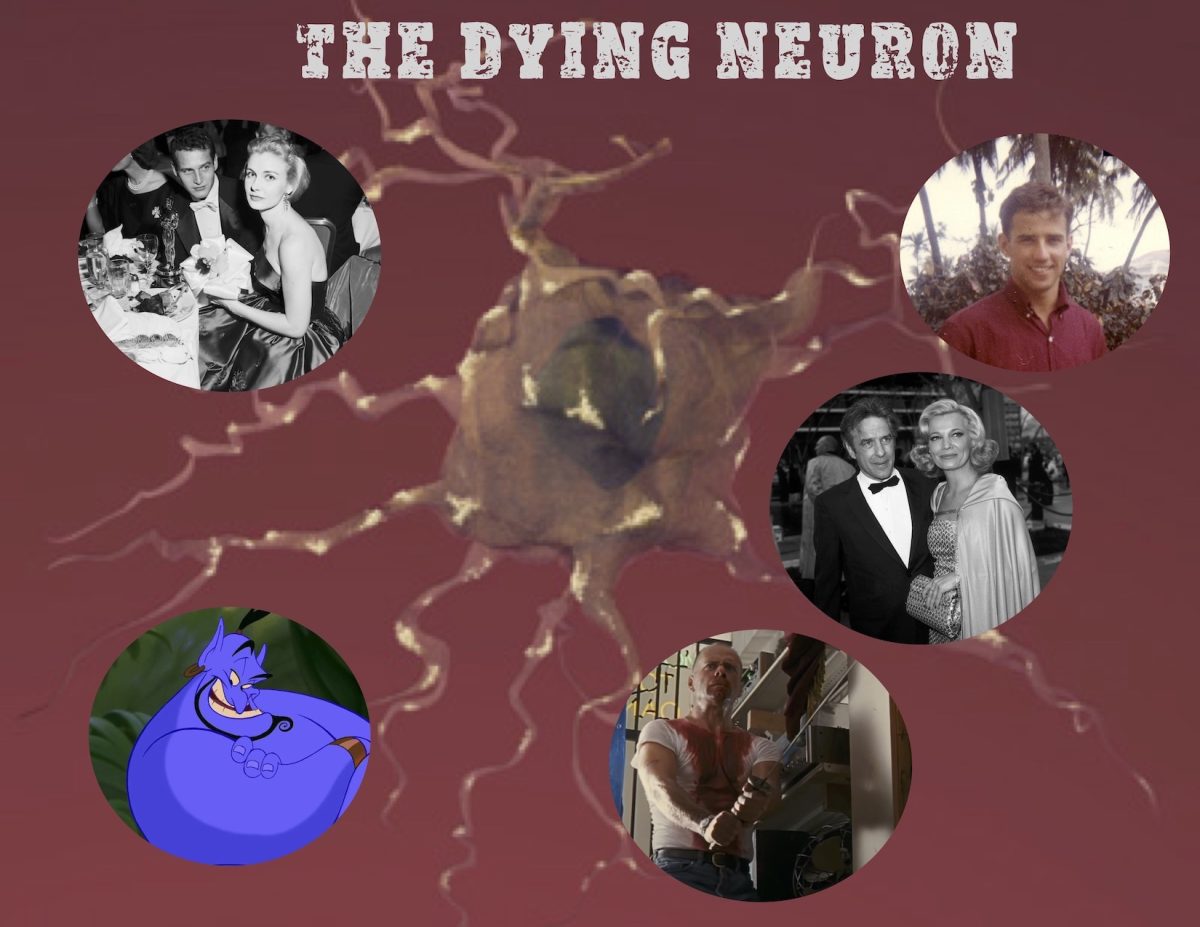
Funny how things happen sometimes… Lately, I’ve been brightening my time on the walking pad (wonderful, but incredibly boring exercise) by re-watching movies from my fairly extensive DVD collection. Every day… I’m not even choosing them – just going in the order my collection is organized: European arthouse, American Classics, American arthouse, etc. And so, believe it or not, on the very day I popped in John Cassavetes’s “Gloria” (1980), starring his wife Gena Rowlands, their son Nick Cassavetes publicly announced that Ms. Rowlands (now 94) has been living with Alzheimer’s disease for the past five years… Heartbreaking…

We hear a lot of that lately, don’t we? More and more people live well into their 90s nowadays: Mel Brooks is 97, William Shatner – 94, Lee Grant – 98, Clint Eastwood – 94, Jimmy Carter is an astonishing 99… And it’s not just celebrities. From Scarsdale to Hong Kong, I know people who lived to see their great-great-grandchildren born… Some of them keep their wits about them just fine, but quite a few fall victims to the age-driven degenerative tendencies of the neurons in the human brains; the ones that force the elderly to develop various conditions leading to dementia… Just like poor Gena Rowlands…

Do you ever think about the reasons behind this trend? I do. In fact, I’m so paranoid about the conditions of people’s brains, I’ve been thinking about this since I was in my 30s. And the way I see it, one of the main underlying causes is the profound disparity between the advances in cardiology vs. neuroscience.

Nowadays, people get their heart valves repaired and replaced, their damaged and destroyed arteries bypassed in triple and quadruple ways, their entire dying hearts transplanted straight into the medical waste and exchanged for the healthy ones obtained off of some unfortunate (but robust, nevertheless) recently departed individual. And all these marvelous procedures end up regenerating cardiovascular wellbeing,  rejuvenating the throbbing engines by decades… 80 and 90-year-olds run around with tickers as vigorous as those of the well-fit 50-year-old youngsters.

On the other hand, the Brains… I don’t think they can 3D-print them even in the most secretive of all evil laboratories in the world. (To the best of my knowledge and research, you know.) And so, very frequently these healthy hearts end up beating for people who can’t recognize their children, can’t take care of their basic needs, have no clue  who and where they are. Did you know that people may live with Alzheimer’s for as long as 25 years? It’s been 5 years for Gena Rowlands, but poor Joanne Woodward, now also 1994, has been living with that diagnosis since 2007. 

For me personally (and I absolutely mean it): I would not want anything working properly in my body, let alone having a heart capacity to last for any extra number of years, if I couldn’t know my daughter sitting in front of me. Fuck that shit! And I was seriously concerned when ten years ago my father, then turning 80, was going for his second stent placement… But his memory and mental faculties were above par for his age and nobody even asked me to contribute my opinion… He was desperate to get rid of the pain in his chest and the shortness of breathe… And I felt terrible even having those thoughts in my head… 

Thankfully, I knew that I weren’t alone and that there were other people who also came to experience such concerns – and not just on a speculatively statistical level, but in a very tangible, first-hand way: Two years prior, in May of 2012, I’ve read Michael Wolff’s cover article he wrote for New York Magazine: A Life Worth Ending – an incredibly intimate account of his and his siblings’ journey through the ordeal of caring for their mother whose heart, through prior surgical intervention, was much younger than her brain. Granted, the article was focused on the healthcare costs associated with such parental conundrum as well as already familiar to me by then subject of Long-Term Care insurance policies… Still, Mr. Wolff’s is a master of narrative nonfiction and his account of this familial ordeal was deeply emotional and relatable.     

I am a very private person who rarely shares (or even communicates – to be honest) with other people. And so that article was basically the first confirmation to me that I weren’t crazy or sinister to be thinking about these matters. That there were other people who agreed that we should be acutely guarded against all those frivolous heart repairs for elderly. That it would be not just prudent, but ultimately humane to be considerate of the possibility that these surgeries may destroy, not improve, the quality of their future lives – if the dementia comes knocking. 

Universally speaking – I would even say, on the politic0-scientific scale of the matter – we can move in two directions towards a kinder, more reasonable, and, in the long run, beneficial for everyone concerned resolution of this, unfortunately very frequently occurring, predicament.

On one hand, we can attempt to make it compulsory for cardiologists to be more responsible when it comes to recommending surgical interventions for people over certain age and more holistic in their patient care with consideration of conditions beyond their direct specialties. Even more important, we (the elderly and their caretakers as the unified interest group) can insist on being provided with the full disclosure regarding the scope of future possibilities, including the one of the longer life marred by mental incapacity.

But here we have finally arrived at the fiscal side of the issue at hand. (I hope you didn’t really think I’ve forgotten about it.) The cardiovascular mending is the biggest cash cow of the medical industrial complex. Heart conditions are #1 most expensive group of chronic diseases. It’s literally impossible nowadays to find a relatively recent statistics on anything, but in 2016 adult cardiovascular spending came to a sweet little sum of $320 billion! Of which 54% was covered by public insurance, i.e. Medicaid and Medicare, and 37% by private insurance. That’s 91%, or $291 billion of automatically collectable funds. It’s hard to imagine the hospital systems, particularly their boards and  investors, giving up any portion of that income – humaneness be damned!  

Yet, there is an alternative route of action: to finally start bearing down on this stumbling block of the aging Brain and attempt to, at the very least, match its longitivtiy of the repaired hearts. And I’m not talking about some sci-fi scenarios here either. Researchers working in the stem-cells limitless field of opportunities already made significant inroads into the possibilities of treating a broad spectrum of neurological conditions, including the ones leading to dementia.

Unfortunately, this area of science is suffering from the – really unimaginable in our “enlightened” times – plaque of “ethical” debates, particularly around the matters of embryonic stem cells. And it is an undeniable reality that entirely baseless, anti-scientific, purely political positions still prevail, thus influencing the legal landscape around the matter; slowing down – instead of spearheading – the advancement towards the younger brains. And, just like with the reproductive rights, the antis here are preoccupied with the status of embryos.    

Actually, whether it deals with embryos or not, officially stem cell research is legal in the United States. However, it’s subject to state-specific laws and federal funding restrictions. And even the embryonic stem cell research is not technically illegal. But! The federal funding (the source responsible for over 50% of all American academic R&D) is categorically prohibited for both the creation of new embryos – reproductive (remember Dolly?) or therapeutic (the creation of stem cells entirely independent of the fertilized eggs) alike – as well as for the distraction of embryos. The latter is especially significant as it includes the process of obtaining stem cells from the existing human embryos – unused and donated by their creators through the fertility banks. In other words, as it frequently happens with our government, everything is dumped into the same suppressive bucket, regardless of the source and purpose.

Believe you me: I’m as much in opposition of the reproductive cloning as the most reactionary conservatives from the heart of Arkansas. I mean, let’s leave the  artificial creation of multiple identical offsprings in the realms of science fiction. Nobody is that special and we truly already have too many people on this planet. And cloned sustenance – no, thank you!

But the therapeutic cloning with hopes to eliminate dementia?! What’s wrong with that? Why do these strange people keep caring more about never to be born embryos than about the living, breathing, and suffering humans. Many of them quite accomplished individuals. Please, let the scientist use those donated bits of cells! Please, give them grants to hurry this shit up! Aren’t you afraid that these terrible neurological tragedies may befall you?           

And it’s so fiscally nearsighted too! Cause imagine the billing volume that can be generated by curative methodologies directed at not just dementia, but also paralysis, multiple sclerosis, Parkinson’s decease… Leukemia, lymphoma, neuroblastoma… Etc., etc., etc. – virtually no limitation to the scope of the applications. Including the heart failure!

But I guess, on the Capitol Hill religious lobbying trumps even HMO lobbying… And so, we remain stuck between the cardiologists who can make you ticking like a fucking clock for decades and the helpless neurologists absolutely unequipped to deal with the sad state of the Brains.        



What Is “Class”? – the American Mis-Confusion


So, somehow I overheard ( which is shocking, believe me, because I don’t really expose myself to this kind of news) that a few weeks ago “people” (who are they? some social media trolls?) got upset with Cate Blanchett (“they” always have a tendency of being upset for all the wrong reasons) on account of her calling herself “middle class”… And I thought: Aha! An excellent opportunity to clarify a thing or two!

Let me first confess: I have never been a big fan of Cate Blanchett as an actress… She has a good screen presence, no matter the setting, but that’s about it . And I’ve even seen her on stage a couple of times too… Including in Liv Ullman’s production of A Streetcar Named Desire, nearly 15 years ago. The critics and the audience raved about it, of course, but, as far as I was concerned, she lacked the emotional fragility necessary for the portrayal of a woman broken in that specific way of Blanche DuBois. I even got  myself in trouble with my fellow BAM patrons by not restraining my opinionated ass on account of that performance…  

But no matter, no matter – as this is not about her acting. This is about her socio-political statements…

(And that’s another thing: Why the hell do people always care so much about what the actors have to say about politics, or social structures, or international relations… Why the fuck the general public bothers itself with listening to  what Barbra Streisand, Bette Midler, Angelina Jolie, Ashley Judd, Madonna, or Cate Blanchett have to say about any of that instead of trying to utilize their own analytical capabilities and form their own opinions?)

So, here is how she described herself, while discussing her experiences of “working with refugees” (of some non-specific kind; yet, her Cannes’ red-carpet dress speaks volumes with that bright and glossy forest-green inset she kept revealing): “I am white, I am privileged, I am middle class…” And somehow it wasn’t the falsely apologetic tone of the whole thing, but the supposed mis-“classification” that got the people upset. Why? “They” explain: the actress’s estimated net worth is $95 million. And “they” think that it disqualifies her as the “middle class”.

Well, let’s see… Even though half-American (on her father’s side), Cate Blanchett was born, raised, and educated in Melbourne, Australia, and is encyclopedically considered an Australian actress. And in that country, as in all former and present parts of the British Empire, societal divisions are still very much defined by one’s familial origins, the ancestry and the hereditary structures. It really has nothing to do with the size of one’s coffers. There are two million millionaires in Australia – the prevailing majority of them are commoners. At the same time a blue-blood aristocrat can be dirt-poor. Therefore, by  these standards Blanchett is absolutely correct, deliberately honest, and entirely un-hypocritical – she is very much a middle-class product: mother’s a teacher, father was a US Navy officer turned an ad exec.

Furthermore, the only American billionaire I knew personally (through a theater charity as a matter of fact) also tried to instill in his three children the idea that they were of the “middle class”. He understood the hereditary class principles simply because his immense wealth placed him very close to the heart of the issue: he knew that his money didn’t make him the upper-class.

And since we’re talking about a screen/stage actor, here’s an example from another frequently produced classical play – Anton Chekhov’s The Cherry Orchard… Keep in mind that Russia had been a monarchy with centuries-old ancestral aristocracy up until just 107 years ago… The play’s central psycho-social conflict is focused on the impoverished hereditary landowners unable to hold on to their estates, including the symbolically precious cherry orchards. Meanwhile,  the wealthy merchant Yermolai Lopakhin, with his peasant familial roots, understands only too well that, in spite of his hard work and all his millions, he can raise himself in the old societal class hierarchy only as far as the middle…  Just like the billionaire I’ve mentioned above… Let me reiterate: the wealth doesn’t make one an aristocrat. 

Generally speaking, the monetary approach to defining societal classes is very much the New World’s notion, which makes me believe that Cate Blanchett’s self-appointed critics are predominantly American. Not surprising at all.

The fact that here, in the States, the vast majority of people consider personal wealth to be the primal factor of the class distinctions is the testimony to two attributes very particular to our country:

A. The strength of our democratic, equal-opportunity roots. In spite of all sorts of privileges and preferential treatments applicable to various and variably defined through the stages of our history societal groups; and with full acknowledgment of the suffocating nepotism that’s been stagnating our progress for decades now – we are still the most democratic country in the world. The state built without castes, aristocratic substructures, and governing rights based on the land ownership. A nation, which believes that a self-made celebrity is equal to the blue-blood royalty. We see nothing especially special in Beyoncé/Jay Z meeting up and chatting with Kate Middleton/Prince William. Hip-pop royalty, sovereign royalty – same difference… 

B. Our preoccupation with money above everything else. And this one is a trait that affects pretty much every single aspect of our nation’s existence – socio-economic, political, and intellectual – not just the interpretations of the societal segregation into classes.

Case in point:

It is without a doubt a reflection of our society’s values that lesser punishments are doled out to those who take away someone’s innocence, or even life, than to those who take someone’s money.”  

                                                                            I Built This Prison, Part III, p. 344

But let’s assume for a second that everyone around the world adopted the American way of thinking and dismissed the old-world traditions of the class division entirely… For the moment, let’s just focus exclusively on the money factor…

Does general public really think that all those doctors at struggling hospitals and private practices, faceless partners in large law firms, CFO’s of the companies barely breaking even – that they are the middle class?! Why? Because they  make lower, or even mid, six-figure salaries? Let me disillusion you about that! In a larger scheme of things, we are all poor – from welfare recipient to an owner of a multi-million-dollar company with a $500K annual salary. Monetarily, we are all the struggling lower class, with just a slight difference in the purchasing powers. None of us can afford to fly everywhere in the first class (let alone the private jets), stay in suites of the 5-star hotels, dine in restaurants with Michelin stars, casually buy designer bags and suits (especially at today’s prices)… Unless, of course, these luxuries are paid by some companies or some other persons… Moreover, children of the welfare recipients have better medical care through the states or the cities and broader access to the educational finances than those of the wage-paid parents…

And Cate Blanchett with her who knows how securely kept millions is somewhere in the median sector of the wealth curve… Truly of the middle class, no matter how you define the matter. Because the ones in the upper portion of the plentitude are what I call “the really rich people” – the sort of folks the dreamers insert into their billionaire fairy-tale romance novels.   


The Frustrated CFO on Ozempic®: Segment 1


If you, the reader, ever decide to delve into my crime memoir I Built This Prison,  you will find out (fairly quickly too, I must say, as I go into the whole “fat pig” thing as early as page 12 and then really expound on the matter in chapter 4 – Bucket of Tears… and Blood)  that I have been struggling with my weight since my toddler years… Nearly six decades now, dammit!

Pear-shaped, as the Nature supposedly intended, plus the squatty stature, plus the slowest metabolism in the history of the universe, plus the propensity for depressive eating… Dieting, severe dieting, extreme dieting… No fats, then no carbs…Atkins in my 30s for so long – I’m still working the accumulated cholesterol off with pills… Counting calories, like forever… Still voluptuous even in the thinnest of times… Then eating everything in sight for days, weeks, months, years… Terrible self-hatred and low self-esteem… Couldn’t even blame it all on genetics – no one else in the family ever got THAT fat… A lifetime of endlessly galloping that vicious circle – both vicious and circular – with no escape…

And I’m not making national news here by telling you that with age, not only losing, but even just keeping the weight off becomes a virtually impossible ordeal for pretty much everyone. (Except maybe for Calista Flockhart, or Lara Flynn Boyle, or Meredith Grey… Sorry, I mean Ellen Pompeo.) It’s not just the loss of the lean muscles and the further deceleration of the metabolism either. Nowadays, getting older comes with more uncertainties, more stress, more anxiety, more depression – hence, higher levels of cortisol. And it’s no joke: even with my notoriously ravenous appetite, it used to be so much easier for me to stay hungry. At 20, I was able to do a seven-day water cleanse… I can’t even think about it now. Seriously: as years went by, fighting off hunger got progressively harder and harder.   

Unless, of course, you are forcefully placed under the special conditions of deprivation… In nearly three years of my imprisonment, which happened to stretch between the 57th and the 60th years of my life, I ended up losing 70 lb. After 16 months of being out on bail and battling my criminal-proceedings anxieties with some pretty grotesque overeating, I went in as a blob of fat size 24, but came out as a yoga-practicing size 14.

Don’t get horrified (Why would you? But just in case.), thinking that NYS DOCCS starves people in prison. They don’t. Well, the food is pretty awful (it’s prison food – there is a special section about it in Part III of I Built This Prison called Our Daily Bread and State Mandated Waste); and its level of nutrients ranges from low to nonexistent; and the last meal of the day they serve you is the 5:30 pm dinner, which technically imposes 14 hours of intermittent  fasting during the most difficult hours – in the evening, after work/school/programs… Nevertheless, I totally could’ve (and many do) gained, not lost, 70 lb.: people get packages full of carbs with long shelf life; buy a lot of bread, pancake mix, pasta, and boxes of Little Debbie treats at the commissary, thus mitigating incarceration with indulgence…

But I didn’t: I didn’t get food packages and I had strict rules about my commissary buys: mixed-greens salad pouches were the highest priority, then whatever proteins I could get within the imposed limits… Little Debbie was classified into the same mortal-enemy territory as the most antisemitic of correctional officers… I think the psychological reality of the Bill’s of Rights loss as a punishment for my crime helped me to be as vigilant with my diet as I used to be very long time ago –  during the periods of intense romance in my youth.

Plus, I was made to walk everywhere – pretty long stretches on a large campus sprawled over the cheap land of Western New York. While writing I Built This Prison, I used Google Earth to calculate the distances I actually covered on an average prison day: it came to 3 miles… Just imagine – if you walk on your treadmill at a brisk pace of 3 miles per hour, it would take 1 whole hour to match that effort.

Stay on that regiment for 3 years (not 3 weeks or 3 months) and you get the 10-sizes body reduction… Then I came back into the “free” life…

I’m not going to keep you (oh, the hopeful me!) in suspense: 18 months later I was back at my pre-prison weight! Who does that?!!! And yes, I overindulged at the beginning… NYC and its limitless options, you know… I forced myself to never think about it while I was behind the barbwire and 370 miles away… But when it’s right in front of you and most of it is literally at your fingertips inside your iPhone? For a life-long epicure like myself? After prison?…

…I don’t know about you, but I loved all of David E. Kelly’s Law-in-Boston shows, including The Practice. (I don’t think it can possibly be qualified as a “spoiler” 22 years after its airing, so I’m not going to apologize for it): Season 7 finds one of the main characters, Lindsay Dole (Kelli Williams), in prison, serving a life sentence after being found guilty of a first-degree murder. Her husband Bobby (Dylan McDermott) comes for a visit and brings her a burger… Watching her devouring it within seconds, he marvels, “I’ve never seen anybody eating a burger this fast…” And she goes, “I’ll talk to you after you go to prison…” Or something to that effect – I’m not going to look for the exact quote… But you get what I’m talking about, right?…

So, as fat as fat can be – again! Weighing as much as my daughter and son-in-law together. Granted, they are skinny people. Still, two humans… I despaired, then got a grip, and embarked on the same course of actions I’ve always employed under similar circumstances in the past: stopped cheating with the calories counting and faithfully limited them to the maximum of 1,250 per day Sunday through Friday with a 1,500 allowance for the relaxation Saturday; got back on the rowing machine, and even bought a walking pad. Of course, who’s got the time in the “free” world to voluntary walk 3 miles? At – what counts for me as speed-walking now – 2.5 mph, it’s like 1 hour and 12 minutes!!!! But! I do 3/4 of a mile absolutely every morning – no excuses… A lot of foods got banished entirely and the ordering-out was pretty much outlawed… It’s a hungry and emotionally draining life… Talking about the struggle being real! 

And that’s when the whole weight-loss-after-sixty factor became vividly evident… Here’s the sad truth: After two years of sticking to that strict regiment… I’ve cumulatively lost 9 lb….

And yes, the vanity is still there: “It’s not fair!!! I cannot fit my arms into my fancy suit jackets!!!” and stuff like that… But on top of that, there are far more detrimental aspects of being overweight in the twilight of your middle age: particularly the exacerbation of the natural body wear, which manifests itself through such unpleasantries as degenerative arthritis of your knees (a few episodes before the very end, Raymond Reddington [played by James Spader, who is 8 months older than I am] says, that it’s the knees first and then the eyesight); or nonalcoholic fatty liver (and that’s just heartbreaking – I’ve never drunk!); or the rising blood sugar (I don’t even sweeten my coffee or tea and never drink soft drinks!).

The knee pain is particularly troublesome – it turns any type of stairs into a torture and completely removes the tiny grains of joy out of walking and rowing, turning any and all exercising into pure misery… So, a few months ago, during the semi-annual visit to my primary physician, I broke my “everything is fine as usual” routine and talked to him about the knee, and the walking, and the rowing, and the watching calories… And he went, “Well, there’s Ozempic…”

“O-o-what?!” …Now it seems inconceivable, but until he spoke that word I’ve never heard of it. Never-ever… Well, primarily, I guess, because I don’t follow the mainstream celebrity gossip… AT ALL… But, once you know about it, of course, you see it everywhere…

The doctor said, “I know you always research everything. So, do that…”

The first thing I did, I mentioned it to my daughter. “Well, mom,” she texted back, “Ozempic is the reason why Natasha Leone looks the way she does…” Damn! Having watched Poker Face, I was actually wondering about that… “Do you know its mechanism?” I, the life-long nonbeliever in weight-loss drugs, asked. She didn’t.   

So, I hit all my research buttons… What I found out was life-changing-ly revelatory… It turned out that semiglutide (Ozempic’s chemical name) works by mimicking a naturally occurring hormone GLP-1, which stimulates insulin secretion by pancreas and lowers blood glucose (hence its primary purpose as a Type 2 Diabetes remedy). But here’s the thing: As the levels of this hormone rise, the digestive system sends a message to your brain, signaling that you are full. Reportedly, these mental prompts are quite similar to the effects of bariatric (aka stomach-stapling) surgeries…

You know how once in a blue moon you literally have an epiphany that you’ve been missing something most crucial from your life? Well, that’s what happened to me when it became vividly clear that my endocrine system simply doesn’t generate that GLP-1 hormone. Because, I have never experienced the sensation of that blessed fullness… If nothing else, I’ve been hungry all my life.

On the other hand, I’m quite familiar with the concept of fullness: Not only that I’ve met people who underwent the bariatric procedures and felt nauseous after drinking a full glass of water, but I’ve also known naturally skinny individuals and I’ve observed them getting full – literally unable to take another bite – after consuming modest quantities of food… It’s the reason why always say that when a skinny person says that he ate a lot and a fat person says he ate nothing, the amount of food consumed by the former is still smaller than that ingested by the latter.

And now these people (I mean, Ozempic’s manufacturers) are telling me that I can get full? And quickly? On small amounts of food? This medicine will curb my appetite and will make the dieting easy? I need that shit!!! Now!!!  No, let me correct that: I’ve been needing that shit all my life!

And the doctor offered it! So, I can get the prescription and start my self-injecting weekly cycle, like, tomorrow! Right? Not so fast…

TO BE CONTINUED…


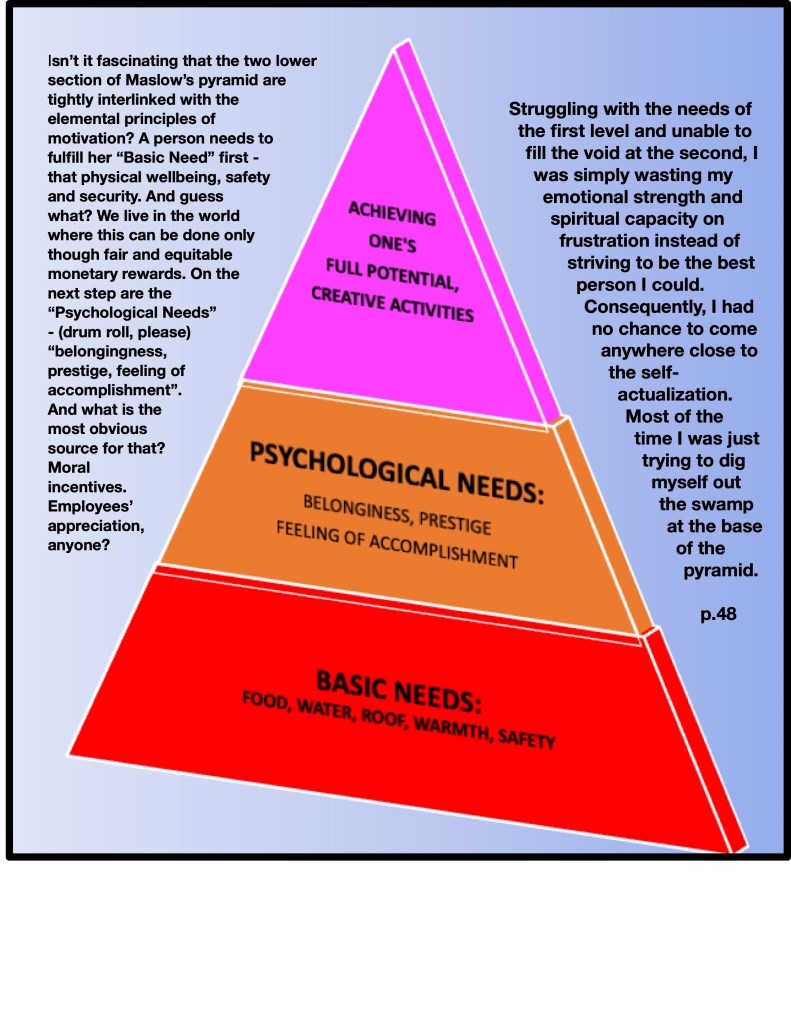
I Built This Prison: Teaser #4: Maslow Hierarchy of Needs for White-Collar Employees


Off the Cutting Room Floor of I Built This Prison: Clip #2: Why Are You Crying?


 “My, as I call it, ‘crying in awe’ goes a little bit further than the conventional lacrimation with the divinity of the (oh, so appropriately named!) Requiem‘s installment –  Lacrimosa. It’s hard not to cry together with 35-year-old Mozart over the heart-breaking truth of him being within hours from the grave and  all his life’s struggles as well as our own sins and fears of the unknown punishments yet to come. Everyone with a soul, no matter how shrunken, weeps listening to that.

I, on the other hand, is known to commence the waterworks even when watching a ‘comedic’ act – if it’s brilliance manages to impact my aesthetic receptors. Like the first time I watched Bo Burnham’s ‘Make Happy’ on Netflix: twenty minutes in, the tears just started pouring out of my eyes in recognition of the boy’s astonishing talent. Stuff like that – in the movies, at plays, in the museums, over books…

And don’t even get me started on J.Ivy’s poetic contribution into Kanye West’s ‘Never Let Me Down’ – it’s profound beauty invariably triggers my tear ducts, every time I listen to the song… 

Unfortunately, that’s not the bulk of my tears production. Genius is rare, desperation abound…

♦♦♦

…Even though they were the biggest contributors into all that wetness, it wouldn’t be fair to place the entire blame for it on my most prevalent pain bringers – my parents first and my employers later. Even in my personal safe heavens of academic institutions – the places where my abilities and efforts have always been singled out, appreciated, rewarded, and even lauded – once in a while, there would be somebody to trigger the tear ducts. This primarily goes back to my Soviet youth – the time when I was powerless to do anything about, for instance, a Philosophy Department Chair openly expressing his surprise about what he perceived as an incongruity between my wild Jewish hair and my deep knowledge of classical marxism. (Dude! I had straight A’s in everything – that’s just how I was.)  And that’s the truth of it – sometimes random strangers can be as harmful as people who already know your soft spots. It’s funny how this type of small stuff sometimes ends up to be so devastating. It’s so difficult to shake off such pointless rudeness. Its emotional violence feels as if a metal-studded cat-o’-nine-tails landed between your shoulder blades. And then, your breath catches, and you lose control of your ducts…

And what else can you possibly do but go and let it all pour out? In secret, of course… What other quick and ready means you have for mitigating the impulses to throw punches and yell, for disarming the triggers that have a potential of sending you into scandalous fits. Effectively, it helps you to dissociate: Regardless of what was happening inside my mind and at the center of my soul, I still went to work every day and performed all my duties, attended meetings and functions; kept the bosses’ businesses and my own household running smoothly, without a single visible glitch. Never a fucking mess in public. With all the pain hidden so deeply that other people, affected by the same terribly hostile environments, would frequently marvel, “How the hell do you manage to stay so composed? How do you bear this? How do you keep yourself so calm?” And I would just smile in response, while letting the nuclear devastation scorching away my sanity… Years of control-building and the aforementioned secret crying – that’s how…

Yet, the bile’s buildup had to manifest itself on the surface in some ways…”

                                               Deleted from I Built This Prison, Chapter 4 – Bucket of Tears… and Blood