More on Nepotism (The Moviemaking)


In my earlier post The Curse of Private Business: Nepotism, I have touched on the damage this phenomenon affects on commercial enterprises and its unfairness to people who still believe in the power of merit-based rewards. It is a complicated topic, though, because when it comes to our own kids we are dedicated to their support. And we would like to believe, of course, they deserve it. It’s the undeserving support that’s problematic?

At the end, to underscore the pervasiveness of this issue I pointed the readers to the familiar territory of pop culture:

“… the industry where nepotism is the most prevalent is the one that suffers the most from lack of fresh talent is the entertainment business.”

Last week, I was told that an IMDb community’s member (Feodor8, I believe) contributed to this very topic. I only had time for a quick look and now the disucssion has been removed. Even without the original material at hand, I would like to comment on few aspects of the “article.”

I hope that the piece was deleted due to the author’s aggressive attitude, which irked me as well, and not because the topic was deemed too sensitive. The contributor didn’t need to resort to offensive tirades and bickering with the commenters.

Considering how intensely he feels about this issue, I found this movie fan’s list of Hollywood players with family connections under-researched. Let me visualize it from my memory… Talia Shire was there, but strangely her son, the adorable and talented Jason Schwartzman was not. Futher into the Coppola clan, Sophia was present, but her brother, director Roman was not. Was Nick Cage (born Coppola) there? None of the three younger Balwin brothers who followed Alec into the acting trade, were mentioned. Alexis Arquette got on the list, but her immensly talented sisters Rosanna and Patricia did not (I don’t remember whether David was there)… And I could go on and on…

Why do it at all, if you do it half-assed? This is so typical – people complain about quality, but cannot live up to their own standards. The same goes for the general public’s opinion-forming process: the prevailing tendency is just to scrape the surface without looking into the root of a problem. The “article’s” author blamed the plunging quality of the entire American cinema on people with family ties, even the talented and hard-working. That’s just superficial.

Remember, this is a CFO’s blog. Filmmaking is commercial enterprising and like any business it abides by basic economic law of supply and demand. The power is with the movie-going audience. If they did not pay their hard-earned money to see the movies feodor8 rightfully condemned, the studios wouldn’t finance them.

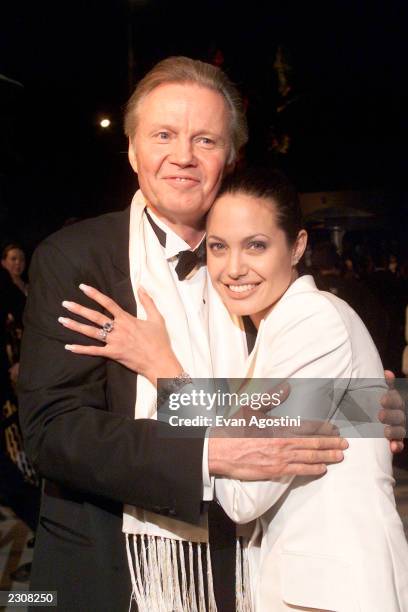
In the past 5 years Angelina Jolie (Midnight Cowboy Jon Voight’ daughter) starred in 7 feature movies. How many of them did I see? None. Yet, in the US alone they earned $440 million in the box office; all commercial successes!!! That’s the demand—and the supply follows. The quality of filmmaking is in your hands, dear audience. As long as you are willing to pay for crap, it will be made.

Job Search: Napoleon Bonaparte Is Hiring


This is a story my friend shared with me.  It just happened.

A headhunter, with whom she worked in the past has contacted her.  He has a client looking for someone with her qualifications.   She is always interested to hear about new opportunities, especially those with potential to expand her CFO expertise.

Surprisingly, the urgency in the headhunter’s voice was incredible.  He sounded like a 911 caller witnessing an explosion.  He rushed through the sentences, jumped from one point to another like a mad frog, even forgot to tell her what was the client’s business .  Somewhere in the middle of it,  my friend has realized that she was somewhat overqualified for the job.  Moreover,  the title and the compensation weren’t defined.  That should have alarmed her.  Yet in her vanity, and she knows it, she decided that all the hurriedness was fueled by the headhunter’s worries of her not being interested.

Actually, there were a few aspects of the job that sparked her interest.  My friend relayed this to the headhunter.   He was very excited and went about contacting the client on the next step. 

Oh, my God!  Within a couple of hours, he called her eleven times: “Setting up a phone interview; no, they are foregoing the phone interview and want to meet you in person straight away; you will meet four different people; no, just two; no, it will be two separate interviews back to back – first with the HR Manager and then with the Owner.  Please, pleeeeese, can we do it tomorrow?” 

And so, the next day my firiend went to the company’s offices and met with the HR Manager.  Talking to him, she was wondering if he would be able to make it through the meeting without falling into a panic attack.  Eventually,  he led her through the hallway to meet with the Owner/CEO.   His agitation escalated in alarming stages.  It was like playing a Liszt’s Etude, which calls for “fast” on the first page, then for “faster” on the second, “as fast as possible” on the third, and still “faster” on the next.

At the very moment she got to shake the hand of the tiny man behind the huge desk, it finally dawned on her.  It had nothing to do with my friend and her qualifications.  This miniature boss of an interesting, but relatively tiny company ($30M) exuded a sense of grandeur of Napoleonic proportions.  He had everyone scurrying like scared mice.  Even those who were not employed by him; including the headhunter, who works for one of the top 3 international recruitment houses.

The first thing he told her was, “I need a second in command who can keep the troops under control.  There were two before you, who were dismissed.”  Funny guy!

The Distortion of Bill of Rights in Small Business Environment


Regardless of your position – CFO, Controller, operational staff, CSR, janitor -when you accept “employment at will” arrangement in a privately-held company, you inadvertently give up the majority of your rights granted to you by the US Constitution.  Since the Bill of Rights is automatically presumed, it is not necessary to include freedom clauses into Employee Handbooks, Rules of Conduct and other such documents.  Look through them again whenever you have a chance:  they primarily describe what the company expects of you, not the other way around.

Closely-held companies are not democracies.  They are owners’ kingdoms, absolute monarchies.  And most of the time there is nothing you can do about it.  Let us look at some of the Amendments.

1.  Free Exercise of Beliefs.  Having been always based in NYC precluded me from ever witnessing open discrimination of employees for their religious believes.  At the same time on many occasions I’ve observed explicitly expressed irritation about people’s taking their PTO to celebrate religious holidays.  Quite a few times I saw the candidates being rejected based on the unspoken possibility  of their observance.

2.  We do not have Freedom of Speech as employees.  We try to keep our political, social and cultural opinions to ourselves if we know they contradict those of our bosses. Frequently we are not even given an opportunity to retort abusive, accusatory, or unfair verbiage directed at us or at our subordinates.

3.  We cannot exercise Right to Assembly.  I myself as a supervisor is pretty strict about people congregating for reasons not related to their jobs during work hours.  At the same time I am not as obsessive about it as some business-owners who throw tantrums every time they see people talking.

4.  The Protection from Unreasonable Search is violated time and again in the workplace.  The business files, emails, etc. are rightfully belong to the company you work for, and if you are openly asked to follow established policies of information sharing, files locations and full disclosure, you should willingly comply.  But many employers use System Administrators to secretly look through their employees’ emails, files, etc.  They open doors with spare keys and look into draws containing personal affects.  They use special programs to record IM communications, etc, etc.

5.  Not a single right guaranteed by the Fifth Amendment (due process, double jeopardy, self-incrimination) is considered when you are judged, persecuted and punished by your boss.  Fairness is laughed at in business environment.  A lot of CEO’s, with whom I dealt over the years either as an employee or through business and social networking, considered my personal determination to be as fair as possible and judge people on their merits in all situations as one of my “strange” qualities.  

One right we, as employees, can enjoy under “employment at will” arrangement is the very special freedom it guarantees you: just as your employer can fire you without warning, you can quit on a moment’s notice.   That, of course, if you can afford to do so.

“Passive-Aggressive” CFO


One of my former CEO’s contacted me after reading my post on Bill of Rights in Small Business Environment (who knew they would be looking?). He’s been in business for 27 years with many employees passing through. Listening to his opinion on the Freedom of Speech, I came to realize that his point of view might be typical for a lot of business owners and should be shared here.

According to him, employees, including his current CFO, choose not to voice their opinions as a manifestation of a passive-aggressive attitude. In reality, he says, he would not mind listening to what they have to say on variety of business issues.

My first impulse was to laugh. I used to work for this person and, to put it mildly, he is not the friendliest of bosses. My policy, nevertheless, was always to express my judgement on all professional issues. This, I must say, received mixed reaction, depending on whether my opinion was in agreement with his or not. It was fortunate that our commercial views were nearly identical and we rarely had disagreements. However, on those occasions when my opinion differed, what I got back was the cold silent stare that could have discouraged someone less straightforward.

But I didn’t laugh, because I wanted to know more about the reasons he has classified his new CFO as passive-aggressive. So, I asked more questions. Actually, this was not the first time I asked these questions. Over the years more than a few senior execs have used that term to describe some of their employees to me. It always puzzled me how these business people recognized a behavioral (i.e. psychological) trait.

Let me tell you, most of the time, including in case of the CFO in question, it amounts to “sulking.” Instead of speaking out, the employee shows a “bad temper”: he is morose, with disappointment and annoyance written all over his face. In other words, unreleased frustration (my favorite subject), jumps from inside onto his face. And yes, that can be classified as a passive expression of aggression.

Yet, at the same time the CFO still works hard, diligently performing all his duties and making sure that the business continues to survive and prosper. And that’s actually the opposite of passivity.

Sulking on its own is not a sufficient symptom to diagnose someone as passive-aggressive. There are far more significant and damaging, especially in business environment, manifestations: procrastination, obstructionism, chronic tardiness, tendency to blame others for one’s own failures, making excuses for non-performance, deliberate creation of chaotic situations.

If you keep catching your employee shuffling papers on his desk every time you walk by, or even if he appears to be busy but never delivers any results; when a deadline of a project gets pushed further and further back, then you may have a passive-aggressive person in front of you.

However, if the employee does his best, but looks upset, maybe you should just let him exercise his constitutional freedom to speak his mind.

Ten Reasons Why “CFO Techniques” Is a Must-Read for Small-Business CFOs


GI_98327_CFO TechniquesReason #1.

"CFO Techniques" was NOT written from an academic perspective, such as of a typical university professor with a consulting-for-large-business on the side.

Not the Author
On the contrary, it WAS WRITTEN by your fellow CFO, who earned her professional stripes in the small-business trenches. During more than 20 years of this hands-on experience, with the last 18 in CFO and Controller positions, she was fortunate to gain exposure to all facets of financial management and organizational administration. Just like the most of you, she knows only too well what it means to wear many hats at the same time.

Hats_0003
Reason #2.

Yet, the author did not loose a constructive touch of a theoretician. In writing the book, she employed her:

  • in-depth knowledge of the fundamental principles that govern all areas of corporate accounting and finance,
  • methodical approach to all tasks that compile ever-expanding scope of a CFO's responsibilities,
  • and ability to dissect the cause and effect relationships of various concepts.

The result is the crystallization of the vast experience into a streamlined functional system, easily adaptable to various types of businesses and industries.

Reason #3.

"CFO Techniques" doesn't try to rehash official regulations, statistical information, bits of hot technology news, results of narrow studies, and such. The book's mission is to spotlight the most important areas of a CFO's or a controller's functionality:

Eight Balls with Juggler

Reason #4.

These professional cornerstones are broken down into crucial components described in bite-size, easily digestible chapters written in a fun and lithe language. The book presents the most complex financial and accounting concepts in comprehensive forms,  which can serve as introductory aids for those who just attained their first controllership appointment and as concise refreshers for seasoned professionals.

Figure 27-1

Reason #5.

It is an unfortunate truth that millions of small businesses struggle (and frequently fail) to survive not because they are neglected by owners and managers, but because these hard-working people simply have no clue what exactly is wrong with their companies, where are the weakest points, which areas require immediate improvements. Smaller enterprises suffer the most from the lack, even complete absence, of business intelligence and performance analytics. "CFO Techniques" is a part of the author's personal crusade to help small and mid-size businesses by providing them with survival tools (analytical, budgetary, procedural, etc.) that don't require expensive and complicated software.

Figure 25-1

Reason #6.

One of the most unique and valuable devices offered within the book is the proprietary  chart

INCOTERMS FOR ACCOUNTANTS.

Originally developed by Eclectic & Dynamic Controllership Consulting (E&D CC) specifically for businesses involved in buying and selling goods, it expands the definitions of standard Incoterms to include such accounting notions as title transfer rules and description of applicable source documents, thus accommodating needs of proper revenue, COGS, and inventory recognition.

Title 

Reason #7.

One of the main underlying themes of the book is the necessity for small-business CFO's and controllers to raise themselves above the bean-counting stereotype and become critical thinkers, indispensable members of the executive management team. "CFO Techniques" emphasizes this pressing demand throughout every section and accentuates the tasks that may facilitate such transformation.

Bean-counter to thinker

Reason #8.

While shedding new light on the day-to-day routines and spinning conventional accounting and finance tasks as crucial and indispensable cogs in the business machine, the author's functional system gives equal rights to new categories of CFOs responsibilities, such as company-wide Information Technology Management, Risk Control, and Strategic Planning.

Reason #9. %5CStore%5CLarge%5Chw-5799

The book takes a holistic approach to multi-faceted positions of CFOs and controllers and supplements specific structural guidelines and practical functional advices with discussions of more general topics applicable to any senior professional operating in private-business environment. Among others, it includes observations and suggestions on how to deal with people on different level of corporate hierarchy and what changes to expect in your future, even if at the moment you feel 100% secure.  

Reason #10.

Even if you don't learn anything new, or if you'll find the book not applicable to your specific professional niche, at the very least you can entertain yourself with the multitude of eclectic cultural references and business insights from the author's personal experience woven through the book's text.
10 reasons ent collage