A Canadian Blogger Jailed in Iran


Even though the topic of this AOL News Article Iran's 'Blogfather' Sentenced to Long Prison Term is not related to the topics of CFOs and Controllers' frustrations, it is related to the freedom of expression issues that concern all of us. That is why it should have its place in the spotlight here.

I don't want to diminish the severity of the sentence and the horror of what Mr. Derakhshan is going through in Iran as the result of expressing his thoughts and opinions in cyberspace.  However, essentially everyone who publishes honest and edgy, or even boring and banal, material on internet are exposed to unpredictable consequences. 

In one article, or post, or conversation after another, we are warned that prospective and current employers are searching internet for possible controversial material on you.  So do the political opponents, educational institutions, investors, country clubs, religious congregations, etc, etc. Here is a typical example of such warning provided by the CEO of TheLadders.com Marc Cenedella in his new book "You're Better Than Your Job Search": In a Google World, Prepare to Be Investigated.   Jail sentences in foreign countries are extreme and rare incidents, but we do learn that people get fired, rejected and harassed because they express themselves.

That is the reason so many bloggers are writing under noms de plume.  That is the reason so many people who have something to say don't write at all.  That is the reason I guarantee 100% anonymity to anyone who shares their professional experiences with me. 

And it does not apply just to cyberspace.  One of my future planned posts will address my favorite topic – something I call the Bill of Rights in the Workplace.  There is a reason the new great American masterpiece from Jonathan Franzen is called "Freedom."  Obviously, it is a concern.

And of course, I disagree with Mr. Derakhshan's politics.  Moreover, I am a life-time student of World History and it seems inconceivable to me that any private citizen without diplomatic immunity would actually accept an invitation from any organization sponsored by an authoritarian government.  History is full of actual repatriation incidents that sound like horror stories: China, Russia, etc.

Nevertheless, my disagreement with his ideas, does not mean that I will not support this writer's freedom of expressing them with all my heart.  It's like what Voltaire said, "I may disagree with what you have to say, but I shall defend to the death your right to say it."    

The Importance of Prioritization for CFOs & Controllers


My very first post CFO's and Controllers' Many Hats  addressed (in two parts, as the matter of fact) the inescapable issue of overwhelming span of functional control tackled by all financial execs.  The issue has been described as a major source of both frustration and pride.

Well, whether you are proud or not of being a natural choice for a million of high-level responsibilities, keeping all balls in the air is a managerial skill mandatory not only for your professional success, but for taming the frustration as well. 

Both mathematical rules of optimization and circus performances teach us that there is a limit to the number of items you can juggle at the same time without dropping them.  This is why Prioritization and Delegation are two most important organizational tools for a Controller or CFO. 

Let me share with you my own Top Three Rules for each of these tools.

Prioritization:

Rule #1.  Assign priority scores to each task.  Let's say, 1 to 10 with one being the lowest.  The highest priority on your list should always be given to the task that in a long run will benefit the bottom line the most.  For example, writing an angry answer to your boss's email asking whether you are busy right now has lower priority (I would say, 2) than looking at your cash position and deciding whether you need to use your credit line or cash availability to finance today's operational expenses (definitely a 10).

Rule #2.  As much as you can, try to block certain time periods with periodic tasks of high priority in advance.  There are such things as SEC reports, monthly budgets, weekly cash flow projections, etc. etc. that occur periodically.  Prevent yourself from cramming at the last moment by assigning priority scores and scheduling these tasks ahead of time.

Rule #3.  If you work in a privately held business (and most small and mid-size companies are) and report directly to the Owner/President/CEO, be ready to push his/hers priority higher up on your list.  I know it sounds almost psychotic, but being flexible when it comes to your boss's requests sometimes can save you the boatload of frustration.  However,  it does not mean that you have to drop everything and attend to his needs.  Many people make that mistake.  Instead, you need to provide him with reasonable time frame and explain why the task at hand is more important for HIS BUSINESS.  I will get back to the issue of flexibility in scheduling discussion.

Delegation:

 Rule #1.  Don't be afraid to delegate important functions to capable subordinates because you are afraid that they will undercut you.  First of all, if you are a good match for your position and do your job to the best of your abilities,  you should be confident.  Secondly, by overwhelming yourself with extra tasks you diminish your own efficiency and undermine yourself.

Rule #2.  NEVER do your subordinate's job because you believe that you can do it faster and better.  This is a bad mistake many of us make.  When we do that, we damage ourselves in two ways: by wasting our own valuable time and by not letting our subordinates to improve and develop.

Rule #3.  Always make time for training and advancement of your subordinates.  By building strong and reliable accounting/finance staff you better your own chances for success .  

Honestly, it took me a while to develop and even longer to start implementing these rules, but I can vouch for their effectiveness. 


First Impression Is the Most Lasting Indeed


They say that the first impression is the most lasting one.  And it is true even for those people who try very  hard to be fair and give people a chance to show their true qualities. 

I myself is one of those people who make themselves look past the appearance of a job applicant.  Few years ago I have interviewed a woman who was grossly obese and needed a cane to assist her in moving her body.  I knew right away that aside from possible health issues, there could be multitude of other problems: we would need to order her a special X-large chair, my CEO may not like someone like that to be prominently installed in the Operations Department, visiting business relations may be destructed by the sight, etc. etc. 

Nevertheless, I gave her a full interview, which she passed with flying colors, and ended up hiring her.  It never even occurred to me not to offer her the salary attached to the position.  She got paid the same wages anyone in her place would.

Turns out, I am a rare exception.  Please, read this post from Vault's Career Blog Does your weight determine your salary?  The statistical data reported in the article are appalling.

Weight issue aside, my opinion is that when it comes to hiring process the entire "first impression" concept is very unprofessional.  Time after time, hiring execs, recruiters and variety of HR professionals yield to their contrived, closed-minded, self-centered views of other people instead of thinking of what's best for their companies.

Two weeks ago my good friend MJZ, also a career CFO, went for a job interview to a company that provides services to children with learning disabilities and autism under the contracts with various government health agencies.  Since such programs usually become first victims of states and counties budget cuts, the company desperately needs someone who can strategize their way into more diversified revenue models.   MJZ has a vast experience of building such strategies and facilitating companies' growth. 

She has previously had a phone interview and communications with the CEO's personal assistant.  So when in-person interview invitation was received, she assumed it would be with the CEO herself.  However, she was interviewed by a middle-rank HR Manager.  

When she told me that she did not even make it to the next round – the actual interview with the CEO (the HR Manager sent her an email), I've asked for the entire meeting description.  Now, knowing all details, I am confident that the HR Manager's rejection had nothing to do with MJZ's professional qualifications.  It had to do with the fact that she was dressed for an interview with the CEO and instead was assessed by a sweater-and-tights-clad middle-manager. 

The sad result is that the company had missed an opportunity to hire somebody who could have brought them to the next level of development.  Their loss, of course, but nevertheless a disappointing experience for my friend.

The Dashboards Obsession


It is easy to understand how executive dashboards have become so chic.  Most products come to mass market by way of technological advancements.  The 3-D movies fascinated audiences in select theaters for decades.  Now, we have 3-D TVs in our homes.  By the same token, specialized and complicated business intelligence software (like Cognos) existed since the 70s.  However, the 21st century brought forward adaptable, customizable, open-architecture systems and integratable reporting tools. 

Business intelligence and financial performance management are not new ideas.  Data warehousing may sound like a novelty, but collecting and organizing records in a particular order for easier access existed for centuries. The concept of information as a key to business success is millennia old.  How many spearheads you are going to make, if you don’t know all the warriors in your tribe? 

Of course, nowadays data flows are more complex.   The CFO’s and CEO’s need information integrated from different sources and they need it fast.   So, the developers caught up with the demand and offered executive information systems aka dashboards.  They advertise, give distribution licenses to specialized vendors, hold conferences, etc. As usual, standardization is mandatory in order to capture larger market shares, and that’s where the fallacy forms. 

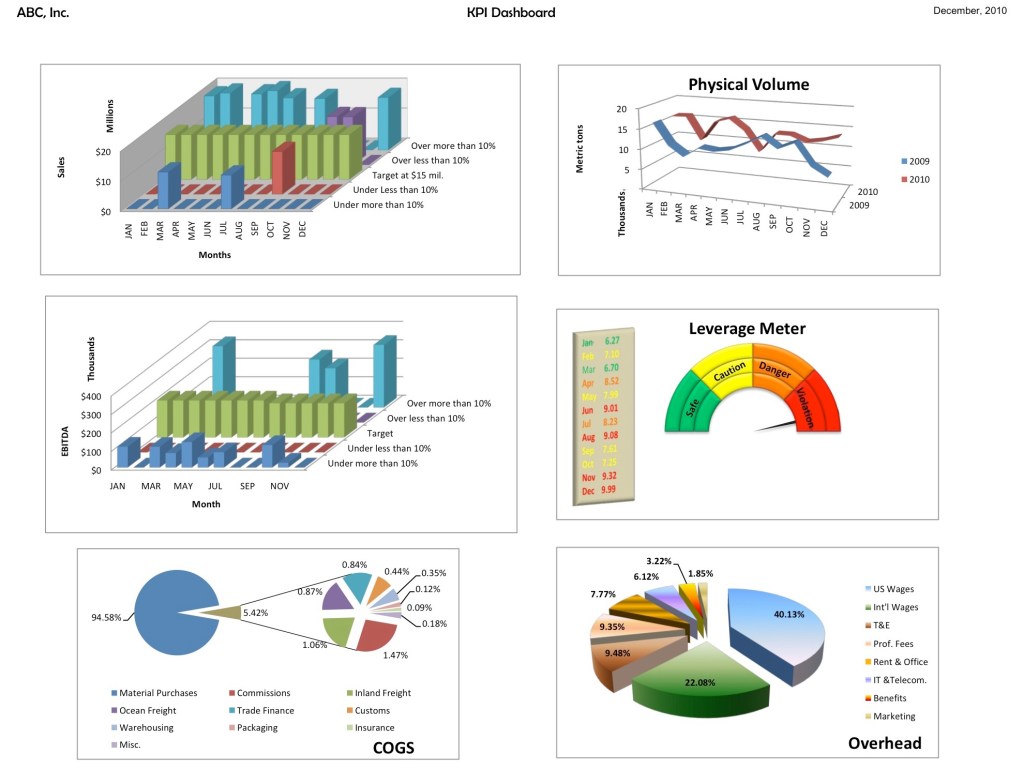
Don’t get me wrong, they are beautiful visual arrangements – much more vivid than dry columns of numbers, far more impressive and memorable.  On top of that, more expensive ones allow you to drill down into the data behind them.  That’s incredibly cool!

Here are some of mine own:

Yet, in far too many instances the form obscures the substance.  Now, the users think they need something looking exactly like that, instead of thinking what info is fed into it.  And it is very sad, because CEOs and CFOs in need of sensible information, frequently end up just looking at a pretty picture.

I’ve seen a lot of dashboards – most of the time I find them absolutely irrelevant.   You are looking at your 12-month revenue curve and it displays expected cyclical pattern.  What are you learning here after spending a tidy sum for ability to generate this graph with a push of a button?  Nothing new – your last year curve had exactly the same shape.  How do you know whether you are doing better or worth now than a year ago?

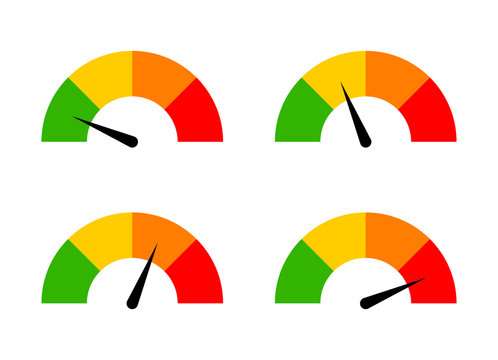
And the gauges!!!  They look awesome and they justify the name “dashboard,” but they are the most difficult charts to read.  Moreover, they are kind of useless for static information.  Unless a constantly changing (and most importantly, crucial) information is fed into this device in real time, you have no reason to stare at a red circle with green border and unmoving black arrow.    

Here is my advice: don’t fall for colorful pictures.  Start from the beginning.  You know which information is most important for you and your CEO, which parameters affect your business’s ability to survive.  Figure out what combination of data would make the real impact on your decision-making, how frequently you want see it, whether it needs to be dynamic or static, etc, etc.  Only after that you can think about the format. 

Let’s say your product’s price is in direct correlation with crude oil market.   In this case, may be the two sets of data should be presented together, or maybe it’s most important to look at the units, not the sales dollar value?  Those are the important decisions, not the shapes and colors.

It is very possible that you need bar charts, graphs, even gauges.  Hey, if you are a jewelry manufacturer and make raw material procurement decisions all day long, there is nothing wrong with having a gold price meter installed right in the center of your screen.  At the end of the day, it is all about common sense.

Executive Recruiter aka Thoughtless Pest


 Let me explain right away that this is not an attack on the entire human resources profession.  There are many thoughtful in-house HR Managers and freelance consultants with whom I worked.  I have no problems with them. 

This is about scores and scores of functionaries buzzing around in international headhunting factories that pretty much monopolize the executive search field – Robert Half, Michael Page, Execu|Search, Ajilon and their lesser competitors.  I kind of hoped that they would be extinct by now.

These pests have neither time nor dedication to understand the actual specifics of positions they are paid to fill.  Even in the pre-internet times, all they ever did was looking for matching items between some laundry lists of requirements and applicants’ resumes.  Did you actually think they read them?  Nope!  It’s a matching game.  Nowadays, they don’t even do that, they don’t even look at CVs.  Now, they’ve got a “cool” software known as  Applicant Tracking System (ATS).  The computer plays the game and just reports the score.    

This insults my intelligence.  It used to devastate me as a job seeker.  It offends me as a hiring executive who goes out of her way looking beyond the resume phraseology for the spark of brightness.  For me hiring was never about check marks.  Recruiting, especially on the senior executive level, is about real jobs and real abilities.     

What I don’t understand is why there is still demand for their services?  Why people are still willing to pay $30K-$100K for a “good enough match”  that rarely produces satisfactory results?  People tell me that they see the same job postings for six, sometimes even 12 months.  Are you kidding me?

Don’t employers know that for a very reasonable fee they can post their ads on job boards such as Monster, CareerBuilder, The Ladders, where all job seekers look?  They can be even more effective (still for a very reasonable fee) and use those boards’ search engines to access thousands of resumes.  It may be time-consuming, but trust me, it has higher value/cost ratio.

Eliminating recruiters from the market would make the job boards’ fees even more competitive.  Meanwhile, they are polluted by big-name ads.  With this post in mind, I took a quick look.   It seems that nearly 80% of postings are coming from just four players.  And the “Requirements” are so similar – they must be copied from the same template.  I am sure they enjoy big discounts too by getting the bulk deals.

With so many people presently out of work, the stories of headhunter encounters just pouring in.  Some of them are so fascinating, they can warrant their own feature posts.  However, there is a striking similarity in all of them – the notion of mindless attitudes and inconsiderate actions.  It appears that like doctors, who have seen so much pain and devastation, they became absolutely insensitive to other people’s anxieties and worries, the recruiters also forgot that they deal with live human beings.  

Well, I am not dealing with them.  How about you?