Business Owners’ Favorite Style of Management


Some people are born with incredible natural aptitude for managing people.  Many years ago I observed a girl on a playground.  She was about 5 years old playing with a group of children the same age.  At one point some play rules, or another important issue, needed to be established, and I was amazed not only by the assertion of authority, but also by the uncanny logic exhibited by this extraordinary little person.  She started with a commanding, "Children, listen to me!" and continued laying out a proposal that nobody has any inclination to dispute.  I remember thinking to myself, "That's a naturally born leader!"

Unfortunately, people like that constitute a small percentage of general population and, strangely enough, they are even rarer among business owners.  Just because someone had a great idea and entrepreneurial drive to establish their own business doesn't mean that they also have sufficient managerial aptitude.  Only few of them had formal business management education and most of them never worked for anybody else long enough to gain on-the-job expertise.  

This pretty much leaves their leadership skills at intuitive level at best.  And if the sixth sense fails them… well, all kind of sad things occur: they cannot see the difference between a pompous phony with an impressive voice spewing well formulated lies and genuinely knowledgeable, but quiet workaholic; they have very little or no understanding of delegation of duties; frequently they cannot even figure out their own roles in the company.  

The most common executive management conundrum such Presidents/CEO's (especially first generation of business ownership) encounter after the enterprise reaches the "established" stage of development can be described as follows.  Their entrepreneurial talents draw their minds to further commercial improvements, to generation of new ideas that will help to expand and strengthen the business.  At the same time, the wonderful feeling of accomplishment plays dirty tricks on them: subconsciously they want to rest on their laurels – they feel that they deserve to work less, to take summers off, etc. etc.  Moreover, since the business is their child that they have born and reared applying their own talents and titanic efforts, they have incredible aversion to the idea of letting other people to completely take over vital tasks of the company's ongoing functionality and maintenance.   

(Side note: I am really tempted to state here that the majority of them are control freaks.  However, I don't have scientific evidence for that, just my own and my colleagues experience. More importantly, it does not make a difference, both obsessive and perfectly balanced CEO's display the same symptoms.) 

You have to agree that this position is absolutely psychotic.  What do they do?  They resort to their favorite style of management – what I personally coined several years ago as "Hands-Off Micromanagement."  

Let me show with this example how this control style may manifest itself. On one hand, the CEO can completely forget that you are working on establishing a $10 million credit line with a new bank, or that you have just upgraded your accounting system to a new version that basically made the entire budgeting function automatic.  But on the other hand, he keeps asking without a fail every month why the Federal Express bill is $2,000 – when he was starting the business it was never more than $100.

I am sure a lot of my fellow CFO's and Controllers have recognized the disease as they have to deal with it and the frustration it causes on daily basis.         
The Ethicist Randy Cohen Talks About Your Boss


You worked real hard day in and day out.  You applied yourself to the very best of your abilities.  Finally, you have reached the senior/executive management position.  Now, you are the CFO, the Controller, the Director, "the right hand," "the most important person in the company without the title" – it doesn't matter what they call you: you've achieved it.  And it's irrelevant that the business is small – in this small pond you are a big fish.Does this mean that now you can tell your boss, the owner of the company, to stop watching porn on your computer after work and leave it on overnight?  Even my favorite columnist Randy Cohen, cannot give you a clear answer in his response to one of our peers' query in June 27th New York Times Magazine - The Ethicist: Porn in the Office.He is trying, though: yes, it is not right that the boss doesn't close the browser, that he leaves it for the next user to see, but he doesn't really do anything illegal either, etc, etc, blah, blah, blah… 

The point is that our dear entrepreneurs do not separate themselves from their businesses.  They treat their place of work as their second home: watching porn, meeting with their friends, letting their kids and pets run around.  This could be a $200 million business you helped to build, but THEY REALLY DON'T CARE WHAT ANYBODY THINKS.  It wouldn't even come to their minds to consider the possibility that somebody may be offended, or simply surprised, by the images on the computer screen.  And it is not about porn.  It's one thing today and another tomorrow – the principal (pun is always intended) attitude is always the  same.

And the unfortunate truth is that no matter how important you are to the company, you cannot criticize them, because they will never forget it.  They will hold the grudge forever, because subconsciously they feel that they are untouchable royalty in their little kingdoms and NOBODY dares to point out their shortcomings.  And if you are experienced and shrewd enough, you will not say a boo (neither would I).

So, here you are, frustrated out of your mind by the unbalance between your professional achievements and organizational position on one side and inability to exercise your personal freedom on the other.  All I can advise you to do at this point is to pick your favorite from my list of coping devices listed in One CFO's Personal Tools for Frustration Relief. That's all you can do.

New Job Hunting Secrets for CFOs and Controllers


All CFOs, Controllers, VP Finance and Financial Directors, especially in small businesses, are involved in recruiting process.  Most of them don't have in-house recruiters and nowadays not too many businesses can afford $25,000-$30,000 headhunters fees.  So, with hiring on one side and testing the market (or in the current economy actively looking) for themselves on the other (plus payroll, benefits, etc. management), their involvement with HR is pretty significant.

However, because they don't work for businesses with thousands of employees and are not professional recruiters, small and mid-size financial execs are not necessarily up to date on the talent-searching technology.  While going through hiring process they are still printing resumes, looking through them manually … – you know the process.  And when the tables turn around and some of these execs are forced to search for new employment themselves, they expect their resumes to receive the same treatment even if they apply for a job in a larger company with its own in-house HR department or reply to a recruitment agency's (such as Robert Half, Michael Page, Source Associates, Forum Group, etc.) ad. 

How could they possibly know, especially if they have been off the market themselves for several years, that today large HR department and recruitment agencies work with automated Applicant Tracking Systems (ATS) – software that in its sophistication goes beyond database matching and usually employs cutting edge data-warehousing technologies?

 I know plenty of financial execs who are so proud (rightfully so) of their accomplishments they don't even bother adapting their resumes to the nuances of advertised job requirements and keep sending them out "as is" regardless of the recipients specifications.

Please, do yourself a favor and read this recent article from TheLadders  The 24-Step Modern Resume.  Not only it is incredibly valuable on its own (an eye-opener for uninitiated, really), but in the text you will find links leading to further details and related subjects. 

I also highly recommend The HR Capitalist blog.  It will provide members of financial executive talent brigade with an opportunity to learn what the other side – the hiring professionals – think.  I found particularly fascinating the insights into Social Recruiting and the important place it occupies in today's hiring in Why Social Recruiting Isn't About Having a Corporate Twitter Account


The Frustrated CFO Is Getting Anxious


I am really anxious to move away from abstract discussions on the nature of stress we experience every day and start showcasing stressful incidents and frustrating professional issues near and dear to every CFO, Controller, etc.  However, before I do that I feel we need to address one more theoretical subject – correlation of Frustration and Anxiety.

As I already mentioned several times, frustration is a normal reaction (whether extra- on introverted) to situations in which we face obstacles to our achieving goals or actions that contradict our standards, etc.  Every person experiences it from the moment he or she is born.  In this blog, with examples from daily war of survival, I argue that my peers, CFOs, Controllers, and other financial execs in entrepreneurial environment, operate in a state of chronic frustration.

Anxiety, on the other hand, no matter how many scientific definitions are out there, boils down to sense and fear of danger, whether real or non-existent.  The symptoms and sensations are the same if you are genetically predisposed ("wired") for anxiety or forced into it through the lifetime of conditioning.

Because it is far more fascinating to try to explain why some people feel anxiety and panic attacks for no tangible reasons at all, cognitive science is primarily preoccupied with the types of anxiety that are caused by chemical imbalance, hereditary factors, etc.  If you are interested to learn more about the latest research advancement in this area, I particularly recommend an almost a year old, but still very accurate and exhaustive, New York Times Magazine article Understanding the Anxious Mind

And, of course, most of us belong to the army of Americans (tens of millions of people, actually) who are worried about the economy, their job security, the money they lost in various market shakeups, the environment, the future of their children, etc. etc. Economic and environmental issues are big reasons why so many people seem to be on the verge of a breakdown.

That said, in the context of this blog I am primarily interested in the undeniable fact that chronic frustration with your job leads to stress and acute anxiety.  Just like Pavlov's dogs we are conditioned by frustration to fear those situations that cause the unpleasant experience.

We try to accomplish a particular task, meet our regular obstacles (bosses interventions, subordinates incompetence, time constraints), fail to achieve our goal, get frustrated – and (surprise-surprise), now we feel anxious every time we start that task, because subconsciously we anticipate frustration and fear the pain.  The anxieties accumulate into stress, and now we feel trapped.  If the situation is not managed, we can spin out of control.

And that is why it is so important to find methods of releasing frustration out of your system (please see my post One CFO's Personal Tools for Frustration Relief) and, just equally important, find resolutions for your professional problems by elevating your managerial, organizational, behavioral and technical skills – issues I hope to discuss in the future based on the incidents from your professional life.  

The Dashboards Obsession


It is easy to understand how executive dashboards have become so chic.  Most products come to mass market by way of technological advancements.  The 3-D movies fascinated audiences in select theaters for decades.  Now, we have 3-D TVs in our homes.  By the same token, specialized and complicated business intelligence software (like Cognos) existed since the 70s.  However, the 21st century brought forward adaptable, customizable, open-architecture systems and integratable reporting tools. 

Business intelligence and financial performance management are not new ideas.  Data warehousing may sound like a novelty, but collecting and organizing records in a particular order for easier access existed for centuries. The concept of information as a key to business success is millennia old.  How many spearheads you are going to make, if you don’t know all the warriors in your tribe? 

Of course, nowadays data flows are more complex.   The CFO’s and CEO’s need information integrated from different sources and they need it fast.   So, the developers caught up with the demand and offered executive information systems aka dashboards.  They advertise, give distribution licenses to specialized vendors, hold conferences, etc. As usual, standardization is mandatory in order to capture larger market shares, and that’s where the fallacy forms. 

Don’t get me wrong, they are beautiful visual arrangements – much more vivid than dry columns of numbers, far more impressive and memorable.  On top of that, more expensive ones allow you to drill down into the data behind them.  That’s incredibly cool!

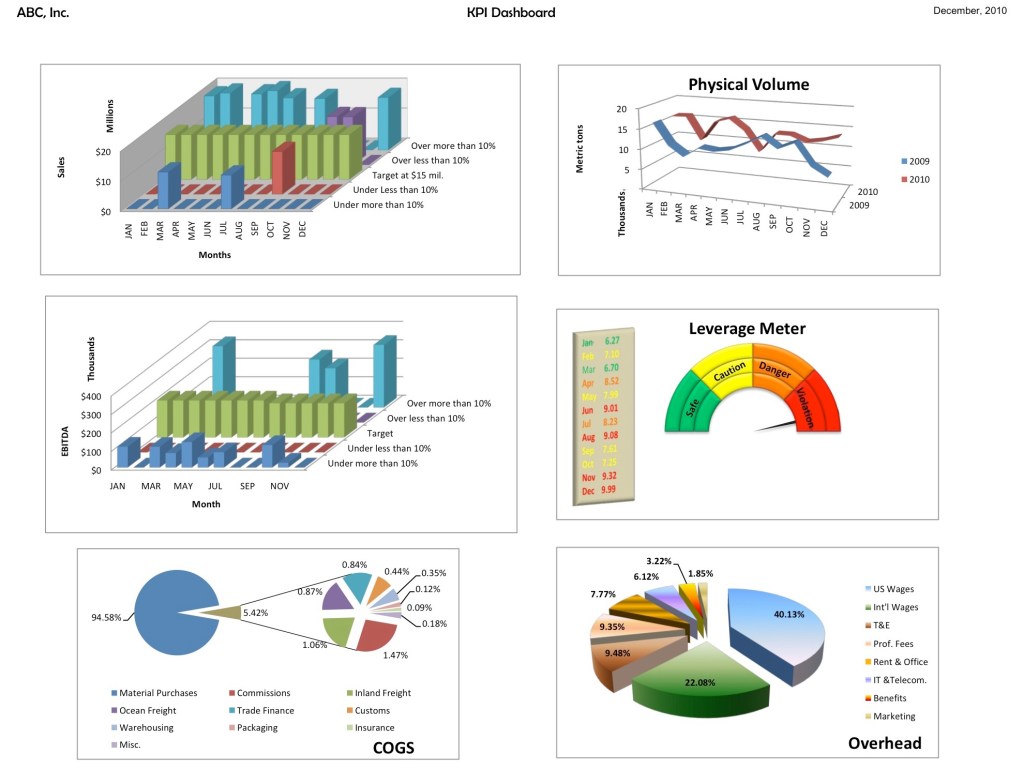
Here are some of mine own:

Yet, in far too many instances the form obscures the substance.  Now, the users think they need something looking exactly like that, instead of thinking what info is fed into it.  And it is very sad, because CEOs and CFOs in need of sensible information, frequently end up just looking at a pretty picture.

I’ve seen a lot of dashboards – most of the time I find them absolutely irrelevant.   You are looking at your 12-month revenue curve and it displays expected cyclical pattern.  What are you learning here after spending a tidy sum for ability to generate this graph with a push of a button?  Nothing new – your last year curve had exactly the same shape.  How do you know whether you are doing better or worth now than a year ago?

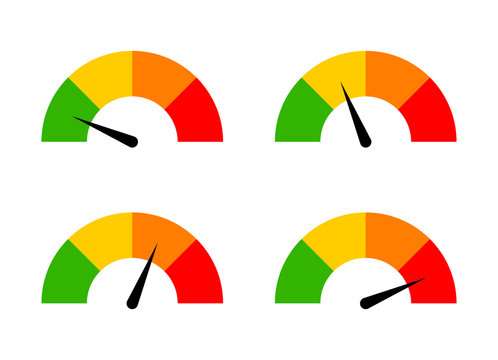
And the gauges!!!  They look awesome and they justify the name “dashboard,” but they are the most difficult charts to read.  Moreover, they are kind of useless for static information.  Unless a constantly changing (and most importantly, crucial) information is fed into this device in real time, you have no reason to stare at a red circle with green border and unmoving black arrow.    

Here is my advice: don’t fall for colorful pictures.  Start from the beginning.  You know which information is most important for you and your CEO, which parameters affect your business’s ability to survive.  Figure out what combination of data would make the real impact on your decision-making, how frequently you want see it, whether it needs to be dynamic or static, etc, etc.  Only after that you can think about the format. 

Let’s say your product’s price is in direct correlation with crude oil market.   In this case, may be the two sets of data should be presented together, or maybe it’s most important to look at the units, not the sales dollar value?  Those are the important decisions, not the shapes and colors.

It is very possible that you need bar charts, graphs, even gauges.  Hey, if you are a jewelry manufacturer and make raw material procurement decisions all day long, there is nothing wrong with having a gold price meter installed right in the center of your screen.  At the end of the day, it is all about common sense.