
More on Nepotism (The Moviemaking)


In my earlier post The Curse of Private Business: Nepotism, I have touched on the damage this phenomenon affects on commercial enterprises and its unfairness to people who still believe in the power of merit-based rewards. It is a complicated topic, though, because when it comes to our own kids we are dedicated to their support. And we would like to believe, of course, they deserve it. It’s the undeserving support that’s problematic?

At the end, to underscore the pervasiveness of this issue I pointed the readers to the familiar territory of pop culture:

“… the industry where nepotism is the most prevalent is the one that suffers the most from lack of fresh talent is the entertainment business.”

Last week, I was told that an IMDb community’s member (Feodor8, I believe) contributed to this very topic. I only had time for a quick look and now the disucssion has been removed. Even without the original material at hand, I would like to comment on few aspects of the “article.”

I hope that the piece was deleted due to the author’s aggressive attitude, which irked me as well, and not because the topic was deemed too sensitive. The contributor didn’t need to resort to offensive tirades and bickering with the commenters.

Considering how intensely he feels about this issue, I found this movie fan’s list of Hollywood players with family connections under-researched. Let me visualize it from my memory… Talia Shire was there, but strangely her son, the adorable and talented Jason Schwartzman was not. Futher into the Coppola clan, Sophia was present, but her brother, director Roman was not. Was Nick Cage (born Coppola) there? None of the three younger Balwin brothers who followed Alec into the acting trade, were mentioned. Alexis Arquette got on the list, but her immensly talented sisters Rosanna and Patricia did not (I don’t remember whether David was there)… And I could go on and on…

Why do it at all, if you do it half-assed? This is so typical – people complain about quality, but cannot live up to their own standards. The same goes for the general public’s opinion-forming process: the prevailing tendency is just to scrape the surface without looking into the root of a problem. The “article’s” author blamed the plunging quality of the entire American cinema on people with family ties, even the talented and hard-working. That’s just superficial.

Remember, this is a CFO’s blog. Filmmaking is commercial enterprising and like any business it abides by basic economic law of supply and demand. The power is with the movie-going audience. If they did not pay their hard-earned money to see the movies feodor8 rightfully condemned, the studios wouldn’t finance them.

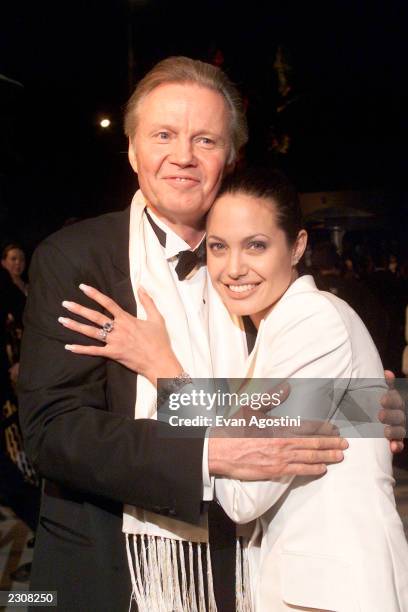
In the past 5 years Angelina Jolie (Midnight Cowboy Jon Voight’ daughter) starred in 7 feature movies. How many of them did I see? None. Yet, in the US alone they earned $440 million in the box office; all commercial successes!!! That’s the demand—and the supply follows. The quality of filmmaking is in your hands, dear audience. As long as you are willing to pay for crap, it will be made.

The Bottomless Well of Nepotism and the Issue of Business Survival


My dear readers, I wish I could stop writing about it, but it never ends – there are always more examples to share. I already wrote The Curse of Private Business: Nepotism and then More on Nepotism, but I cannot resist the urge of giving a space to yet another example. And even though it concerns the entertainment industry, it is an important financial issue as well.

You see, in the deteriorating economic environment (and it will continue deteriorating), there is only a handful of industries that have a chance of surviving. Filmmaking is one of them. Not the whole of entertainment, but cinema in particular. People already pretty much stopped reading books, and who knows what's going on with the music industry. Only a small percentage of population can afford to go to the concerts, sporting events, or theater.

But no matter what happens, people will continue seeking an escape from their dreary lives in the darkness of movie theaters or in front of their TV screens. So, whether we like it or not, it is socially important that Hollywood spreads their financial resources wisely and survives. It would be even better if the production funds were also distributed with artistic responsibilities in mind, but that's a subject for another post (or, perhaps, even another blog).

From a strictly financial point of view, I cannot even complain about the stupid Michael Bay's movies – at least they make money. But I have a problem with irrelevant films that get pushed through studios and independent production companies with the help of connections and familial relationships. Some of them are not able to cover even 10% of their budgets. And not because they are complicated intellectual creations (I don't mind money being spent on actual masterpieces), but because they are simply crap. And it is not about the nepotism per se, as I previously wrote. It is about mediocrity and losses caused by nepotism. In any business, not just filmmaking, if nepotism results in success and profits, objectively it can be tolerated.

So, how is it done? The August 29th issue of New York Magazine had a little interview with Zoe Kazan – Zoe Kazan Needs Coffee, conducted by one of my favorite magazine writers, Jada Yuan. It is actually in the theater section, because on top of having her screenplay being made into a movie (He Loves Me), in which she also stars together with her boyfriend Paul Dano, this 28-year-old has a play, commissioned by Manhattan Theater Club, opening this fall in New York (!).

Of course, Ms. Yuan shines the light on the grounds of this first-time screenwriter's ability to penetrate Hollywood's entry barriers. She starts by defining the interviewee as Elia Kazan's granddaughter. Then she goes on to point out the connection between the directors spearheading He Loves Me – Jonathan Dayton and Valerie Faris, and the boyfriend (they directed Paul Dano in Little Miss Sunshine). Finally, in her last question she names Zoe Kazan's parents – both screenwriters: Nicholas Kazan (who co-wrote Frances, adapted Alan Dershowitz's Reversal of Fortune, and penned excellent, but underrated Fallen) and Robin Swicord, who has a good knack for adapting highbrow sentimental literature (Little Women, Practical Magic, Memoirs of Geisha, The Jane Austin Book Club).

And again, the nepotism would be okay (after all, we know how lazy people are – nobody wants to work hard and look for new talents), if writing was Ms. Kazan's genuine calling and her ideas were original. But He Loves Me is just another rehashing of the Greek legend of Pygmalion. And here is how she answers Jada Yuan's question, why did she start writing:

"Because when I was first trying to get acting jobs, there would be these huge slots of time, where I wouldn't have work…"

Soooo, she started writing because she had free time? Are you joking me? True writers write because they cannot live any other way. Not, because they need to kill some time or as a form of "self-actualization." The saddest thing is that I happen to know incredibly talented young writers with original ideas, who try and try again, querying agents and production companies just for a chance to get their excellent scripts read. Robert McKee says that one of the main concerns of the screenwriting professors is preventing their best students from killing themselves.

But Ms. Kazan? Whatever she is going to write, will be read by someone with a finger on the green-light button. And then, money and resources will be invested on something that only a small group of people (most of them also connected) will be interested to see.