Disney Shareholders: Why Can’t You Be More Like Netflix?


It’s not an easy undertaking to make me laugh nowadays. Most of the time I’m just FINE (as in Frustrated [duh!], Insecure, Nervous, and Exhausted); the rest of the time I am severely distraught… And, of course, I meditate and do my best to cheer the fuck up… The vast music library helps; so does the good literature, quality entertainment… But, laughing – that’s rare, very rare… Except for the news – some news snippets make me burst out laughing! And incidentally this particular hilarious bit also had to do with Entertainment… Or rather the business of it.

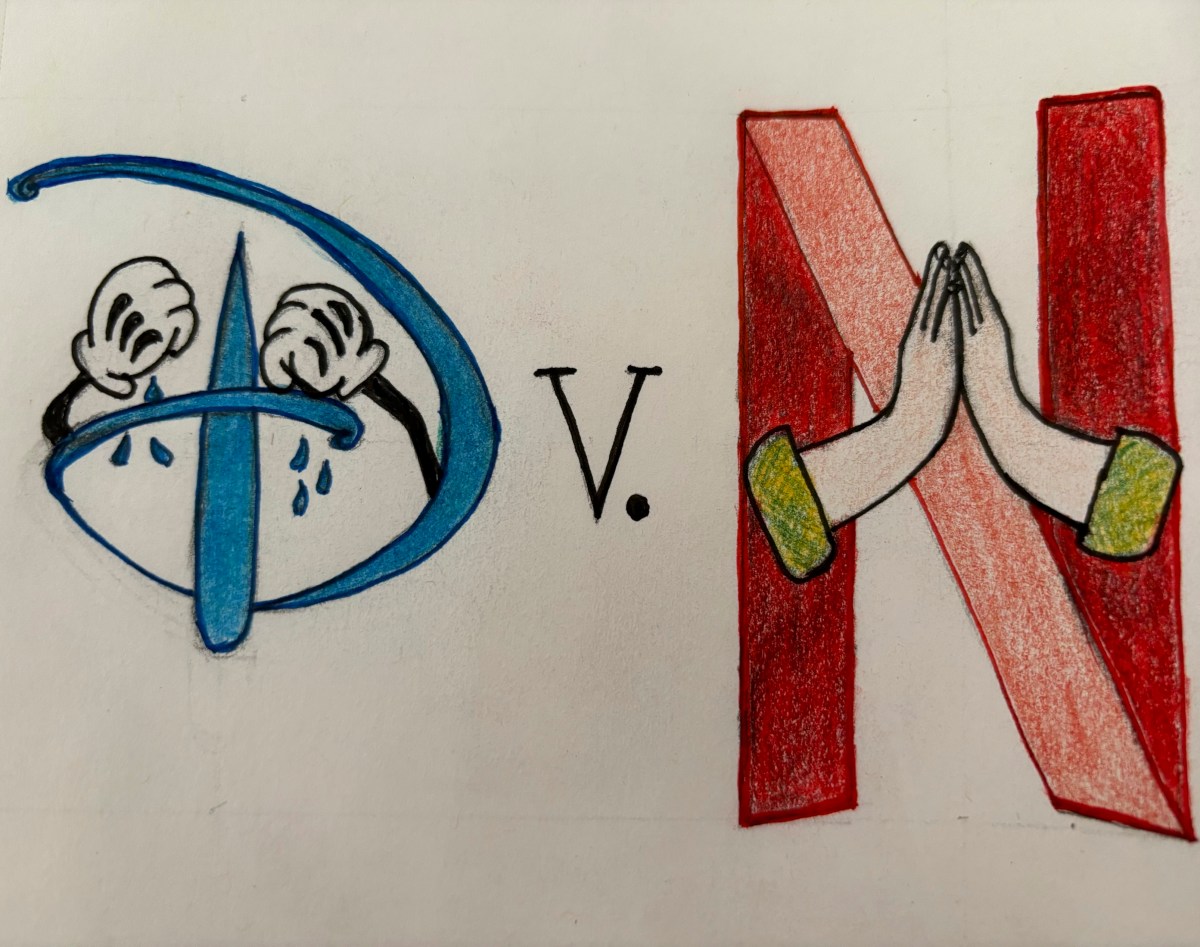
You see, Disney is in trouble… I don’t need to regurgitate to you the whole stock-market mumbo-jumbo everyone else and their mothers write about, primarily focusing on the share prices, which are now below the level they were 10 years ago. Because the bottom line is fairly simple: The original Walt Disney Pictures isn’t pumping out winners annually as they used to do. All those astronomical investments into hoarding the big-name franchises like Stars Wars (Lucasfilm) and Marvel  – in spite of the high profits per hit, don’t really turn themselves into returns fast enough… And – most painfully in terms of the contemporary state of the entertainment marketing – the streaming arm Disney+ is not profitable at all.

Or, as I prefer to define it: Netflix it ain’t.

What to do? What to do? In a typical far-removed-from-reality only-in-corporate-boardrooms turn of events, the self-proclaimed “activist” investor billionaire Nelson Peltz (who started his “business-building” career – and this is very important – by inheriting his grandfather wholesale food company and then turning himself into a prominent private-equity mogul by buying and selling such fully-fledged companies as Snapple and Quaker Oats) challenged Disney’s BOD to commence the corrective actions by dismissing the company’s current CEO Bob (Why Bob, god dammit?! The man is 71! Time to grow up into your full name!) Iger (not a businessman at all – a career media executive, aka glorified mountain-top administrator with an outrageous compensation package of nearly $30 mil per year). In his haste for coup d’état, Peltz forgot to do his homework – he came into the fight empty-handed: no constructive plan, no corrective suggestions, no panoramic view of Disney’s new and improved future… Just the hope that, without Iger in the picture and with him on the board, things will get better… How? By Disney Magic? (If you didn’t hear: Peltz’s coup failed and Iger is still up there – on Disney’s very top, I mean).        

You get why this is so funny to me, don’t you?

The very idea of two people with no entrepreneurial experience in their respective portfolios fighting over who’s better fit to shake up the conglomerated mastodon (in case you forgot your primary-school lessons: mastodons were prehistoric, extinct cousins of the contemporary elephants – very large creatures) and expediently reshape it into an agile operational gazelle able to conquer the most difficult, most contemporary, most innovative trails – it seems inconceivable to me. Moreover, it’s so desperately naive to believe (assuming, of course, that anyone actually believes it) that changing one (or ten! or all!) person sitting on the head of the mastodon – very far away from its vital organs and moving limbs – would trigger the company’s rejuvenation. 

Do you think that the OG business-builders Walt and Roy Disney, if faced with a similar situation, would be concerning themselves with the BOD changes? I don’t think so. They would dig deep into the causes of the business’s slowdown, think outside of all boxes, and try to come up with absolutely new, never-explored-before solutions. Because they were the trailblazers and truly good fathers to their corporate child.  The current executive foster parents, on the other hand, are the worst: all they do is measure their child’s failures against their peers’ successes.        

You see, aspiring to someone else’s model that happens to work for them for the time being is nothing but a short-term bandaid. The key is in the entrepreneurial intuition, the managerial flexibility and the structural mobility; the integral ability to adapt, to change fast – with every single shift of the market demand and technological leap. And can we expect that from a giant who cannot be anything but rigid and slow simply because its too large for its own good? Pure fantasy, of course (who’s going to stop me, though? it’s my blog!), but the best thing for Disney’s Jenga-tower now would be to disassemble into individual blocks and let them operate as separate business units, without the burden of the astronomical executive packages. Let them compete within their own enterprising markets, against their specific peers – not against the fickle stock-market trends. I wonder what would happen then?   

And since commentators keep bringing it up as a benchmark, let me note this: Netflix Inc., God bless them – in spite of their global presence, publicly trading stock, and nineteen subsidiaries – is still a very much agile, 27-year-old (the most beautiful age) baby. With one of its shrewd co-founders still serving as an Executive Chairman of the board. 

I was a member of Blockbuster when my then pre-teen daughter first told me about Netflix DVD subscription. On my way to work I would drop the red envelopes into the mailbox and get the new ones shipped to us as soon as they were scanned into the USPS system at our local P.O. By the standards of those times: extraordinary expediency and incomparable efficiency of the entertainment-delivery operations. And that is still their main focus. Now, by means of what David Foster Wallace predicted (a few years before Netflix DVD was born, actually) would be the main form of delivering content into people’s screens – the dissemination into “teleputers” as he defined it, which we now known as streaming. In between, all of their transitions, developments, enhancements, and additions have been seamless precisely because they keep to their core, pursuing their mission.

And I hope they continue being spry, fluid, and easy to adapt. To whatever the future brings. I don’t know about the rest of you, but I owe them so much! No, for real, I have no clue how I would manage without them…   

Futurenomics of Higher Education


Item_3703People laugh at me when I talk about higher education in negative terms.  And I understand – it sounds hypocritical coming from someone with multiple academic degrees.  But times and environments change.  For my generation, higher education was far less expensive, more intellectually challenging and somewhat more rewarding than it is for young people today. 

Now colleges lower their educational values, so that the degrees seem more intellectually accessible.  The individual thinking is not cultivated anymore and slowly disappears together with independent studies.  It became all about mechanistic skills of test-taking instead of true intellectualism.   

Except for a few institutions still adhering to their academic values, most colleges' coursework does not require any reading beyond the textbooks.  This is how we end up with scores of degreed "professionals" who never read.  My famous pet peeve is having young subordinates with accounting degrees who don't understand the fundamental principles of double-entry bookkeeping. 

So, for $200,000 you get a low-grade minimal intellectual input and the promise of… What?  Nowadays, nothing.  Ok, so wealthy parents may be willing to pay this kind of money in order to delay their children's exposure to the doldrums of the adult life – as far as I am concerned, not a bad idea if you love your children and can afford to do so.  But other than that – it's really just nothing but a bad investment.  

Yet, more and more children continue entering colleges, ending up with unbearable debts.  Some are locked forever in terrible jobs, others are not capable of getting a job at all.   And people still insist that the degrees open some highly desirable doors?  Why is that? 

Because, of that stupid club mentality that pollutes every aspect of our lives.  Hiring managers and recruiters, themselves college graduates, will look down on those without the degrees, regardless of their abilities and knowledge.  This idiotic pattern has to change.  Not to boast or anything, but I always look for a spark of an intellect in a candidate's eyes before I look at the Education section on his resume.     

At the same time, we cannot deny the fact that having graduate and post-graduate degrees inhibits entrepreneurial potential of many bright and capable people.  I have been saying for years that the possibility of being paid good wages prevents people from entering the entrepreneurial route.  It's too scary to gamble on your business success if you have a steady job.   Thus, instead of building small and midsize businesses that could revive our economy, kids "all go to the university, and they all get put in boxes, little boxes, all the same." 

But this point becomes even less relevant now: those highly paid jobs opportunities will not be there in the near future.  Young people, please, you don't have to follow the rest of the sheep.  Think for yourself; let your creativity take you on the self-fulfilling journey.  And you don't have to strive to be rich and famous overnight either – not everyone is meant to be Gates or Zuckerman.  There is nothing wrong with building your own small business that will provide you with middle-class living, while creating jobs for other people on top of that. 


Case Study: The Marketing of Fear


In my consulting practice, I have a client who has a family-ran business.   It has been established several generations back.  He is doing well.  Yet, one of his sons wants to be an entrepreneur of his own stature.  He wants a complete independence – something I very much admire.  The young man has a pretty fascinating idea worthy of at least trying to attract venture capital.  Of course, he wants to do everything himself.   I know the boy for a really long time – when he embarked on figuring things out, I told him he could always count on my advice if he had any questions.

He came to me a few days ago, his model  clearly formulated and ready to be formalized in a business plan.  But he was all out of sorts about the business plan.  His original intent was to buy a PaloAlto's Business Plan Pro (still a #1 business plan software on the market) for $199.99 and work within its framework.  But then somebody told him that he can go cheaper and "easier" with a Growthink's Business Plan Template – only $97 for a pre-written, fill-in-the-blanks, Word document/Excel spreadsheets.  Excited, he went to look at the company's website and ended up having a panic attack.

I went to see for myself what could possibly spook him like that.  Let me tell you right away that I have nothing against Growthink, a 10-year-old consulting company, specializing in business planning and investment brokerage.  They appear to be quite successful in their core business of charging high-rate fees to moneyed clients looking for more funds, expansion or exit strategies.

The thing is, though, that in their daze of success they also decided to "reach out" to the general public.  According to their Special Announcement, they

"regularly receive requests from entrepreneurs who want to hire Growthink but cannot afford our consulting fees. For this reason, we have developed a business plan template that allows entrepreneurs to quickly and cost-effectively develop professional plans."

How about that?  They charge their conventional clients tens of thousands of dollars for their services, but here it is – for $97 you can have exactly the same thing.  Well, that's nothing new.  Consumer beware!

What caused the young entrepreneur to go into a frenzied mode was something else – it was the brutal, fear-fueling tactics that Growthink uses to market their side products.  I don't know how they talk to their conventional clients, but their online lingo is nearly unethical.

You take a vulnerable group of people setting off on a scary quest of entrepreneurship and you tell them,  "You don't know anything.  We are the only ones who know all the secrets.  Here, we tell you 4 out of 10 things you must know and then you will have to buy more products to know the rest.  If you don't do it you are doomed.   Here is another set of products with secrets from Venture Capitalists that were revealed only to us.  Everybody else do it wrong and so will you, if you don't buy this," etc, etc.  And it all enhanced with a rapid-speed audio. 

By the time they are finished talking, the poor young entrepreneur feels he MUST SPEND $1,200, or there is no hope for him.  And all he wanted to do is to spend two hundred bucks on the best business plan software on the market.      

The funny thing is that the template has only three reviews.  Do you think that the $1 billion of venture capital, Growthink claims their clients raised, was attracted by a ready-made generic template?  I don't think so.  Plus, if you are a creative person, capable of original brilliant idea, would you really want fill in the blanks and have somebody else's words expressing your aspirations?