I Built This Prison: Excerpt: Once More On Looking (or Rather Not Looking) the Part


From I Built This Prison, Chapter 2. Aspirations, Hopes, and Dreams

Here is an interesting thing to consider: I never was of the correct shape and texture to fit the typical idea of a cutthroat corporate mover and shaker.  Anywhere. In the same way probably as Julia Child was not considered an acceptable choice as standard TV personality in her time. First of all, it wasn’t just the creative pursuits and liberal-arts education – which included journalism, languages, art history, theater and cinema studies, to make a short list – that were barred by the antisemitism in the Communist Russia. Any and all “executive prospects”, such as they were, were also closed for even the most persistent, academically overachieving Jews. The only thing that mattered there was that I looked Semitic and that my “Nationality”, as ethnically defined on the fifth line of a Russian passport, was “Jewish”.

I bless the moment I was accepted to America as a political refugee over three decades ago. Yet, the pertinent truth is that, even after 25 years of professional experience in NYC and the addition of MBA to the list of my degrees, I was still not recognized as a perfectly fitting executive peg here either. Ethnically looking immigrant with an accent; no Ivy-League tokens on my resume or any nepotistic cards up my sleeve – I had to break a lot of barriers to attain my positions even in the private entities, for which I worked.

Big-time HR managers and headhunters will never admit to it, but, in spite of my verifiable knowledge and expertise, they could never visually match me with formal demands and expectations of their illustrious employers/clients for the targeted positions. It’s only when I had a chance to speak with a functional key person from the hiring company directly my qualification usually prevailed over everything else, which only happened in smaller, privately held companies…

We cannot deny the simple fact that opticals play an instrumental role for all American occupations. It’s like what Aaron Sorkin wrote in his 1995 script for ‘The American President’…: “If there had been a TV in every living room sixty years ago, this country doesn’t elect a man in a wheelchair.”

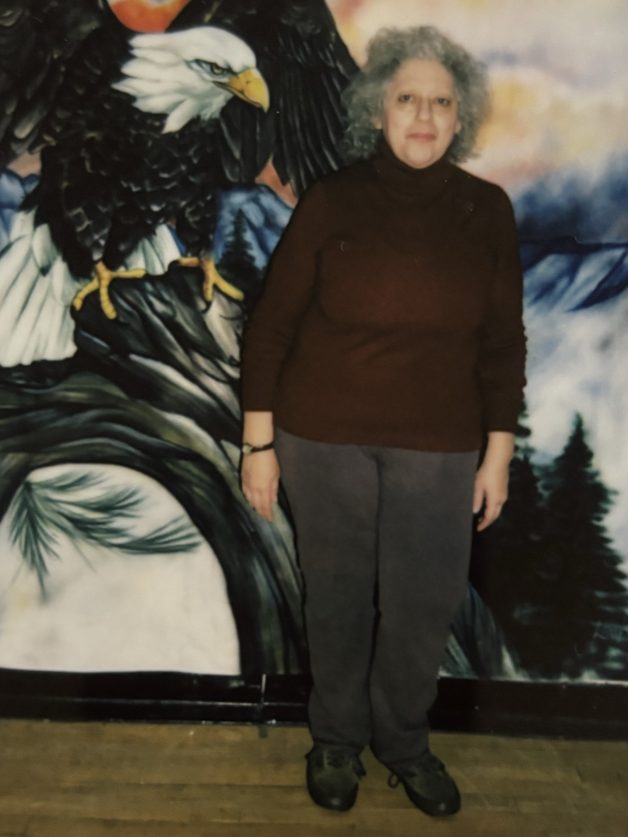
Visually, people like me look most appropriate in the seclusion of labs with Bunsen burners and glass retorts, research libraries with old books and microfiche, at the desks with typewriters, at the various lecture podiums addressing a blurred audience… Not at large-scale corporate events, schmoozing, in a constant search of best-connected targets like a self-propelled torpedo… I cannot stand shellacked hair and none of my business skirts are pencil-shaped. I prefer pantsuits.

I recently mentioned this “suitable look” issue to my daughter who, God bless her, is able to look and act right in any environment imaginable. And she said very simply, “It’s unfortunate, yes. But, Mom, you never even tried to straighten your hair…” How heartbreaking is that? This is what we need to consider in order to succeed in this world? What kind of aspirations we are talking about?

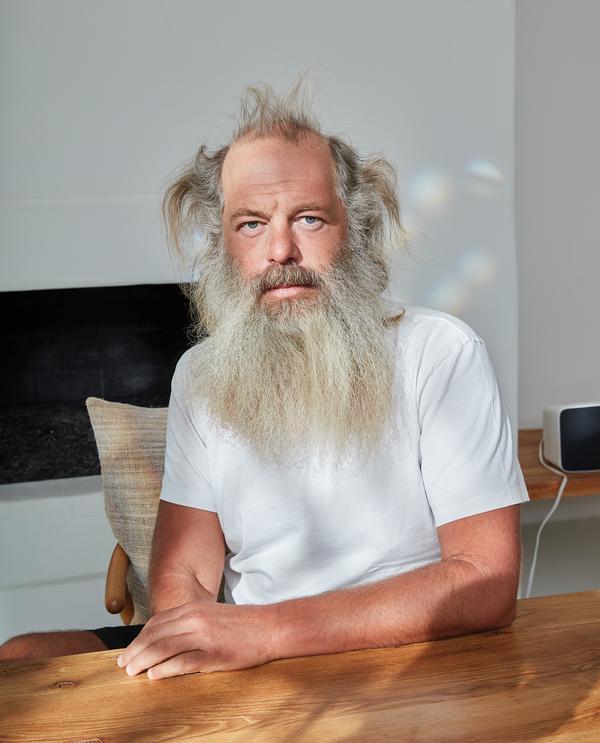
Let me remind you that I am referring here only to the external perception, not the actual competence, abilities, skills, expertise. Everyone knows about a book and its cover, and still no one is willing to read. Yet, looks are truly deceiving, you know, for both covering up the rot and concealing the superpowers. A person may look like an Orthodox-Christian priest but be one of the most important hip-hop, heavy metal, and alternative rock producers of all times (This, by no means, is an abstract example – I specifically have Rick Rubin in mind. I knew who he was long before I saw his photo for the first time. It surprised me.)

Off the Cutting Room Floor of I Built This Prison: Clip #1: Authorship Under Employment


It’s not just your basic human rights that get clipped. You know the inherent copyright rule that everything you create is yours? Not if you created it within your employment framework. As hired help, we lose any and all forms of authorship. Whatever we develop, design, formulate, innovate, write in a normal course of our paid work responsibilities belongs to the compensator. The re-using or duplicating your own prior achievements in any other business can be subject to litigations, which, at best, is throwing money into the wind and, at worst, will ruin your life.

Here’s a classic pop-culture example that can make it clear for everyone. In 1982, Tim Burton, then employed by Walt Disney Feature Animation (a subsidiary of Walt Disney Studios), wrote a poem titled The Nightmare Before Christmas. Being who he is – I mean, an incredibly talented visual storyteller – he considered various possibilities of translating it into images: a TV special, a children book… He created the concept art, the storyboards, and even got Rick Heinrichs (a production designer on many subsequent Tim Burton’s projects, as well as both Ghostbusters, all Pirates of the Caribbeans, etc.) to sculpt the character models… But Disney of the time (CEO E. Cardon Walker) deemed the project too “weird” and stalled it… Then, in his two-year stint as Disney’s CEO (1983-1984), Ron Miller was more interested in creating the Touchstone, which allowed Disney to develop “grown-up” movies, than in Tim Burton’s beautifully morbid ideas – he fired the auteur in 1984.

Thank God for that, because in the next eight years, Tim Burton went on creating Pee Wee’s Big Adventure, Beetlejuice, Batman (all for WB), and Edward Scissorhands (for 20th Century Fox). Yet, the quasi-autobiographical turmoil and conflict between the strangeness of character and the desire to fit into the spirit of a “happy holiday” (never mind that it’s Halloween) that he conceptualize for Jack Skellington have never really left Burton’s creative horizons. Around 1990 he checked… And guess what? Disney still owned it. And by then it was already a Michael Eisner and Jeffrey Katzenberg’s domain with the turf fertile for producing a full-feature Nightmare.

Oh, of course, they gave Tim Burton the creative credit – as the story and characters’ developer. And they listed him as a producer… Why wouldn’t they? His movies were already commercial and critical successes – the instant cult classics that, nevertheless, generated box office numbers in multiples of their budgets. Who wouldn’t want to smack Tim Burton’s name on a billboard? But it’s not like he could take this child he conceived and labored to birth – his creation, and take it away to some place where he could nurture it. No… It was fostered now by people with no blood relations. They even didn’t want to wait until the birth parent was free to play with it (he was committed now to Batman Returns at WB)…. They hired their own nannies from within – a screen writer (Caroline Thompson) and a director (Henry Selick)…  

Don’t get me wrong: I love The Nightmare Before Christmas the way it ended up to be – the stop-motion animated musical with genius music and voice of Danny Elfman. Still, for 30 years now, I’ve been wondering: What it might’ve been if Tim Burton’s parental rights were not terminated by the fact that he was paid a salary by Disney at the time of the authorship…

And as I said, the same rules apply to all achievements attained by a paid employee under the constriction of employment. Whether it’s a product – either creative or physical, a formula, a solution, a process, a recipe, a construct, a logarithm, a program, an optimization matrix, an analytical macro, or a KPI dashboard – it does not belong to you just because you created it. It’s in the possession of the people who paid you your wages. They are the ones who get to use and reuse it, whether you are still attached or separated from them.”

                    Deleted from I Built This Prison, Chapter 4 – Bucket of Tears… and Blood    

NPR Reports: Prisons Are Not Fit for the Elderly. What Else Is New?


On Monday, March 11th (I beg your pardon – it always takes time for me to summarize my reactions), NPR reported via Apple News (The U.S. prison population is graying fast… by Meg Anderson) that American federal and state prisons are not prepared to deal with their growing contingent of elderly inmates. Primarily because the correctional medical care cannot keep up with this demographic trend.

The provided statistical evidence illuminates the bleak reality: Apparently

“across the nation, between 1999 and 2016 the number of adults aged 55 and older increased 280%, compared to an increase of only 3% in those under 55.”

But what else could we possibly expect? The multitude of our socio-economic problems affects all aspects of life, including the age mix of the prison population: the lifers with over thirty years of incarceration on their shoulders, the repeat offenders who cannot be absorbed into society and keep coming back even in the late stages of their lives, plus the older people who commit their first crimes out of hopeless desperation, yet become the subjects of our brutal sentencing customs nevertheless – it’s only arithmetically natural for the proportion of older inmates to increase.

At the same time, it is absolutely unthinkable for any branch or twig of any governmental body directly or tangibly related to correctional codes to consider age-driven triggers for early releases. I mean, as it stands right now, only terminally ill inmates, with pretty much days to live, may qualify for this rare privilege. Anything short of that retains an inmate in prison until the sentencing conditions are fulfilled.   

It appears that the NPR reporter’s main focus is to single out the truth of the aging prison population as the most crucial factor testing the limits of the correctional systems around the nations in keeping all of their charges healthy.  She further broadens the magnitude of the age effect in one of her leading arguments. Namely that prison is a difficult environment and “people behind the bars tend to age faster.” To support this postulation the article quotes some studies by medical professionals specializing in Public Health, which claim that “incarcerated adults experience accelerated aging” (a term borrowed from engineering practice of specifically designed tests under aggravated conditions to speed up the aging of objects). One of the cited doctors suggests that “geriatric” in prison can mean someone as young as 50. 

Well, let’s set the quality of prison medical care – for the entire imprisoned population, not just for elderly – aside for a moment. Because, first and foremost, I would like to contest the validity of the rapid-aging generalization itself. You see, I believe that it actually depends on the person and her attitude. For example, take me (who else would I take, really?): On the day I was sentenced I was 57 years 2 months and 3 weeks old. And yes, pretty quickly my hair gone completely gray. NYS Department of Corrections and Community Supervision (DOCCS) prohibits hair-dying within its walls. (Unlike the federal prison network, which allows it.) And since I’ve been going gray since I was very young and started my regular visits to a colorist when I turned 35, I had no choice but to turn peppery gray in prison. And yes, Natura Bissē products couldn’t be obtained in the commissary or pass through the package-room regulations. So, it was impossible to hide the gloomy state of mind behind the brightness of my skin… But other than that… After decades of sitting on my fat ass behind my office desk, I managed to use my time in prison to get myself into a much better physical shape than I’ve experienced in my entire life: Walking the significant distances between various destinations of Albion prison’s camp and performing daily tasks of physical labor were at first difficult, than bearable, and eventually easy. I progressed from crawling to power-walking at a speed uncatchable by the smoking 20-year-olds. My first yoga class happened in prison and eventually I geared myself up all the way to the power-yoga level. Moreover, I’ve discovered a rowing machine in the gym… Eventually, I’ve developed muscles in places where I only had fat before. And I felt much healthier than I did outside… I felt 40. No joke… Age is really a very-very relative thing.

That said, however, it is an undeniable truth that cost of medical care for incarcerated individuals, guaranteed by the Eighth Amendment to our Constitution, has been growing exponentially. If not because of the aging per se, but due to the complex combination of factors, including the alarming health and longevity decline in the United States. Note: A recent Harvard study has determined that

“for every two Americans who died age 65 and under, one [MZ: 50%] would have been alive if they lived in Australia, Canada, Germany, Japan, or Portugal. An epidemic of chronic illness has also taken hold, with rates of heart disease, diabetes, liver disease, and obesity skyrocketing and impacting younger populations.”


Thus, the percentage of sick people entering various jails and prisons, regardless of their age, is now much higher than anyone expects.  This, along with the persistently increasing price tags of pharmaceuticals and all health-related services, which we all experience whether we are “free” or incarcerated, multiplies the weight of the monetary burden on, already pretty fragile, shoulders of correctional systems. Naturally, the NPR article quotes a few prison officials complaining that it is impossible to care for the older inmates within the existing budget constraints. And I believe them: neither the states nor the federal government have enough money for comprehensive healthcare of incarcerated individuals to begin with; having funds for the permanent geriatric  needs – forget about it!

There is, however, one important factor entirely avoided in the article – maybe deliberately, maybe not: The inherent and persistent problem of the corrections – the utter mismanagement and inefficiency of whatever means they have on hand, sufficient or not. And I don’t know, of course, maybe in the sampled states – Oklahoma, Texas, Michigan, Minnesota – everything is ran in the most methodical and productive ways; and if they had sufficient funds they would be able to medically accommodate prisoners of all ages (though my gut sours in doubt at that)… But I can testify that it would be an impossible dream (and when I say “impossible”, I mean like a fan dreaming of dating her pop-idol) in the prison structure I had a misfortune to experience firsthand, i.e. New York State’s women prisons – the most messed-up can of the administrative worms imaginable, if I have to say so myself.  

There are a couple of essays in I Built This Prison” specifically related to this subject matter – the general mismanagement, the medical care, and the mix thereof. But here let me just mention a few facts. There are three female correctional facilities in the whole of NYS – one for each level of security: the maximum and the minimum are Downstate, in Westchester County, mere 35 miles from NYC and its multitude of high-quality medical care facilities; and medium located in God-forsaken Albion, practically a stone’s throw away from the Canadian border, with the only hospital servicing the prisoners (Erie County Medical Center) 56 miles away. This latter prison camp is, of course, is larger – both in its capacity and the actual population – than the other two put together. And yet… The Albion Correctional Facility (ACF) has only a tiny medical office with no specialists, no OBGYN, no diagnostics, a few beds, and a handful (literally) of doctors that leave at 3 pm and don’t work on weekends. On the other hand, the Regional Medical Unit (RMU), which can actually be qualified as a prison hospital because it is staffed with medical personnel, including doctors and RN’s on 24/7 duty, and, in addition to 20 infirmary beds, has 30 long-term care beds as well as the maternity and nursery divisions – that’s, ladies and gentlemen, is, of course, in Westchester.

So, if an inmate happens to be pregnant or nursing, they have to be held in the maximum security prison regardless of their actual security gradation. The same goes for the legally blind as they cannot get walking assistance Upstate – and no one knows why. On the other hand, every one who is afflicted by ailments that bind them to wheelchairs, including murderers and other violent criminals, are invariably sent away to Albion – that’s where the mobility assistance is provided, which is by no means a replacement for the proper medical care. Etc., etc., etc., etc. It’s truly bizarre. And none of these three facilities can possibly deal with the needs of the aging population. In Albion, even 72-year-old women cannot obtain medical releases from their mess-hall job assignments, even if their feet double in size by the end of the day from edema – I’ve known them personally…

For further reading:

I Built This Prison”, Part III: In Case You Were Wondering About the State-Ran Healthcare 

I Built This Prison”, Part III: Through the Ass Backwards


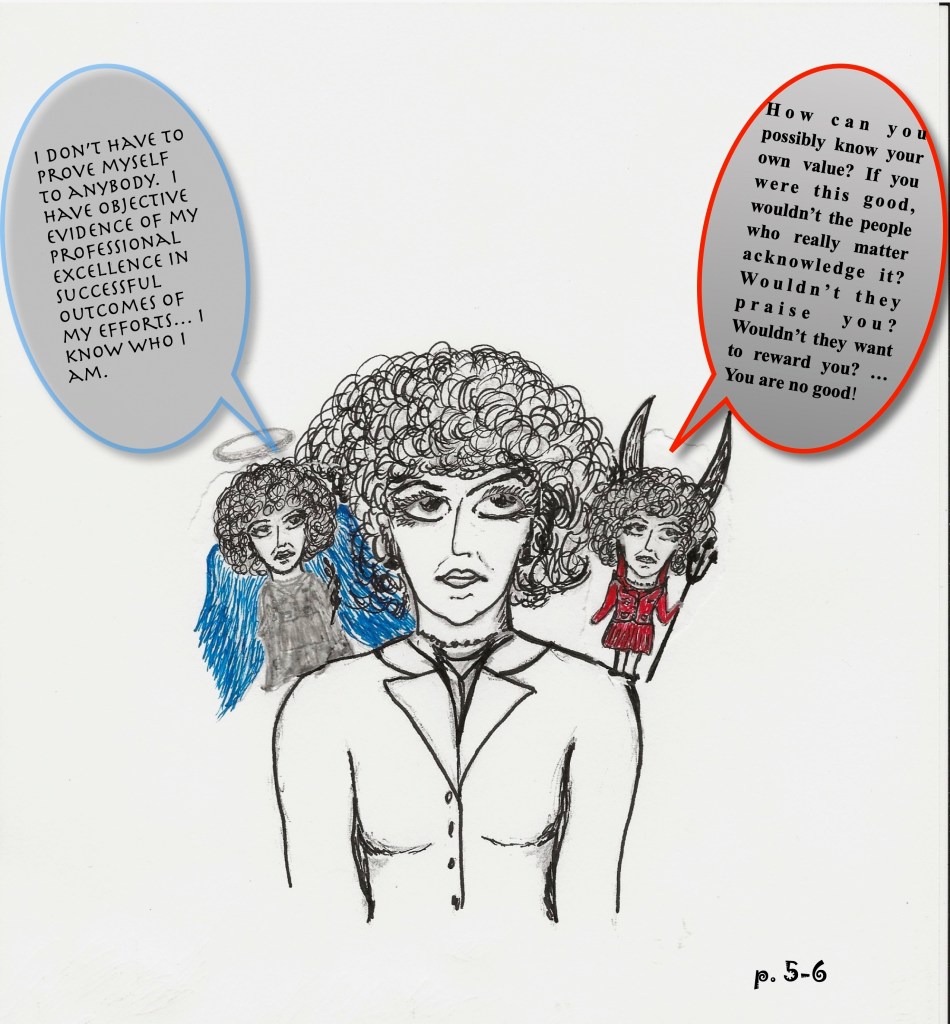
I Built This Prison: Teaser #2: That Battle of Good and Evil Within


I Built This Prison: Excerpt: High Achiever with Low Self-Esteem


From I Built This Prison, Chapter 1, Pride Desperately Seeking Validation

“…I used to think of my unhappy self as some sort of a special brand of weirdo.  And in many ways the circumstances that have shaped my life were very specific.  However, the tangible outcome, the resulting state of mind – that yearning for validation – and not by everyone, but by a particular someone – it is not unique at all.  In fact, many people live the same daily struggle and suffer the overwhelming despair that comes with it.  

Since the moment I accepted that I have a problem and began examining my own condition, I started seeing it in others as well…

…Various forms of this desire for one’s value to be acknowledged and appreciated by the specific people we anoint as our yardsticks can be traced all the way to biblical and mythological sources. “Father’s blessing” as a token of love and recognition is at the center of practically every single sibling rivalry in Genesis, Greek mythology, and Norse lore.

♦♦♦

Despite its relative commonality, it’s not easy to define this condition in one straightforward formula. It’s full of paradoxical qualities.

For example, one of the most prominent common denominators among people who suffer from the rift within their self-image in the same way I do is the drive for overachieving. In spite of the deep, dark emotional abysses inside, on the outside we go out and display the superior levels of functionality.

It’s easy to confuse low self-esteem with the lack of confidence. Even some dictionaries explain one’s meaning with the other.  But they are, by far, not the same. Somehow, being absolutely clear about the extent of my capacities and striving to fully utilize them have always coexisted in me with thinking of myself as utterly worthless. In fact, the awareness of the merit I invested into my accomplishments made my craving of the acknowledgement that much more intense.

This malady is a bizarre cocktail of contradictions. It definitely paralyzed my aspirations and stunted all impulses of positive daring, but conventionally I was doing just fine. I still went about being a straight A student, acquiring multiple academic degrees, expanding my professional expertise, positioning myself at the executive level of the companies that hired me.

It’s like a dual-action trauma: on one hand, I was pounded into the chasm of neglectful diminishment; and on the other hand, I was motivated to swim up and out…”

♦♦♦

Beyond my parents “…my recognition-thirsty psyche… fixated on the worst option possible: my bosses. Granted, I’m not talking about some middle-management hired hands. At the very beginning of my professional career back in the 1990, I made a conscious choice of advancing it in the precarious environment of flat-structured, privately-held, owners-ran companies. I’ve held Controller and CFO positions since 1993 and I’ve never had any layers between myself and the Founder/CEO/President. It placed me and my efforts into the spotlight held by ‘the only people who mattered’ – the ones directly responsible for my appreciation and rewards.

A totally unbalanced logic led me to seek and expect (!) approval from these little Napoleons, the tiny kings in their kingdoms, the self-made entrepreneurs, from whom I chose to accept employment. It is mind-boggling that, even though I usually managed to quickly identify their professional shortcomings and human deficiencies, I remained completely blind to the futility of my hopes to be assessed by them in accordance with my merits.

Nietzsche saw the conscious understanding of one’s value as a natural distinction of someone with a ‘master’ mentality. And he attributed a man’s ‘waiting of an opinion about himself’ to the concept of a ‘servant’ mentality. He called the latter an ‘immense atavism’, implying that it belonged to the old times, when the society was clearly divided.

No matter who we are, when we submit into Employment, we are forced to adapt ourselves to the idea of servitude. And in some of us, it clashes terribly with our true identities.

♦♦♦     

Naturally, the continuous mental battle between the two modes of existence – the one, in which you know your value and are recognized for it, and the one, in which you are ignored and mistreated by those who matter the most – builds an incredibly debilitating pressure inside. This constant back-and-forth switches between someone’s recognition vs. someone else’s disregard, make you sick – and I don’t mean dizzy.       

My agitated mind needed to defend itself in one or another way. While I consciously refused to admit to myself that I had a problem, my subconsciousness has built a defense mechanism all on its own: It learned to seek comfort in the familiar groove of misery carved into my psyche by the repetitive escapes into the dark corners of depression, anxiety, self-loathing, and self-pity.

Just like a gramophone needle, I would drop into this loathsome rut and let myself run, and run, and run in it. And then again, and again, and again…  Every time I felt hurt by one or another situation, a word, or someone’s action – big or small, didn’t matter – I would habitually seek solace in an emotional state most psychiatric professionals would consider highly problematic.

I guess, my depression symptoms have always been somewhat plain to see, because even my primary physicians would suggest a medication. I’ve been on one or another anti-depressant and anti-anxiety pill for some stretches of time since I was 18 years old.  And then I’d stop taking them for the periods just as long.  Sometimes, for very legitimate reasons – like when I was pregnant. And sometimes I would quit for no reason at all. Probably, because I didn’t want to think of myself as crazy or weak.

But you see, even when I did take the medication, it didn’t really work on the internal turmoil.  Like most pharmaceuticals, psychiatric drugs are not the cures; they don’t treat the underlying conditions, they just mitigate the superficial symptoms, which is presumably important but hardly sufficient. 

I would come to a doctor and within the allotted appointment time give a brief description of the darkness and the jittery nervousness that in me manifested itself in cardiological-like aches. “It’s stress,” was the invariable conclusion that satisfied all parties involved: the doctor knew what to prescribe and the patient accepted the chronic nature of the affliction.  What can be done about Stress in the contemporary circus of bread-winning intercut with the single motherhood?  Nothing, really.  And who has the time to look closer, let alone deeper?

Meanwhile, the banal shield of ‘stressful life’ had completely obscured the fact that amidst the unyielding battle between my self-value and low self-esteem I have gradually become severely addicted to Praise and would do anything to achieve it.”