If you took my absence from these pages during the past few months as an indication of my giving up on the blog, you were wrong. This activity is important to me. If nothing else, it lets me "talk" without being interrupted. It's just that the time slot in my overscheduled life, usually allotted to the writing of the blog posts, had to be temporarily relinquished to an extracurricular activity of preparing for a talk I was invited to give to a professional group called Women in International Trade.
Oh, no-no-no! I'm not talking about OWIT (the Organization of Women in International Trade), the big non-profit with global reach headquartered in Washington, DC. This group is much smaller - sponsored by a reputable New Jersey CPA firm, it is pretty much localized to the international-commerce entities and banks (like PNC) with offices and operations in that particular state. It's not like they don't welcome sisters-in-trade from everywhere, it's just how their network happened to develop: commercial clients of the said CPA firm, trade finance clients of the said bank, the local government bureau that deals with exports – all of them work and live in New Jersey.
And the reality is, there are a lot of big and small international businesses located in New Jersey. That's where you can have large office buildings that cost a fraction of what they would in Manhattan; there is plenty of open space for manufacturing and storage; there are Hudson ports that can berth oceanic freighters, etc., etc.
Truth be told, I would never know about these particular Women in International Trade if it weren't for one of the group's member who is also one of my former trade finance bankers and a friend. She is the one who mentioned me to the sponsoring CPA firm's Chief Growth Strategist - a force behind a lot of women initiatives in the Garden State.
They've been inviting me to participate in various women's and co-ed business events for some time. But I have to admit that when you live and work in Manhattan, the hassle of getting to an 8 o'clock breakfast meeting in New Jersey's Essex County makes such invitation very unattractive. I mean you need to drive or get a limo. You'll do it for business, of course, but for a semi-social gathering… that's a bit too much.
Of course, your attitude totally changes when the same professional group invites you to appear for them as a speaker. Vanity is a terrible sin – it demands constant massaging of one's ego. That's why some of us write books that bring meager royalty, give lectures without fees, etc. Plus, unlike the vast majority of people, I actually enjoy sharing my knowledge. And not for narcissistic, show-off reasons – I get a kick out of recognizing to myself, "I taught her that." So, naturally, I agreed.
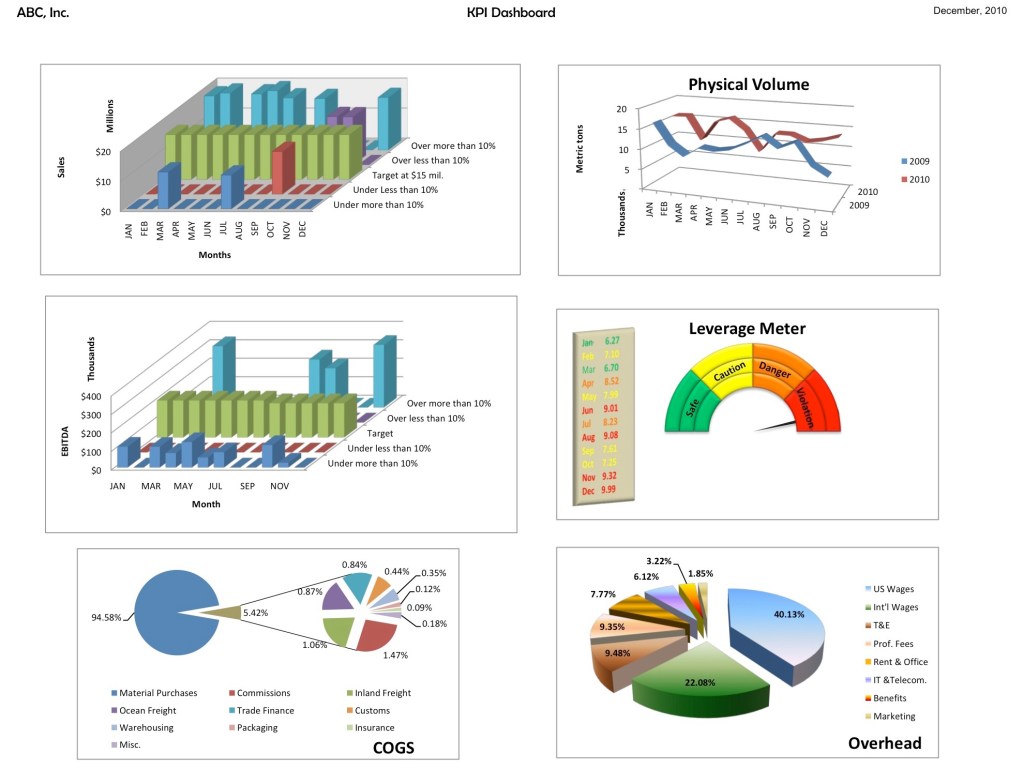
After the initial invitation, I kicked a list of possible topics at the talk's organizer and we settled on two that we both agreed would be the most interesting to international-trade professionals: the position of trade finance in the value chain and KPIs specific to international commerce. I was advised of the reglament: 1.5 hours talk and 30 min Q&A.
"Well," I thought, "If you are going to talk shop with a group of working women for 90 minutes at 8 o'clock in the morning on a Wednesday, you'd better make it engaging and gratifying," and went to work. The rule of thumb is that 90 minutes of talking translates into about 15,000 words. And that's actually is not very short.
Of course, if you are the one who proposed the topic in the first place, you most likely know the subject at hand through and through; you have already developed original ideas and time-proven recommendations; your thoughts and opinions are well formulated. And that's great, but if you are not a professional lecturer who does this sort of things all the time, you still need to outline what you want to say; you have to construct your delivery in a coherent and logical way; you must prepare an exciting Power Point presentation that would prevent your audience from getting drowsy, and use cultural references to make your points memorable. Yeah! If you want to impress people, it's a lot of work. As I said, vanity – it costs you.
The third week of January came, and there I was, in New Jersey, shaking hands with the organizers and the attendees – by all appearances a group of successful and confident women, whose statuses make it okay to be out of the office in the morning hours for the sake of this event.
I proceeded with my presentation and it went well: they paid attention, they were interested, they nodded, they offered sensible and appropriate comments, they loved my visual tricks, and they sincerely laughed at my jokes. The time ran out. "Do you have any questions?" I asked. I was convinced that I've had a pretty good idea about the points of the talk that could've prompted further inquiries.
Imagine my surprise when the first comment/question I've received was, "You are obviously a strong woman. In your professional capacity, how do you handle male resistance to your authority or any other sorts of gender difficulties?" (Notice how the question was formulated: The woman had no doubt that I've encountered such obstacles ans she wanted to know how I dealt with them.)
Slightly taken aback by the sharp shift of gears I skipped a bit, but really – just a bit. I don't need to prepare for a gender equality discussion; I was born ready for it. So, I briefly described my experience: the unfair treatment; the skewed perception; the idiotic remarks; the preferences given to nitwits because "they have to support their families" (many of us have to do the same); which battles I pick; what I say and how I say it; when I bite my tongue and walk away; how I lie in wait and then find a way to teach them a lesson, etc., etc.
Oh my God! It was as if that question and my answer triggered a flood. Apparently these women found my interpretation of the international-trade topics quite clear. What they were confused about was why in 2015 we are still treated like second-class citizens.
At this point (the time was, obviously, running out), everyone talked fast. Many things were mentioned: "honeys" and "sweeties," unequal raises, unreasonable promotions, difficulty of holding back the tears, female professional "ceilings," the insulting male disbelief at a good-looking woman who is also smart. Amazingly, there were not a single person who didn't have something to add. Nobody said, "I have no idea what you all are talking about." You know why? Because there were no men in the room.
One woman in her 30s who was just recently appointed to a Marketing Director position (her warpath has just began), asked me whether I was born "this tough." Actually, I've thought about it before. What I told her was that we (i.e. the women who want to succeed) are not born tough. What we are born with is the ambition, the desire to be rewarded in accordance with our merits, the need to be treated as human beings regardless of our gender. But, while we claw our ways towards whatever peaks we want to achieve, we have to acquire toughness. We have to harden or they will eat us alive.
It is possible that I will never see most of the members of this group again, but when we were saying our goodbyes we felt like sisters. I taught these women a thing or two about trade finance and performance analytics, and, in return, I've learned a lesson of my own: There are no happy and satisfied women in international trade (and, I dare to extrapolate, in other business activities as well), because their ambitions and efforts are constantly curtailed on account of their gender, which is silly, irrelevant, anti-merit, and (call me an idealist) anti-American.
 The Frustrated CFO