Charlie Skinner (Sam Waterston), handing an assignment:
"We don't need it fast, but we need it right… But we need it fast."
Episode 1.8
Written by Aaron Sorkin
The Frustrated CFO comment:
Bull's-eye, Mr. Sorkin! Bravo!
Charlie Skinner (Sam Waterston), handing an assignment:
"We don't need it fast, but we need it right… But we need it fast."
Episode 1.8
Written by Aaron Sorkin
The Frustrated CFO comment:
Bull's-eye, Mr. Sorkin! Bravo!
I frequently say that people who really know accounting and finance don't care what to count, analyze, fund, etc. I obviously include myself into this group – not to toot my own horn, but simply because my career has proved that I am actually able to successfully plunge into any type of business, any industry.
The essential prerequisite for this level of expertise is an extensive fundamental knowledge combined with a propensity for applying general principles to specific situations. There is also a very special knack that plays a crucial role in the making of universal financial experts: a natural ability to convert everything into monetary units.
I do it almost automatically, almost with everything, sometimes to a fault. However, my reverence for creative endeavors prevents me from crudely slapping price tags onto them. It's only somewhat recently, as a result of certain developments in my own life, that I became curios about various numerical aspects of arts and entertainment.
Of course, some numbers are commonly known. The others are easily derived through general financial acumen and cultural intuition. But I must say, some of my findings turned out to be simply bewildering.
I. Books
The PEN Award recipient Grady Tripp (Michael Douglas's character in Wonder Boys)said that the only reason the University's Chancellor fell in love with him was because "she was a junkie for the printed word. Lucky for me," he continued, "I manufactured her drug of choice."
I have to say that if there were such a thing as Arts Addictions Anonymous, I would probably end up, together with the Chancellor, in the "books group." (After that they would move me to the Theater and Cinema rehabs.) The question is, how many other people would be there with us? Here are a few sad numbers about my first love - the written words.
According to various publishing specialists, if an advance of $3,000 is paid to a book's author, the life-time sale of 10,000 copies is considered to be a success. Most debut literary story collections sell no more than 2,000 hard-cover copies. For the first literary novel this number falls into the range between 3,000 and 7,000.
An average professional-interest book sells about 5,000 copies in its lifetime. This includes e-Books (which, as you know, can be easily stolen). If the author hires, naturally at his own expense, a book agent and a PR firm, the sales may go up as high as 12-13 thousand copies.
Just for the sake of the statistical integrity, let me remind you that the population of this country is 315 million.
Now, here come the dollars. This is derived from my own first-hand experience: an author's royalties range anywhere between $1-$4 per sold book. So, if your book has sold 5,000 copies, you can hope to generate somewhere between $5,000 and $20,000. Astonishing, isn't it? We are talking about the payoff on the multi-months (sometimes years) struggle.
This explains why 99% of American authors have day jobs. Most literary writers with respectable names teach creative writing classes in Universities. One of my idols, the late Kurt Vonnegut, taught at the University of Iowa Writers' Workshop (the most prestigious post-graduate program in the country) practically until he died. Many authors write for magazines (and I am not talking about just The Atlantic or The New Yorker). Of course, less known fiction and non-fiction writers also teach, research, consult, hold executive positions, etc., etc.
It also explains why so many literary awards come with the words Fellowship or Grant at the end. It signifies that the author was provided with sufficient funds to sustain her or him through the writing of the next masterpiece.
Of course, there are bestsellers. It is said that in order for a book to get on the bestselling list, it must sell at least 7,000 copies a week (in any category). So, if you see that a book stayed on The New York Times Bestsellers list for, let's say 20 weeks, it means that it has sold at least 140,000 copies. Now, we are talking about different kind of money – about $500,000 in royalties from a single title. Of course, if you had an agent who hooked you up with the right publisher, 10% of that goes to him.
Unfortunately, it is quite rare that a true literary novel or a scientifically brilliant non-fiction becomes a bestseller. With the exception of a few (Kurt Vonnegut again, John Updike, John Irving, Muriel Spark, Alice Munro, Norman Mailer, Jennifer Egan, Johnathan Franzen), most contemporary writers (royalty-free old classics are not the subject of this post), whose work measures up to my standards of quality, never see their names on the bestselling lists.
It's the thrillers, the soft-porn romances (the Fifty Shades of Grey trilogy still occupies the top three spots), the vampire stories, the heroic fantasies, and the chick-lit opuses that top the charts of fictional hits. Children and young-adult adventures are distributed by bucketloads through schools and city libraries.
Most popular non-fiction titles are memoirs, biographies and autobiographies, self-help books that promise to remake and happify you by the time you turn the last page, cook books, chronicles of staggering financial rises and downfalls.
And then there are mega-sellers - books that appeal to armies of readers, generating multi-million-dollar revenues for their authors and publishers. Among the most recent fortune-making printed commodities are the Harry Potter series (over 500 million copies world-wide and counting), Twilight series (over 120 million copies), Diary of a Wimpy Kid series (75 million copies), The Hunger Games series (50 million) [all young-adult books, by the way]; The Da Vinci Code (80 million) [a pseudo historical thriller with a feminist twist]; The Purpose Driven Life (30 million) [a 40-days spiritual journey manual for finding God]; The Girl with the Dragon Tattoo (30 million) [sexual deviance thriller with even stronger feminist twist].
Note that all fictional books on the mega list were also turned into movies, thus multiplying their author's wealth. To be fair, I must say that it doesn't happen only to low-brow mass-market hits. High quality literary books are frequently adapted (at much smaller prices, of course) for the silver screen as well (the aforementioned Wonder Boys, Brokeback Mountain, 25th Hour, Fight Club, Forrest Gump, The Color Purple, Stand by Me, Schindler's List, The English Patient, to name a few). It's another way for a good writer to earn a little bit of extra money.
We will return to movies later in this series.
I must've dozed off, or something… And I dream that I died and went to hell. There my soul is tortured by things I fear the most…
…I see the country that used to be a beacon of freedom for the oppressed being perverted into a security vault. I see cameras, metal detectors, x-ray machines, bag searchers everywhere. There are satellites looking straight at me. Someone always watches, hears every whisper, reads every word I type on my computer…
…I see that the notion of merit is dead. All that matters now is who you know. Connections and "club" memberships are the hottest commodities…
…I'm forced to watch people merging into two groups: millions of those who barely manage to eke out a living from whatever professions or trades they forced upon themselves and a small number of comfortable others – nothing in between. And on the top, there are a handful of secret billionaires who have been quietly buying up the world…
…Someone murdered the free competition. Small businesses fall down like slaughter victims. Banking conglomerates are being bailed out of their greedy fuckups through the ponzi schemes of international borrowing, but the treasury is empty. In horror, I look at the decaying corpse of the glorious industrialism formerly driven by the production of quality goods - now it's just a feed for the paper-trading worms…
…I see special interests' money usher through the Supreme Court unconstitutional laws, re-directing average taxpayers' earnings right into the pockets of the paying monopolies…
…And I see young fools, with no prospects for decent lives and no understanding of underlying reasons for it, burning with desire for a change. They've been dumbed down to the point that they cannot formulate their purpose or devise an action plan. They huddle in a tiny space, called Zuccotti Park, near the place they assume to be the source of their distress, simply because they have nothing else to do…
…I stop by a newsstand strewn with tabloids covered by repulsive photographs of insignificant clowns. I manage to pluck out one "real" magazine. It excitedly screams into my face that Lena Dunham has received four Emmy nominations for her half-baked mediocrity. The well-connected and moneyed hipsters, she so skillfully represents, jump up and down like mad rabbits…
…And I see a 5-floor-high advertisement board of Katy Perry in 3-D, but I hear that Fiona Apple's The Wilder Wheel tour is not sold out…
…And I see the Redeemer, the young woman whose words and images have the power to alter people's consciousness. But nobody can hear her as she is sealed into a cell of fear built by haters… And I know that I contributed to her imprisonment. She is smashing her body at the see-through walls in exhaustive attempts to break free, and I am not able to help her. And those who can, refuse to do it… I feel impotent, paralyzed.
It hurts so much inside, as if somebody put a grenade where my heart is supposed to be and it's exploding. I scream in agony. I claw at my chest, trying to let the pain out. I whisper to myself, "Wake up, wake up!"
Only, I cannot wake up. This is not a dream and I am not dead. This is the hell of my actual existence.
"Do yourself a favor… don't have kids… Ruins you ambitions, keeps you from what you want in life… I'm not a good mother… Kids are like clients, they want all of you, all the time. Don't get me wrong. I love my son… Love's nothing, love's easy. They come out of you, you love them. What you do after – that's the hard part."
Damages, Season 1, episode 1
Written by Todd Kessler,
Glenn Kessler, Daniel Zelman
The Frustrated CFO's comments:
I watched this and thought, "Wow! This is hard core. You cannot dismiss the truth here." A couple of episodes later Patty ships her disobedient and rebellious son to a Reform Academy. He is snatched away kidnapping-style. She is all about efficiency and getting her way.
Can women have it all? No, they can't. Not, if they want a glorious career and "ideal" children. There is no such thing as an "ideal" child. They are humans, not dolls, and just as fallible as their parents. And the career? Please… there is always something.
What women can have are two zebras (if they are lucky!): white stripe is followed by the black one, and so on, and so forth. Ups and downs at work, good and bad times with kids – the hard life… and that's if no real tragedies happen.
I cannot really call myself a comics fan just because I am familiar with the names and overall stories of the most famous characters. That’s just popular culture saturation. I know some real devotees, and those people can discuss different genres, know the names of artists, aware of obscure series, and dissect the aesthetics of comics with the same depth I apply to theater, cinema, or literature. Yet, I do appreciate the idea of a superhero, a human with extraordinary abilities and skills. In a sense, Ayn Rand‘s John Galt is a superhero. Some of the stories written by comics’ authors are just as dark and prophetic. And, I’ve seen the original drawings of the best creators: there is no question in my mind – it’s art.
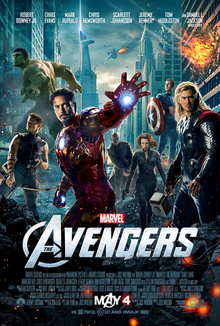
On the other hand, cinematic interpretations of graphic novels, the money-making machines of Marvel and DC Comics, rarely measure up to the original sources. I don’t even remember when was the last time that I saw a comic-based movie on a big screen… Until this summer’s release of Joss Whedon‘s The Avengers.
I’ve always had a weak spot for Joss Whedon’s creative powers. His visions, both phantasmagorical and futuristic, yet so human, are among my guilty pleasures. Amazingly, the man is capable of making all sorts of creatures sexy and soulful. After all, he brought vampires with various personality traits into our lives way before the recent wave of the blood-sucking hype. He is to current supernatural TV programming, what Nirvana is to contemporary Rock.
Stephenie Meyer may list Shakespeare and Jane Austin as influences for her deplorable writing all she wants; and the story how the idea of love between a human girl and a vampire came to her in a dream on June 2, 2003 is a great PR ploy. But isn’t it uncanny that Joss Whedon aired the last episode of Buffy the Vampire Slayer series on May 20, 2003. Maybe the young Mormon wife and mother was simply missing Buffy’s heat.
So, because it’s written and directed by Joss Whedon, I went to see The Avengers… And it was very entertaining, exhilarating, sufficiently layered for those who want to look beneath the surface, and accessible to those who just want to have fun – in other words, it was very Joss Whedon. I mean, who else would be able to take the Incredible Hulk and not only accentuate the character’s original traits, but make him even more tragic, brilliant, powerful, soulful… and funny?
Yeah, the Incredible Hulk as interpreted by Joss Whedon – oh boy, do I relate to that character, or what? I mean, “That’s my secret, captain. I’m always angry,” – it’s like he went into my head and read it on my cerebral cortex. Always angry, but in control most of the time. Well, in my case, practically all the time, trying to channel the frustration through writing, cursing at the toilet bowl, or stomping on a piece of paper; only wishing that I could unleash the anger for real.
When I just started this blog, I took time to explain in several posts my take on frustration and its management. In one of them, I nominated John McEnroe as the frustration release hero . And, he definitely is that, but if I were to expand my search pool beyond mere humans… Joss Whedon’s Dr. Banner/Hulk definitely takes the first prize – reserved, humble, unstoppable when angered by bad guys, and with a sense of humor regardless of his physical/mental state.
Watching him handling Loki’s arrogance was probably one of the most satisfying therapeutic experiences I’ve had in a long time. For a hot second I felt avenged. Oh, how I yearn for an ability to do that to some people! In fact, I think it would work for me even better than Darth Vader’s management style.
 The Frustrated CFO