Quote of the Week: Advice to a Young Artist: Get Your Head Out of Your Ass


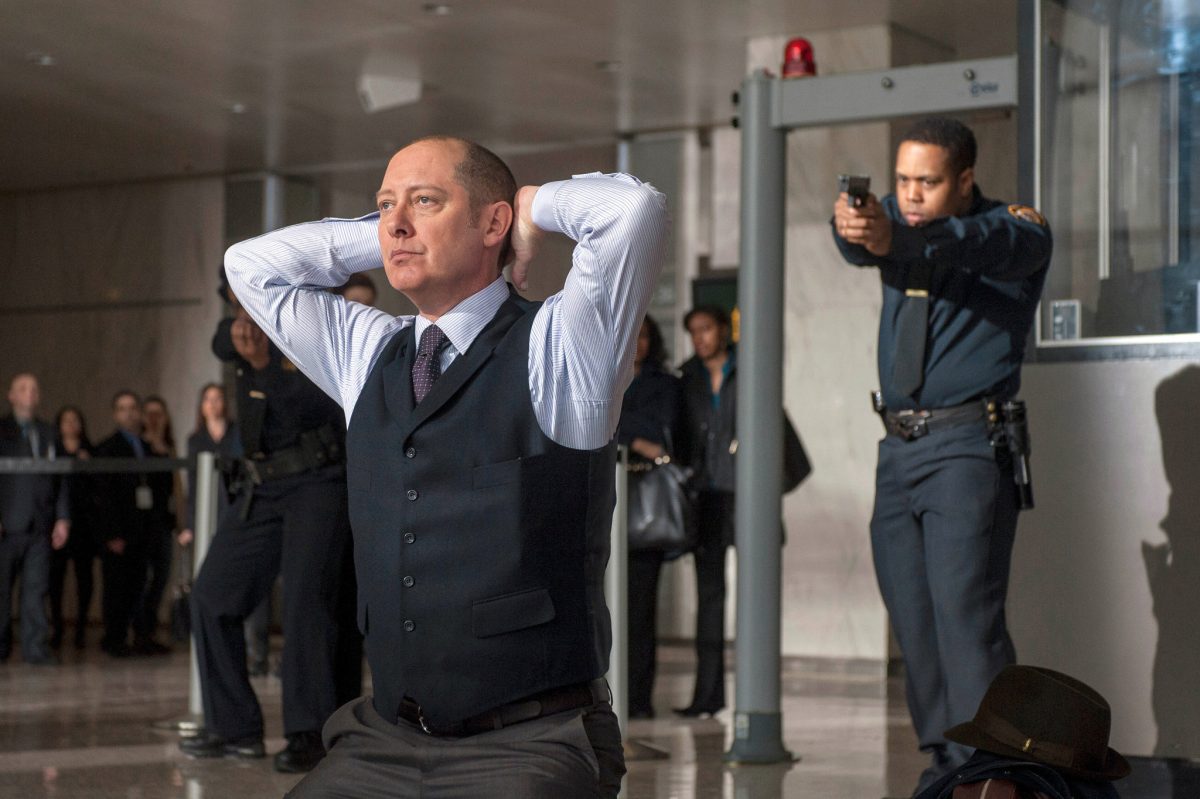
Don Draper reading John Ciardi translation of Dante's Inferno

Don Draper is reading Dante's The Inferno translated by John Ciardi

"Modern art is what happens when painters stop looking at girls and persuade themselves that they have a better idea."


                    John Ciardi


The Frustrated CFO's comment: I am sure we can all agree that nowadays John Ciardi's remark is applicable to all branches of art and visual media.  The main reason why so much of the contemporary "art" is nothing more than gimmick-ridden market-trading commodity is because its creators are blinded by their own self-importance.  Oh, why this picture?  Because mad men like Don Draper over there, coincidentally reading John Ciardi's 1954 translation of Dante's Inferno, also belong to the slew of visual originators whose ideas of what things should look like reshaped and distorted the general public's perception of images, artistic or otherwise. 

Our Fluid Morality, or What Makes “The Blacklist” So Seductive


Not the most watched TV show in America (somehow it’s impossible for any series to compete with everyone’s guilty pleasure aka the NCIS franchise), The Blacklist, nevertheless, draws respectable numbers of viewers:  Between those who must watch every episode when it first airs (out of fear that they will be assaulted by the spoilers at the water coolers, no doubt) and those who are grateful for the opportunity to do things on their own schedule (i.e. DVRists and On-Demandists), about 16 million people watch every episode of the show within 3 days from its original airing (if you prefer accumulating new episodes and then watch them 6 at a time or you just binged on the entire first season on Netflix, you don’t count).  The episode that aired after the Super Bowl had a record of 30 million viewers.

Impressive!  Of course, the show’s creators keep hooking and reeling in the audience with secrets and vague hints about the main characters’ pasts, futures, connections and disconnects, the overall story arch, and the possible endgame.  Plus, it’s an action thriller, so there are plenty of twists and turns, car chases, shootings, tortures, and “suspenseful” misadventures in every case.  Except that we can get all that through so many other media outlets, don’t we?

There is no doubt in my mind that the main draw of the show is its chief protagonist – the former Navy officer (“he was groomed for admiral”), now one of the FBI Ten Most Wanted Fugitives, Raymond “Red” Reddington.  We know it and so are the designers of all printed-media ads.  And, some part of it may be attributed to James Spader‘s offbeat charm and subtlety, that almost shy smirk in the corners of his mouth, that hidden trauma deep inside his eyes (or to our memory of the charm and subtlety, the smirk, and the trauma as he finessed them as Graham Dalton).  But the real truth is that, James Spader or not, we LOVE the hard-core criminal, the ruthless, the calculating, the self-righteous, the snobbish know-it-all, the flawed, the mysterious hero that is Red Reddington.

Look, we live in bizarre, degenerative times of perpetual futility and failure, with dubious future prospects and shifting moral standards.  Everybody (and I mean, EVERYBODY) does illicit things, lies, steals, cheats, covets.

And I’m not even talking about big-time thieves (like corporate moguls) and liars (like politicians), arms and drug dealers, rapists and  molesters, or even that CFO who stole $7 million from his employer.  

I’m sure you, my reader, consider yourself a fairly decent person.  So, I invite you to examine just one day in your life and I guarantee you will find something that, strictly speaking, is not moral. 

Start small and “innocent”: half the time when you take a sick day off your aren’t sick at all, right?  Of course.  And what’s wrong with that?  As far as you know, everyone does it.  A man’s gotta do what a man’s gotta do… to survive: resumes, interviews, taxes, drugs, office supplies you bring home from your place of work, your expense account, that last drink you took before you got into the car, that little tryst with a hotty from marketing, 99% of the bullshit that comes out of your own and everyone else’s mouth, etc., etc. – just the basics of an average person’s somewhat moral existence. 

All that matters is how slick and seamless you are when you do it and whether you can get away with it.  As long as you don’t get caught, fired, kicked out of your house, or sued, you will continue doing what “everyone else does.” 

When we see wrongdoings we don’t speak up because we are afraid of the consequences; and we don’t express our opinions because we don’t want to be ostracized; we hide our own sins and look away from those of others.

But most of us are not sociopaths: while on the surface this behavior goes unpunished, our buried in bullshit subconscious is nevertheless secretly troubled.  As a result, we suffer from unexplainable fears, anxiety, and anger. 

Yep, we are very-very angry; you may even say wrathful  – pretty much at everyone and everything: our governments, generations of people who destroyed our planet and those fucks who still do, overpopulating nations and individual families, domestic animal abusers and wildlife killers, the dwindling quality and escalating prices, our bosses and subordinates, parents and children, spouses, boyfriends, girlfriends, exes, neighbors, customer services and customers, people who don’t think like us; every single motherfucker who takes advantage of us; everyone who we blame for who we are, including ourselves; our own cowardice and impotence. 

We are livid watching the worst sinners reaping life’s rewards and those untalented idiots who, by some fluke of fate or flourishing nepotism, are recognized as cultural icons.  Sometimes it overwhelms us to the point when we just want to grab people by their collars, lift them up, and smack them against the wall real hard. 

And in this condition of perpetual moral sacrifices, bewilderment at the state of things, intense disappointment, and the pent-up anger, how can we not be drawn to a morally flawed character, who confirms that the world is fucked and we are not crazy, that we are justified in feeling the way we do? 

Practically in every episode, he exposes every branch and every agency of every government as thoroughly corrupt and incapable.  He confirms that money and the corporations behind them rule the world and us; that a handful of people possess virtually unlimited powers and can destroy fates of nations by raising their hands in some treacherous vote.  And, given a chance, he will try to hurt those devils or at least to interfere with their evil plans. 

He walks into the most dangerous situation with a surety of an invincible superhero.  If it’s necessary, he coolly raises his hand with a gun in it and squeezes the trigger with an air of a vermin exterminator.  He will lie, scheme, and  take advantage of every opportunity to reach his goals.  On top of that, he prefers animals to humans!  

Even more impressive is his sober understanding of the faults and weaknesses of those to whom he is personally attached.  Just because he cares about them, it doesn’t mean that he has any illusions about who they are. 

We marvel at the way Reddington stands out against the background of powerless and defective schmucks, oh, so similar to us.  Cause (did you notice?), whether they are on the side of the “law” or on the criminal side, there are no good, honest, decent people in the show’s vast cast of characters – everyone is ethically deficient and either confused about their selfish motivations or knowingly hide them.  In contrast, Red’s immoral clarity is incredibly refreshing. 

To tell you the truth, I don’t think that the show’s creators had consciously cooked this up as a marketing ploy.  They are not different from us – just as ethically corrupt (maybe even more so) and anxious.  They simply follow their instincts and realize their dreams of justice through their fictional creations.  And by making these apparitions public they allow us to participate in the experience as well.  Such has been the prerogative of writers for over 4000 years.

What I do have to give the creators and producers credit for is the targeting of wide slices of viewing demographics.  First of all, they got the most relevant age groups covered: 20-somethings who like shows with hot FBI/CIA/Mossad chicks and ugly foreign dudes with big guns; 30-somethings still preoccupied with cool jobs, career advancements, and scarred-forever hearts; and middle-agers who fucked up their own lives and those kids’ futures to the irreversible point, yet still hope that they can “fix things.” 

Then they got the important interests groups: people of both genders who are interested in guns and explosives and those who are into politics; women who put their jobs ahead of everything else and those who still dream the American dream.  And they got nerds with cutting-edge tech stuff and conspiracy theories!  Plus, they keep uncovering domestic and world-wide social boils, thus appealing to people with at least some ability for progressive thinking.

Bravo!  They get them interested and then Red keeps them hooked.  Let’s just hope that the show-runners have an actual sense of direction and that they will not let the seductively successful character drown in some muddy bullshit.  Maybe James Spader’s new co-executive position that his reps negotiated for him after the first season’s success will prevent commonly destructive tendencies.

And look what happened: He just got the executive power and two episodes in the first half of the second season were directed by Andrew McCarthy.  Nepotism, of course, but still, honoring old ties, supporting old friends – it ranks pretty high on our contemporary degraded morality scale. All we need now is a guest appearance by Jon Cryer (now available after 12 seasons of Two and a Half Men) and Molly Ringwald as agent Keen’s presumably dead mother.  The Pretty Pinklist, anyone?                  

Quote of the Week: Reconfirming the Perversity of Today’s Existence


The-Fall-the-fall-tv-series-34039149-514-620"Our modern life is such an unholy mix of voyeurism and exhibitionism.  People are perpetually broadcasting their internal and external selves."

                        Stella Gibson

                        The Fall

                        Season 2, episode 4

                        Created, written,

                        and directed by

                        Allan Cubitt


The Frustrated CFO commentary:

When I heard these words spoken with a bitter sigh by Gillian Anderson I felt fortunate to have experienced once more the cultural sensation Alan Bennett described as the hand of an unknown but like-minded friend reaching out to you from far away.   For confirmation, check out this post on social networking I wrote back in November 2013.  You don't even have to bother yourself with all 1000+ words – just read the fourth paragraph.

I've never met you, Allan Cubitt, but you are my friend.

Quote of the Week: Anthony Bourdain, Let’s Be Friends!


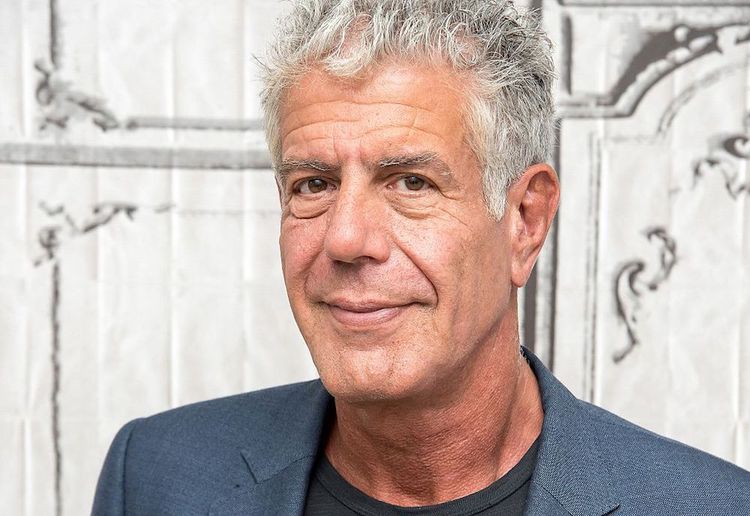
“You know, I look at popular music, the stuff that’s selling millions of records in America, and it makes me angry, actually…  If I see Nickelback I want to kill myself.  Okay, I want to kill them and then I want to kill myself, and then I want to kill everybody who listens to them.”

            Anthony Bourdain

            Parts Unknown, Tokyo

The Frustrated CFO’s comment:

Oh, my God!  My sentiment exactly!  Nickelback, and fun., and MAGIC! (what’s up with all that stylizing, anyway?!), and the rest of them.  And by the way, I love QOTSA and see them every time I have a chance!  And I can outeat any Japanese person at a conveyor sushi restaurants in Tokyo!  And I LOVE uni!!!  Let’s be friends!

Economic Newsflash: You May Never Have a Chance to See the Mona Lisa Again


Old_695So, apparently France got themselves into a $2.6 trillion debt hole.  This translates into $42,623 of national obligations per each of 66 million French têtes.  Of course, the number is staggering.  However, I feel obligated to state that this is not as bad as what we have here, in our own beloved country with our very own $17.8 trillion burden pressing hard on 319 million of us with a weight of $55,684 per capita.

Still, someone just asked me the other day, how the hell France got itself so fucked.  It's not like the country pays $42 billion into IMF every year; or covers 22% of the UN budget; or sticks its nose into every hot spot in the world, bankrolling military and whatever-else aid campaigns.  And it definitely doesn't spend billions on artificially fueling the US stock market, even though if it crumbles the economies world-wide, including the French,  will be doomed.  It's our government that borrows funds for all that. 

I'm no expert on French economy and I'm not about to embark on researching their problems in detail (God knows, I have more pressing things to do).  However, basic knowledge of European affairs is sufficient for a logical person to form some general ideas. 

This is what happens with the formerly wealthy, but already shaky (who isn't now?), national economies when they decide to build an opposition to USA by combining as many European countries as they can into some utopian economic union: they start breaking their financial backs by carrying on their shoulders weaker (like, ahem… Greece) nations.  And, of course, the state needs resources to support domestic  industries (solely in the name of protectionism).  Add to that immigration policies driven by "special interests," which result in a population seriously skewed toward multi-children families with idle heads of households, who don't pay taxes but draw extensively on social programs.  And why not?  The majority of French population don't want to work too hard anyway: shorter hours, exuberantly long vacations, early retirement (at 60!).  And again, why not when there is the Mandatory State Pension Provision in place?    

What the poor France to do?  Well, the French government came up with this brilliant idea: They are going to sell national treasures, starting with… Da Vinci's Mona Lisa (!), which, thanks to king Francis I, has been in France's possession since Leonardo's death, i.e. nearly 500 years. 

Don't tell me that this doesn't sound like the end of the world:  Through ages of political rioting and religious massacres, twenty three wars, three full-blown revolutions, multiple colonial rebellions, and Nazi occupation France managed to hold on to Mona Lisa.  It's the perverted foreign policies and socialistic interior governing of our foolish times that led to the total socio-economic bankruptcy of the formerly powerful country.

You and I may think that La Gioconda is priceless, but the French have already assessed its market price, i.e. how much money someone may be willing to shed for it.  During the 60s the best guess of the art-dealing community was around $100 million.  Now, 50 years later, the time-adjusted equivalent of that sum is $2.6 billion.  Never mind that this would cover only 0.1% of the debt in question.  As they used to say in pre-Euro France, every centime counts.

One can't help but marvel at the utter stupidity and nearsightedness of the government that can entertain the idea of  eliminating one of the main reasons for the international tourism to the infamously snooty, unreasonably expensive, and ethnically unstable City of Lights (the Louvre is still #1 visited museum in the world).  Can these people see anything beyond their service terms?  I can clearly visualize the snowball of layoffs and business closures, which will unavoidably lead to the further drain on the state's treasury.  But those are French problems.  So, fuck them!

What the rest of the world, especially those of us who care for the arts, should be concerned about is the distinct possibility that we may never ever have a chance to stand in front of the Mona Lisa and attempt to absorb (it's really not that easy in the room full of tourists holding up their video and photo devices) Da Vinci's masterpiece in person.  And this is especially heart-breaking because it is one of only 23 surviving major works that are either universally or generally attributed to Leonardo.

It's dreamy to imagine one of the world's major museums trying to acquire the painting.  However, it is unlikely that any such institution will be able to come up with a $2.6 billion check.  The third-ranked museum in the world, The Metropolitan Museum of Art, is America's richest cultural institution with $2.7 - $3 billion annual endowment.  However, the $300 million operating budget and constant structural updates apparently eat away the majority of the funds – during the fiscal year of 2012 the Met spent only $39 million on new acquisitions.  Of course, there is an aggressive deaccessioning, which allows the museum to sell off "minor" pieces in pursuit of the "major works,"  but even with an average of $1 million per item, the institution will need to liquidate 2600 (!) works to collect the required amount.  Highly doubtful!

So, if the transaction does materialize, it most likely will be funded by private wealth.  You can pack a large ballroom with people from different corners of the world whose wealth amounts to multiples of the asking price.  For the sake of my personal amusement we can entertain another beautiful fantasy:  How grand would it be if one of our openly super-rich individuals with strong philanthropic inclinations shelled out a chunk of his wealth for La Gioconda and then gave it away to the Met, so that the grateful general public could continue enjoying it (only now in my own backyard)!     

It would take only 4.4% of Warren Buffett's worth or 3.2% of Bill Gates's.   But both of them are too preoccupied with keeping the world healthy and the US technologically comfortable (don't ask me why) to bother with art gifts like that.  And by the way, the Codex Leicester, the most famous of Da Vinci's scientific journals, which Gates bought in 1994 for $31 million, is kept in the MS mogul's own private vault.  It is considered a great generosity that the Codex is let for display once a year in different cities around the world.  Yes, it is hard to imagine that anyone would give away the Mona Lisa as a gift to an institution or a nation.

The way I see it, the buyer will probably be someone whose immeasurable wealth you can't find on some Forbes list, because it is not valued in the ephemeral public-stock prices.  This multi-billionaire is someone who keeps a low profile and his name would mean nothing to the majority of the world even if he walked into the Louvre in person.  But such an individual will transact through multiple proxies, and when all is done the Mona Lisa will disappear from the public eye into a secret stronghold.  We will be left with reproductions and copies, while a handful of people will enjoy the privilege of up-close peering into the delicate strokes of oil paints applied by the genius's hand to a piece of poplar wood.