
Posts

BOI Reporting: Wellcome, Big Brother?


If you are a business owner and/or executive and you’ve used an online processor, like LegalZoom, to set up your corporate affairs; or outsource some of your in-house functions to a large service provider, like Paychex, for instance; or employ a fairly sizable CPA company to audit your books – it is most likely that these business partners of yours have notified you at some point last year that you are a subject to the new type of government reporting – the Beneficial Ownership Information (BOI), due for submission to Financial Crime Enforcement (FinCEN) bureau of the US Department of Treasury. 

The rest of the business owners – those without an exposure to large business and/or professional networks – especially the ones running those small, private, neighborhood companies we supposed to cherish as a backbone of the American economy…  Well, I don’t really know how they are meant to find out about this new reporting obligation. FinCEN promised to roll-out a whole awareness campaign with YouTube videos and stuff – but I personally haven’t seen anything like that being pushed at me. Maybe if you search for it, you’ll find something… But how would you know to look in the first place?

I personally discovered it via LegalZoom’s notification sent to an entrepreneur whose books I help to keep. She casually mentioned it to me – I somehow sensed it seriousness and looked into it. Mainly for the sake of the small business owners around me, but also out of the feeling of foreboding this bit of information gave me.

It turned out that FinCEN was formed in 1990 (Wow! The things that fly over our heads! Even if we are somewhat politically alert.) under the parentage of the Office of Terrorism and Financial Intelligence with an official purpose

“to combat domestic and international money laundering, terrorism financing, and other financial crimes”.

Naturally, it is a perfect agency to oversee the specific measures that have been formulated under the Corporate Transparency Act (CTA) signed into power by Congress in 2021 – the federal law pushed through under the banner of

“the government’s efforts to make it harder for bad actors to hide or benefit from their ill-gotten gains through shell companies or other opaque ownership structures.”

                                                      fincen.gov, January 29th, 2024

(Again! What ordinary citizen paid attention to that piece of shocking legal maneuvering?!)

One such measure, formulated in March of 2023, is the BOI reporting. I don’t want bore my readers with every single rule and detail pertaining to this new corporate reporting duty. Just bear with me for a few important highlights I’m providing for those who didn’t dive into this issue yet. 

A Beneficial Owner is a person who directly or indirectly exercises substantial control over the reporting company or owns at least 25% of its interests. Now, all senior officers – specifically: President, CFO, General Counsel, CEO, and COO; anyone with an ability to appoint or remove officers or a majority of directors; anyone who is an “important decision-maker”; and anyone (listen to this catchall) who has “any other form of substantial control” are qualified as Beneficial Owners and must be reported as such to FinCEN.

There is an interesting caveat: if a person is not a senior officer, but, nevertheless, exercises significant control over the reporting company through her employment there, that person doesn’t need to be reported. I’m thinking: high-power controllers who value their privacy higher than the status, or simply don’t want to expose their personal info for open access, should stop vying for CFO positions (assuming, of course, the pay is satisfactory). 

Any and all corporations, LLCs, and other entities created through the filing of a document with a secretary of State or any other similar office in the US is obligated to report. I carefully studied the 23 exceptions and can vouch that I personally never dealt with an entity that would qualify for an exemption. Nevertheless, everyone who deals with corporate matters of their businesses/employers is encouraged to study the relevant material at BOI FAQ.

Anyone whom the reporting company authorizes  to act on its behalf may file the BOI report. And this authorized filer, whatever their relationship with the company may be, MUST submit her full name, email address, and phone number

The information the reporting company must submit about itself is: full legal name, any trade names (DBAs, etc.), current street address of the principal place of business (to be updated when changes), its jurisdiction of formation or registration, and TIN. The whole kit and caboodle.

For the beneficial owners the reportable data is as follows: name, DOB, residential address, and ID# – either US passport or state driver’s license – and the name of the latter’s jurisdiction. And guess what? The reported ID must be uploaded into the database! Some people may feel relieved that at least they are not demanding the SSN’s. But if you ask me: disclosing your picture ID and the place where you live! Seriously?

But get a load of this! In addition to the information on the entities, their beneficial owners, and those assigned to deal with this by their bosses, the financial crime fighters want to further collect the same info on the individuals they call “applicants” (starting with incorporating dates of January 1, 2024 and on), i.e. the individuals who directly file the documents that create or register the company and those who direct and control the filing. And that’s pretty much any intermediary agent whose services you may engage in the process: accountants, lawyers, formation services, even the messengers delivering the application packages into the hands of the clerks.     

FinCEN openly discloses that any Federal, State, local, and Tribe as well as “certain” foreign officials will be allowed the access to thus compiled database for activities broadly described as “related to national security, intelligence, and law enforcement.” No consents or even notices of the inquiries’ subjects are required. On the other hand, financial institutions need to obtain a reporting company’s agreement before being allowed to take a peek. But who in their right mind says “no” to a bank considering granting you a credit line, for example? Especially if it’s a small entrepreneurial business. Most eager CFO’s and CEO’s wouldn’t even bother asking who exactly will be looking.

The penalties for refusing or foregoing the BOI reporting include both civil and criminal repercussions: up to $500 per day of the violation, $10,000 fine, and up to 2 years of imprisonment.  

So, to summarize: millions and millions of Americans are now forced to make their personal information openly available for access by all and any domestic and international government entities as well as financial institutions, or risk criminal and civil prosecution. I absorbed all that, and I was like: Whoa! What?! George Orwell miscalculated his arrival by 40 years, for sure, but the Big Brother is definitely hear now – not in North Korea, Iran, Russia, China; but here in the United States of A as well as 30-something other “civilized” countries with similar regulations. Of course, I have to be objective about my reactions to such things: I was born and raised under the communist dictatorship of the Soviet Union. Therefore, I have a tendency of seeing things related to governmental interferences in darker lights than most American citizens. I mean, Terry Gilliam’s Brazil (1985) is the avant-garde realism to me, not a dystopian sci-fi as it’s conventionally classified.

Moreover, I’m a libertarian in my political convictions. Thus, personal and socio-economic freedoms are paramount to me. Even more painful for a small-business crusader like myself: Do we really need another negative consideration thrown at potential entrepreneurs considering going into business? It’s fucking depressing – at least to me…

But guess what? It turned out that I was not alone in my fears of the government’s infringing on our democracy. On March 1, 2024, the United States District Court for the Northern District of Alabama held the entire CTA, and BOI requirements in particular, unconstitutional. To the fundamental question of whether the Constitution gives Congress the power to regulate millions of entities and their stakeholders the moment they obtain their formal corporate status from the state, the Court has answered that not only there are no constitutional provisions supporting such excessive claims of power, but there are also no citable precedents or sufficient legal nexus.

For the time being, the Alabama Court’s decision protects from CTA’s enforcement only the specific plaintiffs who filed the claim. We can hope, however, that it will encourage other companies, individuals, civil rights lawyers, etc. in other states, to join the effort of protecting our corporate and individual privacy. Meanwhile, every entity incorporated before January 1, 2024 have to file before the deadline of January 1, 2025 and those incorporated during 2024 – within 90 days after the date of official creation by the state. Starting 2025, the reporting timeframe will be shortened to just 30 days.

Here comes the funny part, though: If you decide to bother yourself with episode 17 of the final (10th) season of The Blacklist, you will be able to see how utterly futile these government efforts are. The vast network the FBI special task force is trying to dismantle during that episode is engaged not only in establishing the fictitious corporate fronts to cover the diverse criminal enterprising, but also in creating flawless, unimpeachable false identities for the individuals – real or virtual – who qualify to be their “Beneficial Owners” under the CTA’s definitions.

I mean, it’s pretty clear to all of us, isn’t it? Those who want to stay hidden – will. Meanwhile, the rest of us will expose our identities to hell knows what kind of breaches and misuses. And if you think that that particular bit of The Blacklist fancy is as phantasmagorical as the rest of the show, we can agree to disagree: I thought it was the most realistic piece of plotting of the entire series. And I watched every single of the 218 episodes and liked quite a few of them too.                 

I Built This Prison: Teaser #5: Life Is a Meat Grinder


The fact that I took it so personally day in and day out my whole life is a testimony of how severely self-absorbed I was. The prolonged nurturing of the scars caused by casual indignities was a very special pet in my menagerie of craziness. But even I would never claim that the pedestrian oppression of hierarchic systems was my exclusive prerogative.  

To be mistreated by those who outrank you (a boss or a critic) – this is just how life is.  If you try to make something of yourself in this harsh and merciless reality, no matter what it is, you must be ready to endure scores and scores of hardships.  You will have your self-esteem wrung, torn into pieces, thrown on the ground and stamped all over – hundreds of times. There is nothing new, special, or personal about it. You cannot be “out there” without experiencing a continuous inflow of sufferings.  The key is to be able to manage it without being traumatized and damaged. Which is quite a tall order.

  Generally speaking, as a species, we should’ve evolved to deal with all that shit.  How else are we surviving? There are a few rare individuals who, for better or worse, found ways of preserving themselves, of staying away from the garden-variety degradation of the spirit.  The rest of us, however, willingly and even strategically – with precision, rhythm and deliberation – stomp our feet straight into the meatgrinder.  And it fucking hurts.  Being chewed by the metal teeth of the machine (no matter what it may be – business, science, entertainment, arts, anything at all) is painful to everyone – lazy and hardworking, mediocre and geniuses, laid-back and ambitious.     

I’ve observed people and their involuntary reflexes in the workplace for thirty years – listening to their complaints, concerns, and rueful ramblings. It is my firm belief that even those who are pre-conditioned for the delusional complacency – perfectly tenderized and well-shaped for the feeder – are unable to remain indifferent to the hierarchic cruelty.”

“I Built This Prison”, Part I: Etiology of Crime, Chapter 4: Buckets of Tears… and Blood,  p. 51 – 52

I Built This PrisonExcerpt: Ozark‘s Wendy Byrde Negotiates Her Compensation


I Built This Prison,  Part I – Etiology of Crime, Chapter 3 – Delusions of Entitlement and Misconfusion of Rewards:

“In the episode 1.6 of Netflix’s original ‘Ozark’, desperate for money Wendy Byrde charges at her boss with an attempt of hostile earnings renegotiation (she is a pushy bird that Wendy Byrde, so it goes with the character). She notes that the sales are up 43% compare to the same month the previous year, while the only business change that took place was her hiring. Hence, she deserves a bonus that would correlate her compensation with her value(‼). Specifically, 50% of the income increase. They haggle and at the end the boss agrees to the bonus that together with Wendy’s salary amounts to one-third of the additional profits.

Fiction, of course. But, if the employers were actually inclined to evaluate and compensate their employees based on their tangible contribution into their businesses, the negotiations like that would be a common place. And maybe they are… somewhere. But I’ve never really witnessed anything like that. Well, something of the kind – once, fifteen years ago. But that was it.  

Of course, these are not exactly “negotiations” either. Wendy gives her boss an ultimatum because she has an upper hand – there is no comparable supply of labor in that God forsaken bumblefuck locale. There is like literally no one to do the same job – not on a half-ass, or quarter-ass, or even one-hundredth of an ass level. And so, her boss is not rewarding her for her contribution, he yields under the pressure of unfavorable market conditions.

An unimaginable situation for NYC (and I’m sure the same goes for all industrial centers), no matter what your field of expertise is! Here, an employer – even the one that is afraid out of his mind to lose you – deep inside knows that if you walk, he can find at least Somebody to fill the void. You, on the other hand, may drown in the competition searching for another place.”

                                                                                                                          p.40

Off the Cutting Room Floor of I Built This Prison: Clip #3: The Methodical Corruption of the Soul


“When Nietzsche wrote, ‘God is dead’, he wasn’t really talking about God’s existence per se. On the contrary, he was commenting on the state of human morality, or rather lack thereof, in the society greatly affected by the industrial revolution… And even that is not exactly right: it was more about the pervasive preoccupation with the accumulation of wealth… For many centuries before, whether correctly or not, philosophers and writers presumed the corruption by money to be the rich people’s affliction. I mean, you will not find any peasants in Dante’s Inferno. What Nietzsche alluded to was that by his time everyone, regardless of the status or the class, got onto the money-mining wagon and, as a result, removed themselves from God: even those attending services, kept doing it as a habitual ritual, not because of some true faith:

‘They no longer even know what religions are good for and merely register their presence in the world with a kind of dumb amazement. They feel abundantly committed, these good people, whether to their business or to their pleasures, not speak of the “fatherland” and their newspapers and “family obligations”: it seems that they simply have no time left for religion, the more so because it remains unclear to he whether it involves another business or another pleasure…’

                        Fredrich Nietzsche

                        Beyond Good and Evil, Part Three: What Is Religious

Well, we can argue that instead of formulating that snappy motto about God’s demise amidst all of the ‘civilized’ industriousness, he should’ve written: We, the humans, murdered God through the distraction of morality. But he said what he said. And it created a circular effect: his audience believed him – literally, and it liberated many into further relaxation of moral codes. Because we hear what we want to hear, disregarding the true meaning of the words.

And there lies the danger of catch phrases. They become popular beyond their intended audiences. Once out there, among the millions, all ideas described by memorable slogans get separated from their origins, adapted to the users’ whims and needs, reinterpreted, reshaped, modified to the point of becoming opposite of themselves. Sometimes it’s an act of the intentional distortion, but mostly it happens without any deliberation on the part of the unthinking revisionists.

I mean, I was born into a vile society that was built on blood, hate  and expropriation masked as ‘liberation’ causes by the slogans of supposed freedoms. It’s the reason why I ran away, idealistically hoping to be delivered onto more virtuous planes…”

                        Deleted from I Built This Prison, Chapter 5: Omni-Present and Omni-Powerful


The Problem of the Brain


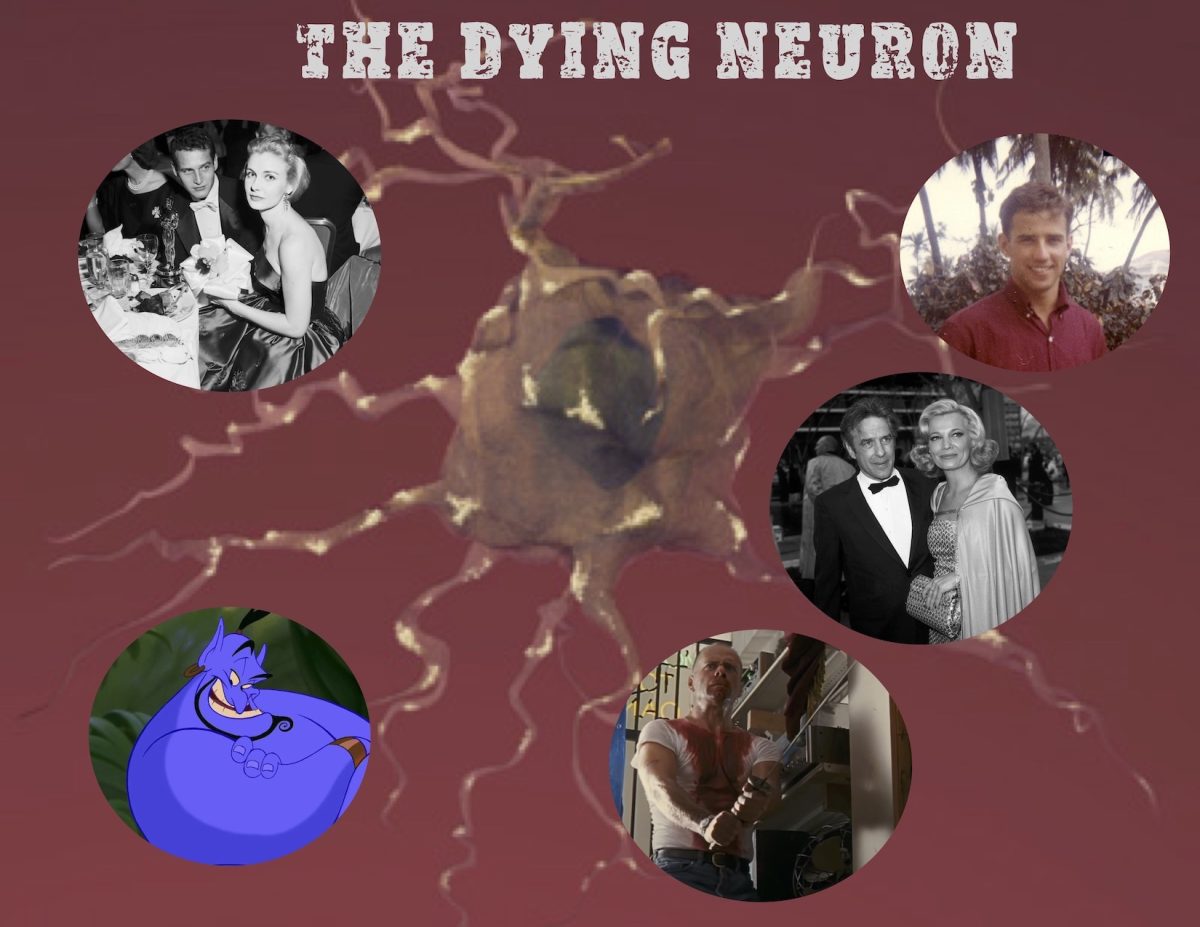
Funny how things happen sometimes… Lately, I’ve been brightening my time on the walking pad (wonderful, but incredibly boring exercise) by re-watching movies from my fairly extensive DVD collection. Every day… I’m not even choosing them – just going in the order my collection is organized: European arthouse, American Classics, American arthouse, etc. And so, believe it or not, on the very day I popped in John Cassavetes’s “Gloria” (1980), starring his wife Gena Rowlands, their son Nick Cassavetes publicly announced that Ms. Rowlands (now 94) has been living with Alzheimer’s disease for the past five years… Heartbreaking…

We hear a lot of that lately, don’t we? More and more people live well into their 90s nowadays: Mel Brooks is 97, William Shatner – 94, Lee Grant – 98, Clint Eastwood – 94, Jimmy Carter is an astonishing 99… And it’s not just celebrities. From Scarsdale to Hong Kong, I know people who lived to see their great-great-grandchildren born… Some of them keep their wits about them just fine, but quite a few fall victims to the age-driven degenerative tendencies of the neurons in the human brains; the ones that force the elderly to develop various conditions leading to dementia… Just like poor Gena Rowlands…

Do you ever think about the reasons behind this trend? I do. In fact, I’m so paranoid about the conditions of people’s brains, I’ve been thinking about this since I was in my 30s. And the way I see it, one of the main underlying causes is the profound disparity between the advances in cardiology vs. neuroscience.

Nowadays, people get their heart valves repaired and replaced, their damaged and destroyed arteries bypassed in triple and quadruple ways, their entire dying hearts transplanted straight into the medical waste and exchanged for the healthy ones obtained off of some unfortunate (but robust, nevertheless) recently departed individual. And all these marvelous procedures end up regenerating cardiovascular wellbeing,  rejuvenating the throbbing engines by decades… 80 and 90-year-olds run around with tickers as vigorous as those of the well-fit 50-year-old youngsters.

On the other hand, the Brains… I don’t think they can 3D-print them even in the most secretive of all evil laboratories in the world. (To the best of my knowledge and research, you know.) And so, very frequently these healthy hearts end up beating for people who can’t recognize their children, can’t take care of their basic needs, have no clue  who and where they are. Did you know that people may live with Alzheimer’s for as long as 25 years? It’s been 5 years for Gena Rowlands, but poor Joanne Woodward, now also 1994, has been living with that diagnosis since 2007. 

For me personally (and I absolutely mean it): I would not want anything working properly in my body, let alone having a heart capacity to last for any extra number of years, if I couldn’t know my daughter sitting in front of me. Fuck that shit! And I was seriously concerned when ten years ago my father, then turning 80, was going for his second stent placement… But his memory and mental faculties were above par for his age and nobody even asked me to contribute my opinion… He was desperate to get rid of the pain in his chest and the shortness of breathe… And I felt terrible even having those thoughts in my head… 

Thankfully, I knew that I weren’t alone and that there were other people who also came to experience such concerns – and not just on a speculatively statistical level, but in a very tangible, first-hand way: Two years prior, in May of 2012, I’ve read Michael Wolff’s cover article he wrote for New York Magazine: A Life Worth Ending – an incredibly intimate account of his and his siblings’ journey through the ordeal of caring for their mother whose heart, through prior surgical intervention, was much younger than her brain. Granted, the article was focused on the healthcare costs associated with such parental conundrum as well as already familiar to me by then subject of Long-Term Care insurance policies… Still, Mr. Wolff’s is a master of narrative nonfiction and his account of this familial ordeal was deeply emotional and relatable.     

I am a very private person who rarely shares (or even communicates – to be honest) with other people. And so that article was basically the first confirmation to me that I weren’t crazy or sinister to be thinking about these matters. That there were other people who agreed that we should be acutely guarded against all those frivolous heart repairs for elderly. That it would be not just prudent, but ultimately humane to be considerate of the possibility that these surgeries may destroy, not improve, the quality of their future lives – if the dementia comes knocking. 

Universally speaking – I would even say, on the politic0-scientific scale of the matter – we can move in two directions towards a kinder, more reasonable, and, in the long run, beneficial for everyone concerned resolution of this, unfortunately very frequently occurring, predicament.

On one hand, we can attempt to make it compulsory for cardiologists to be more responsible when it comes to recommending surgical interventions for people over certain age and more holistic in their patient care with consideration of conditions beyond their direct specialties. Even more important, we (the elderly and their caretakers as the unified interest group) can insist on being provided with the full disclosure regarding the scope of future possibilities, including the one of the longer life marred by mental incapacity.

But here we have finally arrived at the fiscal side of the issue at hand. (I hope you didn’t really think I’ve forgotten about it.) The cardiovascular mending is the biggest cash cow of the medical industrial complex. Heart conditions are #1 most expensive group of chronic diseases. It’s literally impossible nowadays to find a relatively recent statistics on anything, but in 2016 adult cardiovascular spending came to a sweet little sum of $320 billion! Of which 54% was covered by public insurance, i.e. Medicaid and Medicare, and 37% by private insurance. That’s 91%, or $291 billion of automatically collectable funds. It’s hard to imagine the hospital systems, particularly their boards and  investors, giving up any portion of that income – humaneness be damned!  

Yet, there is an alternative route of action: to finally start bearing down on this stumbling block of the aging Brain and attempt to, at the very least, match its longitivtiy of the repaired hearts. And I’m not talking about some sci-fi scenarios here either. Researchers working in the stem-cells limitless field of opportunities already made significant inroads into the possibilities of treating a broad spectrum of neurological conditions, including the ones leading to dementia.

Unfortunately, this area of science is suffering from the – really unimaginable in our “enlightened” times – plaque of “ethical” debates, particularly around the matters of embryonic stem cells. And it is an undeniable reality that entirely baseless, anti-scientific, purely political positions still prevail, thus influencing the legal landscape around the matter; slowing down – instead of spearheading – the advancement towards the younger brains. And, just like with the reproductive rights, the antis here are preoccupied with the status of embryos.    

Actually, whether it deals with embryos or not, officially stem cell research is legal in the United States. However, it’s subject to state-specific laws and federal funding restrictions. And even the embryonic stem cell research is not technically illegal. But! The federal funding (the source responsible for over 50% of all American academic R&D) is categorically prohibited for both the creation of new embryos – reproductive (remember Dolly?) or therapeutic (the creation of stem cells entirely independent of the fertilized eggs) alike – as well as for the distraction of embryos. The latter is especially significant as it includes the process of obtaining stem cells from the existing human embryos – unused and donated by their creators through the fertility banks. In other words, as it frequently happens with our government, everything is dumped into the same suppressive bucket, regardless of the source and purpose.

Believe you me: I’m as much in opposition of the reproductive cloning as the most reactionary conservatives from the heart of Arkansas. I mean, let’s leave the  artificial creation of multiple identical offsprings in the realms of science fiction. Nobody is that special and we truly already have too many people on this planet. And cloned sustenance – no, thank you!

But the therapeutic cloning with hopes to eliminate dementia?! What’s wrong with that? Why do these strange people keep caring more about never to be born embryos than about the living, breathing, and suffering humans. Many of them quite accomplished individuals. Please, let the scientist use those donated bits of cells! Please, give them grants to hurry this shit up! Aren’t you afraid that these terrible neurological tragedies may befall you?           

And it’s so fiscally nearsighted too! Cause imagine the billing volume that can be generated by curative methodologies directed at not just dementia, but also paralysis, multiple sclerosis, Parkinson’s decease… Leukemia, lymphoma, neuroblastoma… Etc., etc., etc. – virtually no limitation to the scope of the applications. Including the heart failure!

But I guess, on the Capitol Hill religious lobbying trumps even HMO lobbying… And so, we remain stuck between the cardiologists who can make you ticking like a fucking clock for decades and the helpless neurologists absolutely unequipped to deal with the sad state of the Brains.